


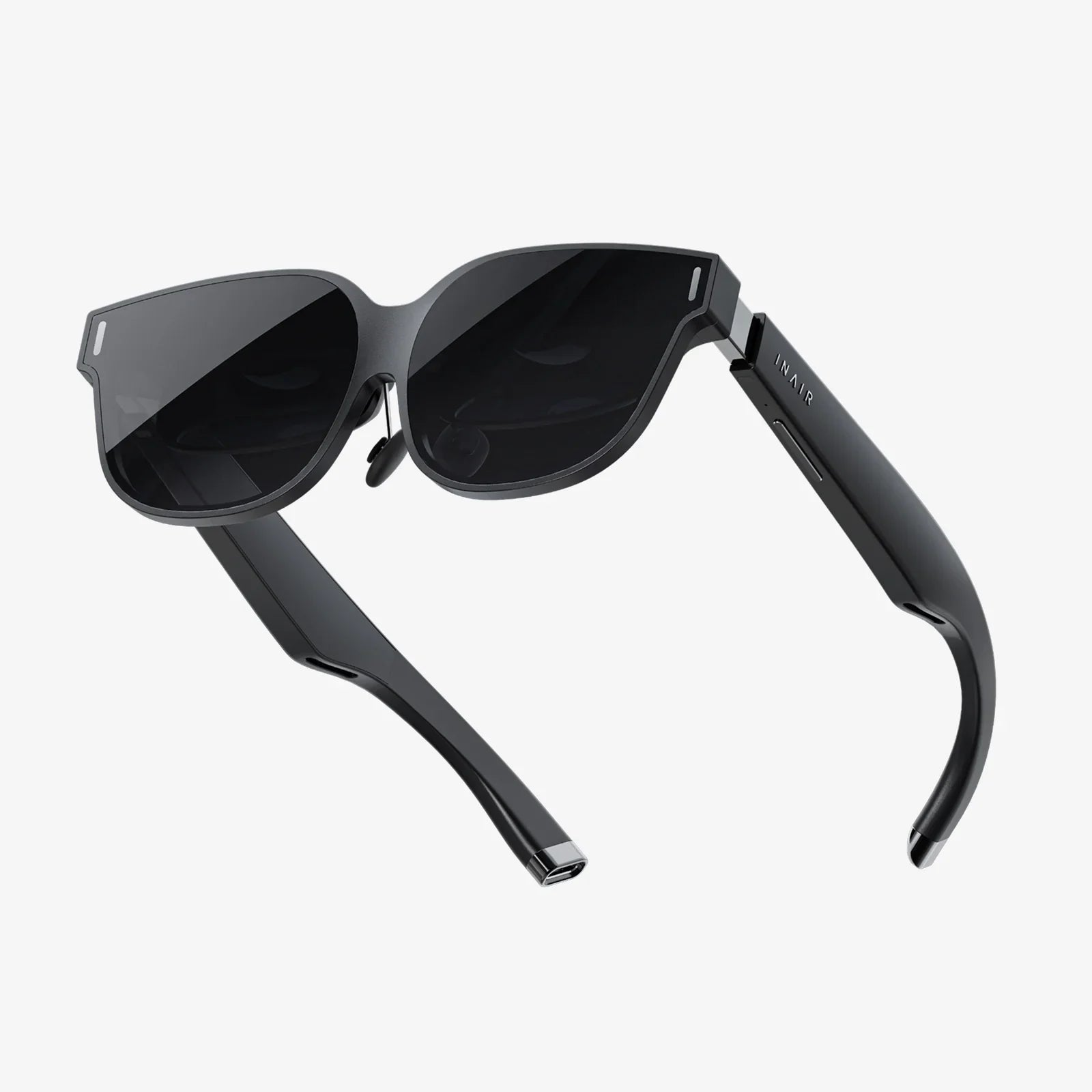
Imagine slipping on a sleek, futuristic device and instantly being transported from your living room to the peak of Mount Everest, the bridge of a starship, or a front-row seat at a concert happening halfway across the globe. This is not science fiction; it’s the immediate, awe-inspiring promise of a virtual headset. These technological marvels are gateways, not just to games, but to entirely new dimensions of experience, connection, and understanding. They represent a fundamental shift in how we interact with digital information and with each other, blurring the line between the physical and the virtual in ways that are as thrilling as they are revolutionary.
The Core Function: Crafting a Convincing Digital Reality
At its most fundamental level, a virtual headset, more formally known as a Virtual Reality (VR) headset, has one primary mission: to replace your perception of the real world with a convincing, interactive, and immersive digital one. It achieves this through a sophisticated combination of hardware and software working in perfect harmony.
The Hardware: Your Windows to Another World
The headset itself is a powerhouse of miniaturized technology. Its most critical components are the high-resolution displays, one for each eye, positioned mere centimeters from your face. These screens are viewed through specialized lenses that warp the image, creating a wide field of view that fills your peripheral vision, a crucial element for feeling truly inside the virtual environment. This stereoscopic vision, presenting a slightly different image to each eye, is what creates the powerful illusion of depth and scale, making a digital object feel solid and a virtual chasm seem terrifyingly deep.
Tracking: Knowing Where You Are
Immersion would shatter the moment you moved your head if the world didn't move with you. This is where advanced tracking systems come into play. Inside-out tracking uses a array of cameras and sensors on the headset itself to map the physical room and track the headset's precise position and orientation within it. Outside-in tracking uses external sensors placed in the room to monitor the headset's movement. The result is six degrees of freedom (6DoF): the ability to not only rotate your head (yaw, pitch, roll) but also to physically lean, crouch, and walk around within a defined space, with every movement reflected instantly and accurately in the virtual world.
Audio and Interaction: Completing the Illusion
Visuals are only half the story. Spatial audio is a game-changer. Instead of standard stereo sound, advanced audio algorithms simulate how sound waves interact with the environment and your ears. A noise from your left truly sounds like it's coming from your left, and it will change subtly as you turn your head, just like in real life. This auditory cue is incredibly powerful for selling the reality of a space.
Finally, we have the controllers. These are your virtual hands. Equipped with their own tracking capabilities, haptic feedback motors, and an array of buttons and triggers, they allow you to reach out, grab, throw, push, and manipulate the digital world. Advanced haptics provide subtle vibrations and resistance, letting you feel the virtual click of a button or the recoil of a tool, forging a tangible connection between your actions and their digital consequences.
Beyond the Hype: The Expansive Applications of Virtual Headsets
While gaming is the most famous and commercially successful application, the utility of virtual headsets extends far beyond entertainment. They are becoming indispensable tools across numerous professional and personal fields.
Transforming Education and Training
Virtual headsets offer the ultimate safe space for learning complex or dangerous skills. Medical students can practice intricate surgical procedures on virtual patients, making mistakes without consequence. Aspiring mechanics can disassemble and reassemble complex engine models. Astronauts, pilots, and soldiers train for high-pressure scenarios in hyper-realistic simulations. This "learning by doing" in an immersive environment drastically improves knowledge retention and muscle memory compared to traditional textbooks or videos.
Revolutionizing Enterprise and Design
In the corporate world, VR is a powerful tool for collaboration and prototyping. Architects and interior designers can walk clients through photorealistic 3D models of unbuilt structures, allowing for changes before a single brick is laid. Engineers from different continents can meet in a virtual boardroom to examine a full-scale 3D model of a new product, identifying design flaws early in the process and saving immense amounts of time and capital.
Enhancing Social Connection and Storytelling
Virtual headsets are evolving into powerful social platforms. Users can meet up with friends as personalized avatars in virtual spaces to watch movies, play games, or simply hang out, overcoming geographical barriers with a sense of physical presence that video calls cannot match. Furthermore, filmmakers and artists are exploring VR as a new medium for narrative. Instead of watching a story unfold on a screen, you can stand within it, an active observer whose perspective and focus can change the experience, creating a profoundly personal and emotional form of storytelling.
Expanding Healthcare and Therapy
The therapeutic potential of VR is immense. It is successfully used for exposure therapy, helping patients with phobias like fear of heights or flying to confront their anxieties in a controlled, gradual manner. It aids in physical rehabilitation by turning exercises into engaging games, motivating patients to complete their routines. VR can also provide calming, distracting environments for pain management and has shown promise in treating PTSD and anxiety disorders.
The Human Experience: What It Actually Feels Like
Describing the sensation of using a high-quality virtual headset is difficult until you experience it yourself. It’s a phenomenon often called "presence"—the undeniable, subconscious feeling that you are actually in the virtual place. Your brain is convinced. You'll instinctively try to lean on a virtual table. You might feel a wave of vertigo looking over a digital ledge. This powerful psychological response is the true magic of the technology, and it’s what separates it from any other screen-based experience.
Considerations and The Road Ahead
Of course, this technology is not without its challenges. Some users experience motion sickness if there's a disconnect between what they see and what their inner ear feels. The hardware, while improving rapidly, can still be bulky for extended sessions. There are also important discussions around data privacy, social interaction norms in virtual spaces, and ensuring equitable access.
Yet, the trajectory is clear. Future headsets are moving towards being lighter, wireless, with even higher-resolution displays (often called "retina resolution"), wider fields of view, and more intuitive controls, including advanced hand-tracking that eliminates the need for controllers altogether. The line between the virtual and augmented reality (which overlays digital information onto the real world) is also blurring, pointing towards a future where a single device might serve all our computing and interactive needs.
The journey into the virtual is just beginning. From the moment you first strap on a headset and find yourself somewhere else entirely, you understand that this is more than a gadget; it’s a passport to the impossible, a tool for profound human connection, and a canvas for the next great chapter of human creativity and exploration. The question is no longer what a virtual headset does, but what incredible things we will choose to do with it.
Share:
High Tech Goggles: The Invisible Revolution Reshaping Reality
Professional Hologram Projector: The Ultimate Guide to Next-Generation Visual Communication