


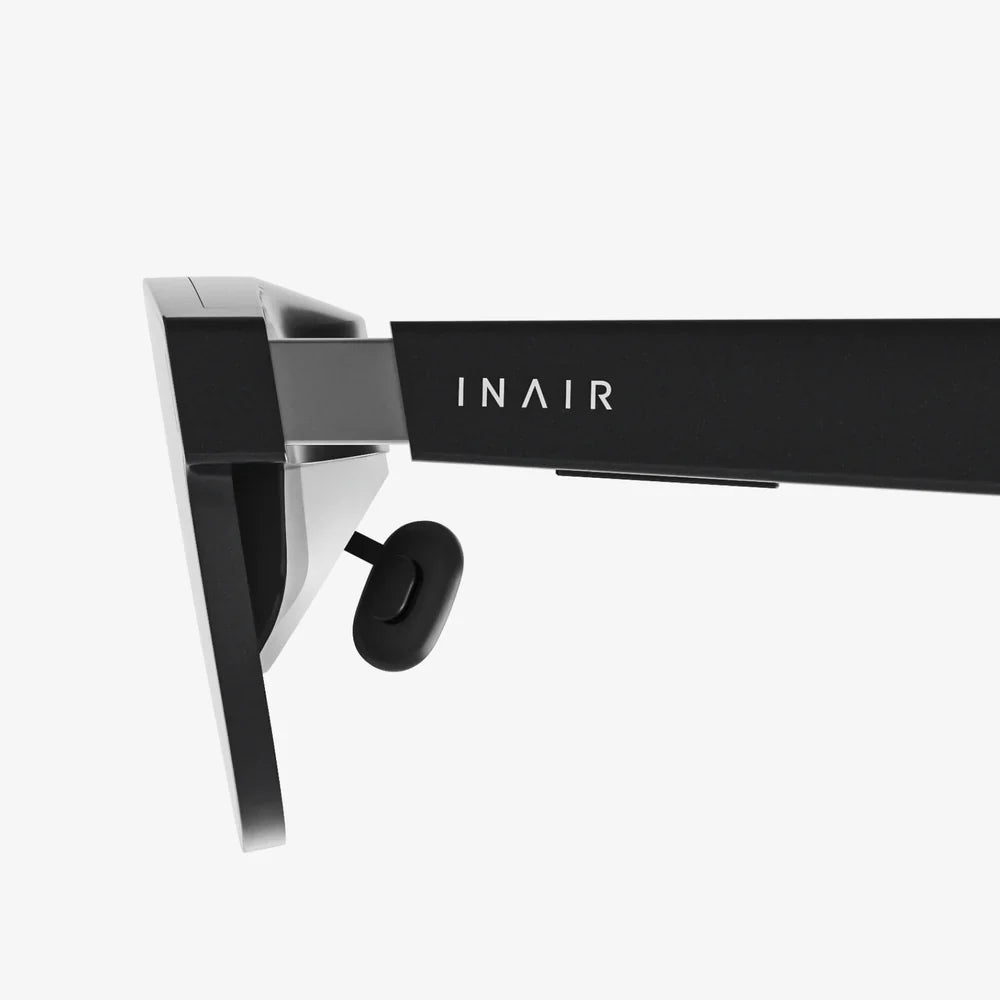
- by wangfred
High Tech Looking Glasses Are Redefining Our Vision of the Future
- by wangfred
Imagine a world where information floats before your eyes, where digital assistants are not confined to screens but exist in the space around you, and where the very way you perceive and interact with reality is enhanced, personalized, and transformed. This is not a scene from a science fiction film; it is the imminent future being built today, and it is being delivered through a device that sits comfortably on your face. High tech looking glasses are poised to become the next pivotal platform in personal computing, moving beyond the novelty of their predecessors to offer genuinely useful, powerful, and immersive experiences that promise to reshape everything from how we work and play to how we connect with each other and the world.
The journey of smart eyewear has been a turbulent one, marked by early attempts that were often clunky, socially awkward, and limited in functionality. These initial forays into wearable visual tech were primarily focused on capturing video or displaying basic notifications, often failing to deliver a compelling reason for mass adoption. They were solutions in search of a problem. However, the landscape has dramatically shifted. Today's high tech looking glasses are the beneficiaries of a decade of relentless innovation in miniaturization, sensor technology, battery efficiency, and artificial intelligence. They are no longer just glasses with a camera; they are sophisticated computers designed for your face, representing a fundamental convergence of the digital and physical realms.
Beneath the sleek, often minimalist designs of modern smart glasses lies a dense orchestra of advanced components working in perfect harmony.
At the core of the experience is the display technology. Unlike virtual reality headsets that block out the real world, high tech looking glasses use augmented reality (AR) to overlay digital information onto your natural field of view. This is achieved through a combination of micro-displays, often using technologies like MicroLED or LCoS, which are incredibly small, bright, and power-efficient light engines. This light is then projected into the user's eye using optical waveguides. These are transparent lenses etched with nanoscale precision to act as conduits for light, bending and shaping the digital imagery so it appears to float in the real world at a comfortable focal distance. The result is a seamless blend of reality and data, all without obscuring your vision.
To understand and interact with the environment, these glasses are equipped with a sophisticated array of sensors. This typically includes:
All this sensor data is meaningless without immense processing power. Modern high tech glasses incorporate powerful, specialized processors capable of running complex machine learning and AI algorithms directly on the device. This on-device AI is critical for several reasons: it enables real-time responsiveness, as there is no latency from sending data to the cloud; it enhances user privacy by processing sensitive information like camera feeds locally; and it allows for context-aware computing. The glasses can recognize objects, translate text in real-time, identify people (with permission), and understand voice commands with startling accuracy, all without needing a constant internet connection.
The true potential of this technology is unlocked by its software and the myriad of use cases it enables across every facet of life.
In enterprise and industrial settings, high tech looking glasses are already delivering immense value. Field technicians can have schematic diagrams and instruction manuals overlaid onto the machinery they are repairing, keeping their hands free and their focus intact. Surgeons can visualize patient vitals and 3D anatomical models during procedures without looking away from the operating table. Architects and engineers can walk through 3D holographic models of their designs at full scale. Warehouse workers can receive optimized picking routes and inventory information directly in their line of sight, dramatically improving efficiency and reducing errors. This "hands-free, heads-up" paradigm is transforming complex tasks by providing contextual information exactly when and where it is needed.
For the consumer, the implications for communication and creativity are profound. Imagine a video call where you are not staring at a grid of faces on a screen, but where the person you are talking to appears as a life-like hologram sitting across from you on your couch. Content creators can capture their point-of-view with unprecedented ease and immersion, telling stories from a truly first-person perspective. Social media could evolve from a feed on a phone to a layer of shared experiences and annotations on the world around us—a digital graffiti that only those with the right permissions can see.
Everyday life is also ripe for enhancement. Walking through a foreign city, translation overlays could instantly convert street signs and menus into your native language. Navigation arrows could be painted onto the sidewalk in front of you, guiding you turn-by-turn without the need to look down at a phone. For individuals with visual or hearing impairments, the technology could describe surroundings, recognize faces, or provide enhanced subtitles for real-world conversations, breaking down barriers and fostering greater independence.
Despite the exciting potential, the path to ubiquitous adoption is fraught with significant challenges that must be thoughtfully addressed.
A device that is always on your face, with cameras and microphones always at the ready, represents a profound privacy challenge. The potential for constant, passive surveillance—both by individuals and, more worryingly, by corporations or governments—is a serious concern. Robust, transparent, and user-centric privacy frameworks are non-negotiable. Features like obvious recording indicators, physical lens covers, and clear, audible cues when filming are essential to ensure these devices are used responsibly and ethically, fostering trust rather than fear.
Early attempts at smart glasses were met with significant social resistance. The term "Glasshole" entered the lexicon to describe users who were perceived as intrusive, disconnected, or simply awkward while using the technology. Overcoming this stigma requires more than just better technology; it requires better design. The next generation of devices must be aesthetically pleasing, indistinguishable from regular eyewear at a glance, and socially intuitive. They must include clear social signals—like a visible light when recording—to reassure others and establish new social norms for their use in public spaces.
The ultimate goal for human-computer interaction is an "invisible interface"—one that feels natural and effortless. For high tech glasses, this means moving beyond clumsy touchpads on the temple or voice commands that disrupt a quiet room. The future lies in multimodal interaction: a subtle combination of voice, gesture, gaze, and even neural inputs. Imagine selecting a virtual object simply by looking at it and confirming with a subtle pinch of your fingers. Or scrolling through text with a slight movement of your eyes. This requires incredibly robust and sensitive technology, but it is essential for creating an experience that feels like a natural extension of the self, not a distracting device.
The development of high tech looking glasses is accelerating at a breathtaking pace. In the near term, we can expect rapid improvements in battery life, display brightness and field of view, and the seamless integration of cellular connectivity, truly cutting the cord. Further out, the convergence of this technology with advancements in AI agents will be transformative. Your glasses could evolve into a always-available, contextual personal assistant that anticipates your needs, manages your digital life, and helps you navigate the world with unprecedented ease.
We are standing at the precipice of a new era of computing. The transition from desktops to laptops liberated us from our desks. The shift to smartphones put a computer in our pockets. Now, high tech looking glasses promise to weave computing into the very fabric of our perception. They offer a vision of the future that is not about escaping reality, but about enriching it, enhancing our human capabilities, and connecting us to information and to each other in ways we are only beginning to imagine. The question is no longer if this future will arrive, but how quickly we will adapt to the profound and thrilling changes it will bring to our lives.
The world is about to be viewed through a new lens, and what we see will forever change what is possible. The next time you put on a pair of glasses, they might not just help you see the world more clearly—they might help you see an entirely new one, layered with magic and intelligence, waiting right there in front of you all along.
Share:
New AI Goggles: The Dawn of a Seamless, Augmented Reality
New AI Goggles: The Dawn of a Seamless, Augmented Reality