


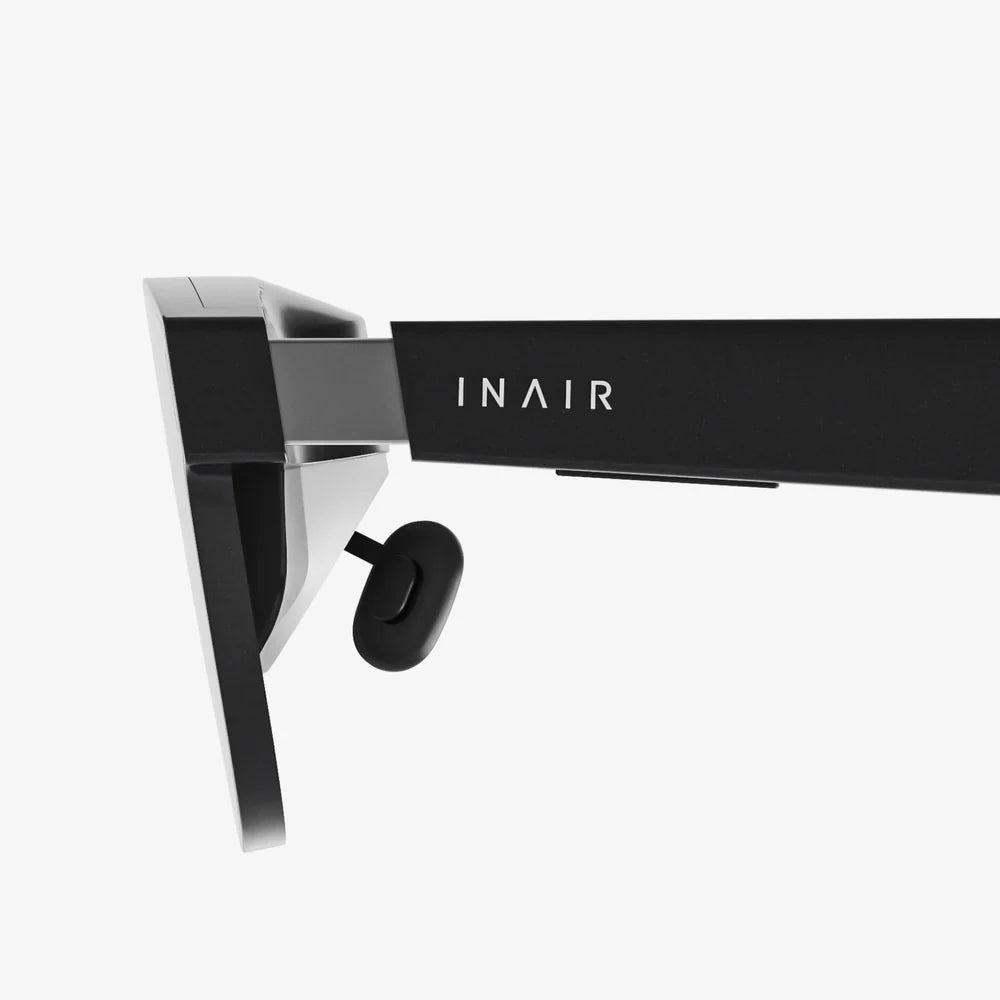
- by wangfred
New AI Goggles: The Dawn of a Seamless, Augmented Reality
- by wangfred
Imagine a world where information doesn’t live on a screen in your hand, but is woven seamlessly into the fabric of your reality, accessible with a glance, a whisper, or a thought. This is the tantalizing promise held within the sleek, futuristic frames of new AI goggles, a technology poised not just to change what we see, but to fundamentally redefine how we interact with the world and with each other. We stand at the precipice of a new computing paradigm, one that could make the smartphone look as archaic as the dial-up modem.
To understand the seismic shift these devices represent, we must look at the convergence of two powerful technological trajectories. For years, augmented reality (AR) has promised to overlay digital information onto our physical environment. Simultaneously, artificial intelligence, particularly in the realms of computer vision and natural language processing, has advanced at a breathtaking pace. New AI goggles are the crucible where these two forces merge, creating a device that doesn’t just display data but truly understands and contextualizes it.
Unlike their predecessors, which were often clunky, limited, and offered a narrow field of view, this new generation is built from the ground up with AI as its core operating system. The hardware is a symphony of miniaturized sensors: high-resolution cameras, LiDAR scanners, depth sensors, and microphones, all continuously feeding a torrent of raw data about the user's environment. The onboard AI processor acts as the conductor, interpreting this data in real-time. It’s not merely capturing images; it’s identifying objects, recognizing faces, translating text, mapping spaces in 3D, and understanding spoken and unspoken commands. This moves the interaction from a simple heads-up display to a contextual and anticipatory interface.
The most profound impact of new AI goggles will be the dissolution of the traditional user interface. We are moving from a model of pull—where we actively seek out information on a device—to a model of push—where relevant information presents itself to us contextually.
The applications for this technology stretch far beyond consumer convenience, promising to overhaul entire sectors by providing workers with real-time, hands-free information and expert guidance.
Surgeons could overlay CT scans directly onto a patient’s body during a procedure, improving accuracy. Medical students could practice complex techniques on detailed, interactive holograms. EMTs arriving at an accident scene could have vital signs and triage instructions displayed as they work, all while keeping their hands free to save lives.
A technician repairing a complex machine could see internal components, historical service records, and a step-by-step guide superimposed on their field of view. This reduces error, slashes training time, and allows less experienced workers to perform tasks previously reserved for veterans. Remote experts can see what the on-site technician sees and annotate their reality to guide them, effectively teleporting knowledge to any location.
Learning becomes an immersive, interactive experience. History students could witness historical events unfold around them. Engineering students could deconstruct and reassemble virtual engines. Anatomy classes could walk through a life-sized, beating human heart. This experiential learning fosters a deeper, more intuitive understanding than any textbook or video can provide.
Perhaps the most human-centric application of new AI goggles is in communication. They promise to add a rich, digital layer to our social interactions, potentially making remote communication feel more present and authentic.
Imagine a video call where instead of staring at a grid of faces on a screen, the participants appear as life-like holograms sitting around your living room, able to make eye contact and use natural gestures. Real-time translation could break down language barriers entirely, with subtitles appearing naturally in your vision as someone speaks, or even their voice being softly translated while preserving their original lip movements.
These devices could also enhance social recall. The AI, recognizing a person you’ve met before, could discreetly remind you of their name and where you met, alleviating social anxiety. It could help those with visual impairments by identifying people, obstacles, and reading text aloud, granting a new level of independence.
For all their potential, new AI goggles present a minefield of ethical and societal challenges that must be addressed with utmost seriousness. The very features that make them powerful—constant environmental scanning and always-on sensors—also make them a potent threat to privacy.
The journey of new AI goggles is just beginning. Current iterations are still grappling with challenges like battery life, form factor, and generating truly photorealistic holograms. However, the trajectory is clear. We are moving towards a future of more ambient, intuitive, and contextual computing.
The ultimate goal is not to lose ourselves in a virtual world, but to use technology to enhance our understanding and enjoyment of the physical one. The success of this technology will not be measured by its technical specifications, but by its ability to fade into the background, to become so intuitive and useful that we forget it’s there—augmenting our human capabilities without interrupting our human experience.
The next time you look up from your phone, take a moment to observe the world. Soon, that world might just look back, offering its secrets not on a pane of glass, but woven into the very light around you, waiting for you to simply ask.
Share:
High Tech Looking Glasses Are Redefining Our Vision of the Future
High Tech Looking Glasses Are Redefining Our Vision of the Future