


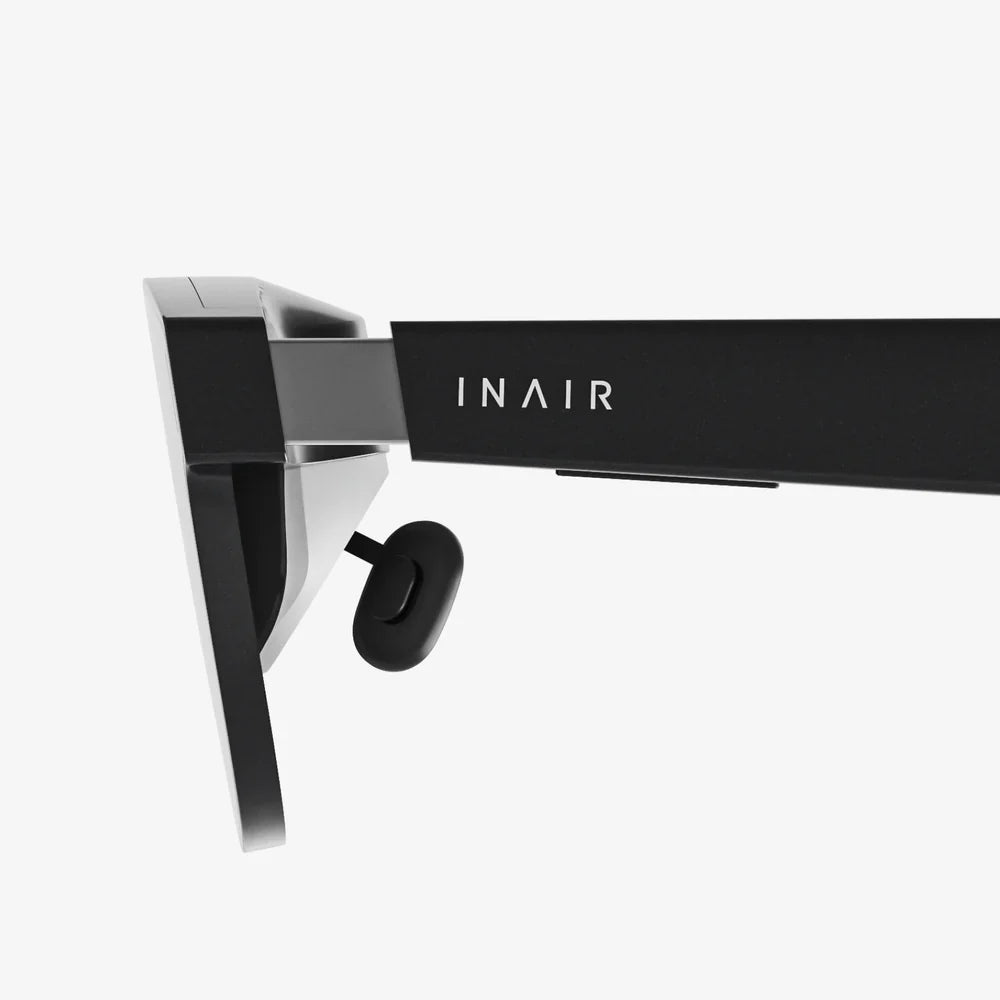
Imagine stepping into a virtual world so crisp, so lifelike, that the very concept of a "screen" dissolves into irrelevance. A realm where you can read the finest text on a virtual document, count the individual threads in a digital tapestry, and see the subtle, fleeting emotions in a character's eyes from across a room. This is no longer the stuff of science fiction; it is the promise fulfilled by the highest resolution VR headset of 2025, a technological marvel that is redefining the boundaries of human-computer interaction and setting a new benchmark for immersive experiences.
The Unrelenting Pursuit of Pixel Perfection
For years, the virtual reality industry has been engaged in a quiet but fierce arms race, with resolution standing as the primary battleground. The journey from the early, discernible pixels of first-generation hardware to the clarity we enjoy today has been one of the most significant in consumer technology. The term "screen door effect"—that visible grid of lines between pixels that once plagued VR—has been the nemesis of engineers and designers alike. The highest resolution VR headset of 2025 doesn't just minimize this effect; it annihilates it, delivering a visual experience that is best described as optically transparent.
Deconstructing the Numbers: Beyond Megapixels
To understand the leap forward, we must first look at the raw specifications. While specific figures vary between manufacturers, the flagship headsets of 2025 operate in a realm once thought impossible for consumer-grade hardware. We are talking about resolutions that comfortably exceed 4K per eye, often landing in the ballpark of 3840x3840 or higher for each display. This translates to a staggering combined resolution that surpasses 8K and a pixel density that pushes 40 pixels per degree (PPD) or more. To put this in perspective, the human eye, under ideal conditions, is estimated to resolve around 60 PPD. The 2025 high-resolution headsets are, for the first time, entering the realm of true retinal resolution, where the individual pixels become indistinguishable to the average user, creating a seamless and continuous image.
The Engine of Clarity: Micro-OLED and Breakthrough Display Technology
This monumental achievement is not the result of a single innovation but a confluence of several cutting-edge technologies. The heart of this visual revolution is the display panel itself. While earlier headsets relied on variations of LCD or PenTile OLED tech, the highest resolution VR headset of 2025 is almost universally powered by next-generation Micro-OLED (or sometimes, Micro-LED) displays.
Micro-OLED panels are fabricated directly onto a silicon wafer, allowing for incredibly small pixel sizes and exceptionally high densities. This technology offers several critical advantages:
- Unmatched Pixel Density: The fundamental enabler of the ultra-high resolution, allowing for millions of pixels to be packed into a minuscule area.
- Perfect Blacks and Infinite Contrast: Unlike LCDs, which use a backlight, each pixel in an OLED display is self-emissive. This means black pixels are truly off, delivering inky, perfect blacks and a contrast ratio that is essentially infinite. This dramatically enhances depth perception and realism, especially in dark or high-contrast scenes.
- Exquisite Color Gamut: These advanced panels cover a vast color space, reproducing hues with an accuracy and vibrancy that was previously reserved for professional-grade monitors.
- Rapid Response Times: The pixel response time is exceptionally fast, virtually eliminating motion blur and ghosting, which is crucial for maintaining immersion during fast-paced action.
The Lens of the Future: Pancake Optics and Aspherical Elements
A stunning display is only half the battle. The optics—the lenses through which you view those pixels—are equally important. The bulky Fresnel lenses of the past, with their god rays and fixed focal planes, have been decisively replaced by sophisticated Pancake optics. This design uses a series of polarized lenses to fold the light path, allowing for a dramatically slimmer and lighter headset form factor. More importantly, the latest Pancake lenses in the 2025 headsets are crafted using advanced aspherical and compound elements. These designs drastically reduce visual aberrations like chromatic aberration, distortion, and glare, ensuring that the pristine signal from the display panels reaches your eyes with minimal degradation.
The Intelligence Behind the Image: Foveated Rendering & AI Upscaling
Rendering two displays at resolutions beyond 8K would bring even the most powerful computing hardware to its knees. This is where the true magic of systems-level engineering comes into play. The highest resolution VR headset of 2025 leverages two powerful techniques to make this feasible: eye-tracked foveated rendering and AI-powered upscaling.
Inside-out eye tracking is now a standard, high-precision feature. The system knows exactly where your fovea—the central, high-resolution part of your retina—is looking at any given moment. It then dedicates the vast majority of the GPU's rendering power to fully detail only that small, central area of the display. The peripheral vision, which is naturally low-resolution, is rendered at a much lower fidelity. This technique can reduce the rendering load by well over 70% without the user perceiving any drop in quality, as it perfectly mimics the biology of human sight.
Furthermore, these headsets integrate dedicated processing units that employ artificial intelligence to upscale rendered images in real-time. Similar to the technology found in modern televisions and game consoles, these AI algorithms intelligently reconstruct a native-resolution image from a lower-resolution base, adding detail and sharpness while minimizing performance overhead. The combination of foveated rendering and AI upscaling is the indispensable key that unlocks the door to these ultra-high-resolution experiences without requiring a supercomputer in your home.
More Than Just Games: The Ripple Effect Across Industries
The implications of this visual fidelity extend far beyond the realm of entertainment. The highest resolution VR headset of 2025 is a productivity and professional tool of unprecedented capability.
- Enterprise & Design: Architects can walk clients through photorealistic building models. Engineers can examine complex 3D schematics with every component清晰可见. Medical students can perform virtual dissections with tissue detail that rivals a real cadaver.
- Remote Work & Collaboration: Virtual meetings transform as participants can share and annotate high-fidelity 3D models, read body language with newfound clarity, and work on virtual whiteboards that feel as tangible as physical ones.
- Social VR & Telepresence: The sense of "being there" with another person is supercharged. The subtle facial expressions captured by advanced avatars or photorealistic codec avatars are conveyed with perfect clarity, forging a deeper and more genuine human connection across vast distances.
The Human Factor: Comfort, Accessibility, and the Future
This pursuit of resolution has not come at the expense of user comfort. The move to Pancake optics has inherently made headsets smaller and lighter. Manufacturers are also employing advanced materials like magnesium alloys and carbon fiber to reduce weight without sacrificing durability. Improved weight distribution and better facial interfaces ensure that users can enjoy these high-fidelity experiences for extended periods without fatigue.
Furthermore, this leap in clarity is a monumental step forward for accessibility. Users with varying levels of visual acuity can now engage with virtual content more comfortably, as the reduction in eyestrain and the ability to perceive fine detail makes VR a more inclusive medium.
A New Reality Dawns
The arrival of the highest resolution VR headset of 2025 is more than a simple spec bump; it is a fundamental paradigm shift. It marks the moment where the technology finally, convincingly, disappears, leaving only the experience itself. It bridges the gap between the digital and the physical, not through brute force, but through elegance and engineering brilliance. This isn't just about seeing more pixels; it's about feeling more present, understanding more deeply, and connecting more authentically. The looking-glass is now clear, and the worlds on the other side are waiting for you to explore them in a way you never thought possible.
Share:
VR Headset with Hand Controllers: The Ultimate Portal to Immersive Digital Worlds
Extended Reality XR Hardware Market: A Deep Dive into the Future of Immersive Technology