


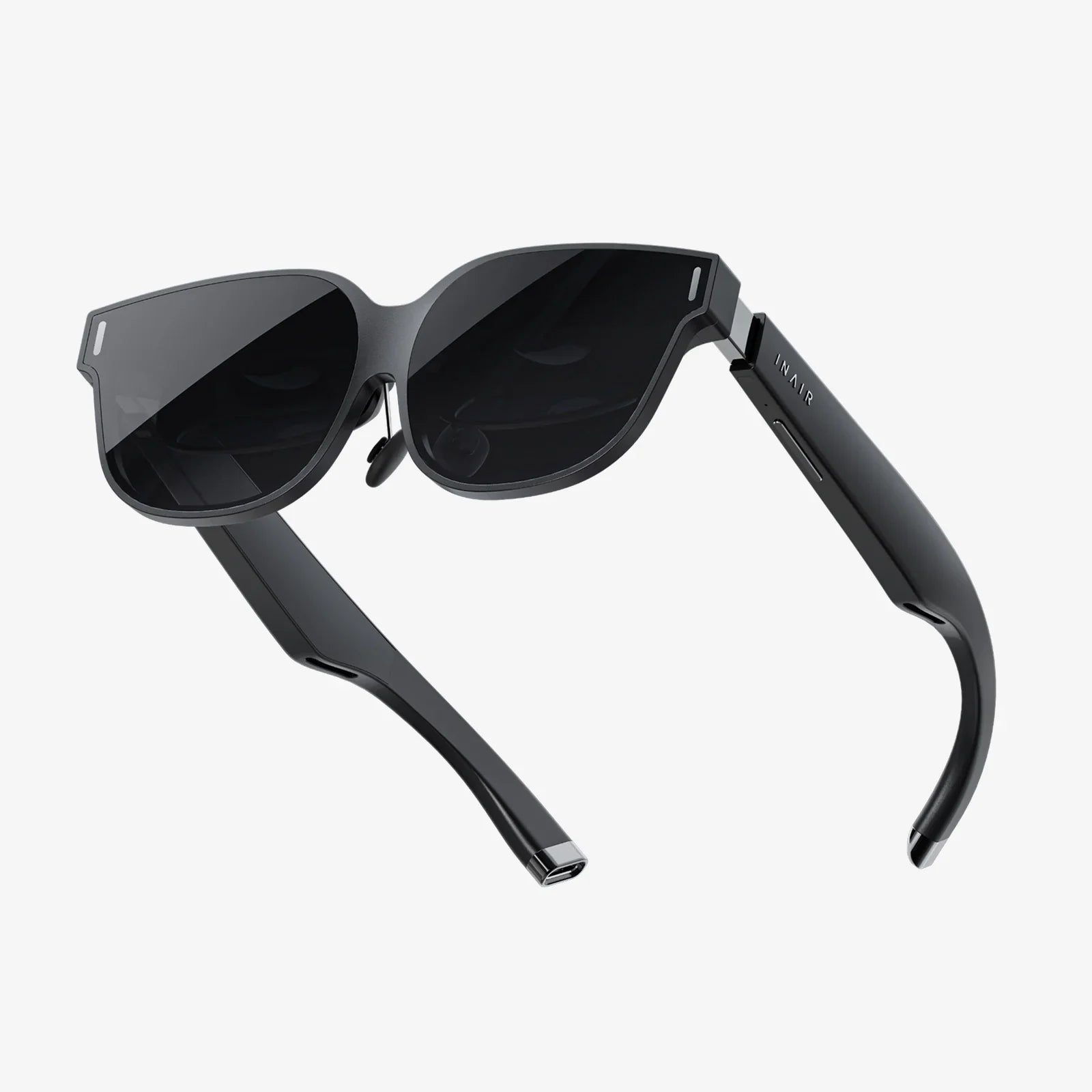
Imagine a world where your glasses translate foreign street signs in real-time, your ring monitors your deepest health metrics, and your clothing is a responsive interface to a digital universe. This isn't a glimpse into a distant sci-fi future; it's the tangible present and near-future promised by wearable computers. But to truly appreciate the sleek devices on our wrists today, we must embark on an extraordinary journey back through time, tracing a path of brilliant, often eccentric, innovation that spans centuries. The history of wearable computers is a story of humanity's relentless drive to integrate technology intimately into the human experience, to augment our abilities, and to bridge the gap between the physical and digital worlds. It’s a narrative filled with unexpected origins, spectacular failures, and breakthroughs that have fundamentally reshaped how we live, work, and connect.
The Earliest Sparks: Pre-20th Century Conceptualizations
While the term "wearable computer" feels resolutely modern, the foundational concept—a portable device that aids in computation—has astonishingly deep roots. Long before silicon and software, there were mechanical marvels worn on the body.
The most iconic, and perhaps earliest, example is the abacus ring. Dating back to the Qing Dynasty in China, these were intricate rings worn on the finger, featuring tiny beads strung on wires, allowing the wearer to perform calculations discreetly. This was a personal, portable calculating tool, the absolute pinnacle of wearable tech for its era. Similarly, the pocket watch, emerging in the 16th century, represented a monumental shift. It liberated timekeeping from stationary clocks on walls and towers, personalizing it and attaching it to the body. It was a wearable instrument that provided a constant, glanceable stream of data—the core functionality of any modern smartwatch.
These inventions established the primal ethos of wearables: portability, immediacy, and personal augmentation. They set the stage for the explosion of ideas that would follow once electricity entered the picture.
The 20th Century: From Fiction to Function
The 20th century provided the fertile ground from which modern wearable computing would sprout. Two parallel tracks developed: one in the realm of imaginative fiction, and the other in pragmatic, albeit clunky, invention.
The Fictional Blueprint
Science fiction authors have long served as the unacknowledged prophets of technology. Decades before the engineering was feasible, they envisioned a world fused with technology. In 1948, Edward O. Thorp and Claude Shannon conceived a wearable computer, but it was fictionalized narratives that captured the public's imagination. Perhaps the most famous early example is the wrist-worn two-way television communicator from the comic strip Dick Tracy, first appearing in 1946. This device perfectly captured the dream of wearable communication. Later, authors like Robert A. Heinlein described characters using augmented reality glasses, and Douglas Adams wrote of a "Sub-Etha Sens-O-Matic" in The Hitchhiker's Guide to the Galaxy—a book that itself was a fictional tablet computer. These stories weren't just entertainment; they were blueprints that inspired a generation of engineers and inventors.
The First Working Models: A Clunky Revolution
While fiction dreamed, inventors built. The 1960s witnessed the creation of what are widely considered the first true wearable computers.
In 1961, Edward Thorp and Claude Shannon (now moving from fiction to reality) actually built a shoe-mounted computer designed to predict roulette wheels. It was a timing device with toe-operated switches, representing a monumental leap: a computer worn on the body, interacting with the environment to gain an advantage. Around the same time, the world of espionage developed miniature cameras concealed in ties, buttons, and glasses—wearables designed for covert data capture.
However, the undisputed landmark in this era was the invention of the head-mounted display (HMD). In 1968, computer scientist Ivan Sutherland, with his student Bob Sproull, created The Sword of Damocles. This was an apparatus so heavy it had to be suspended from the ceiling. It presented the wearer with simple wireframe graphics that overlaid their physical surroundings. It was the world's first functional Augmented Reality (AR) system. While impractical, it was profoundly prophetic, establishing the core paradigm of computer-generated imagery enhancing the real world.
The 1970s-1980s: The Dawn of Personal Wearables
The calculator and digital watch boom of the 1970s brought microelectronics to the masses and onto their wrists. The HP-01, launched in 1977, was a marvel of its time. Marketed as a "calculator watch," it was far more: it integrated an LED display, a full keypad for calculations, a timer, a stopwatch, and even memory functions. It was a genuine, mass-produced wearable computer, encapsulating the era's ambition to miniaturize and multi-functionality.
This period also saw the rise of wearable aids for specific disabilities, such as the hearing aid, which evolved from bulky body-worn devices to more discreet behind-the-ear models, demonstrating a parallel track of practical, life-improving wearable technology.
The 1990s: A Decade of Definition and Experimentation
The 1990s were the crucible where the modern concept of wearable computing was forged. The term itself was popularized, and a clear philosophy emerged, championed by researchers at institutions like the MIT Media Lab. Figures like Steve Mann, a pioneering inventor often called the "Father of Wearable Computing," spent decades living with his own engineered eye-tap devices, streaming his life and overlaying digital information onto his vision. His work defined the six axioms of wearable computing: it must be unmonopolizing, unrestrictive, observable, controllable, attentive, and communicative.
This era was characterized by a do-it-yourself, cyberpunk aesthetic. Wearables were often cobbled together from modified helmets, laptops, and bulky displays, connected by a "rats nest" of wires. They were research projects and passion pieces, not consumer goods. Yet, they proved the profound utility of always-on, always-accessible computing for tasks like equipment repair, navigation, and communication. The 1994 ACM International Symposium on Wearable Computers (ISWC) became the premier academic venue for this burgeoning field, cementing its status as a serious discipline.
The 2000s-2010s: The Consumer Revolution and the Smartphone's Shadow
The new millennium brought a critical shift: the move from academic labs and niche applications to the consumer market. The rise of the smartphone was the single most important catalyst. It solved the most complex problems for wearables: it provided a miniaturized, powerful, and connected computing platform with mature operating systems, abundant sensors (accelerometers, gyroscopes, GPS), and a robust app ecosystem.
Suddenly, a wearable device didn't need to be a standalone supercomputer; it could be a companion—a "terminal" on the body that leveraged the smartphone's brain, a concept known as tethered computing. This led to an explosion of activity:
- Fitness Trackers: Devices like the Fitbit Ultra (2009) exploded in popularity by focusing on a single, compelling use-case: health and activity monitoring. They made wearables accessible and desirable to a mass audience.
- Smartwatches: Early attempts like the Microsoft SPOT watch were limited. The true revolution began in 2013 with the crowd-funded Pebble Smartwatch, which proved the market demand. This was followed by the Apple Watch in 2015, which brought unparalleled processing power, sleek design, and a comprehensive health focus to the category, legitimizing it for the mainstream.
- Early Smart Glasses: Google Glass, launched in 2013, was a bold and ultimately flawed attempt to bring an always-on AR display to consumers. While it failed due to high cost, limited functionality, and significant privacy concerns, it was a massive step forward in technology and a crucial learning experience for the entire industry.
This era transformed wearables from quirky gadgets into multi-billion-dollar industries focused on health, wellness, and convenience.
The Present and Future: Invisible, Intelligent, and Integrated
Today, we stand at an inflection point. The historical trajectory is clear: wearables are becoming smaller, more powerful, less obtrusive, and more specialized. The current trends point toward a future where the technology disappears into our environment and even our bodies.
- Miniaturization and New Form Factors: The watch is no longer the endpoint. We now have intelligent rings for sleep and activity tracking, smart glasses with discreet audio and displays, sensor-embedded clothing (echtronics), and smart patches for medical monitoring.
- Advanced Health Biosensing: The frontier of wearables is medical-grade health monitoring. Devices are now capable of taking electrocardiograms (ECG), measuring blood oxygen saturation (SpO2), detecting atrial fibrillation, and monitoring temperature and stress levels. The goal is a shift from reactive healthcare to proactive, predictive health management.
- Artificial Intelligence and Machine Learning: AI is the new operating system. It is the intelligence that makes sense of the vast torrents of data collected by wearable sensors. It provides personalized insights, predicts health events, and allows for more natural and contextual user interactions.
- Brain-Computer Interfaces (BCIs) and Implantables: The final frontier of wearables is moving from on the body to in the body. Companies are developing non-invasive and implantable BCIs with goals ranging from helping paralyzed individuals communicate to enhancing human cognition. This raises profound ethical questions but represents the logical culmination of the wearable computing dream.
Ethical and Social Considerations: The Price of Augmentation
The history of wearable computers is not just one of technological triumph; it is also a cautionary tale. Each step forward brings new dilemmas that society must grapple with.
- Data Privacy and Security: Wearables collect the most intimate data imaginable: our location, health, sleep patterns, and even our biometric identity. Who owns this data? How is it used? The potential for surveillance, both corporate and governmental, is unprecedented.
- The Digital Divide: As these technologies become central to health and social participation, a new form of inequality could emerge between the augmented and the non-augmented.
- Constant Connectivity and Mental Health: The "always-on" nature of wearables can lead to increased stress, anxiety, and an inability to disconnect from the digital sphere.
- Bias in Algorithms: If AI is making health recommendations, the biases embedded in its training data could lead to misdiagnosis or inadequate care for minority groups.
Navigating these challenges is as important as the technology itself. The future of wearables must be built on a foundation of strong ethical principles, transparency, and user control.
From the abacus ring to the AI-powered health monitor on your wrist, the history of wearable computers is a testament to a single, powerful idea: that our tools should not just be something we use, but something we live with. It’s a story that began with a desire to count on one's finger and is now hurtling toward a future where technology is woven into the very fabric of our clothing, our vision, and our biology. This journey reveals that the next great leap in computing won't be a faster chip or a sharper screen; it will be technology that understands us, anticipates our needs, and enhances our human experience so seamlessly that it simply feels like a part of us. The next chapter is being written not in labs alone, but on the wrists, fingers, and eyes of millions, and it promises to be the most immersive yet.
Share:
Smart Device Support: The Unseen Backbone of Our Connected Future
Wearable Comparison: The Ultimate Guide to Choosing Your Perfect Tech Companion