


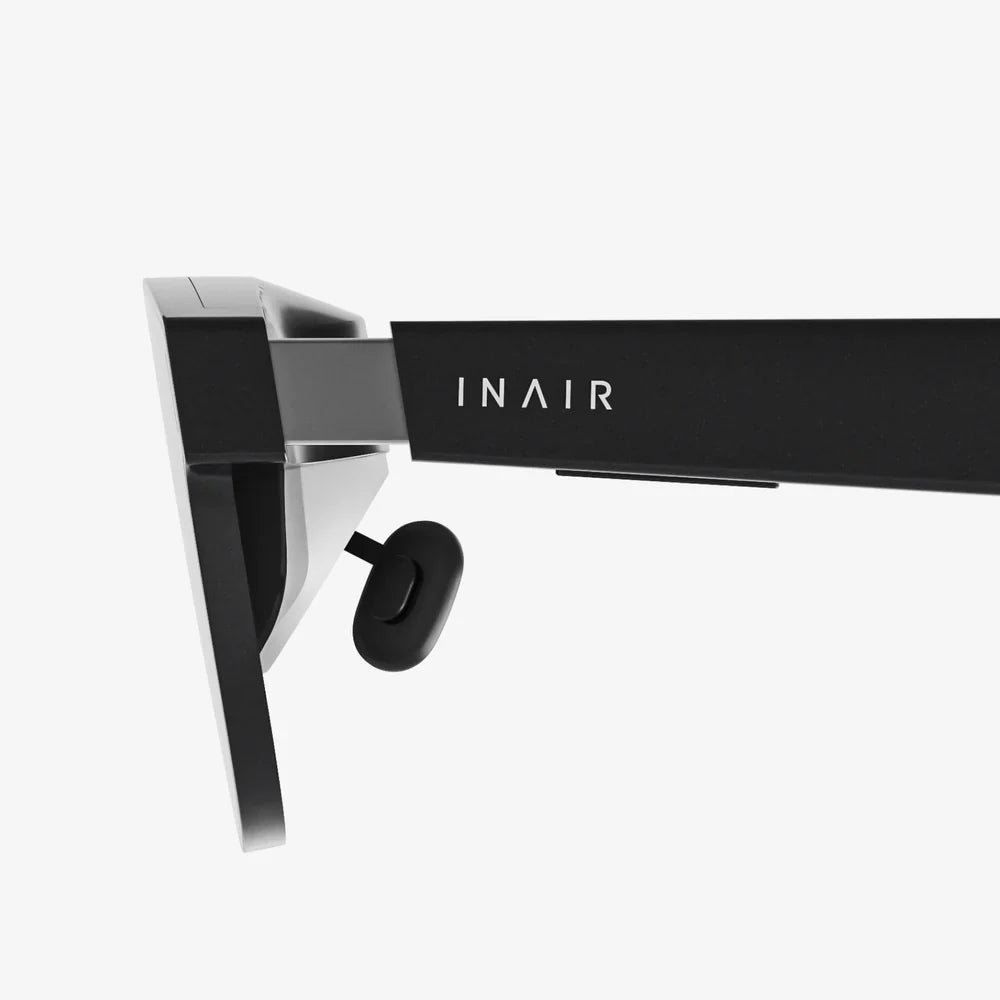
Imagine reaching into your computer screen and manipulating a complex 3D model with your bare hands, not with a mouse or a stylus. Envision a medical student dissecting a hyper-realistic, life-sized human heart that floats in mid-air before them, or an architect walking a client through the very halls of a building that exists only as a digital blueprint. This is not a scene from a science fiction film; it is the imminent future promised by the hologram PC monitor, a technological leap that will fundamentally alter our relationship with digital content and unlock dimensions of productivity, creativity, and entertainment we have only begun to dream of.
Beyond the Glass: Defining the True Hologram Display
Before delving into the mechanics, it is crucial to distinguish true holographic technology from the marketing hype that often surrounds it. The term "hologram" is frequently misapplied to various 3D effects, such as those created by Pepper's Ghost illusions used in concert performances. A genuine hologram PC monitor, however, does not merely project an image onto a flat surface that appears three-dimensional from a specific angle. Instead, it generates light fields to create volumetric images that possess depth, parallax, and a genuine three-dimensional structure. This means you can walk around the display and see the object from different perspectives, just as you would a physical object in the real world. It is a window into a contained digital reality, not a flat picture with simulated depth.
The Magic Behind the Mirage: Core Technologies at Work
The creation of such a seemingly magical display relies on several sophisticated and converging technologies. Unlike a traditional monitor that uses a single array of pixels on a flat plane, a holographic display must manipulate light with incredible precision to simulate depth.
Computational Holography and Spatial Light Modulators (SLMs)
At the heart of many advanced systems lies computational holography. This process involves using powerful algorithms to calculate the complex interference patterns required to shape a coherent light source (like a laser) into a three-dimensional image. These calculated patterns are then fed to a core component called a Spatial Light Modulator (SLM). Think of the SLM as a dynamic, high-resolution transparency film that can control the phase, amplitude, and sometimes even the color of light passing through its millions of tiny pixels. By precisely modulating the light beam according to the holographic computation, the SLM creates the constructive and destructive light interference patterns that form a volumetric image in space.
Light Field Technology and Volumetric Displays
Another prominent approach involves light field technology. While a standard display emits a single ray of light for each pixel, a light field display emits multiple rays in different directions from each point. This replicates the way light scatters from a real object, providing the viewer's eyes with the different visual cues each eye needs to perceive depth naturally, thereby creating a comfortable and realistic 3D experience without the need for specialized glasses. Some systems physically create this effect using multiple layered LCD panels or complex arrays of micro-lenses that direct light.
Separately, volumetric displays physically generate imagery within a defined volume. Some methods involve projecting onto a rapidly spinning screen or exciting particles in a plasma field to make them illuminate in mid-air. While less common for desktop use currently, the principles inform the broader field of holographic visualization.
The Immense Computational Burden
It is impossible to overstate the computational power required for real-time holography. Calculating the light diffraction patterns for a complex, dynamic 3D scene at refresh rates high enough to avoid lag or nausea is a task that brings even the most powerful conventional processors to their knees. This is one of the primary reasons this technology has remained in labs for so long. The recent advent of specialized AI accelerators and dedicated holographic processing units (HPUs) is proving to be a game-changer. These chips are designed specifically for the parallel processing demands of holographic algorithms, making real-time, interactive holography finally feasible.
A Universe of Applications: More Than Just Sci-Fi
The value of a hologram PC monitor extends far beyond dazzling visuals. Its potential to revolutionize entire industries is profound.
Revolutionizing Design and Engineering
For CAD designers, engineers, and architects, a hologram monitor is the ultimate tool. Instead of painstakingly rotating a 3D model on a 2D screen to understand a complex assembly, they can simply reach in and manipulate the full-scale hologram. They can inspect internal components by digitally "slicing" through the model, identify interference fits intuitively, and collaborate with colleagues around a shared 3D prototype as if it were physically present. This drastically reduces design iteration times and minimizes costly errors before manufacturing even begins.
Transforming Medicine and Bioscience
The medical field stands to benefit enormously. Surgeons can plan complex procedures by interacting with a precise hologram of a patient's anatomy derived from CT or MRI scans, practicing their approach and anticipating challenges. Medical students can move beyond textbooks and cadavers to study detailed, interactive holograms of organs, muscular systems, and skeletal structures, gaining an unparalleled understanding of the human body. Pharmaceutical researchers could visualize and manipulate complex protein structures and molecular interactions in 3D space, accelerating drug discovery.
Supercharging Education and Training
Education becomes an immersive experience. History students can explore ancient Roman settlements in detail, astronomy students can navigate the solar system, and chemistry students can assemble and observe molecular reactions from within the atomic landscape. For vocational training, mechanics can learn the intricacies of an engine, and electricians can trace the wiring of a building system in a safe, virtual, yet tangibly real environment.
Redefining Entertainment and Social Connection
Entertainment will be utterly transformed. Imagine strategy games where the battlefield unfolds across your desk, or role-playing games where characters and monsters appear in your room. Telepresence and remote work will take on a new meaning; video calls will be replaced by realistic, life-sized holograms of participants, creating a powerful sense of shared presence and making geographical separation nearly irrelevant for collaboration.
Navigating the Challenges: The Road to Your Desk
Despite the exciting progress, significant hurdles remain before hologram PC monitors become a commonplace accessory.
- Resolution and Fidelity: Achieving the pixel density and brightness necessary for photorealistic holograms that are indistinguishable from real objects is still a monumental technical challenge. Current prototypes may suffer from issues like speckle noise or limited viewing angles.
- Cost and Accessibility: The exotic components, from high-powered lasers to advanced SLMs and custom silicon, make early-generation devices prohibitively expensive for all but specialized enterprise and research applications.
- Content Ecosystem: A new medium requires a new library of content. Software and operating systems will need to be entirely reimagined to support 3D interface design and holographic application development. Widespread adoption depends on a robust ecosystem of developers creating compelling experiences.
- Human Factors: Prolonged use must be comfortable. Issues like vergence-accommodation conflict—where your eyes struggle to focus on a seemingly solid image that is actually projected on a single plane—can cause eye strain and must be solved for truly immersive experiences.
The Dawn of a New Visual Era
The development of the hologram PC monitor is not merely an incremental upgrade like moving from HD to 4K. It is a paradigm shift as significant as the transition from the command line to the graphical user interface. It promises to dissolve the final barrier between the digital and the physical, turning our desks into portals and our ideas into tangible forms. We are standing at the precipice of this new era. The foundational technologies are advancing at a breakneck pace, moving from research laboratories into development kits and soon, into the consumer market. The two-dimensional screen has served us well for decades, but its reign is nearing its end. Prepare to reach through the glass and step into a world where your digital creations are no longer confined to a flat pane but can live, breathe, and interact in the space around you.
Share:
Best Virtual Game System: The Ultimate Portal to Digital Realms
VR Information: The Next Frontier in Data Interaction and Immersive Understanding