


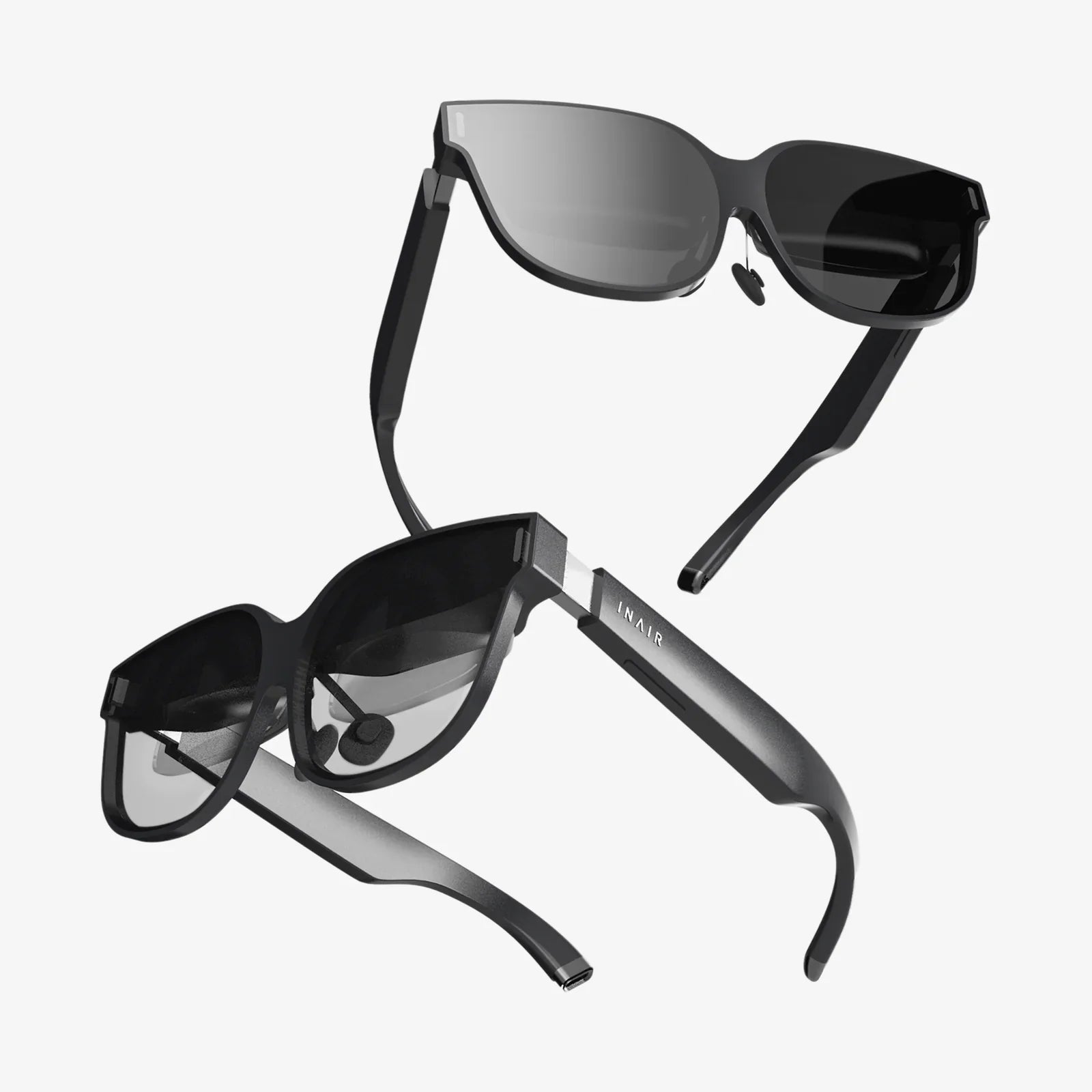
Imagine not just reading a report on climate change, but standing within a swirling, visual representation of global weather patterns, watching ice caps recede in real-time, and reaching out to touch a data point that reveals the atmospheric carbon levels from a century ago. This is no longer the realm of science fiction; it is the emerging reality of VR information, a paradigm shift that is set to redefine our relationship with knowledge itself. We are on the cusp of moving from passively consuming information on flat screens to actively inhabiting it, engaging with data through our entire sensory being. This transformation promises to unlock deeper understanding, foster unparalleled empathy, and solve complex problems in ways we are only beginning to imagine.
From Abstraction to Experience: The Core of VR Information
For centuries, humanity has relied on abstract symbols—words, numbers, charts, and graphs—to encode and transmit information. While powerful, these abstractions require significant cognitive effort to decode and contextualize. A spreadsheet full of sales figures tells a story, but it demands that the reader translate rows and columns into mental models of market trends and consumer behavior.
VR information shatters this abstraction. It leverages the human brain's innate and highly efficient capacity for spatial reasoning and sensory processing. Instead of telling you that a machine component is likely to fail under specific stress conditions, a VR information system can place you inside a fully rendered, interactive model of the component. You can visually see the stress fractures propagate, hear the simulated creaks and groans of the material, and intuitively understand the point of failure through direct experience. This shift from representation to simulation is profound. Knowledge becomes less about memorization and more about embodied understanding.
The Architectural Pillars of Immersive Data
The construction of meaningful VR information environments rests on several key technological pillars, each contributing to the sense of immersion and utility.
Data Spatialization
This is the foundational principle: placing data in a three-dimensional space. Complex multivariate datasets can be mapped onto visual and auditory properties within a virtual world. A financial analyst could walk through a "forest" where the height of trees represents a company's revenue, the thickness of the trunk its market capitalization, and the color of the leaves its year-over-year growth, allowing for the instantaneous spotting of trends and outliers that might be missed in a 2D scatter plot.
Embodied Interaction
VR information is not a spectator sport. It is inherently interactive. Using motion controllers, hand-tracking, and eventually, neural interfaces, users can manipulate data with natural gestures. They can grab a cluster of data points and pull them apart for closer inspection, scale a historical timeline to the size of a city block and walk through it, or use a virtual tool to slice through a geological data model to reveal stratigraphic layers beneath the earth's surface. This kinaesthetic learning—learning by doing—cements understanding far more effectively than passive observation.
Multi-Sensory Feedback
True immersion engages more than just sight. The next frontier of VR information involves sophisticated haptic feedback systems that allow users to "feel" the texture of data—the resistance of a strong magnetic field or the vibration of a high-frequency trading signal. Spatialized 3D audio can be used to sonify data, allowing a researcher to hear the correlation between variables, with different relationships producing distinct harmonic or dissonant sounds. By engaging multiple senses simultaneously, VR information creates rich, memorable, and deeply contextual learning experiences.
Revolutionizing Industries Through Immersive Insight
The applications for VR information are vast and cross-disciplinary, offering transformative potential in nearly every field of human endeavor.
Scientific Research and Discovery
Scientists are using VR to step inside their data. Molecular biologists can manipulate complex protein structures, folding and unfolding them to understand drug interactions. Astrophysicists can traverse vast celestial maps of telescope data, navigating the cosmos and identifying gravitational lensing effects with a wave of the hand. Archaeologists can reconstruct ancient sites from LiDAR scan data and literally walk through streets that vanished millennia ago, gaining new perspectives on urban planning and social organization. VR information turns data analysis into an exploratory adventure, accelerating the pace of discovery.
Medicine and Healthcare
In medicine, VR is moving beyond surgical training to become a core tool for diagnosis and patient communication. Radiologists can explore MRI or CT scan data as a fully 3D, interactive model of a patient's anatomy, peeling away layers of tissue to pinpoint the exact location and size of a tumor with unprecedented precision. This immersive review can lead to earlier and more accurate diagnoses. Furthermore, doctors can use these models to explain complex conditions and procedures to patients, transforming abstract medical jargon into a tangible, visual journey through their own body, thereby reducing anxiety and improving informed consent.
Engineering and Architecture
The fields of design and engineering are being revolutionized. Architects and their clients can don a headset to walk through a building long before the foundation is poured, experiencing the flow of space, the play of light at different times of day, and identifying potential design flaws that would be invisible on a blueprint. Engineers can immerse themselves in simulations of fluid dynamics, structural stress, or complex assembly lines, experimenting with solutions in a risk-free virtual environment. This application of VR information saves immense amounts of time and resources while fostering more innovative and human-centric design.
Education and Training
This is perhaps the most promising application. VR information creates the ultimate classroom without walls. History students can witness the signing of a pivotal treaty not as a paragraph in a textbook, but as an avatars in the room, absorbing the tension and atmosphere. Apprentice mechanics can practice disassembling a complex engine, with each part labeled and its function explained in context. Corporate trainees can navigate hyper-realistic simulations of difficult conversations or high-pressure crisis scenarios. The information is not learned; it is lived, leading to drastically improved knowledge retention and skill acquisition.
Navigating the Challenges on the Horizon
Despite its immense potential, the path to widespread adoption of VR information is not without significant obstacles.
The issue of data visualization literacy remains. Just as one must learn to read a graph, users will need to develop new literacies to navigate and interpret immersive data landscapes effectively. Misinterpretation in a 3D space could lead to flawed conclusions. Furthermore, creating these detailed and accurate virtual environments is currently a resource-intensive process, requiring specialized skills in 3D modeling, data science, and software development. The computational power needed to render complex data in real-time is also substantial, though this barrier is rapidly receding with advancements in processing and cloud-based rendering.
Perhaps the most critical challenges are ethical. Immersive information is powerfully persuasive. The creator of a VR experience holds immense power to frame a narrative and influence the user's perception by choosing what to highlight, what to omit, and how to represent abstract concepts. This raises serious concerns about bias, manipulation, and the creation of persuasive propaganda experiences that feel objectively "true" because they are immersive. Establishing ethical guidelines for the creation and curation of VR information will be paramount to ensuring it serves as a tool for enlightenment, not deception.
The Future is an Environment to be Inhabited
Looking ahead, the evolution of VR information points toward a future where the distinction between the digital and physical worlds becomes increasingly blurred. We will not "use" a computer to access information; we will step into informational landscapes that are persistent, collaborative, and constantly updated with live data streams. The concept of a "dashboard" will be replaced by a "situation room"—a shared virtual space where teams from across the globe can gather to analyze real-time logistics networks, respond to unfolding natural disasters, or model the potential outcomes of economic policy.
Advancements in artificial intelligence will act as a force multiplier, with AI agents acting as guides and oracles within these data spaces. You could simply ask, "Show me the most unexpected correlation in this dataset," and an AI avatar would instantly highlight a previously hidden relationship. Brain-computer interfaces, though further out, could eventually allow us to query and manipulate data through thought alone, making the interaction as natural as thinking itself.
The journey of information is one of increasing intimacy. We moved from oral traditions to written scrolls, from printed books to dynamic digital screens. Each step brought the world's knowledge closer to us. VR information represents the next logical, yet revolutionary, step: instead of bringing information to us, it brings us into the information. It promises a future where we don't just know about things—we understand them, from the inside out. The screen that has long been our window to the digital universe is finally dissolving, and we are stepping through, ready to walk among the data and grasp the very fabric of knowledge with our own hands.
Share:
Hologram PC Monitor: The Future of Immersive Computing is Here
Best and Cheapest VR: A Guide to Affordable Immersion