


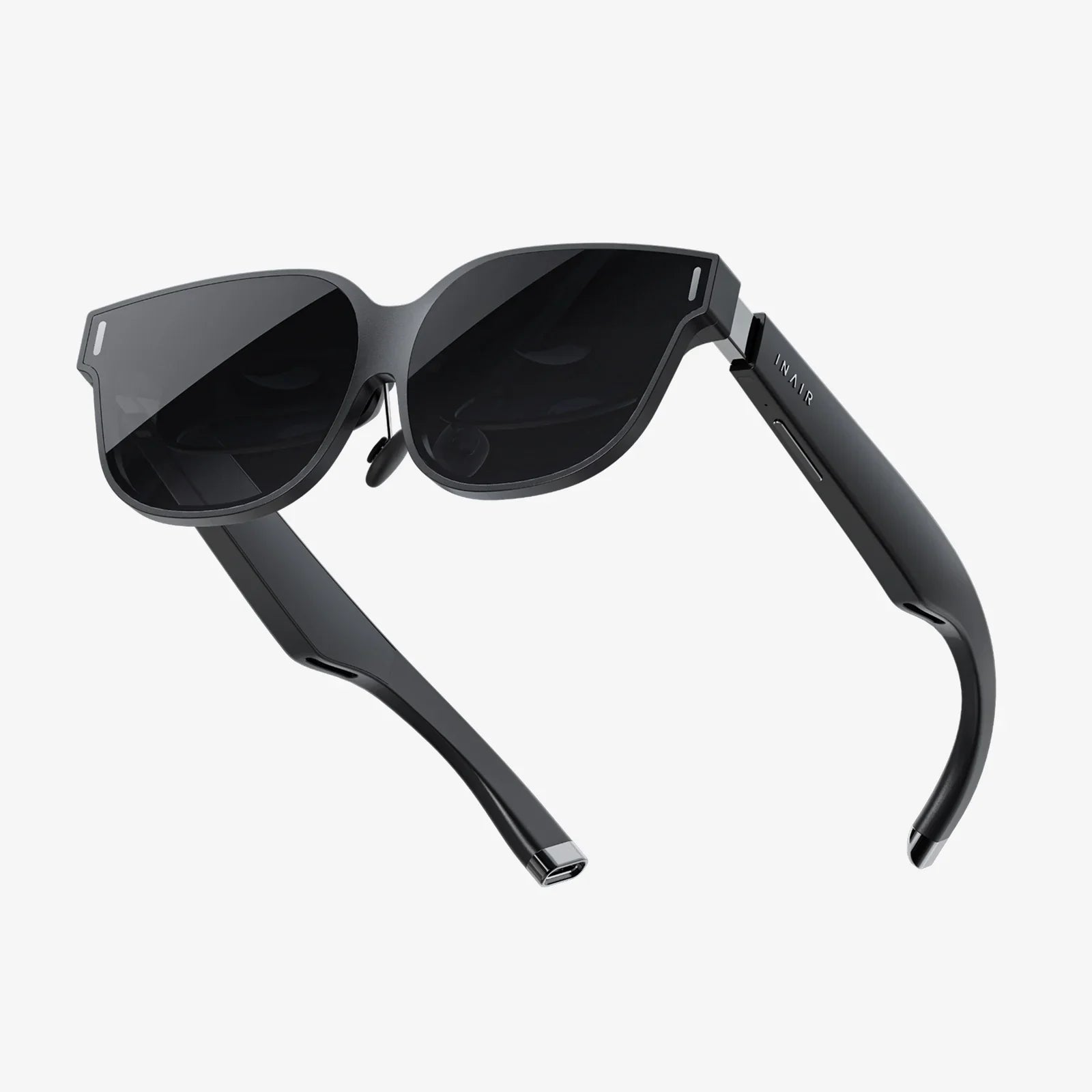
Imagine a world where your sunglasses do more than shield your eyes from the sun; they project a vibrant, interactive digital universe onto the lens of reality itself. This is not a scene from a science fiction film but the burgeoning reality offered by hologram sunglasses, a technological marvel poised to revolutionize how we perceive and interact with the world around us. This convergence of advanced optics, wearable computing, and augmented reality represents one of the most significant leaps in personal technology, offering a glimpse into a future where the digital and physical are seamlessly intertwined.
The Architectural Marvel: How Hologram Optics Function
At the heart of this revolution lies a sophisticated optical system that feels nothing short of magical. Unlike traditional displays that you look at, holographic waveguide technology projects images you look through. Tiny projectors, often embedded in the temples of the sunglasses, beam light onto a specially engineered combiner lens. This lens, a masterpiece of nano-scale etching and coating, acts as a guide, bending the light and projecting a full-color, high-resolution holographic image directly into the user's field of vision.
The genius of this system is its ability to maintain a thin, lightweight form factor indistinguishable from high-end fashion sunglasses. The complex machinery is miniaturized and seamlessly integrated, ensuring comfort for all-day wear. This optical engine allows digital information—from navigation arrows and messages to intricate 3D models—to appear as if it is floating in the real world, anchored to physical objects and environments with stunning precision.
Beyond Augmented Reality: A New Layer of Existence
While often grouped under the broad umbrella of Augmented Reality (AR), hologram sunglasses represent a distinct and more immersive evolution. Traditional AR can sometimes feel like a flat overlay, a digital placard stuck onto a live video feed. Holographic displays, however, achieve true optical fusion. The projected imagery occupies true stereoscopic depth, meaning it has volume and perspective that shifts naturally as the user moves their head, just like a real object. This creates a profoundly more convincing and intuitive experience, effectively blending the synthetic and the authentic into a single, coherent perception.
This technology effectively creates a spatial computing interface, transforming the entire world into a potential desktop. Instead of looking down at a screen, users interact with applications and data that exist within their environment. This paradigm shift promises to free us from the confines of rectangles of glass and metal, offering a more natural and human-centric way of computing.
Everyday Applications: Transforming the Mundane
The potential applications for this technology extend far beyond novelty, promising to enhance nearly every facet of daily life.
- Navigation Reimagined: Forget glancing at a phone map. With hologram sunglasses, glowing directional arrows and pathways are painted directly onto the street in front of you, guiding you turn-by-turn through a complex cityscape. Points of interest can be highlighted with floating tags, offering instant information about a restaurant's menu or a building's history.
- Contextual Information On-Demand: Imagine looking at a complex piece of machinery and seeing animated repair instructions overlaid onto its components. Or visiting a foreign country and seeing real-time translations of street signs and menus appear right next to the text. The world becomes instantly more accessible and understandable.
- Revolutionizing Social Connection: Communication becomes spatial. A video call could manifest as a life-sized, holographic representation of the person you're speaking with, sitting across from you at the café table. Gestures and facial expressions are preserved, creating a sense of presence that flat screens cannot match.
- The Ultimate Personal Assistant: Your schedule, notifications, and reminders are no longer trapped in your pocket. They float discreetly in your periphery, only expanding to full clarity when you need them, allowing you to stay informed without ever being disconnected from your surroundings.
Professional and Creative Frontiers
The impact on specialized fields is equally profound. Architects and engineers could walk through full-scale, holographic models of their designs, making adjustments in real-time. Surgeons could have vital patient statistics and 3D anatomical guides visible during complex procedures without ever looking away from the operating table. For artists and designers, these sunglasses could become the ultimate creative canvas, allowing them to sculpt and paint in three dimensions within their physical studio space.
Navigating the Challenges: Privacy, Security, and Society
Such a powerful technology does not arrive without significant challenges and ethical considerations. The ability to record, analyze, and display information about everything and everyone in view raises monumental privacy concerns. The concept of public space is fundamentally altered when one can access a digital dossier on a stranger simply by looking at them. Robust digital ethics frameworks, clear regulations, and built-in privacy features—like obvious recording indicators and user-controlled data permissions—will be non-negotiable for widespread adoption.
Furthermore, the potential for digital distraction is immense. If not designed with extreme care, these devices could create a society more engrossed in digital overlays than the rich, complex reality they are meant to enhance. The goal must be augmentation, not replacement. There is also the risk of creating a new digital divide, between those who can afford this enhanced perception of reality and those who cannot.
The Invisible Revolution: Design and Fashion
For this technology to become truly mainstream, it cannot look like a piece of clunky laboratory equipment. It must become a desirable fashion accessory. The most successful iterations will be designed in collaboration with leading fashion houses, offering a wide range of styles, materials, and customizations. The technology must recede into the background, becoming invisible until the moment it is needed, allowing the wearer to express their personal style without compromise.
The Road Ahead: From Prototype to Ubiquity
We are currently at the dawn of this new era. Early versions of this technology are demonstrating the incredible potential, but hurdles remain in perfecting field of view, brightness in direct sunlight, battery life, and computational power. The next five to ten years will see rapid iteration, with each generation becoming lighter, more powerful, and more visually stunning. The true tipping point will arrive when the digital layer feels as real and immediate as the physical one, and the act of putting on a pair of sunglasses becomes synonymous with unlocking a new dimension of human experience.
The journey of personal technology has been a steady march towards greater immersion and integration, from the desktop computer to the laptop, the smartphone, and the smartwatch. Each step brought the digital world closer to our physical selves. Hologram sunglasses represent the logical, and perhaps final, step in this journey: the complete and seamless merger of the two. They promise a future not of isolated digital consumption, but of enhanced human experience, where technology empowers us to see more, understand more, and connect more deeply with the world, and with each other. The next time you reach for your sunglasses, you might just be plugging into the future.
Share:
AR Hologram The Future of Reality is Here and It's Transparent
Virtual Reality Options: A Comprehensive Guide to the Digital Frontier