


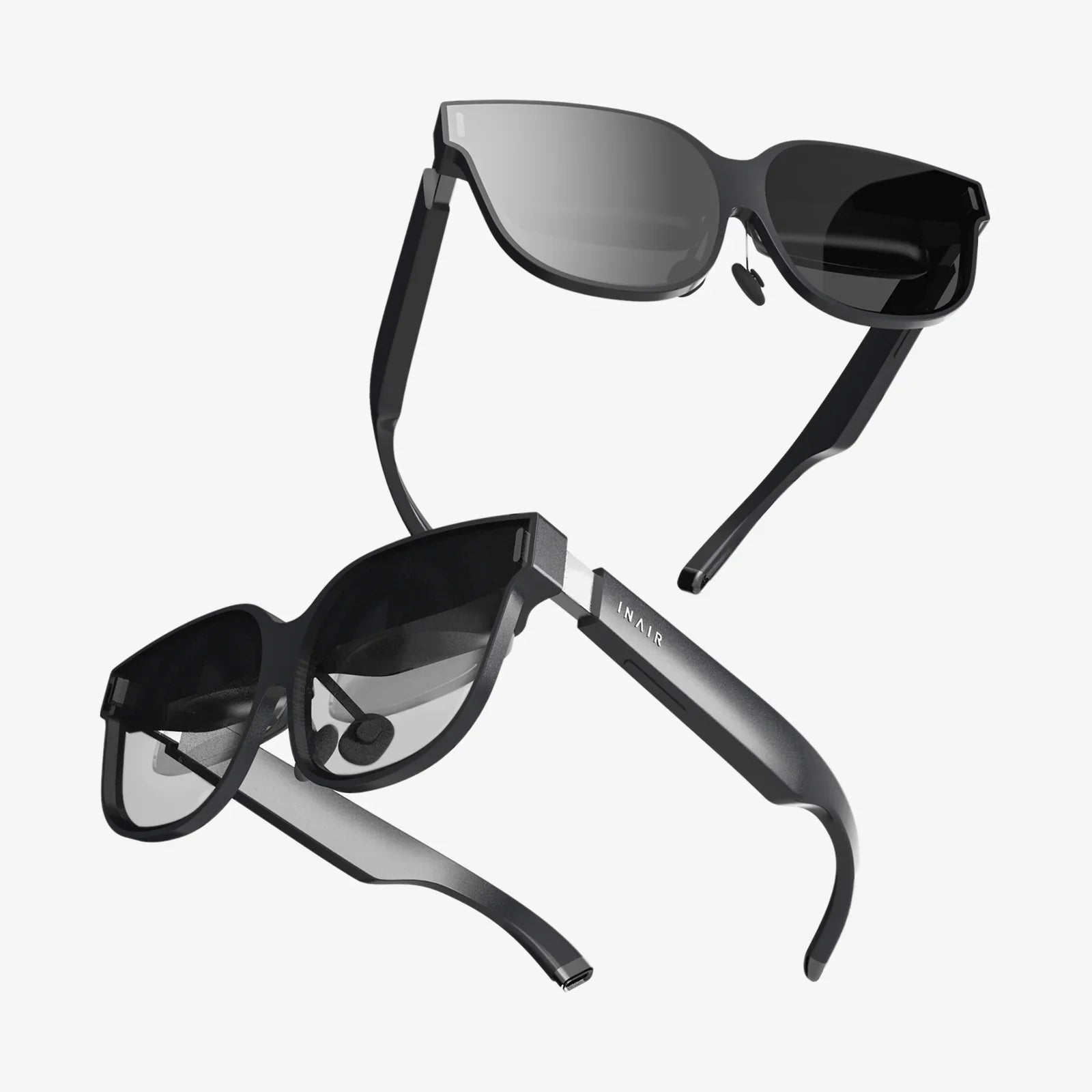
Imagine a world where your doctor examines a beating, three-dimensional human heart floating in mid-air before a complex surgery, where your car’s dashboard projects vital navigation data onto the windshield without obstructing your view, and where a product you see in a commercial can be rotated, inspected, and virtually ‘held’ from the comfort of your living room. This is not a distant science fiction fantasy; it is the imminent future being built today, and its foundation is the rapidly expanding holographic display market. The staggering growth projections for this market are not just numbers on a spreadsheet; they are a direct reflection of a global technological pivot towards immersive, intuitive, and revolutionary forms of visual communication.
Defining the Holographic Horizon: Beyond Science Fiction
Before delving into the market metrics, it is crucial to understand what constitutes a holographic display in a commercial context. True holography, which creates light-field reconstructions viewable from all angles without special glasses, remains largely in R&D labs. The current market is dominated by technologies that create autostereoscopic (glasses-free) 3D illusions and volumetric displays that project images into a physical volume, creating a convincing hologram-like effect. These technologies are the engines powering the current market growth, bridging the gap between theoretical science and commercial application.
The Numbers Speak: Quantifying a Revolution
The global holographic display market size is a testament to its disruptive potential. Valued at several billion dollars just a few years ago, consistent analysis from leading market research firms projects a compound annual growth rate (CAGR) of well over 20% for the foreseeable future. This trajectory suggests the market is on pace to multiply its value several times over within the next decade. This explosive growth is not a singular phenomenon but is distributed across various product types, technologies, and end-use industries, each contributing to the overall expansion.
Market Segmentation: The Pillars of Growth
The market's structure can be broken down into several key segments that provide a clearer picture of its dynamics and opportunities.
By Component
- Displays: This includes the core hardware units, such as light modulators, projection screens, and volumetric display cases. This segment commands the largest share of the market revenue, driven by high hardware costs and continuous innovation.
- Software: The digital backbone, including rendering engines, content creation platforms, and SDKs for developers. As the market matures, the value of sophisticated software is becoming increasingly critical.
- Accessories and Services: This encompasses everything from mounting solutions and calibration tools to installation, maintenance, and content creation services.
By Technology
- Electro-holographic: The pinnacle of the technology, though still emerging, using techniques like computer-generated holography (CGH) with spatial light modulators (SLMs).
- Touchable Holograms: Leveraging ultrasonic or haptic feedback technologies to add a tactile dimension to holographic projections.
- Piston-based Screens: Utilizing a rapidly vibrating screen to create a persistent 3D image in a defined space.
- Laser Plasma Displays: Using focused lasers to create glowing points of plasma in mid-air, a technology that truly creates images in empty space.
By Application: Where the Market is Blooming
The true driver of the holographic display market size is its vast and growing range of applications, which are transforming entire industries.
Medical Imaging and Surgery
This is perhaps the most impactful application. Surgeons can use holographic displays to visualize complex anatomical structures from MRI and CT scans in 3D, allowing for better pre-operative planning and intra-operative guidance. Medical students can study detailed, interactive holograms of organs, leading to a deeper understanding of human anatomy. This sector is a major contributor to the market's value and is expected to see some of the highest adoption rates.
Retail and Advertising
The retail sector is leveraging holograms to create unforgettable in-store experiences. From virtual try-ons for clothes and accessories to life-size holographic models of products like furniture or electronics, brands are engaging customers in novel ways. Digital signage is being revolutionized, with 3D holographic advertisements capturing attention far more effectively than traditional 2D screens.
Automotive and Aerospace
Head-up displays (HUDs) are evolving into augmented reality HUDs, projecting vital information like speed, navigation arrows, and hazard warnings directly onto the windshield, seamlessly integrating with the driver's view of the road. This enhances safety and reduces distraction. Similarly, in aerospace, pilots and ground crews use holographic interfaces for maintenance and operational data.
Entertainment, Gaming, and Live Events
The entertainment industry is a massive growth vector. Concerts featuring 'resurrected' artists performing as holograms have already drawn massive crowds and media attention. Gaming is moving towards truly immersive 3D environments without the need for VR headsets. Museums and educational exhibits are using holograms to bring history and science to life, creating engaging and interactive learning experiences.
Industrial Design and Engineering
Engineers and designers across automotive, aerospace, and consumer goods industries use holographic prototyping to visualize and manipulate 3D models of their designs at full scale. This allows for collaborative review and identification of design flaws before committing to expensive physical prototypes, saving significant time and resources.
Key Growth Drivers: Fueling the Expansion
Several powerful forces are converging to propel the holographic display market size to new heights.
Unprecedented Investment in R&D
Significant capital is flowing into both established corporations and agile startups dedicated to overcoming the technical barriers of holography. Research is focused on increasing viewing angles, improving resolution and brightness, reducing costs, and developing more efficient content creation pipelines. This relentless innovation is directly expanding the market's capabilities and accessibility.
The Surging Demand for Augmented Reality (AR)
Holographic displays are the ultimate output device for AR, moving beyond the confines of smartphone screens or specialized headsets to integrate digital information directly into the user's environment. As enterprise and consumer applications for AR explode, the demand for advanced holographic display solutions follows suit.
Rising Consumer Expectations and Digitalization
In a world saturated with high-definition 2D content, consumers and businesses are hungry for the next level of engagement. The global push towards digital transformation across all sectors is creating fertile ground for disruptive technologies like holography that offer a clear competitive advantage through enhanced visualization and interaction.
Favorable Government Initiatives
Governments worldwide, recognizing the strategic importance of advanced display technologies for defense, healthcare, and education, are funding research initiatives and providing grants. This public-sector support is a critical catalyst for early-stage development and commercialization.
Challenges and Restraints: The Hurdles on the Path
Despite the optimistic projections, the path to a ubiquitous holographic future is not without its obstacles. These challenges represent both a restraint on current growth and an opportunity for future innovation.
The High Cost of Technology
Currently, high-resolution, large-format holographic displays are prohibitively expensive for most consumers and even many small and medium-sized businesses. The cost of components like high-powered lasers and specialized optical elements remains a significant barrier to mass adoption.
Technical Limitations
Issues such as limited viewing angles, the need for controlled lighting conditions, and the high computational power required to render complex holograms in real-time are ongoing technical hurdles that researchers are working to solve.
Content Creation and Standardization
A display is useless without content. Creating high-quality 3D holographic content requires specialized skills and software, creating a chicken-and-egg problem. The lack of universal standards for content format and playback can also hinder widespread development and compatibility.
Regional Analysis: A Global Landscape
The adoption and development of holographic display technology are not uniform across the globe.
- North America: Currently holds the largest market share, driven by strong technological adoption in the U.S., particularly in defense, medical, and entertainment sectors, coupled with significant venture capital investment.
- Asia-Pacific: This region is projected to be the fastest-growing market. Countries like China, Japan, and South Korea are global powerhouses in display manufacturing and consumer electronics. Heavy government and corporate investment in R&D are positioning APAC as a future leader.
- Europe: Shows strong and steady growth, with significant applications emerging in the automotive industry for AR HUDs and in healthcare for advanced medical imaging systems.
- Rest of the World: Other regions are earlier in the adoption curve but present significant long-term opportunities as technology costs decrease and applications become more widespread.
The Future is Holographic: Beyond the Forecast
Looking beyond the current market size projections, the future of holographic displays points towards even more profound integration into daily life. We are moving towards truly glasses-free, wide-angle holographic TVs and monitors for home and office use. Holographic telepresence will make remote collaboration feel as natural as being in the same room, revolutionizing work and personal communication. As the technology miniaturizes, we can expect holographic interfaces on personal devices like smartphones and wearables. The convergence of artificial intelligence with holography will enable dynamic, interactive holograms that can respond to voice commands and gestures in real-time. The market's growth is not just about selling more units; it is about building the foundational visual layer for the next era of human-computer interaction.
The figures outlining the holographic display market size are more than mere statistics; they are a quantifiable measure of a paradigm shift in visual technology. From revolutionizing surgical outcomes to creating breathtaking new forms of art and entertainment, this technology is poised to break the two-dimensional plane that has constrained our digital lives for decades. As technical barriers crumble and innovation accelerates, the question is no longer if holographic displays will become mainstream, but how quickly they will transform everything we see and do.
Share:
Sunglasses with Camera and Speaker: The Ultimate Wearable Tech Revolutionizing How We See and Share the World
Human–Computer Interaction: The Invisible Thread Weaving Our Digital Future