


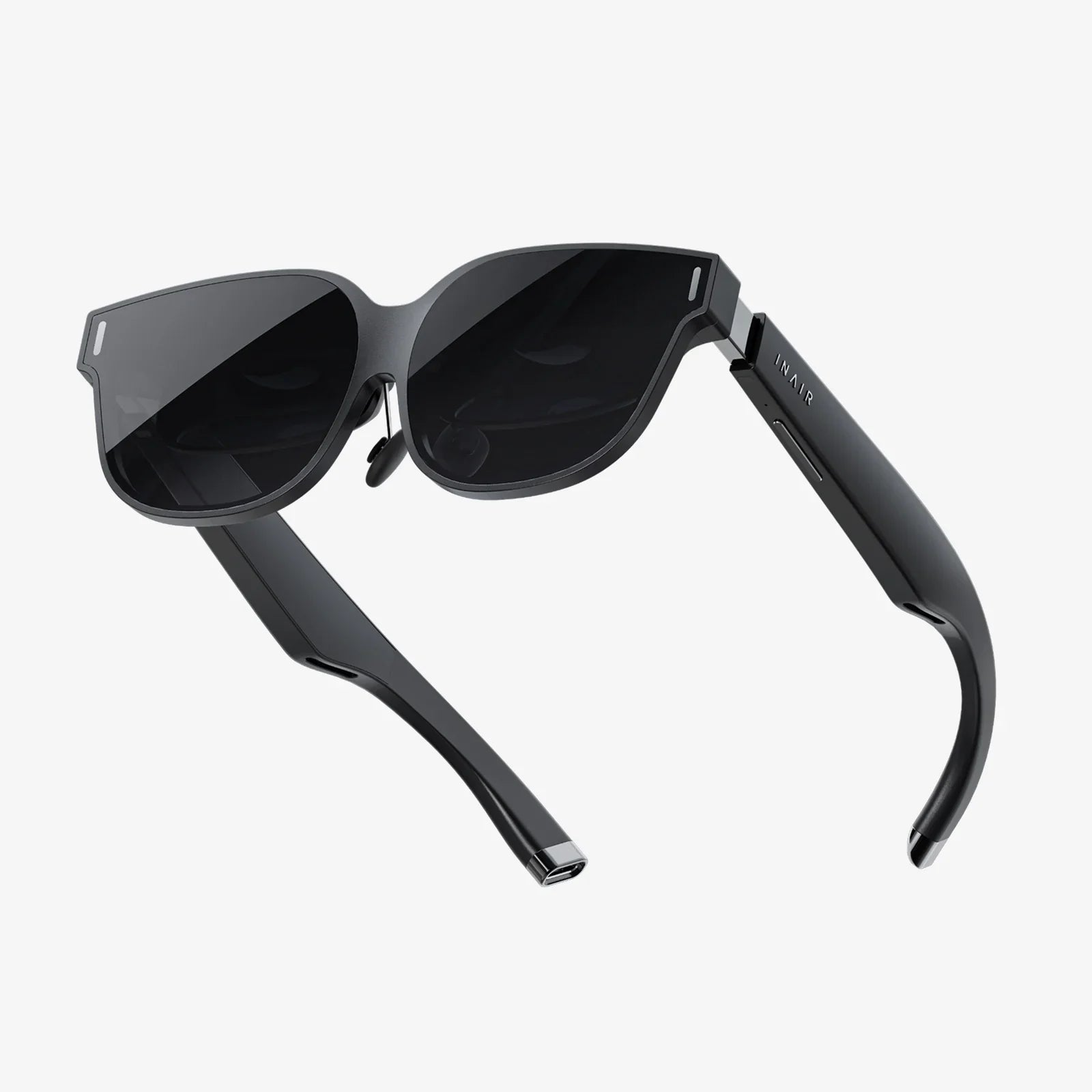
Imagine a world where your most cherished memories aren't just recalled but relived through your own eyes, where the soundtrack of your life plays in perfect sync with your perspective, and where sharing your reality is as effortless as a glance. This is no longer the realm of science fiction. The convergence of advanced optics, micro-computing, and audio engineering has birthed a new category of wearable technology: sunglasses with integrated cameras and speakers. This seamless fusion is poised to revolutionize not just how we capture our lives, but how we interact with the world and each other, blending the digital and physical into a single, stylish experience.
The Anatomy of Innovation: Deconstructing the Design
At first glance, a pair of these advanced sunglasses appears to be a sleek, modern accessory. The true marvel lies in the meticulous engineering required to pack powerful technology into a form factor designed for comfort and style. The challenge for designers is immense: maintain the lightweight, unobtrusive feel of classic sunglasses while embedding a sophisticated computer, high-resolution camera, sensitive microphones, and clear speakers.
The camera system is the centerpiece. Typically housed discreetly within the frame's browbar or the bridge, its placement is a critical balance between optimal field of view and aesthetic subtlety. These are not bulky, protruding lenses but sophisticated wide-angle or ultra-wide-angle sensors capable of capturing high-definition video and still images from the wearer's literal point of view. This first-person perspective, often called "point-of-view" or POV, is incredibly powerful, offering an immersive and authentic recording experience that handheld devices or body cams cannot replicate.
Equally impressive is the audio subsystem. Microphones, often using beamforming or noise-cancellation technology, are strategically placed to capture clear audio from the wearer and their surroundings while minimizing wind noise—a perennial challenge. The speakers represent perhaps the most delicate engineering feat. They must be small enough to fit within the slender temples yet powerful enough to deliver intelligible audio directly to the wearer's ears without significant sound leakage to those nearby. This often involves bone conduction technology or miniature directional speakers that create a private listening bubble, allowing the user to hear music, take calls, or receive audio notifications without inserting earbuds, thus maintaining awareness of their environment.
Powering all this is a compact but capable battery and processing unit, frequently integrated into slightly reinforced temple arms. Connectivity via Bluetooth and Wi-Fi is standard, enabling real-time streaming, seamless pairing with a smartphone, and easy sharing of captured content. Controls are kept intuitive, often utilizing touch-sensitive strips on the frame or simple button presses to start/stop recording, adjust volume, or activate a voice assistant.
Beyond Vanity: A Multitude of Practical Applications
While the cool factor is undeniable, the utility of camera sunglasses extends far beyond capturing stylish vacation videos for social media. Their hands-free, eyes-forward nature makes them invaluable tools across numerous professions and hobbies.
- The Adventurer's Chronicle: For cyclists, rock climbers, skiers, and runners, these devices are a game-changer. They can record their entire journey without the instability of a mounted action camera or the distraction of holding a phone, preserving the thrill of the descent or the serenity of the trail exactly as they experienced it. The integrated speakers allow for navigation prompts or a motivating playlist without compromising situational awareness.
- Journalism and Field Reporting: Reporters can conduct interviews and capture b-roll footage in a profoundly unobtrusive way. The natural, first-person perspective can create a more intimate and authentic connection with the audience, bringing them directly into the story.
- Professional and DIY Applications: Mechanics, contractors, and inspectors can document their work hands-free, creating visual records for clients, for training purposes, or for personal reference during complex tasks. A chef could record a cooking tutorial from their perspective, a gardener could document plant growth, and a musician could capture a jam session—the possibilities are endless.
- Enhanced Memory and Documentation: For anyone attending a wedding, a child's recital, a birthday party, or even a casual day out, these sunglasses offer a way to preserve memories in a more natural and participatory way than staring at a screen through a viewfinder. You remain fully engaged in the moment while simultaneously preserving it.
Navigating the Gray Areas: Privacy and Ethical Considerations
The very feature that makes camera sunglasses so powerful—their discreet nature—also places them at the center of a critical ethical and privacy debate. The ability to record audio and video without obvious indication raises legitimate concerns about consent and personal privacy.
In a public space, laws regarding recording vary significantly by region. While many places allow for video recording in public where there is no expectation of privacy, audio recording often falls under stricter wiretapping laws, typically requiring the consent of one or all parties involved. The seamless integration of these functions into a common accessory like sunglasses complicates social etiquette and legal boundaries. It becomes difficult for individuals to know when they are being recorded, challenging the norms of informed consent.
This necessitates a heightened sense of responsibility from the user. Ethical use involves being transparent about recording, especially in private settings or during sensitive conversations. Many manufacturers have attempted to address these concerns by incorporating privacy features such as recording indicator lights, though their effectiveness is debatable. Ultimately, the onus is on the wearer to use this technology respectfully and within the bounds of the law. The conversation around this technology must evolve alongside the technology itself, establishing new social contracts for a world where recording devices are increasingly hidden in plain sight.
The Sound of Style: The Audio Experience Redefined
The inclusion of speakers transforms these devices from mere recording tools into holistic wearable computers. The audio experience is fundamentally different from traditional headphones or earbuds. By not occluding the ear canal, open-ear audio technology allows ambient environmental sounds to mix with your music, podcasts, or call audio.
This is a significant advancement for safety and awareness. Runners and cyclists can enjoy their audio content while remaining alert to traffic, horns, and other potential hazards. Professionals can take hands-free calls while still being aware of their workplace. Parents can listen to a podcast while keeping an ear on their playing children. It promotes a connected yet present existence, countering the trend of noise-cancelling isolation that dominates the personal audio market.
The sound quality is tailored for clarity and speech intelligibility rather than overwhelming bass, making it perfect for navigation instructions, podcasts, and phone calls. While audiophiles seeking a immersive, room-shaking experience might look elsewhere, for on-the-go, situational-aware listening, the convenience and safety are unparalleled.
A Glimpse Into the Future: Where Do We Go From Here?
The current iteration of sunglasses with cameras and speakers is merely the first step onto a much larger technological pathway. We are witnessing the embryonic stage of true augmented reality (AR) eyewear. The logical evolution is the integration of micro-displays that overlay digital information onto the real world—think navigation arrows on the road ahead, translated subtitles floating over a conversation with someone speaking another language, or performance metrics displayed for an athlete during a workout.
Advancements in artificial intelligence will supercharge these devices. Imagine an AI assistant that not only hears your commands but also sees what you see, providing contextually relevant information. "Identify that building," "translate this menu," or "remember where I parked my car" become simple voice commands, with the results displayed in your lenses or spoken through the speakers. Battery technology, connectivity (like 5G), and processing power will continue to improve, making these features faster, more reliable, and longer-lasting.
The line between a dedicated device and a multi-functional wearable will continue to blur. The ultimate goal is a pair of glasses that serves as your phone, your camera, your personal assistant, and your gateway to a digitally-augmented reality, all while looking and feeling like a premium fashion accessory.
We stand at the precipice of a new era of human-computer interaction, one where technology doesn't demand our attention but effortlessly enhances our perception. Sunglasses with camera and speaker technology are the vanguard of this shift, offering a tantalizing preview of a future where our tools understand not just our commands, but our context, our environment, and our point of view. The way we see, hear, and share our world is about to change forever—and it all starts with a simple pair of shades.
Share:
Viture AR Glasses 4K 120Hz: The Unprecedented Immersion of High-Fidelity Augmented Reality
Holographic Display Market Size: A Deep Dive into the Future of Visual Technology