


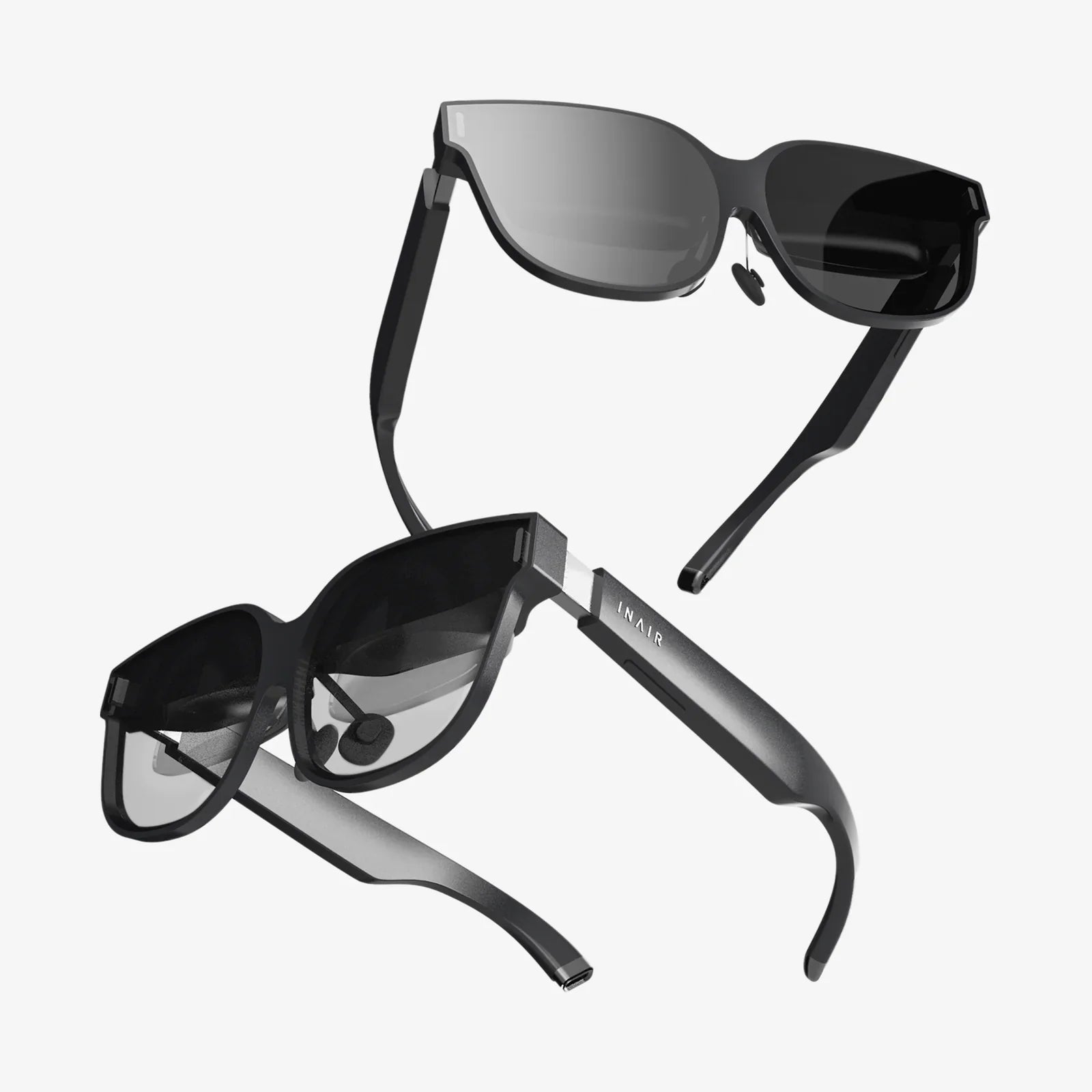
Imagine a world where your digital screen is no longer a flat, confined rectangle of glass but a shimmering, three-dimensional image floating in mid-air, visible from all angles and interactive to the touch. This is the breathtaking promise of holographic display technology, a field of innovation that is rapidly transitioning from the realm of science fiction into tangible reality, poised to fundamentally reshape our interaction with the digital universe.
The Science of Light and Illusion: How It Actually Works
At its core, holographic display technology is about the precise manipulation of light to create the perception of a three-dimensional object. Unlike a traditional 3D display, which uses stereoscopy to trick the brain into seeing depth by presenting slightly different images to each eye, true holography recreates the light field of an object. This means it replicates how light would naturally reflect off and emanate from a physical object, allowing your eyes to focus at different depths within the image, just as they would on a real object in space.
The foundational principle is interference. A hologram is recorded by illuminating a subject with a coherent light source, typically a laser. This laser light splits into two beams: the object beam, which reflects off the subject, and the reference beam, which travels directly to the recording medium. Where these two beams meet, they create an interference pattern—a complex, seemingly random series of lines and whorls that is permanently etched onto the medium (be it a photographic plate or a digital sensor). This pattern is a frozen record of the light's phase and amplitude.
To view the hologram, the recording medium is illuminated with a light source similar to the original reference beam. This illumination light interacts with the interference pattern and is diffracted, reconstructing the original object beam. It is this reconstructed wavefront that travels to the viewer's eye, perfectly mimicking the light that would have come from the original object, creating a volumetric image with true depth, parallax, and realism.
From Analog to Digital: The Evolution of a Revolution
The journey of holography began in 1947 with the pioneering work of physicist Dennis Gabor, who developed the theory while seeking to improve electron microscope resolution. For decades, the technology remained analog, reliant on lasers and physical photographic plates, making it impractical for widespread use. The digital revolution changed everything.
Digital holography involves capturing the interference pattern with a digital sensor and then using computational power to process and reconstruct the image. This shift from physical to digital is monumental. It allows for the creation of computer-generated holograms (CGH), where complex algorithms calculate the necessary interference pattern to represent a virtual 3D model, eliminating the need for a physical object to ever exist. This computational approach is the engine behind modern dynamic holographic displays, enabling moving, interactive visuals.
Key Technological Approaches in Modern Displays
Several competing and complementary methodologies are being pursued to create viable holographic displays, each with its own advantages and challenges.
Volumetric Displays
These systems create imagery within a defined volume, often by rapidly projecting light onto a moving or spinning surface or by using upconversion materials in a transparent medium. While they produce truly 3D images viewable from a wide range of angles, they often lack the fine detail and ability to occlude light (where a foreground object blocks a background object) that defines true holography.
Wavefront Reconstruction
This method aims to be the true heir to traditional holography. It uses a spatial light modulator (SLM), a device that can precisely control the phase and amplitude of light waves passing through it. By programming the SLM with the computed interference pattern of a digital object, it can modulate a coherent light source to reconstruct the desired wavefront, creating a high-fidelity holographic image. The primary challenge here is achieving the extremely high resolution and refresh rates needed for complex, full-color, real-time video.
Pepper's Ghost and Other Optical Illusions
Often mistaken for true holography, techniques like the classic "Pepper's Ghost" illusion—using angled glass or foil to reflect a hidden image—are effective for stage shows and certain AR applications. However, they produce a two-dimensional image that appears to float rather than a genuine light field with volumetric properties.
Transforming Industries: Practical Applications Today
While the consumer dream of a holographic television remains on the horizon, the technology is already making significant impacts across various professional sectors.
Medicine and Biomedicine
This is arguably one of the most impactful applications. Surgeons can now view detailed, interactive holograms of a patient's anatomy derived from CT or MRI scans, floating above the operating table. This allows for unprecedented pre-operative planning and intra-operative guidance, enabling surgeons to "see through" tissue to locate tumors or vital structures without making a single incision. Medical students can study intricate anatomical relationships in 3D, dissecting virtual cadavers without the need for a physical lab.
Engineering and Design
From automotive to aerospace, engineers are using holographic prototypes to visualize and interact with complex 3D models. Design teams can gather around a full-scale hologram of a new engine component, examining it from every angle, identifying potential interferences, and making decisions long before a physical prototype is ever built. This accelerates development cycles and drastically reduces costs.
Education and Communication
Imagine a history lesson where students can walk around a holographic reconstruction of an ancient temple, or a chemistry class where they can manipulate and combine virtual molecules. Holographic technology has the potential to turn abstract concepts into tangible, interactive experiences, fostering deeper understanding and engagement. Furthermore, telepresence systems aim to project lifelike, volumetric holograms of remote participants into a meeting room, creating a sense of shared presence that video conferencing cannot match.
The Road Ahead: Challenges and Future Visions
Despite the incredible progress, significant hurdles remain before holographic displays become ubiquitous. The primary challenge is computational. Calculating the interference patterns for complex, dynamic scenes requires an immense amount of processing power. Researchers are exploring specialized chips and new algorithms to overcome this bottleneck. Secondly, there are material and optical constraints. Creating SLMs with sufficiently high pixel density and fast response times is a major engineering feat.
Looking forward, the convergence of holography with other technologies like artificial intelligence and 5G/6G connectivity will be key. AI can optimize the computationally intensive rendering process, while high-bandwidth, low-latency networks will be essential for streaming holographic content. The ultimate goal is the creation of a holographic display that is compact, affordable, and capable of rendering photorealistic scenes in real time.
A New Dimension of Human-Computer Interaction
The advent of mature holographic display technology represents more than just a new type of screen; it signifies a paradigm shift in how we interface with information. It moves us away from the metaphor of a desktop or a page and towards a natural, spatial interaction. We will no longer point and click but reach, grab, and manipulate digital objects as we do physical ones. This will blur the line between the digital and physical worlds, giving rise to new forms of art, entertainment, and social connection that we are only beginning to imagine.
The flat screen has been the window to our digital lives for generations, but that window is about to shatter, revealing a universe of depth, dimension, and possibility waiting on the other side. The age of light is dawning, and it will change everything you thought you knew about seeing and believing.
Share:
Head Up Display HUD: The Future of Information is Right Before Your Eyes
HUD Goggles: The Future of Augmented Reality on Your Face