


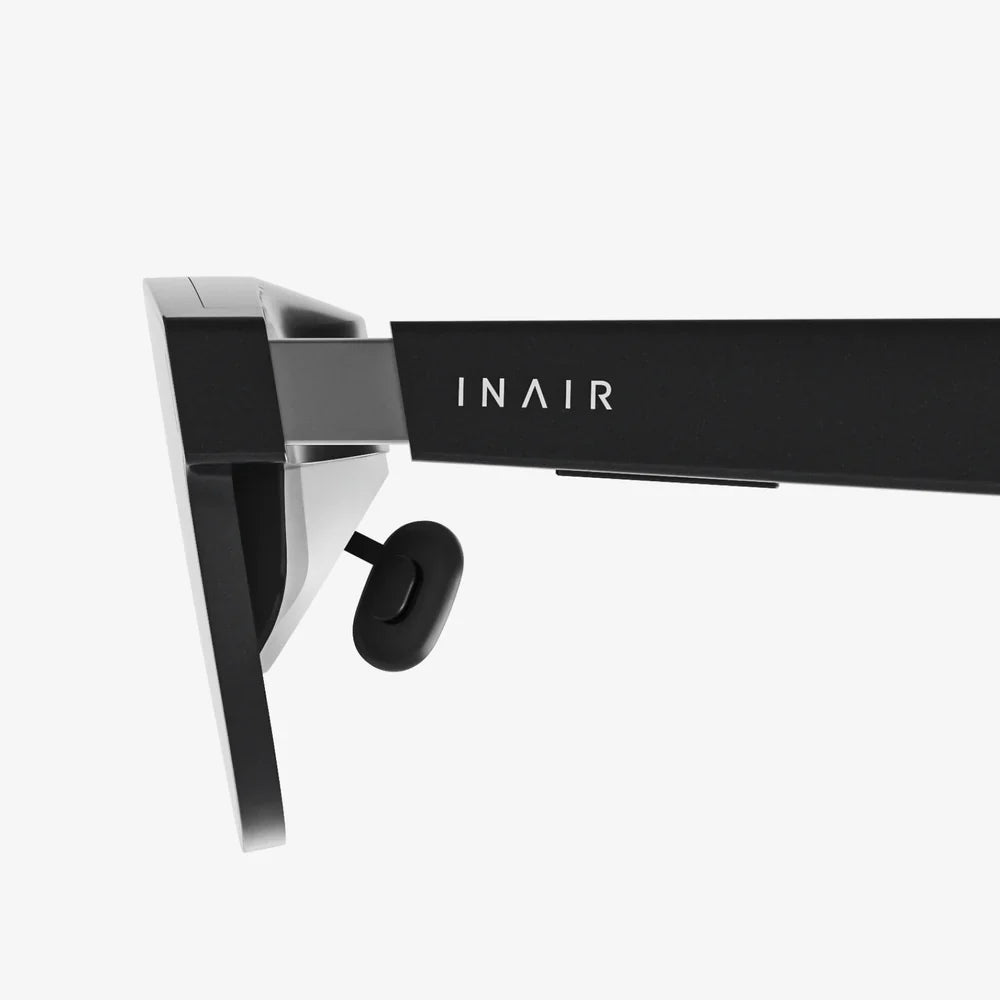
Imagine a world where information doesn't live on a screen in your hand, but floats seamlessly in your field of vision. Where navigating a foreign city, performing a complex repair, or even socializing is enhanced by a digital layer that understands and interacts with your environment. This is the promise of HUD goggles, a technology that is rapidly evolving from science fiction fantasy into a tangible, world-changing reality. The era of looking at a device is ending; the era of looking through one is about to begin.
Deconstructing the Magic: How HUD Goggles Actually Work
At its core, the technology behind HUD goggles is a symphony of advanced components working in perfect harmony to project a digital universe onto the real one. Understanding this symphony is key to appreciating their potential.
The Visual Engine: Waveguides and Microdisplays
The most critical component is the optical system, responsible for painting digital images onto your retina. Unlike a traditional screen you stare at, HUD goggles use a combination of microdisplays and waveguides. Tiny, high-resolution displays, often based on technologies like OLEDoS (Organic Light-Emitting Diode on Silicon) or LCoS (Liquid Crystal on Silicon), generate the initial image. This image is then channeled into your eye through a waveguide, a transparent piece of glass or plastic etched with microscopic patterns that essentially "pipe" the light, bending it into your field of view. This allows you to see a bright, sharp digital overlay while still maintaining a clear view of the world behind it.
The Brain and Senses: Processors and Sensors
The optical system is nothing without the sophisticated computer and sensor suite that powers it. A powerful onboard processor acts as the brain, handling immense amounts of data in real-time. This brain is fed by a constant stream of information from an array of sensors, including:
- High-Resolution Cameras: These act as the device's eyes, continuously scanning the environment for object recognition, spatial mapping, and gesture tracking.
- Inertial Measurement Units (IMUs): Comprising accelerometers, gyroscopes, and magnetometers, these track the precise movement, orientation, and rotation of your head with incredible speed and accuracy.
- Depth Sensors: Using technologies like LiDAR or structured light, these sensors create a detailed 3D map of the surrounding space, understanding the distance and dimensions of objects.
- Eye-Tracking Cameras: By monitoring the position and dilation of your pupils, the system knows exactly where you are looking, enabling intuitive control and dynamic focus rendering.
Bridging the Real and Digital: Spatial Computing
The true magic happens when these components fuse together through a process called spatial computing. The goggles don't just superimpose an image; they understand the world. They can pin a virtual monitor to your physical wall, have a digital character hide behind your real sofa, or display instructions aligned perfectly with the engine you are repairing. This contextual awareness, powered by simultaneous localization and mapping (SLAM) algorithms, is what separates true HUD goggles from simple heads-up displays, creating a persistent and interactive digital layer anchored to reality.
Beyond the Hype: Transformative Applications Reshaping Industries
While consumer entertainment is the most visible application, the profound impact of HUD goggles will be felt across numerous professional and industrial sectors, solving real-world problems and enhancing human capability.
Revolutionizing Enterprise and Manufacturing
On the factory floor, HUD goggles are becoming indispensable tools. A technician performing maintenance on a complex machine can see schematics, torque specifications, and animated instructions overlaid directly onto the components they are working on, hands-free. This reduces errors, slashes training time, and improves safety. In logistics and warehousing, workers can see optimal picking routes and inventory information visually guided to item locations, dramatically increasing efficiency. Architects and engineers can walk through full-scale 3D holograms of their designs, making changes in real-time.
The Future of Healthcare and Surgery
In medicine, the potential is staggering. A surgeon could have a patient's vital signs, ultrasound data, or pre-operative scans visible in their periphery without ever looking away from the operating field. Medical students could practice procedures on detailed holographic anatomies. Paramedics at an accident scene could receive remote guidance from a specialist who sees what they see, potentially saving lives through telemedicine.
Redefining Education and Remote Collaboration
Education can transition from passive learning to immersive exploration. Students studying astronomy could have the solar system orbiting around their classroom. History lessons could involve walking through ancient Rome. Furthermore, HUD goggles promise to erase the limitations of geography for collaboration. Instead of a flat video call, remote colleagues could appear as photorealistic holograms in your living room, able to interact with shared 3D models as if they were physically present, creating a powerful sense of "telepresence."
Enhancing Daily Life and Accessibility
For the general consumer, the applications are vast. Navigation arrows can be painted onto the road in front of you. Translation apps could subtitle a conversation in real-time, displaying the translated text near the speaker's face. For individuals with visual or hearing impairments, auditory cues could be converted into visual symbols, or speech could be transformed into clear subtitles, making the world more accessible.
The Other Side of the Lens: Navigating Challenges and Ethical Dilemmas
This powerful technology does not arrive without significant challenges and profound questions that society must address.
The Form Factor Conundrum
For mass adoption, the devices must become smaller, lighter, more comfortable, and ultimately, indistinguishable from regular eyewear. Current prototypes often struggle with battery life, field of view, and social acceptability. The race is on to create a pair of glasses that can deliver a compelling experience without being bulky or cumbersome.
The Privacy Paradox
This is arguably the most significant hurdle. HUD goggles, by their very nature, are equipped with always-on cameras and microphones constantly scanning environments. This raises critical questions: Who has access to this data? How is it stored and used? The potential for unprecedented surveillance, both by corporations and governments, is a serious concern. Clear regulations and transparent data policies will be essential to prevent a dystopian future where our every glance is tracked and monetized.
The Social and Psychological Impact
What does it mean for human interaction when people are partially immersed in a digital world during a conversation? Will it enhance our experiences or further isolate us? There are concerns about digital addiction, the blurring of lines between reality and simulation, and the potential for new forms of advertising and misinformation to be injected directly into our perception of the world. Establishing digital etiquette and understanding the long-term psychological effects will be crucial.
On the Horizon: The Next Evolution of HUD Technology
The current state of HUD goggles is merely the first step. Research is already pushing towards even more immersive and integrated experiences. The next frontier involves neural interfaces, moving beyond hand gestures and voice commands to control the digital layer with our thoughts. Imagine simply thinking about opening an app and it appearing. Furthermore, advancements in holography and varifocal displays will solve current issues with visual comfort and depth perception, making the digital objects feel utterly real and solid. The ultimate goal is a seamless, invisible interface that feels like a natural extension of our own cognition.
The path forward is not just about sharper displays or longer battery life; it's about building a future with this technology that is ethical, inclusive, and fundamentally human-centric. The goggles themselves are just the hardware; the true revolution will be shaped by the software, the developers, the policymakers, and ultimately, by us, the users. The ability to augment our reality is quite literally falling into our hands—or onto our faces—and it will challenge us to reimagine not just what we see, but who we are and how we connect with the world around us. The view through this new lens is waiting to be defined.
Share:
Holographic Display Technology: The Future of Visual Interaction is Here
Best HUD Display: The Ultimate Guide to Modern Windshield Technology