


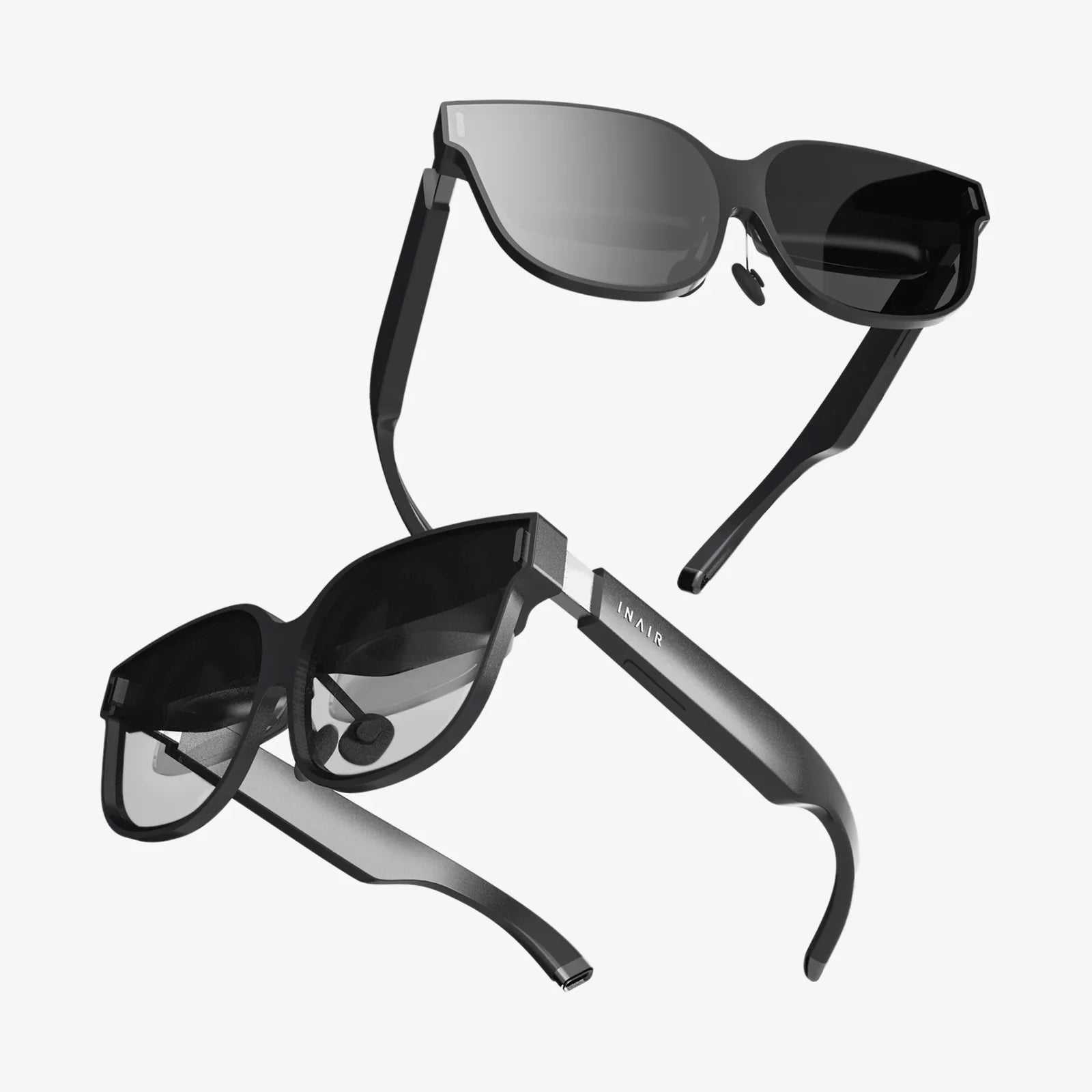
Imagine a world where your computer screen is no longer a flat, two-dimensional pane of glass but a dynamic, three-dimensional portal into your digital universe. This is the promise of the holographic PC monitor, a technology that is rapidly transitioning from the realms of science fiction into tangible reality, poised to fundamentally alter the landscape of personal computing, professional design, and interactive entertainment.
Beyond the Flat Panel: Defining the Holographic Display
To understand the holographic monitor, one must first move beyond the common misconception of the term "hologram." Popular culture often depicts holograms as ethereal, glowing projections visible from any angle, like a ghostly apparition in mid-air. While an impressive feat, the current generation of consumer-focused holographic PC monitors operates on a different, more immediate principle. These are not necessarily free-floating images but sophisticated displays that project stereoscopic, three-dimensional imagery within or just beyond a physical display unit, creating a powerful and convincing depth illusion without the need for specialized headgear or glasses.
The core technology hinges on manipulating light in a way that tricks the human brain into perceiving volume and space. Unlike a traditional monitor, which emits a uniform field of light for each pixel, a holographic display uses complex algorithms and optical systems, such as spatial light modulators or lenticular lens arrays, to direct specific light rays to each of the viewer's eyes. This recreation of the natural parallax and perspective shift that our eyes use to judge depth is what generates the breathtaking 3D effect. It's a leap far beyond the auto-stereoscopic 3D screens of the past, offering greater depth, wider viewing angles, and significantly reduced eye strain.
The Technological Engine: How It All Comes Together
The magic of a holographic display is woven from several advanced technological threads, each critical to achieving the final, cohesive three-dimensional image.
Computational Power and Rendering
At its heart, generating a holographic image is an immensely computationally intensive task. The display must calculate and control the phase, amplitude, and direction of millions of light waves in real-time to construct a stable 3D scene. This requires a staggering amount of processing power, far exceeding what is needed for traditional 2D rendering. Specialized processors and powerful graphics units are tasked with running complex algorithms that simulate the wavefronts of light, a process known as computer-generated holography (CGH). This digital cornerstone is what allows for real-time interaction with the holographic content.
Advanced Optical Systems
The computed holographic data is then translated into physical light by a key component: the spatial light modulator (SLM). Acting like a dynamic, high-resolution transparency, the SLM precisely modulates the light passing through it pixel by pixel, altering its phase or amplitude to construct the desired wavefront. This modulated light is then focused through additional optics, which can include lenses, mirrors, and sometimes even a spinning diffuser, to direct the image into a defined volume of space, making it appear solid and tangible to the viewer.
Tracking and Interaction
For a truly immersive experience, the display must be responsive. Integrated eye-tracking and sensor arrays are paramount. These sensors continuously monitor the position of the viewer's eyes and head, allowing the display system to adjust the projected imagery in real-time. This ensures the perspective and parallax remain consistent and accurate as the viewer moves, preserving the illusion of a solid 3D object. Furthermore, this tracking enables revolutionary interaction paradigms, allowing users to reach into the display volume and manipulate digital objects with their hands or styluses, blurring the line between input device and the digital world itself.
A Universe of Applications: More Than Just Novelty
The implications of holographic monitors extend far beyond dazzling visual effects. They promise to unlock new levels of efficiency, creativity, and understanding across numerous fields.
Revolutionizing Design and Engineering
For architects, engineers, and product designers, holographic monitors will be nothing short of transformative. Instead of painstakingly examining a 3D model on a 2D screen from different angles, a designer could place a holographic rendition of a new engine component or a building's architectural model right on their desk. They can walk around it, peer inside it, and deconstruct it layer by layer in a way that feels intuitive and natural. This tangible interaction drastically improves spatial understanding, facilitates quicker identification of design flaws, and enhances collaboration, as teams can gather around a single, shared 3D representation.
Transforming Medical Imaging and Education
In medicine, the ability to visualize complex anatomical structures in true 3D has profound potential. A surgeon could study a holographic reconstruction of a patient's MRI or CT scan, exploring a tumor's relationship with surrounding blood vessels and tissue from every conceivable angle before making a single incision. In medical education, students could move beyond textbooks and screens to interact with detailed holographic models of the human body, accelerating the learning process and building a more intuitive knowledge of human anatomy. This technology can turn abstract data into a palpable, interactive object for study.
Redefining Entertainment and Gaming
The entertainment industry will be utterly reshaped. Gaming will evolve from an experience viewed through a window to one that inhabits the player's physical space. Strategy games could see battlefields sprawl across a desk, while puzzle games could involve manipulating floating, intricate structures. For content creators and video editors, a holographic timeline could offer a new dimension of control, arranging clips and audio tracks in a spatial environment. While fully immersive virtual reality requires a headset, a holographic monitor offers a compelling "shared reality" experience, where digital content coexists with the real world, perfect for social games and collaborative experiences.
Enhancing Professional Workflows
From scientific data visualization to advanced financial modeling, the benefits are vast. Scientists could walk through a 3D model of a protein molecule or a cosmic nebula. Data analysts could explore complex multi-variable datasets as intricate, three-dimensional graphs, spotting correlations and outliers that would be invisible on a flat chart. The added dimension of depth provides a new canvas for representing information, unlocking patterns and insights that were previously obscured.
Navigating the Challenges: The Path to Mainstream Adoption
Despite the exciting potential, the road to ubiquitous holographic monitors is paved with significant technical and practical hurdles that innovators are actively working to overcome.
The most formidable challenge remains resolution and clarity. Achieving a pixel density high enough to render sharp, high-fidelity 3D images that rival today's high-resolution 2D displays is extremely difficult. The computational load for CGH is astronomical, requiring hardware that is currently expensive and power-hungry. Furthermore, there are inherent trade-offs between factors like display size, viewing angle, depth of field, and computational requirements. Creating a large-format display with a wide viewing angle that multiple people can use simultaneously remains a key area of research and development.
Finally, there is the challenge of software and content ecosystem. For this technology to thrive, it needs a robust library of applications and content built from the ground up to leverage its unique capabilities. This requires buy-in from developers and content creators to adopt new tools and design principles. Establishing industry-wide standards will be crucial to avoid fragmentation and ensure a smooth user experience.
The Future is Volumetric: What Lies Ahead
The evolution of the holographic PC monitor is set to follow a trajectory of rapid refinement. We can expect resolutions to climb, hardware to become more efficient and affordable, and viewing angles to expand. The line between the display's volume and our space will continue to blur, potentially leading to form factors where the screen itself becomes minimal or transparent, projecting imagery directly into our environment.
Integration with other emerging technologies will amplify its impact. Combined with artificial intelligence, the monitor could intelligently render scenes, prioritizing processing power for the areas the user is focused on. In conjunction with augmented reality wearables, the holographic display could act a stationary hub, with content seamlessly transitioning from the public screen to a personal, augmented overlay. The potential for telepresence is staggering, enabling life-like, 3D representations of remote participants to appear in a meeting room as if they were physically present.
The holographic PC monitor represents more than just a new way to view content; it signifies a fundamental shift in our relationship with digital information. It is the next logical step in the human-computer interface, moving us from passive observers to active participants within a digital space that respects and mimics our own three-dimensional world. It promises to unlock new forms of creativity, deepen our understanding of complex data, and create shared experiences that feel more real and more connected than ever before.
The glow of your next computer monitor won't just be for viewing—it will be a window to a world you can literally reach out and touch, redefining reality from the desktop up and forever changing what it means to compute, create, and connect.
Share:
Pass Through VR: The Revolutionary Technology Blending Your Reality with the Virtual World
AR Free: The Invisible Revolution Reshaping Our Digital and Physical Worlds