


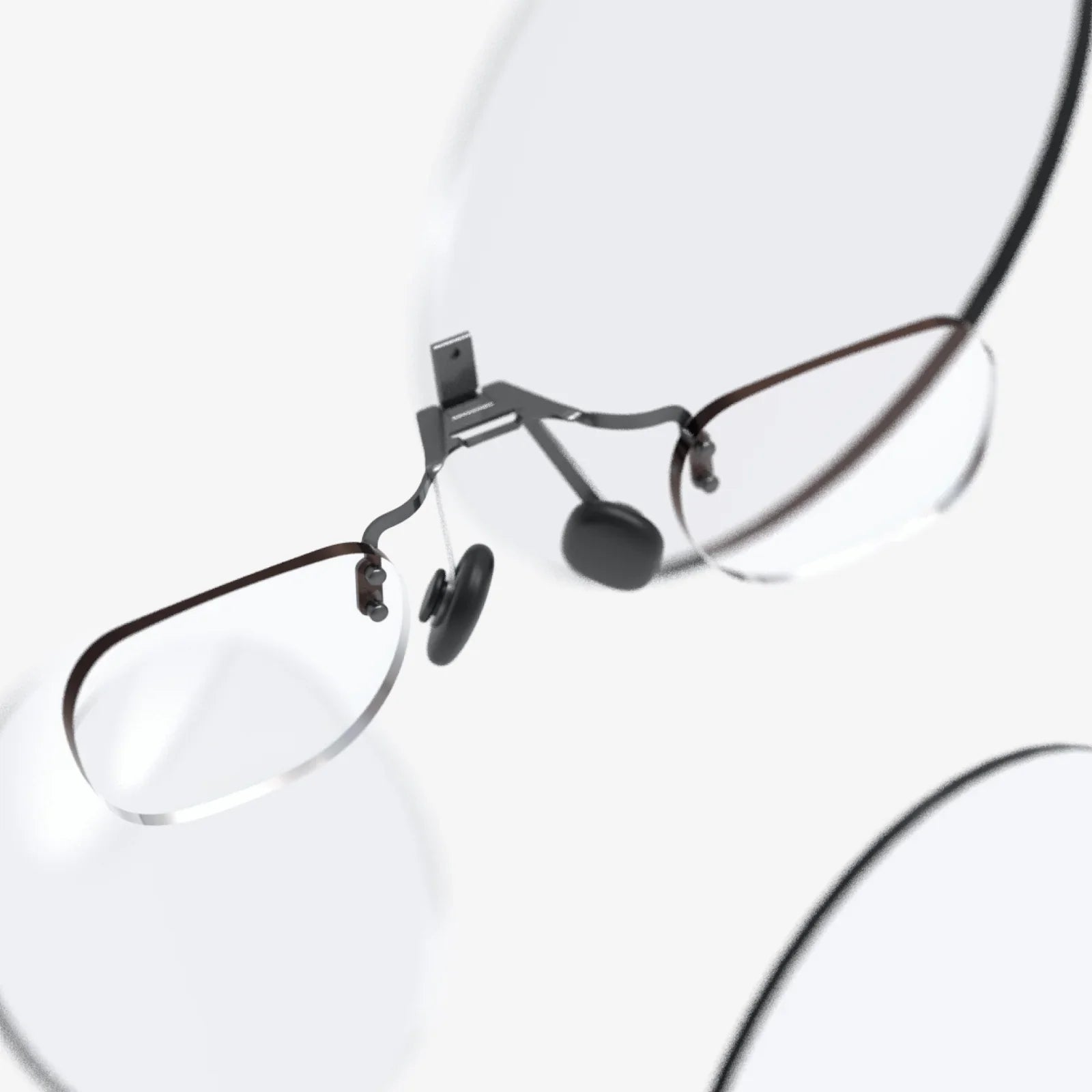
Imagine pointing your smartphone at a complex piece of machinery and watching a digital overlay instantly identify every component, complete with animated repair instructions. Envision walking through a historic city and seeing its ancient ruins reconstructed to their former glory right before your eyes, all without ever strapping on a bulky headset. This isn't a glimpse into a distant, sci-fi future; it's the reality being unlocked today by the rapid and profound emergence of AR Free technology. This movement away from proprietary, expensive hardware is democratizing augmented reality, tearing down the barriers to entry and weaving digital information directly into the fabric of our everyday lives. The revolution is here, and it requires nothing more than the device already in your pocket.
Demystifying AR Free: Beyond the Goggles
To understand the significance of AR Free, we must first distinguish it from its more famous cousin. Traditional augmented reality, while powerful, has often been synonymous with specialized wearables—smart glasses, helmets, and other headsets. These devices, though impressive, have historically been hampered by high costs, limited accessibility, social awkwardness, and technical constraints like battery life and field of view. They created a walled garden, limiting AR's potential to a niche audience of early adopters and enterprise users with large budgets.
AR Free shatters this paradigm. It refers to the ecosystem of augmented reality experiences that are delivered through ubiquitous, general-purpose devices—primarily smartphones and tablets. By leveraging their high-resolution cameras, powerful processors, and sophisticated sensors (like the LiDAR scanners now common in many devices), AR Free platforms can understand the environment and anchor digital content to the physical world with astonishing accuracy. The "free" in AR Free is a multilayered promise: it means free from costly hardware, free from restrictive ecosystems, and free to access for billions of people worldwide. It’s a shift from a hardware-centric model to a software and experience-centric one, fundamentally changing how we interact with information.
The Technological Engine: How AR Free Works Its Magic
The magic of seeing a virtual sofa in your living room or a dinosaur in your backyard is powered by a complex symphony of technologies working in perfect harmony. The core engine of any AR Free experience is a combination of computer vision, simultaneous localization and mapping (SLAM), and sensor fusion.
Computer vision algorithms act as the eyes of the system. They analyze the video feed from your camera in real-time, identifying flat surfaces like floors and tables, detecting edges, and recognizing distinct feature points in the environment. This allows the digital content to have a stable place to exist within your physical space.
SLAM technology takes this a step further. It doesn't just recognize the environment; it constructs a map of it while simultaneously tracking the device's position within that map. This is why you can walk around a virtual object and view it from different angles—the phone understands its own movement in relation to the digital anchor point.
Finally, sensors like the accelerometer, gyroscope, and magnetometer (the compass) contribute crucial data about the device's orientation and movement, while more advanced depth sensors and LiDAR (Light Detection and Ranging) create a precise 3D depth map of the surroundings. This enables incredibly realistic occlusion, where digital objects can appear to hide behind real-world physical objects, cementing the illusion that the two worlds are one.
Transforming Industries: The Practical Power of Accessibility
The true power of AR Free is not in its technological wizardry alone, but in its practical application across a vast spectrum of industries. By being instantly accessible, it is solving real-world problems and creating new paradigms for interaction.
Retail and E-Commerce: Try Before You Buy, Digitally
The retail sector has been one of the earliest and most enthusiastic adopters of AR Free. The ability to visualize products in your own space has become a game-changer. Customers can now see how a new lamp would look on their side table, how a rug would fit their living room's color scheme, or even how a pair of glasses would fit their face—all from their phone. This drastically reduces purchase hesitation and minimizes returns, creating a more confident and satisfying shopping experience. Virtual try-ons for apparel, makeup, and accessories are becoming increasingly sophisticated, bridging the gap between the online and in-store experience.
Education and Training: Bringing Lessons to Life
In education, AR Free is an unparalleled tool for engagement. Textbooks become interactive portals; a diagram of the human heart can become a beating, animated 3D model that students can explore from every angle. History lessons are transformed as students hold their devices up to a monument to see historical reenactments. For vocational training, mechanics can learn complex repair procedures with step-by-step AR instructions overlaid directly onto equipment, reducing errors and improving learning retention. This hands-on, visual learning caters to diverse learning styles and makes abstract concepts tangible.
Navigation and Tourism: The World as Your Guidebook
Gone are the days of constantly looking down at a blue dot on a map. AR Free navigation apps can overlay directional arrows, street names, and points of interest directly onto the live camera view of the street in front of you. For tourists, this is revolutionary. Pointing a phone at a landmark can reveal its history, show opening hours, or even translate signage in real-time. Museums and historical sites are creating AR experiences that resurrect ancient civilizations or provide deeper context to exhibits, turning a simple visit into an immersive journey through time.
Industrial Design and Manufacturing
In industrial settings, AR Free is accelerating design and maintenance processes. Architects and engineers can project full-scale 3D models of their designs onto a construction site, allowing for virtual walkthroughs and identifying potential clashes before a single foundation is poured. Factory technicians can use AR instructions on a tablet to perform complex assembly or maintenance tasks with greater speed and accuracy, pulling up schematics and safety information hands-free. This not only improves efficiency but also enhances workplace safety.
The User Experience: Intuitive, Immersive, and Instant
The brilliance of the AR Free model lies in its frictionless user experience. There is no setup, no additional purchase, and no learning curve. The interaction is intuitive: you simply open your camera and point. This immediacy is key to its widespread adoption. The experiences are designed to be snackable and shareable, often accessed through a simple QR code scan or a tap within a mobile app. This low barrier to entry encourages experimentation and discovery, making AR a part of daily digital behavior rather than a specialized activity.
Challenges and Considerations on the Road Ahead
Despite its incredible potential, the path forward for AR Free is not without its obstacles. For developers, creating high-quality, compelling AR experiences that work across a fragmented landscape of devices with varying capabilities remains a significant technical challenge. Performance optimization is crucial to ensure smooth, jitter-free experiences that don't drain battery life or overheat devices.
From a user perspective, privacy concerns are paramount. AR applications, by their very nature, require access to a device's camera and location data. Ensuring that this data is handled responsibly, with clear user consent and robust security measures, is non-negotiable for building and maintaining trust.
Furthermore, there is the challenge of discoverability. How do users easily find these AR experiences in the vast ocean of mobile apps and web content? The industry is still developing standardized methods for triggering and sharing AR content, though initiatives like AR Quick Look on mobile operating systems are making strides in this area.
The Future is Phygital: What Comes Next for AR Free?
The evolution of AR Free is pointing towards an even more seamless integration of the digital and physical, a concept often called the "phygital" world. We are moving towards a future where contextual information is available on-demand, simply by looking at the world through our devices.
Advances in AI and machine learning will make object recognition instantaneous and hyper-accurate. The line between the web and the world will continue to blur, with search evolving from typing keywords into a box to pointing your camera at an object to learn everything about it. As 5G connectivity becomes ubiquitous, it will enable more complex and data-heavy AR experiences to stream instantly, without being tethered to a device's internal storage.
Ultimately, AR Free is the foundational stepping stone. It is acclimating billions of people to the concept of an augmented world, building the user base and developer ecosystem that will pave the way for the next generation of wearable technology. When sleek, socially acceptable AR glasses finally arrive at a consumer-friendly price point, the world will already be fluent in the language of augmented reality, thanks to the quiet, pervasive revolution started by AR Free.
The most powerful technologies are often those that fade into the background, becoming an invisible yet indispensable part of our daily routine. AR Free is achieving just that—transforming our smartphones from mere communication tools into literal windows to a new layer of reality. It’s quietly erasing the line between what is real and what is digital, empowering us with superhuman context and understanding, all without asking us to change a thing about how we already live. The next time you unlock your phone, remember—you're not just holding a device; you're holding a lens to the future, and it's already switched on.
Share:
Holographic PC Monitor: The Dawn of a New Visual Computing Era
New AR Glasses Are Redefining Reality: A Deep Dive into the Next Digital Revolution