


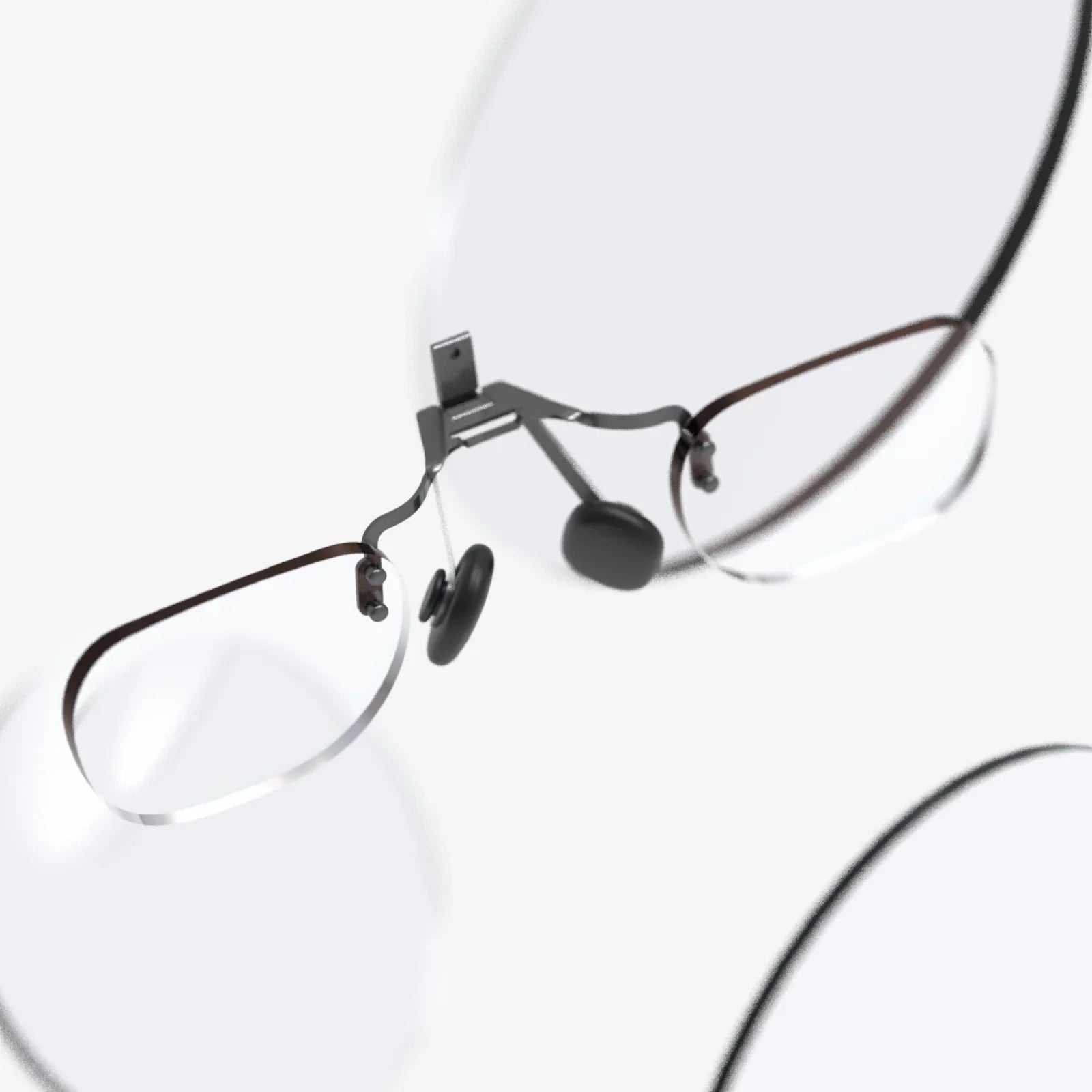
Imagine a world where your reality is your interface, where digital information doesn’t live on a screen in your hand but is elegantly woven into the fabric of your physical environment. This is no longer the stuff of science fiction; it’s the imminent future being built today, and it’s being delivered through a new generation of sleek, powerful, and intelligent augmented reality glasses. This isn't just an incremental upgrade; it's a fundamental reimagining of our relationship with technology, promising to dissolve the barrier between the digital and the physical in ways we are only beginning to comprehend. The next great platform for human-computer interaction is arriving, and it’s designed to be worn on your face.
The Architectural Leap: How Modern AR Glasses Actually Work
The latest iterations of this technology represent a monumental leap from their clunky, limited predecessors. The magic lies in a sophisticated symphony of components working in perfect harmony to create a convincing and useful augmented layer over our world.
Advanced Optical Systems: Projecting a New Reality
At the heart of any AR glasses is the display technology. The goal is to project crisp, bright, and stable digital images onto transparent lenses so they appear to coexist with real-world objects. Early models often used simple LED projections or waveguides that suffered from narrow fields of view, dim images, and a distracting screen-door effect. The new wave utilizes cutting-edge approaches like:
- MicroLED Arrays: These are incredibly small, ultra-bright light-emitting diodes that offer exceptional luminance and color gamut while consuming minimal power, a critical factor for wearable devices.
- Holographic Waveguides: This technology uses microscopic gratings etched into the lens to bend and direct light from a projector on the temple into the user's eye. This allows for a much thinner and more glasses-like form factor compared to older, bulkier solutions.
- Liquid Crystal on Silicon (LCoS): Another high-resolution micro-display technology that provides vibrant colors and deep blacks, excellent for rendering detailed text and complex 3D models.
The result is a digital overlay that feels less like a projection and more like a natural part of the environment, with a wide field of view that encourages immersion rather than peering through a tiny window.
Spatial Mapping and Perception: The Machine's Understanding of Space
For digital objects to feel real, they must understand and respect the physics and geometry of your space. This is achieved through a suite of sensors that act as the glasses' eyes and brain.
- Depth-Sensing Cameras: Using technologies like structured light or time-of-flight sensors, these cameras actively scan the environment to create a precise, real-time 3D map, measuring the distance to every surface.
- High-Resolution RGB Cameras: These capture the visual details of the world, helping with object recognition, text reading, and video capture.
- Inertial Measurement Units (IMUs): A combination of accelerometers, gyroscopes, and magnetometers that track the precise movement and orientation of the head with six degrees of freedom (6DoF). This ensures that a virtual vase placed on a real table doesn't jitter or drift away when you move your head.
- Onboard Compute: The raw sensor data is processed by powerful, miniaturized chipsets specifically designed for spatial computing. They perform simultaneous localization and mapping (SLAM), instantly placing digital content into the world and tracking its position as the user moves.
Intuitive Interaction: Beyond the Touchscreen
Interacting with a floating screen on your face requires a new language of control. New AR glasses are pioneering multi-modal input systems that feel more natural than pulling out a phone.
- Voice Assistants: Advanced, always-listening AI assistants allow for hands-free control, information retrieval, and app launching through natural speech.
- Hand Tracking: Using the onboard cameras, the glasses can see and interpret your hand gestures with remarkable accuracy. Pinching to select, dragging with a finger, or using a virtual keyboard becomes a tangible way to manipulate the digital world.
- Controller Support: For precision tasks like 3D design or gaming, optional handheld controllers can provide haptic feedback and precise input, offering the best of both worlds.
Beyond Novelty: The Transformative Applications
The true value of this technology is not in the hardware itself, but in the profound ways it can augment human capability across every facet of life.
Revolutionizing the Professional Workspace
The enterprise and industrial sectors are poised to be the earliest and most impactful beneficiaries. These devices are moving from prototypes to essential tools on the factory floor, in operating rooms, and on construction sites.
- Remote Assistance and Collaboration: A field technician repairing a complex piece of machinery can stream their live view to an expert thousands of miles away. The expert can then draw annotations—arrows, circles, instructions—directly into the technician's field of view, guiding their hands as if they were there. This slashes downtime, travel costs, and error rates.
- Complex Assembly and Design: In manufacturing, workers can see digital schematics and instructions overlaid directly onto the physical components they are assembling. Step-by-step animations can show exactly which part goes where, drastically reducing training time and improving quality control. Architects and engineers can walk through full-scale 3D models of their designs before a single foundation is poured.
- Medical Visualization:
Surgeons can have vital patient information, such as ultrasound data or 3D reconstructions of tumors, projected directly onto their field of view during procedures, eliminating the need to look away at a monitor. Medical students can practice on detailed, interactive holographic models of human anatomy.
Redefining Social Connection and Entertainment
While professional use cases are clear, the consumer potential is equally staggering, promising to change how we play, learn, and connect.
- Immersive Gaming and Storytelling: Games will escape the confines of the TV and explode into your living room. Imagine defending your home from an alien invasion with spacecraft swooping around your furniture, or solving a puzzle game that uses your entire house as the game board. Narrative experiences become deeply personal, with characters appearing to sit on your couch.
- Live Events and Shared Experiences: Sports fans could watch a game with real-time stats floating around players, choose different camera angles, or even feel like they have a courtside seat from their own home. Friends separated by geography could watch a movie together in a virtual theater, seeing each other's avatars and reactions.
- Contextual Information and Navigation: Walking through a new city, you could see historical facts pop up next to landmarks, get translated subtitles over foreign street signs, or follow a floating path on the sidewalk to your destination without ever looking at your phone. Your world becomes persistently annotated with a layer of useful knowledge.
The Inevitable Challenges: The Road to Ubiquity
Despite the exciting potential, the path to mainstream adoption is fraught with significant technical, social, and ethical hurdles that must be navigated carefully.
The Battery Life and Form Factor Conundrum
Packing supercomputer-level processing into a package that is comfortable to wear all day remains the single greatest engineering challenge. High-resolution displays and constant environmental scanning are incredibly power-intensive. Current solutions often involve a wired battery pack, but the holy grail is a self-contained, lightweight device with all-day battery life, requiring breakthroughs in battery chemistry and power-efficient chip design. The design must also appeal to the fashion-conscious consumer, moving beyond a tech-geek aesthetic to something people are proud to wear.
The Privacy Paradox: The Most Intimate Device Yet
AR glasses with always-on cameras and microphones represent a privacy challenge of unprecedented scale. They have the potential to constantly record everything and everyone around the user. The "creep factor" is real. How do we prevent covert recording? Who has access to the data stream? How is facial recognition regulated? Robust, transparent, and user-centric privacy frameworks are not an optional feature; they are an absolute prerequisite for public acceptance. Features like a prominent recording indicator light and clear, audible voice commands will be essential to building trust.
Digital Divide and Societal Impact
As with any transformative technology, there is a risk of exacerbating existing inequalities. Will this create a new class of "augmented" individuals with access to superior information and capabilities, leaving others behind? Furthermore, the constant overlay of digital stimuli could lead to new forms of distraction and social isolation, or a diminished appreciation for the un-augmented world. Establishing digital etiquette—when it is and isn't appropriate to use such devices—will be a new social challenge.
The arrival of truly capable and consumer-ready new AR glasses is not a question of if, but when. We are standing at the precipice of the next major computing paradigm, one that promises to be more intuitive, more contextual, and more deeply integrated into our human experience than anything that has come before. The potential to enhance our productivity, amplify our creativity, and deepen our connections is immense. The challenges are equally profound, demanding thoughtful design and careful consideration. One thing is certain: the world is about to get a lot more interesting, and it will all be seen through a new lens.
Share:
AR Free: The Invisible Revolution Reshaping Our Digital and Physical Worlds
VR Set Up: The Ultimate Guide to a Flawless Immersive Experience