


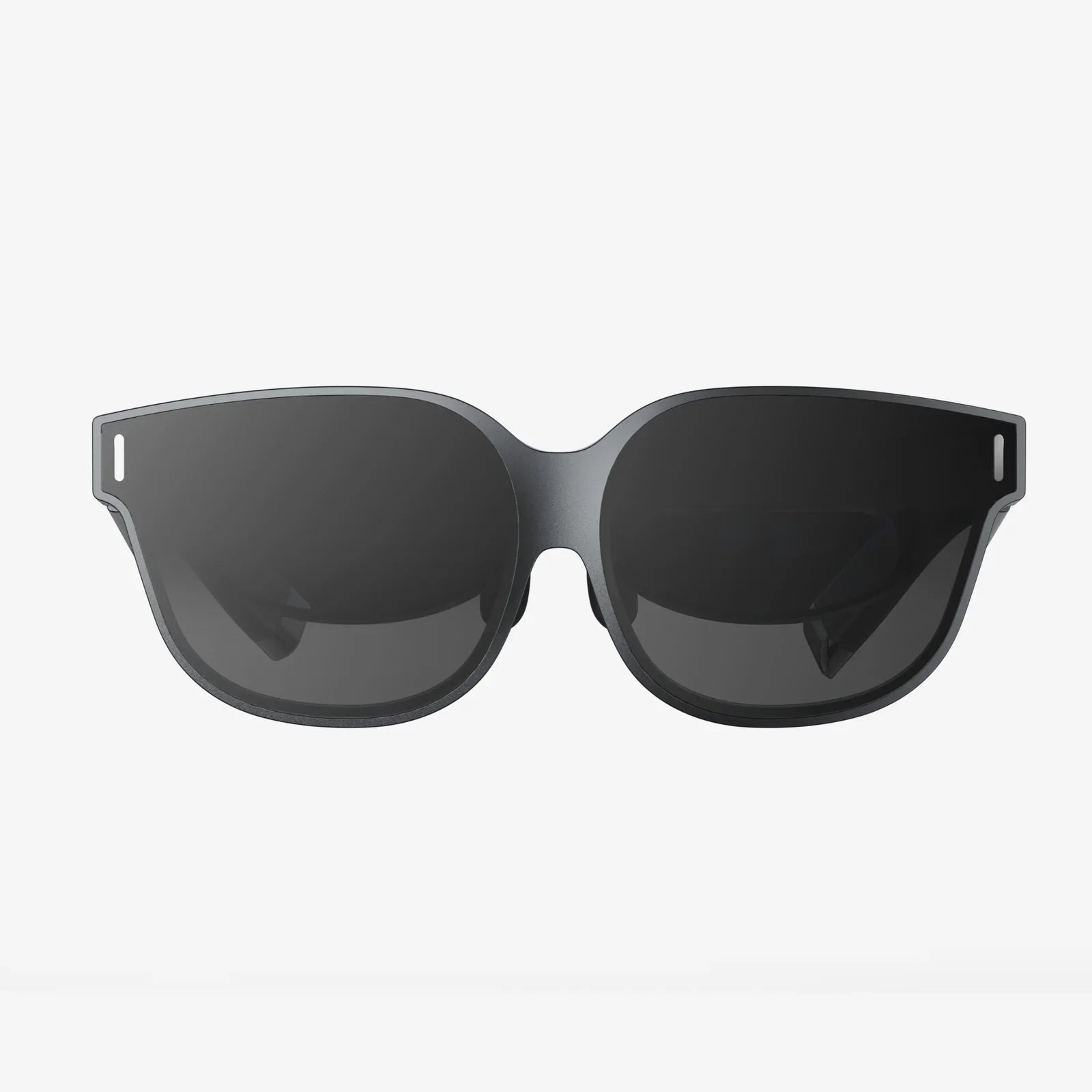
Imagine a world where your digital screen is no longer a flat, confined rectangle but a shimmering, three-dimensional image hanging effortlessly in the air before you. A world where a doctor can walk around a beating, life-sized human heart, a designer can sculpt a new engine prototype with their bare hands, and a historian can deliver a lecture as a photorealistic avatar from across the globe. This is not a scene from a science fiction film; it is the imminent reality being forged by the rapid advancement of holographic projection display technology. This revolutionary medium is poised to redefine every facet of our visual communication, from entertainment and education to medicine and manufacturing, dissolving the final barrier between the pixel and the physical.
The Science Behind the Spectacle: Peering Into the Light Field
At its core, a holographic projection display is a device that creates the illusion of a three-dimensional object in a physical space using light. Unlike a traditional 3D display, which uses stereoscopy to trick the brain into perceiving depth by showing slightly different images to each eye, true holography recreates the actual light field that would be emitted by a real object. This is the fundamental difference: stereoscopy is an illusion, while holography is a reconstruction of reality.
The principle was first demonstrated in the mid-20th century with the invention of the laser, but creating dynamic, computer-generated holograms has been the holy grail. The process involves several intricate steps and can be achieved through various technological approaches:
- Computer-Generated Holography (CGH): A digital model of an object is used to calculate the incredibly complex interference pattern that, when illuminated with a coherent light source like a laser, will reconstruct the object's wavefront. This calculation is computationally immense, requiring immense processing power.
- Photorefractive Polymers and Crystals: These specialized materials can record and display holographic images. A laser beam is split into two: a reference beam and an object beam (which is reflected off the object or modulated with its digital information). Where these two beams intersect within the material, they create an interference pattern that is stored. Illuminating this stored pattern with the reference beam reconstructs the hologram.
- Volumetric Displays:
Often grouped under the holographic umbrella, these displays create imagery within a defined volume, such as a glass globe or a mist-filled chamber, by projecting light onto a rapidly moving screen or exciting particles in a gas or plasma. While not always true holograms by the strictest definition, they achieve a stunning 360-degree, glasses-free 3D effect.
A Spectrum of Applications: Transforming Industries Today
The potential of holographic projection is not confined to a distant future; it is already making significant inroads across a diverse range of sectors, offering solutions that were previously unimaginable.
Revolutionizing Medical Visualization and Surgery
In the medical field, precision and understanding are paramount. Holographic displays are providing both. Surgeons can now view detailed, interactive holograms of a patient's anatomy derived from CT or MRI scans, allowing them to plan complex procedures with unprecedented insight. They can rotate, zoom, and virtually dissect these models to identify the safest surgical pathways. During an operation, such a display can provide real-time, holographic overlays of critical structures—like tumors or blood vessels—directly onto the patient's body, acting as an X-ray vision guide that enhances accuracy and reduces risk.
Reinventing Entertainment and Live Events
The entertainment industry has been an early and enthusiastic adopter. Concerts now feature performances by legendary artists resurrected as perfect holograms, captivating audiences with their seemingly live presence. In museums and theme parks, exhibits are coming alive. Visitors can interact with historical figures, witness dinosaurs roam the hall, or explore the inner workings of a cell, creating deeply immersive and educational experiences that transcend passive observation. The gaming and home cinema markets are also on the cusp of a transformation, with the promise of living room experiences where game characters and movie scenes unfold in the space around the viewer.
Elevating Design, Engineering, and Manufacturing
The design process is being fundamentally altered by holographic prototyping. Automotive and aerospace engineers can examine a full-scale holographic model of a new design, identifying potential flaws and assessing ergonomics long before a physical prototype is ever built. This accelerates development cycles and saves vast amounts of capital. On the factory floor, assembly line workers can receive holographic instructions overlaid onto their workspace, showing them exactly which part to install and where, drastically reducing errors and training time.
Powering the Next Generation of Communication and Collaboration
Remote collaboration is moving beyond flat video calls. Holographic telepresence aims to project a realistic, three-dimensional representation of a person into a meeting room, enabling true eye contact, natural gestures, and a powerful sense of shared presence. This has profound implications for global business, remote education, and connecting families across continents, making digital communication feel human again.
The Technical Hurdles: The Path to a Holographic World
Despite the exciting progress, several significant challenges must be overcome before holographic displays become a ubiquitous consumer technology.
- Computational Complexity: Calculating the diffraction patterns for high-resolution, full-color, real-time holograms requires processing power that is only now becoming feasible with advanced GPUs and specialized silicon.
- Limitations in Resolution and Viewing Angle: Achieving a wide viewing angle without a corresponding drop in resolution is extremely difficult. Many current systems have a narrow "sweet spot" or require the viewer to wear special glasses, defeating the purpose of a natural 3D experience.
- Size, Cost, and Accessibility: The optical systems, lasers, and spatial light modulators needed are often large, complex, and prohibitively expensive, limiting them to research labs and high-budget commercial applications.
Glimpsing the Future: From Science Fiction to Everyday Reality
The trajectory of holographic technology points toward a future where it is seamlessly integrated into our daily lives. We can anticipate the development of ultra-compact projectors embedded in our phones and glasses, capable of conjuring personal displays anywhere. Holographic interfaces could replace our touchscreens, allowing us to manipulate digital information with intuitive gestures. In the more distant future, the line may blur entirely with advancements in haptic feedback, enabling us to not only see but also feel these projected objects.
The societal and ethical implications will be profound. As digital avatars become indistinguishable from real people, questions of authenticity, privacy, and misinformation will arise. New forms of art and storytelling will emerge, and our very perception of reality may be challenged. The technology holds the promise of democratizing expertise, allowing a master engineer or surgeon to guide someone anywhere in the world through a complex task as if they were standing side-by-side.
The shimmering, ethereal image of a hologram is more than just a visual trick; it is a window into a new paradigm of human-computer interaction. It represents the culmination of decades of research in optics, computing, and material science, all converging to set our digital information free from the glass cage of the screen. As the technology continues to mature, becoming higher fidelity, more affordable, and more compact, we are not just looking at a new type of display—we are looking at the future of reality itself, and it is a future written in light.
Share:
VR Gaming 2025: The Immersive Revolution You Won't Believe
HMD Wearable Computer: The Invisible Revolution Reshaping Our Digital Lives