


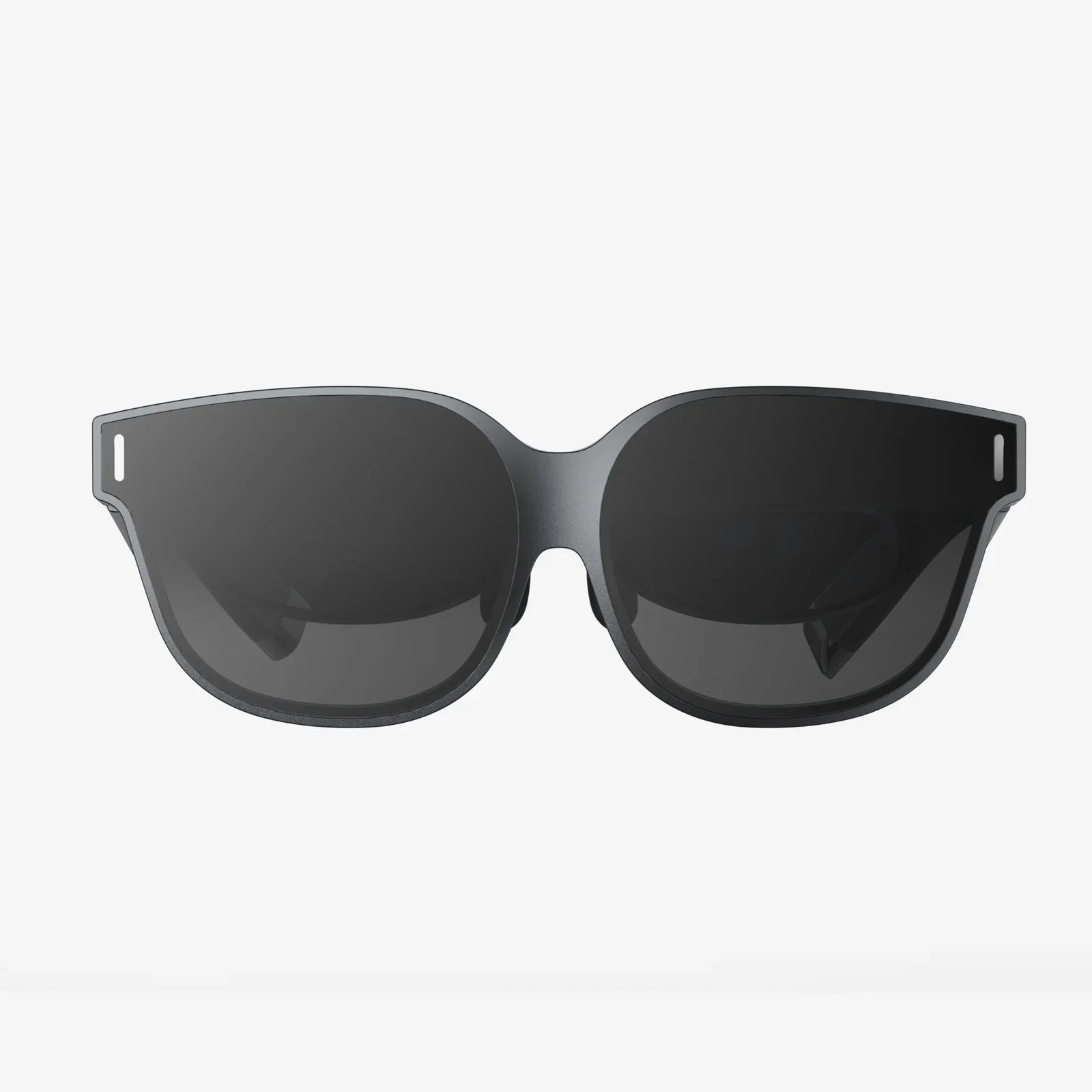
Imagine a world where the line between reality and digital fantasy doesn't just blur—it vanishes. You're not just playing a game; you're living it. Your heart pounds as you peer over the edge of a skyscraper in a cyberpunk metropolis, your palms sweat as you carefully defuse a bomb with only seconds to spare, and you feel a genuine connection to the virtual characters sharing your space. This isn't a distant sci-fi dream. This is the breathtaking reality of VR gaming in 2025, a revolution that is redefining entertainment, social connection, and human experience itself. The future is here, and it's more immersive than you ever thought possible.
The Hardware Leap: Beyond the Headset
The most immediate and tangible evolution in 2025 is the hardware. The clunky, wired, and isolating headsets of the past decade are now museum pieces. The modern VR system is a symphony of integrated technology designed for seamless immersion.
The All-in-One Wireless Standard
By 2025, the concept of being tethered to a powerful computer is archaic. Standalone headsets are not just the norm; they are incredibly powerful, boasting processing capabilities that rival the consoles of just a few years prior. Advances in chip design, specifically for spatial computing and AI-driven tasks, have enabled this leap. The focus has shifted from raw graphical power to intelligent optimization, with dedicated neural processing units (NPUs) that handle complex physics, lighting, and enemy AI, all while maintaining a buttery-smooth 120Hz refresh rate or higher.
Visual Fidelity: The Retina of the Virtual World
Screen Door Effect? That's a term historians use when discussing the early, primitive days of VR. Today's micro-OLED displays offer resolutions so high—often referred to as "retina-level"—that the human eye cannot distinguish individual pixels. Combined with dynamic foveated rendering, where eye-tracking technology tells the GPU exactly where to focus its rendering power, visuals are photorealistic. High Dynamic Range (HDR) lighting creates stunning contrasts, with deep, inky blacks and dazzlingly bright highlights that make virtual sunsets and neon-lit alleyways feel tangibly real.
The Haptic Ecosystem: Feeling the Unreal
Perhaps the most profound hardware shift is the move beyond visual and auditory immersion. 2025 is the year of full-body haptics. This goes far beyond simple rumble controllers. Users now wear lightweight, flexible haptic suits or garments embedded with a matrix of precise actuators. These can simulate everything from the gentle patter of rain and the harsh impact of a punch to the subtle, disconcerting crawl of a spider up your virtual leg. Haptic gloves provide nuanced feedback, allowing you to feel the texture of a rough stone wall, the resistance of pulling a bowstring, and the weight and shape of a virtual object. This tactile layer completes the sensory illusion, making the virtual world physically persuasive.
Eye, Face, and Body Tracking: The Expressive Self
Avatars have evolved from clumsy puppets into authentic digital reflections. Built-in eye and facial tracking in headsets translate your every expression—a raised eyebrow, a smirk, a look of fear—directly onto your avatar in real-time. This creates a layer of social nuance previously impossible in digital interactions. Combined with hip and leg trackers, your entire body is represented accurately, allowing for natural movement, body language, and non-verbal communication. In a virtual meeting or a cooperative game, you're not a floating pair of hands; you are a fully embodied person.
The Software Revolution: Worlds Without Limits
This new hardware canvas has allowed developers to paint masterpieces. The software of VR gaming in 2025 is diverse, deep, and astonishingly creative.
Generative AI and Persistent Worlds
The most significant software breakthrough is the deep integration of generative AI. Game worlds are no longer static. Non-Player Characters (NPCs) possess advanced AI-driven personalities, memories, and goals. They can engage in unscripted, contextual conversations that react to your actions and the world's state. Quests and storylines can emerge organically based on player behavior, creating a truly dynamic and personalized narrative for every user. Furthermore, persistent online worlds now evolve in real-time. A city might slowly rebuild after a player-driven event, or a ecosystem might change based on collective player actions, creating a living, breathing universe that exists beyond any single player's session.
The Genre Explosion
While action and rhythm games remain popular, VR has blossomed to encompass every genre imaginable.
- Social VR Hubs: Platforms have evolved into vast, user-generated metaverse spaces where people work, attend concerts, watch films, and socialize in beautifully crafted virtual environments. It's less a game and more a new layer of the internet.
- Hyper-Realistic Simulations: From surgery and flight training to complex machinery operation, VR simulations offer risk-free, cost-effective training with unparalleled fidelity.
- Mind-Bending Puzzles: Games that manipulate physics, perspective, and gravity itself, using the unique properties of VR to challenge players' perceptions in ways flat screens never could.
- Narrative Experiences: Story-driven games are emotionally devastating and uplifting in equal measure. Being physically present with a character as they experience joy or tragedy forges a powerful empathetic bond that traditional media struggles to achieve.
The Rise of Adaptive Accessibility
With this power comes a responsibility for inclusion. A major focus in 2025 is adaptive accessibility. AI-powered systems can now dynamically adjust game difficulty, control schemes, and even narrative complexity in real-time based on player performance and preference. For users with mobility limitations, advanced neural interface prototypes (though not yet consumer-ready) and eye-tracking controls offer new ways to interact and experience these worlds, ensuring VR gaming is for everyone.
The Societal Impact: More Than Just a Game
The ripple effects of VR's maturity in 2025 extend far beyond entertainment.
The New Social Square
VR has redefined social connection. Distance is no longer a barrier to meaningful interaction. Families separated by oceans share weekly game nights in virtual environments, friends feel as if they are truly sitting next to each other, and global communities form around shared interests in immersive 3D spaces. This has alleviated feelings of isolation for many, creating a new digital public square.
Education and Professional Training
Classrooms are being transformed. Students can take field trips to ancient Rome, the bottom of the ocean, or the surface of Mars. They can manipulate complex molecular structures or historical artifacts with their hands, leading to dramatically improved retention and engagement. Corporations across industries use VR for everything from soft-skills training and public speaking practice to collaborative 3D design and architecture walkthroughs.
Health and Therapeutic Applications
Therapeutic use of VR has become mainstream. It's effectively used for exposure therapy to treat phobias and PTSD, for physical rehabilitation to make exercises more engaging, and for cognitive therapy to help with conditions like ADHD. VR meditation apps offer deeply immersive relaxation experiences, helping users manage stress and anxiety in powerful new ways.
Challenges and the Road Ahead
Despite the incredible progress, the industry still faces hurdles. The cost of high-end full-body haptic systems remains a barrier to mass adoption for some, though the core standalone headset experience is more affordable than ever. Questions around data privacy, especially with always-on eye and face tracking, are the subject of intense debate and regulation. Developers and communities are also continuously grappling with establishing norms and tools to prevent harassment in social VR spaces, ensuring they remain welcoming for all.
The journey from a novel gadget to a transformative platform is complete. VR gaming in 2025 is not a niche hobby for tech enthusiasts; it is a vibrant, diverse, and rapidly evolving medium that is pushing the boundaries of storytelling, social interaction, and human experience. It challenges our definitions of reality and connection. The headset is no longer just a window into a game; it's a portal to new worlds, new ways to learn, new methods to heal, and new possibilities for how we connect with each other. And the most exciting part? This revolution is just getting started. The virtual frontier is open, and its potential is limited only by our imagination.
Share:
More Wearable Tech: The Seamless Integration of Intelligence into Our Daily Lives
Holographic Projection Display: The Future of Visual Communication is Here