


- by wangfred
Holographie Augmented Reality: The Invisible Revolution Reshaping Our World
- by wangfred
Imagine a world where the digital and the physical are no longer separate realms, but a single, seamless tapestry of experience. Where instructions for repairing a complex engine float in the air before your eyes, a medical student can dissect a beating heart hovering above a lecture hall table, and a historical figure steps out of a textbook to narrate their story in your living room. This is not a distant science fiction fantasy; it is the imminent future being built today at the powerful intersection of holographie and augmented reality. This technological convergence represents one of the most significant shifts in how we will perceive, interact with, and understand our world, promising to dissolve the final barriers between the information of the digital realm and the tangibility of our physical existence.
To appreciate the revolution, one must first understand the distinct yet complementary nature of its core components. Holographie and augmented reality are often conflated, but they originate from different principles.
True holographie is a photographic technique that records the light scattered from an object and then presents it in a way that appears three-dimensional. Unlike a photograph, which captures only the intensity of light (creating a 2D image), a hologram captures both the intensity and the phase of light waves. This allows it to encode the visual properties of depth, parallax, and perspective, meaning the image changes exactly as a real object would when the viewer moves around it. For decades, holographie was largely static, seen on security badges and artistic installations, requiring specific lighting to view.
Augmented reality, by contrast, is a technology that superimposes a computer-generated image onto a user's view of the real world. Early AR was experienced through screens—smartphones and tablets—where the digital content was anchored to the physical world via the device's camera. The goal was to enhance the real world with contextual digital information, from navigation arrows on a street to furniture previewed in a room.
The true magic begins when these two fields merge. Modern holographie augmented reality is the pursuit of projecting dynamic, high-fidelity, three-dimensional holograms into a user's environment in real-time, without the need for a static 2D screen as an intermediary. It’s about creating digital objects that not only look real but exist spatially within our world, interacting with physical objects and obeying the laws of perspective.
Creating this seamless illusion is a feat of engineering that relies on several advanced technologies working in concert.
The first step is for the device to understand the environment. This is achieved through a suite of sensors, including cameras, depth sensors (like LiDAR), accelerometers, and gyroscopes. These components perform simultaneous localization and mapping (SLAM), creating a real-time 3D map of the room. This map allows the system to understand surfaces, recognize objects, and precisely place digital content so it doesn’t float arbitrarily but sits convincingly on a table or behind a chair.
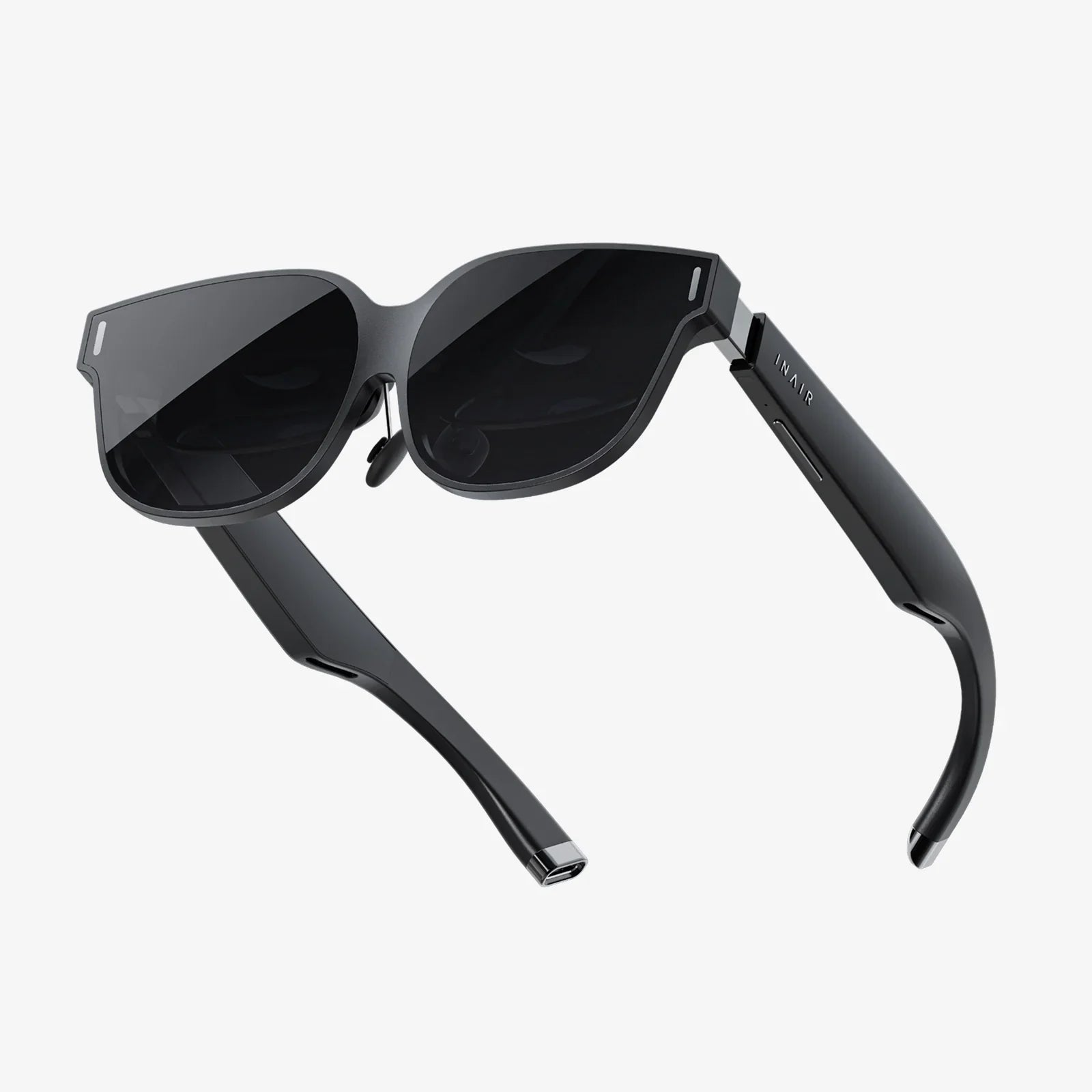
This is where the holographie principle comes into play. While various methods exist, the most promising for wearable devices are optical waveguides. These are transparent lenses etched with microscopic structures that bend light from a projector on the device's temple into the user's eye. This technology is evolving to project not just a flat image, but a "light field"—a simulation of the way light rays emanate from a real object, providing the crucial depth cues that make an image truly holographic. Other experimental systems use lasers to project images directly onto the retina or even use arrays of tiny speakers to create visual displays with sound waves.
Generating a complex, photorealistic 3D model and rendering it from the correct perspective dozens of times per second requires immense processing power. Advances in edge computing, cloud processing, and dedicated AI chips are making this possible, ensuring the hologram remains stable and responsive as the user moves.
The potential of holographie augmented reality extends far beyond novelty and entertainment. It is poised to become a fundamental tool across numerous sectors.
In medicine, the impact is profound. Surgeons can use holographic AR to overlay a patient's MRI or CT scan directly onto their body during a procedure, providing an X-ray vision-like view of anatomy, tumors, or blood vessels. This enhances precision and reduces risk. Medical training is also being transformed, allowing students to interact with life-sized, detailed holograms of organs and biological systems, practicing procedures without risk to patients.
On the factory floor, holographic AR acts as the ultimate assistant. A technician repairing a complex machine can see step-by-step instructions overlaid directly on the components they are working on, with arrows highlighting specific bolts and diagrams showing internal parts. Remote experts can see what the on-site technician sees and annotate their field of view with holographic notes and pointers, drastically reducing travel time and downtime. Designers and engineers can collaborate on 3D prototypes in real-time, manipulating holographic models to test fit and function before a single physical part is made.
Education becomes an immersive journey. History lessons can feature historical events unfolding in the classroom. Astronomy students can walk through a scale model of the solar system. Chemistry students can manipulate complex molecules, watching how they bond and interact. This moves learning from abstract memorization to experiential understanding, catering to a variety of learning styles.
The try-before-you-buy concept reaches its apex. Consumers can use holographic AR to see how a new sofa would look in their living room, how a car's dashboard would feel, or how a pair of glasses fits their face—all at true scale and in their actual environment. This reduces purchase anxiety and product returns, creating a more confident and satisfying consumer experience.
Perhaps the most profound application of holographie augmented reality is in redefining human interaction. The concept of "telepresence" will evolve from flat video calls on a screen to feeling as if another person is in the room with you. Their life-sized, holographic representation could sit across the table from you, making eye contact and using natural gestures. This has the potential to erase geographical barriers for families, global business teams, and remote work, fostering a deeper sense of presence and connection that video conferencing has never been able to achieve.
Despite the exciting progress, significant hurdles remain before holographic AR becomes an everyday reality.
Key challenges include achieving a wide field of view in wearable displays without making the devices bulky, increasing display resolution to near-retina quality, developing all-day battery life, and creating realistic haptic feedback to allow users to "feel" digital objects. The computational demands also remain high, requiring continued innovation in processing power and energy efficiency.
As with any transformative technology, holographic AR raises important questions. Issues of privacy and data security are paramount, as these devices will constantly scan and record our environments. The potential for digital vandalism—placing offensive holograms in public spaces—is a concern. There is also the risk of a new digital divide and the broader societal impact of further blurring the lines between the real and the virtual. Establishing ethical guidelines and robust security frameworks will be essential for healthy adoption.
The journey from a glowing screen to a world alive with digital phantoms is already underway. Holographie augmented reality is not merely a new gadget; it is a new lens through which we will see reality itself. It promises to augment not just our environment, but our capabilities, our knowledge, and our connections with one another. The boundary between the atoms of our world and the bits of our digital creation is fading, and on the other side awaits a future limited only by the imagination.
Share:
Best VR Headset Company: A Deep Dive into the Titans Shaping Our Digital Reality
Difference Between AR and MR: A Deep Dive into Blended Realities