


Imagine a world where your customers can try on your latest product from their living room, where your field technicians can see a holographic schematic overlaid on a broken machine, and where your training manuals leap off the page as interactive, 3D guides. This is not a distant sci-fi fantasy; it is the tangible, transformative reality that Augmented Reality (AR) offers to businesses today. The question is no longer if AR will reshape industry, but how quickly your organization can harness its potential to create unparalleled value, forge deeper customer connections, and unlock operational efficiencies previously thought impossible. The future is here, and it's layered with data, interaction, and immersive possibility.
The Foundation: Understanding Augmented Reality in a Business Context
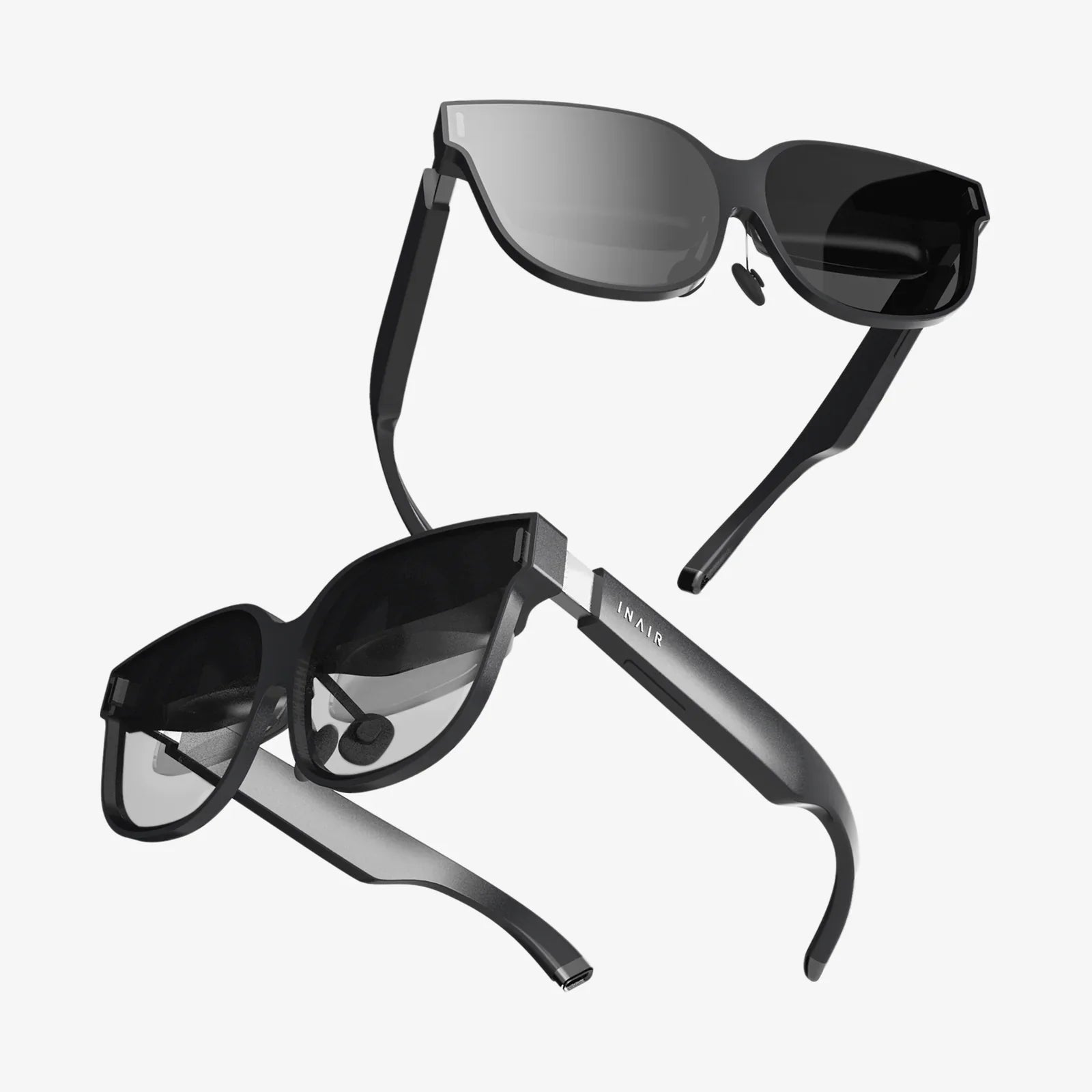
Before diving into applications, it's crucial to define what we mean by Augmented Reality. Unlike Virtual Reality (VR), which creates a completely digital environment, AR overlays digital information—images, videos, 3D models, data points—onto the user's real-world view. This is typically achieved through devices nearly everyone already owns, such as smartphones and tablets, or through more specialized hardware like smart glasses. The magic of AR lies in its ability to contextualize information, placing it directly into the user's line of sight and interaction with their immediate environment. For a business, this translates to a powerful tool for enhancing decision-making, simplifying complex tasks, and delivering information in the most intuitive way possible: visually and in context.
Revolutionizing the Retail and E-Commerce Experience
The retail sector has been one of the earliest and most enthusiastic adopters of AR, and for good reason. It directly addresses one of the fundamental limitations of online shopping: the inability to physically interact with a product.
Virtual Try-On and Visualization
Fashion and apparel companies are using AR to allow customers to "try on" clothes, glasses, jewelry, and makeup virtually through their smartphone cameras. This drastically reduces purchase hesitation and minimizes return rates. Similarly, furniture and home decor retailers empower shoppers to place true-to-scale 3D models of sofas, tables, and lamps into their actual living spaces. Customers can walk around the virtual item, see how the color works with their lighting, and ensure it fits perfectly before clicking "buy." This not only boosts consumer confidence but also creates a memorable, engaging shopping experience that fosters brand loyalty.
In-Store Navigation and Enhanced Product Information
For brick-and-mortar stores, AR can transform the physical shopping journey. Customers could use an app on their phone to navigate large stores, receiving AR pathways on their screen leading them directly to the items on their list. By pointing their device at a product on the shelf, they could see overlaid information such as detailed specifications, customer reviews, comparable products, or even sustainable sourcing information. This bridges the gap between the rich information available online and the tactile experience of shopping in person.
Transforming Manufacturing, Maintenance, and Logistics
Perhaps the most profound impact of AR is happening behind the scenes, on factory floors, in warehouses, and at remote worksites, where it is streamlining complex processes and boosting productivity.
Assembly, Manufacturing, and Quality Control
In complex assembly tasks, workers can use AR glasses or tablet-based guides to see digital instructions overlaid directly onto the physical components they are assembling. This can highlight the next part to install, show the exact orientation for placement, and display torque settings for fasteners. This reduces errors, slashes training time for new employees, and improves overall assembly speed. For quality control, inspectors can have acceptance criteria and anomaly detection highlights superimposed on a product, ensuring nothing is missed.
Remote Expert Assistance and Maintenance
This is a game-changer for industries with expensive or hard-to-reach equipment. When a machine breaks down, a on-site technician equipped with AR glasses can stream their first-person view to a senior expert located anywhere in the world. The expert can then draw digital arrows, circles, and annotations that appear in the technician's field of view, guiding them through the repair process step-by-step. This minimizes downtime, reduces travel costs for specialists, and allows less experienced staff to perform complex repairs with expert guidance.
Warehouse Logistics and Picking
In massive distribution centers, AR can supercharge the order picking process. Warehouse staff wearing smart glasses can be visually guided along the most efficient route to retrieve items. The technology can highlight the exact shelf and bin, display the quantity to pick, and confirm the item with a visual match, drastically reducing errors and improving picking speed. This application directly translates into faster order fulfillment and lower operational costs.
Supercharging Training and Onboarding
Corporate training is often expensive, time-consuming, and not always effective. AR creates a safe, scalable, and highly effective alternative for skill development.
Hands-On Learning Without Risk
Instead of reading a manual or watching a video, trainees can learn by doing—but in a risk-free AR environment. Medical students can practice procedures on virtual patients. Mechanics can learn to dismantle and rebuild a complex engine with digital guides. Electricians can practice wiring sequences without the danger of live current. This experiential learning leads to significantly higher knowledge retention and confidence before an employee ever touches real, expensive equipment.
Onboarding and Continuous Performance Support
New employees can use AR to learn about their new workplace. Pointing a device at a piece of machinery could launch a tutorial on its operation. This creates a just-in-time learning environment where information is available exactly when and where it is needed, reducing the cognitive load on employees and empowering them to solve problems independently.
Innovating Marketing and Advertising Campaigns
AR offers marketers a revolutionary way to capture attention, tell compelling stories, and create deeply interactive brand experiences that consumers actively seek out and share.
Interactive Print and Packaging
A product's packaging or a print advertisement can become an interactive portal. By scanning the package with their phone, a customer can unlock a gamified experience, see a story about the product's origin, or access exclusive video content. This transforms passive packaging into an active engagement tool, adding value and strengthening brand perception.
Immersive Brand Experiences and Events
Brands can create AR filters and experiences tied to locations or events. Imagine pointing your phone at a stadium during a major sports event to see player stats and replays overlaid on the field, or at a historic monument to see it rebuilt to its former glory. These campaigns generate massive buzz, drive social media sharing, and create positive, memorable associations with the brand.
Enabling Remote Collaboration and Design
The shift to remote and hybrid work has accelerated the need for better collaboration tools. AR moves collaboration beyond flat screens and into shared 3D spaces.
Architecture, Engineering, and Construction (AEC)
Architects and clients can walk through a full-scale, holographic model of a building design before a single foundation is poured. They can move walls, change materials, and experience the space in a way blueprints cannot convey. On construction sites, AR can project building plans onto the physical land, ensuring accurate alignment and helping teams visualize the final result throughout the build process.
Virtual Prototyping and Design Review
Design and engineering teams spread across the globe can collaborate on a 3D holographic model of a new product. They can examine it from every angle, make annotations in real-time, and iterate on designs without the cost and delay of physical prototypes. This accelerates time-to-market and fosters more innovative design thinking.
Developing a Strategic AR Implementation Plan
Adopting AR is not about chasing a trend; it's about solving business problems. A successful implementation requires a strategic approach.
- Identify the Problem: Start with a clear business challenge—high return rates, lengthy training, frequent equipment downtime—not with the technology itself.
- Start Small and Scale: Begin with a pilot program focused on a single, well-defined use case. Prove the value and ROI before expanding.
- Choose the Right Technology: Decide between marker-based (triggered by an image) or markerless (using GPS or object recognition) AR, and whether to use smartphones or dedicated headsets based on your use case and audience.
- Prioritize User Experience (UX): The AR interface must be intuitive and add value without being cumbersome. If it's frustrating, it will be abandoned.
- Measure and Iterate: Define key performance indicators (KPIs) upfront—e.g., reduced training time, increased sales conversion—and continuously measure results to refine your approach.
Navigating Challenges and The Road Ahead
The path to AR integration is not without its hurdles. Businesses must consider challenges such as the cost of development and hardware, concerns over user privacy and data security, and the technical limitations of current devices, including battery life and field of view. Furthermore, creating high-quality, realistic 3D content requires specialized skills. However, the technology is advancing at a breathtaking pace. The convergence of AR with Artificial Intelligence (AI) and 5G connectivity will unlock even more powerful applications, such as AR systems that can understand and interact with the environment in real-time with near-zero latency. The businesses that begin their AR journey now, learning and adapting, will be the ones best positioned to lead in the next decade.
The door to a new dimension of business operation and customer engagement is wide open, offering a competitive advantage that is as vivid as it is valuable. The businesses that will thrive are those that look at their operations, their challenges, and their customer journeys and see not just what is, but what could be—with a digital layer of intelligence, guidance, and wonder seamlessly integrated into reality. The tools are here, the use cases are proven, and the first movers are already reaping the rewards; the only thing left to do is to take the first step into this augmented world and begin building your company's future today.
Share:
AI Glasses Wearable Technology: The Dawn of a Seamless Augmented Future
Ubiquitous Augmented Reality The Invisible Revolution Reshaping Our World