


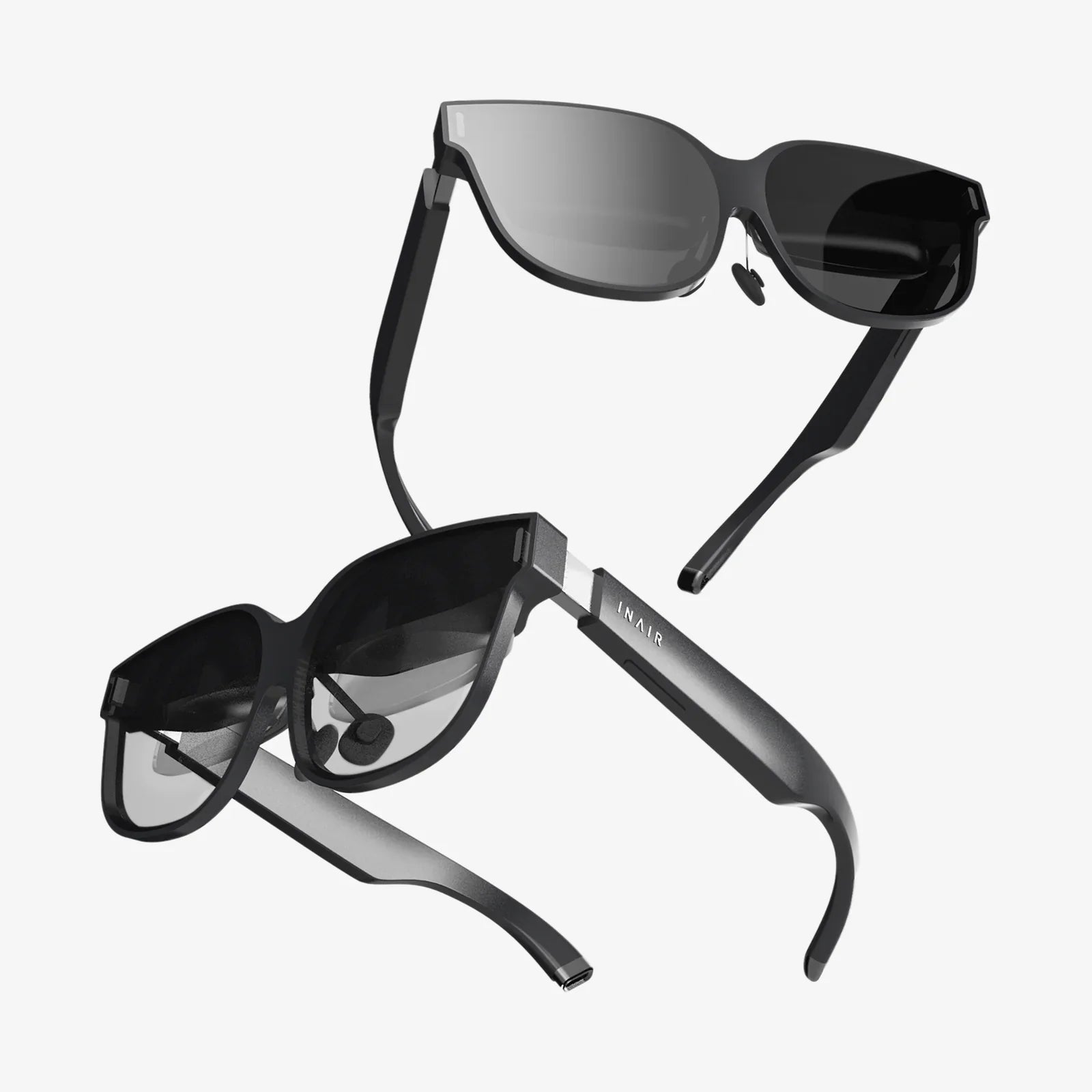
Imagine a world where information flows as effortlessly as sight, where the digital and physical realms are not just connected, but seamlessly intertwined. This is the promise held within a sleek, unassuming frame perched on the bridge of your nose. The era of passive eyewear is ending, and the age of intelligent vision is dawning. AI glasses, the most personal and potent expression of wearable technology yet, are poised to redefine our reality, not by replacing it, but by augmenting it with a layer of contextual, intelligent computation.
For decades, the concept of computer-enhanced vision has been a staple of science fiction, from the Terminator’s targeting systems to the holographic displays of countless futuristic protagonists. The journey from fantasy to tangible product, however, has been a turbulent one. Early attempts at smart eyewear were often clunky, socially awkward, and limited by the technology of their time. They were solutions in search of a problem, impressive tech demos that struggled to find a compelling reason to exist in the daily lives of consumers. The fundamental hurdles were immense: processing power, battery life, display technology, heat dissipation, and perhaps most importantly, a natural and socially acceptable user interface.
The turning point has been the maturation of several key technologies simultaneously. The miniaturization of powerful processors, the development of low-power, high-resolution micro-displays, and breakthroughs in sensor technology—including high-resolution cameras, depth sensors, and inertial measurement units—have provided the essential hardware foundation. But the true catalyst, the element that transforms a sophisticated camera-and-screen headset into ‘AI glasses,’ is artificial intelligence. It is the sophisticated algorithms machine learning models, and neural networks that process the vast stream of visual and auditory data in real-time, understanding the context of what the user is seeing and hearing to provide relevant, timely information.
The Core Technologies Powering Intelligent Vision
To understand the capabilities of modern AI glasses, one must look under the hood at the symphony of technologies working in concert.
- Advanced Sensor Arrays: These are the eyes and ears of the device. Multiple cameras, including standard RGB, depth-sensing (like time-of-flight sensors), and ultra-wide-angle lenses, capture a comprehensive view of the environment. Microphones, often using beamforming technology, isolate the user's voice from ambient noise.
- On-Device AI Processing: While some data may be processed in the cloud, true responsiveness requires powerful, efficient AI chips within the glasses themselves. These Neural Processing Units (NPUs) are designed specifically to run complex machine learning models for tasks like object recognition, scene segmentation, and natural language processing with minimal latency and power consumption.
- Intuitive Display Systems: The magic of seeing digital content overlaid on the real world is achieved through various optical techniques. Waveguide technology, using tiny gratings to bend light into the eye, and holographic optical elements are common, allowing for a relatively normal-looking form factor. The displays project information directly onto the retina or onto a transparent lens, creating the illusion that digital objects exist in the user’s physical space.
- Contextual Awareness Software: This is the brain of the operation. The AI software stack fuses data from all sensors to build a real-time understanding of the user’s context. It answers questions like: Where are they? What are they looking at? Who are they talking to? What task are they trying to perform?
Transforming Everyday Experiences
The power of AI glasses lies not in isolating the user in a digital bubble, but in enhancing their interaction with the world around them. The applications span from the mundane to the miraculous.
Imagine walking through a foreign city. Your glasses instantly translate street signs and restaurant menus, overlaying the translation directly onto your field of view. They recognize landmarks and provide a historical summary. They can even listen to a conversation and provide real-time subtitles, breaking down language barriers in a way that feels natural and effortless.
In the professional sphere, the impact is profound. A technician repairing a complex machine can see schematics, torque specifications, and step-by-step instructions overlaid directly on the components they are working on. Their hands remain free, and their focus remains on the task. A surgeon could see vital patient statistics, MRI scans, or guidance systems during a procedure. An architect could walk through a physical building site and see the digital blueprint perfectly aligned with the construction, identifying potential clashes before they become costly problems.
For individuals with visual or auditory impairments, AI glasses can act as a powerful assistive technology. They can describe scenes, identify people, read text aloud, and amplify specific sounds while dampening background noise, granting a new level of independence and connection.
On a more personal level, they serve as the ultimate contextual computer. They can recognize faces and discreetly display a person’s name and how you know them—a modern solution to an age-old social anxiety. They can provide real-time feedback on your posture during a workout, guide you through a recipe with instructions projected onto your ingredients, or help you find your lost keys by remembering where you last saw them.
The Inevitable Challenges and Ethical Imperatives
This powerful technology does not arrive without significant challenges and serious ethical questions that society must grapple with.
Privacy and the Societal Gaze: This is the most pressing concern. A device that records audio and video continuously presents a profound privacy paradox. The potential for ubiquitous surveillance, either by individuals, corporations, or governments, is unprecedented. The concept of consent in public spaces becomes blurred. How do we prevent a world where everyone is a potential unwitting subject of recording? Robust, clear, and enforceable regulations will be required. Features like prominent recording indicators, geofencing that automatically disables recording in sensitive areas, and strong data anonymization protocols are not just features; they are ethical necessities.
The Digital Divide and Accessibility: As with any advanced technology, there is a risk that AI glasses could exacerbate social and economic inequalities. If they become essential tools for certain professions or social interactions, a new divide could emerge between those who can afford this augmented layer of reality and those who cannot. Ensuring equitable access and preventing discriminatory use will be critical.
Social Acceptance and Etiquette: Wearing a camera on your face in social situations is a significant cultural hurdle. Social norms will need to adapt. Is it rude to wear them during a conversation? Will restaurants and bars ban them? The success of this technology depends heavily on its ability to integrate into society gracefully, not disrupt it.
Data Security and Dependency: The amount of personal data collected by these devices—everything you see, everywhere you go, everyone you talk to—is staggering. Protecting this data from breaches is paramount. Furthermore, an over-reliance on this constant stream of information could potentially impact human memory, attention spans, and our innate ability to navigate the world unaided.
The Road Ahead: From Novelty to Necessity
The current generation of AI glasses is still in its infancy, often targeting developers, enterprise users, and early adopters. Battery life remains a constraint, and the field of view for augmented reality overlays can be limited. However, the trajectory is clear. Moore’s Law, applied to sensors, displays, and AI chips, will relentlessly improve performance while shrinking size and cost.
We are moving towards a future where AI glasses will be as commonplace as smartphones are today. They will evolve from a separate device to a central hub that connects to your other devices, orchestrating your personal area network. They will become the primary portal through which we interact with the burgeoning metaverse, anchoring digital objects and experiences into our physical environment in a coherent way.
The ultimate goal is invisibility—not of the device itself, but of the technology. The interface will become so intuitive, the information so contextually relevant, and the form factor so lightweight and normal that using it will feel like a natural extension of our own cognition. We won’t think about ‘using the glasses’; we will simply think, and the glasses will assist.
The true potential of this technology lies not in what it adds to our vision, but in what it reveals about our world and our place within it. It promises to make us more knowledgeable, more capable, and more connected to the digital heartbeat of modern life. The next great shift in human-computer interaction is not in your pocket; it’s on your face, waiting to open your eyes to a world of possibilities you’ve only just begun to imagine.
Share:
Augmented Reality Target Market: A Deep Dive into the Industries and Demographics Driving Adoption
How Business Can Use Augmented Reality: A Strategic Guide to Unlocking Immersive Potential