


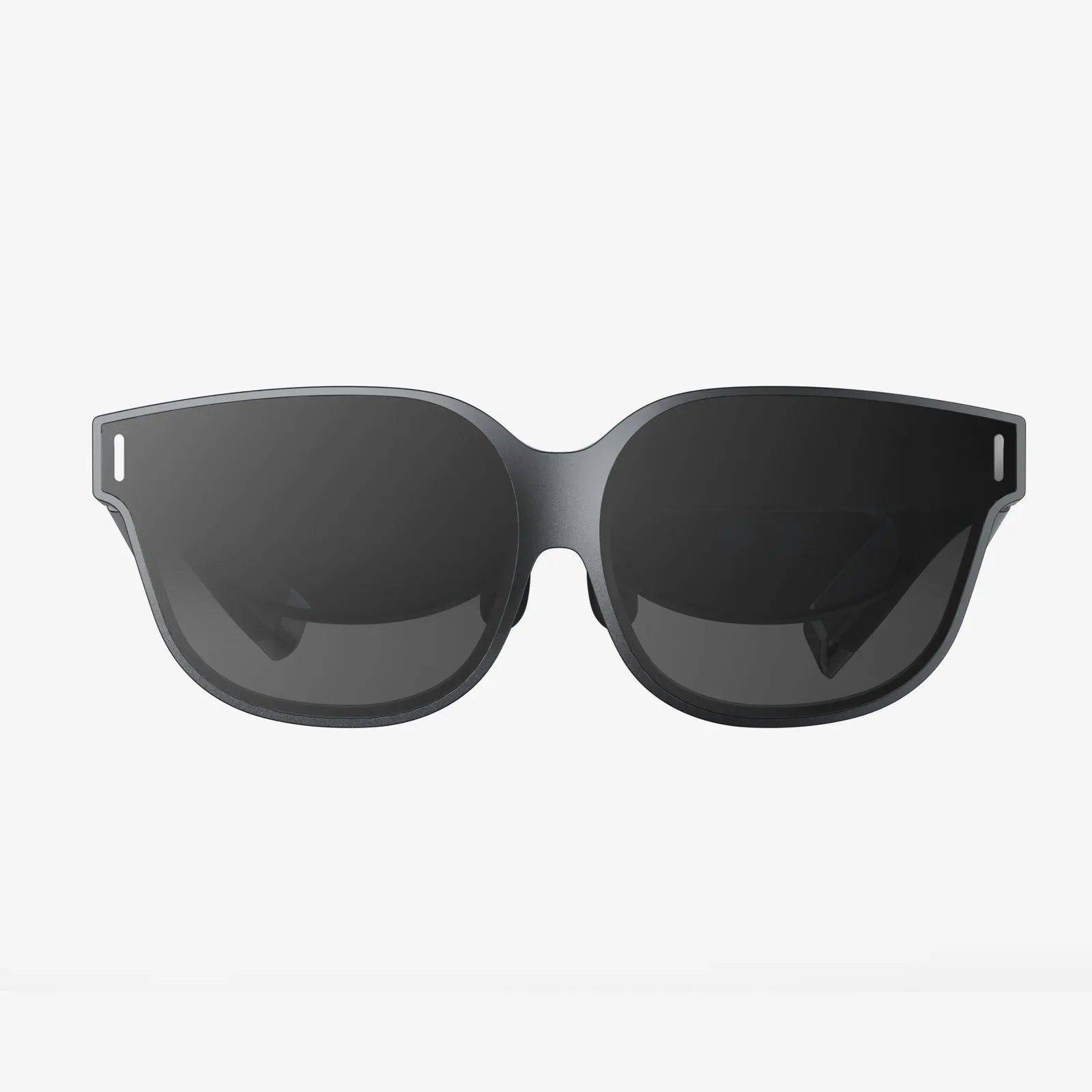
Imagine a world where information floats effortlessly before your eyes, where language barriers dissolve with a glance, and your surroundings become an interactive canvas of data and discovery. This is no longer the realm of science fiction; it's the burgeoning reality made possible by artificial intelligence eyewear. But have you ever stopped to wonder, as you slip on a pair of these sleek, futuristic frames, what technological symphony is playing out just millimeters from your brain? The journey from simple lenses to intelligent visual companions is a fascinating tale of miniaturization, sensor fusion, and computational brilliance.
The Architectural Blueprint: More Than Meets the Eye
At their core, AI glasses are a masterpiece of integrated systems engineering. They are not a single device but a harmonious convergence of several critical components, each playing a vital role in creating a seamless augmented experience. Think of them as a compact supercomputer designed for your face.
The Eyes and Ears: Sensor Arrays
The primary data gatherers of any AI glasses system are its sensors. These act as the digital eyes and ears, continuously feeding information about the user's environment into the central brain of the device.
- Cameras: High-resolution, often wide-angle, cameras capture visual data. This isn't just for taking pictures; it's for real-time video analysis. They scan text, identify objects, recognize faces, and map the three-dimensional space around the user.
- Microphones: An array of microphones does more than just pick up voice commands for a virtual assistant. They use beamforming technology to isolate specific sounds or voices from background noise, enabling clear audio capture and processing.
- Inertial Measurement Units (IMUs): These include accelerometers and gyroscopes that track the precise movement, orientation, and rotation of the user's head. This is crucial for anchoring digital objects stably in the real world. If you turn your head, the digital display must move with you accurately to maintain the illusion.
- Depth Sensors: Some advanced models employ LiDAR (Light Detection and Ranging), time-of-flight sensors, or stereoscopic cameras to create a detailed depth map of the environment. This allows the AI to understand not just what objects are, but how far away they are and their spatial relationship to each other and the user.
- Ambient Light Sensors: These adjust the brightness and contrast of the displayed images based on the surrounding light conditions, ensuring optimal visibility whether you're in a dark room or bright sunlight.
The Brain: On-Device Processing Power
Raw sensor data is meaningless without interpretation. This is where the processing unit comes in. Early augmented reality concepts relied on tethering to a powerful smartphone or computer. Modern AI glasses, however, increasingly feature sophisticated System-on-a-Chip (SoC) processors, similar to those in high-end smartphones but often optimized for specific AI tasks.
This shift to on-device processing is critical for three reasons:
- Latency: For augmented reality to feel natural and immersive, the response must be instantaneous. Sending data to the cloud for processing and waiting for a response introduces lag, which can break immersion and even cause nausea. On-device processing ensures near-zero latency.
- Privacy: Processing data locally means sensitive visual and audio information from your life doesn't need to be constantly streamed to remote servers.
- Reliability: Functionality does not depend on a perfect, high-speed internet connection. The glasses can work anywhere, anytime.
These processors often contain a dedicated Neural Processing Unit (NPU) or Tensor Processing Unit (TPU). These are hardware components specifically designed to efficiently run the complex mathematical computations required for machine learning and AI models, drastically improving performance and battery life for tasks like object recognition and natural language processing.
The Voice: Audio Output
Interaction is a two-way street. AI glasses provide audio feedback through miniature speakers, often using bone conduction or directional audio technology. Bone conduction transducers send vibrations through the skull bones directly to the inner ear, leaving the ear canal open to hear ambient sounds for safety and awareness. Directional audio projects sound waves directly into the user's ear, minimizing what bystanders can hear, thus preserving privacy.
The Canvas: Display Technologies
This is the component that truly defines the experience—how digital information is projected into the user's field of view. There are several competing approaches, each with its own advantages.
- Waveguide Displays: This is a leading technology in many modern devices. Light from a micro-LED or laser projector is injected into a transparent glass or plastic lens (the waveguide). This light bounces through the lens using principles of diffraction or reflection until it is directed into the user's eye. The result is bright, high-resolution images that appear to hover in the real world. Waveguides allow for sleek, relatively normal-looking eyeglass designs.
- Birdbath Optics: A compact design where light from a micro-display is projected onto a combiner, a partially mirrored surface that reflects the image into the user's eye while allowing real-world light to pass through. This can offer excellent color and brightness but may result in a slightly bulkier form factor.
- Retinal Projection: A more experimental approach where a low-power laser scans the image directly onto the user's retina. This can create a vast, always-in-focus image with high brightness and contrast, but it presents significant engineering and safety challenges.
The Intelligence: Where the Magic Happens
The hardware provides the stage, but the AI software is the star performer. This is a multi-layered stack of algorithms and models that transform raw data into actionable, contextual intelligence.
Computer Vision: Teaching Machines to See
This field of AI is fundamental. Computer vision algorithms process the video feed from the cameras to perform incredible feats:
- Object Recognition and Detection: The AI can identify and label thousands of objects—a chair, a dog, a specific model of car—in real-time. This is powered by deep learning models, primarily Convolutional Neural Networks (CNNs), which have been trained on millions of labeled images.
- Optical Character Recognition (OCR): The system can detect blocks of text in the environment, such as signs, documents, or menus, and convert the image of that text into machine-readable characters. This is the first step toward real-time translation or reading assistance.
- Simultaneous Localization and Mapping (SLAM): This is the cartographer of the AI world. SLAM algorithms use data from the cameras, IMUs, and depth sensors to simultaneously map an unknown environment and track the user's position within that map. This is how digital objects can be placed on a physical table and stay there as you walk around the room.
- Facial Recognition: Advanced systems can identify individuals, though this raises significant privacy considerations that manufacturers must navigate carefully, often making it an opt-in feature.
Natural Language Processing: Conversing with the World
Another critical AI pillar is NLP, which handles spoken language.
- Automatic Speech Recognition (ASR): This converts the user's spoken words into text. The microphone array isolates the voice, and the ASR model transcribes it.
- Natural Language Understanding (NLU): This goes beyond transcription to discern the user's intent. It parses the sentence structure and context to understand whether a command is to "send a message," "set a reminder," or "identify that building."
- Real-Time Translation: This combines OCR or ASR with powerful machine translation models. The glasses see or hear foreign text/speech, the AI translates it, and the results are displayed through the interface or spoken through the audio system, effectively creating a universal translator.
Contextual Awareness: The Ultimate Goal
The most sophisticated function of AI glasses is synthesizing all this data into contextual awareness. The system doesn't just see a coffee shop; it understands you are standing outside a coffee shop, remembers you have a meeting in 15 minutes, and might proactively suggest you order your usual drink. It uses your location, calendar, preferences, and real-time visual data to provide proactive, relevant information without the user even asking.
Powering the Future: The Battery Dilemma
All this technology is incredibly power-hungry. Running multiple cameras, microphones, and a powerful AI processor continuously places immense demands on a battery that must be small and light enough to fit on a pair of glasses. This is one of the biggest engineering challenges. Solutions include:
- Highly optimized, efficient processors and NPUs.
- Advanced battery chemistries offering higher energy density.
- Contextual power management, where the system intelligently powers down non-essential sensors when not in use (e.g., the cameras don't need to run SLAM at full resolution if the user is sitting still).
- Distributed power systems, sometimes splitting the battery between the arms of the glasses or using a small, tethered battery pack.
A New Lens on Life: Applications Transforming Industries
The convergence of these technologies unlocks a world of possibilities far beyond novelty.
- Accessibility: For the visually impaired, AI glasses can audibly describe scenes, read text aloud, identify currency, and detect obstacles, granting unprecedented independence.
- Navigation: Directional arrows and street names can be overlaid directly onto the real world, making urban exploration intuitive.
- Professional and Industrial Use: Technicians can see schematics overlaid on machinery they are repairing. Warehouse workers can see optimal picking routes and item information. Surgeons can have vital signs and 3D scans visualized during procedures.
- Education and Training: Students can dissect a virtual frog or explore the solar system in 3D. Mechanics-in-training can see step-by-step instructions superimposed on an engine.
- Social Connectivity: The ability to capture photos and videos from a first-person perspective and share experiences in real-time offers a new paradigm for communication and memory preservation.
Navigating the Challenges: Privacy and the Social Contract
This powerful technology does not come without profound questions. The ability to passively record, identify, and analyze the world and people in it raises serious privacy concerns for both users and bystanders. The very concept of a always-on, internet-connected camera and microphone worn on one's face demands a robust ethical framework. Manufacturers must prioritize features like clear recording indicators, physical camera shutters, and transparent data policies to build trust. The societal conversation about where and how this technology should be used is just beginning.
The intricate dance of photons, algorithms, and sensors happening within a pair of AI glasses is a testament to human ingenuity. They are not merely a display but a perceptual extension of ourselves, filtering and enhancing reality through the lens of artificial intelligence. As the technology continues to shrink, grow more powerful, and become more seamlessly integrated into our lives, these devices promise to fundamentally reshape how we work, learn, connect, and perceive the universe around us, offering a glimpse into a future where our digital and physical realities are no longer separate, but beautifully, intelligently intertwined.
Share:
Augmented Reality News Today: The Invisible Revolution Reshaping Our World
Augmented Reality VR Headset: The Portal to a New Digital Layer of Reality