


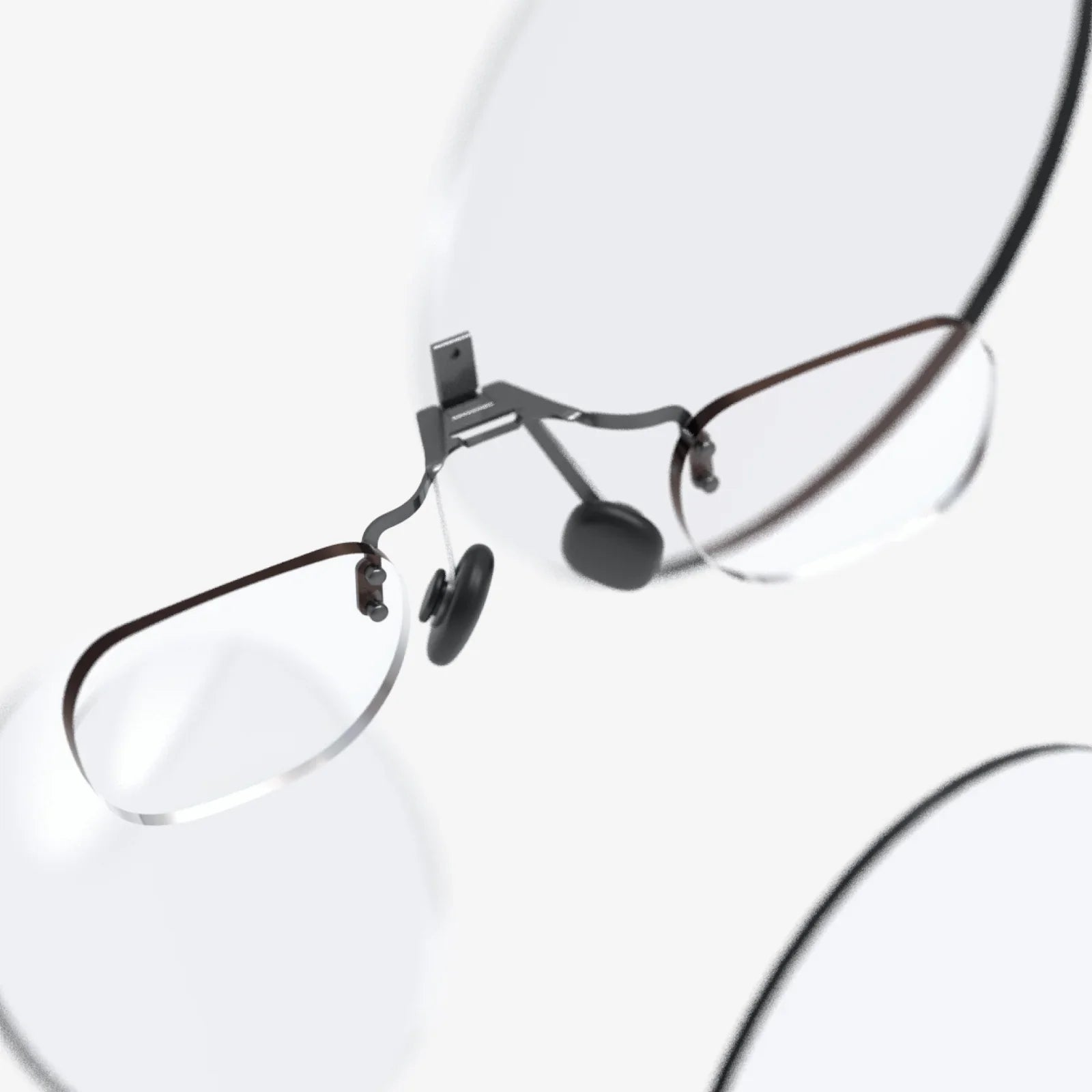
Imagine walking through your city and seeing historical figures reenacting events on the very street corners where they occurred, or gazing at the night sky through a device that labels every constellation and planet with stunning clarity. Envision a mechanic seeing a holographic schematic overlaid directly onto a faulty engine or a surgeon visualizing a patient's anatomy in three dimensions during a procedure. This is the promise, and increasingly the reality, of the modern augmented reality VR headset—a device that is rapidly evolving from a science fiction fantasy into the most intuitive and powerful computing interface humanity has ever created. It’s not about escaping reality; it’s about enhancing it, enriching it, and connecting with it on a profoundly deeper level. The world is about to get a dazzling new layer, and it’s waiting for you to put on a headset and see it.
The Confluence of Two Realities: Defining AR and VR
To understand the power of an augmented reality VR headset, we must first distinguish between the two technologies it seeks to merge. Virtual Reality (VR) is an immersive, all-encompassing experience. A traditional VR headset blocks out the physical world entirely, replacing your visual and auditory reality with a computer-generated one. You are transported to a digital environment, whether it's a game world, a virtual meeting room, or a simulated training ground. The goal is presence—the convincing feeling of being somewhere else.
Augmented Reality (AR), on the other hand, does not seek to replace the real world but to supplement it. Digital information—images, text, animations, 3D models—is superimposed onto your view of your immediate surroundings. The classic early example is the smartphone game that placed fantastical creatures in your local park, viewable through your phone's camera. AR adds a context-aware digital layer to our existing reality.
The modern augmented reality VR headset, often called a Mixed Reality (MR) headset, is the sophisticated evolution of both. It uses advanced cameras and sensors to scan your environment in real-time, understanding the geometry of the room, the position of surfaces, and the lighting conditions. It then seamlessly anchors digital objects to your physical world, allowing you to interact with them as if they were truly there. You might have a virtual television pinned to your real wall, or a digital pet that hides under your actual coffee table. This blend is where the true magic and utility lie.
Peering Into the Machine: The Core Technologies at Work
The seamless experience delivered by a high-end augmented reality VR headset is a marvel of modern engineering, combining several cutting-edge technologies into a single, wearable device.
Advanced Display Systems: Painting Light onto the World
At the heart of any headset is its display. Unlike VR headsets that use simple displays, AR-capable devices often employ sophisticated waveguide technology or micro-OLED screens with incredibly high pixel density. These systems project light directly into the user's eyes, carefully blending digital photons with the natural light entering from the real world. The challenge is achieving high brightness, rich colors, and a wide field of view without creating a bulky, uncomfortable device. Recent advancements have made significant strides, creating displays that are both transparent enough to see the world clearly and powerful enough to render vivid digital content.
Spatial Mapping and Computer Vision: The Digital Nervous System
For digital objects to behave believably in your space, the headset must understand that space intimately. This is achieved through a suite of sensors, typically including:
- Cameras: Multiple high-resolution cameras constantly scan the environment, tracking the position of the user's hands and mapping the room's surfaces.
- Depth Sensors: Using technologies like structured light or LiDAR (Light Detection and Ranging), these sensors fire out invisible dots of light and measure their return time to create a precise 3D depth map of the room. This tells the headset exactly how far away every object is.
- Inertial Measurement Units (IMUs): These accelerometers and gyroscopes track the precise movement and rotation of your head with millimeter accuracy, ensuring the digital world stays locked in place even as you move.
This constant stream of data is processed by onboard chips using complex algorithms for Simultaneous Localization and Mapping (SLAM). This is the computer vision magic that allows the headset to both map an unknown environment and track its own position within it simultaneously.
Intuitive Interaction: Beyond the Controller
While controllers are still an option, the most transformative input method for an augmented reality VR headset is your own body. Hand-tracking technology allows you to reach out and manipulate digital objects with natural gestures—pinching, grabbing, pushing, and pulling. Your hands become the controller. Furthermore, eye-tracking and voice command integration create a multi-modal interaction system. You can look at an object and say "open" or "delete," making the experience feel less like using a computer and more like using your own intuition. This natural user interface is key to the technology's widespread adoption.
Transforming Industries: The Practical Power of Augmented Reality
Beyond gaming and entertainment, which are driving initial consumer adoption, the professional and industrial applications of augmented reality headsets are staggering and are already delivering tangible value.
Revolutionizing Design and Manufacturing
In architecture and industrial design, teams can collaborate in a shared virtual space, viewing and interacting with life-size 3D models of their creations before a single physical resource is spent. A car designer can walk around a full-scale hologram of a new vehicle prototype, examining every curve and panel. On the factory floor, assembly line workers can have step-by-step instructions and diagrams overlaid directly onto the machinery they are assembling, drastically reducing errors and training time.
The Future of Medicine and Surgery
Medical students can practice complex procedures on detailed anatomical holograms, gaining valuable experience without risk. Surgeons can use AR overlays during operations to visualize critical information like the precise location of a tumor beneath layers of tissue, or the path of a major blood vessel, directly in their field of view. This enhances precision and can lead to better patient outcomes.
Redefining Remote Collaboration and Workspaces
The concept of the "virtual office" is moving beyond flat video calls. With an augmented reality headset, remote colleagues can appear as photorealistic avatars in your physical space, able to collaborate on 3D models, share virtual whiteboards, and interact with gestures as if they were standing right next to you. This sense of shared presence can bridge geographical gaps and foster a new level of teamwork, making the digital remote feel physically proximate.
Enhancing Retail and E-Commerce
Imagine trying on new glasses, experimenting with different shades of paint on your walls, or seeing how a new sofa would fit in your living room—all before making a purchase. Augmented reality headsets enable truly try-before-you-buy experiences from the comfort of your home, reducing product returns and increasing consumer confidence. This has the potential to fundamentally reshape the retail landscape.
Navigating the New Frontier: Challenges and Considerations
For all its promise, the path to ubiquitous augmented reality is not without significant hurdles that developers, companies, and society must address.
The Form Factor Dilemma: From Goggles to Glasses
Current high-end headsets are powerful but often bulky, tethered, or have limited battery life. The ultimate goal is a device that is as socially acceptable and comfortable to wear as a pair of everyday eyeglasses, while still packing the necessary computational power and display technology. Achieving this requires breakthroughs in miniaturization, battery technology, and thermal management. The journey from today's headsets to tomorrow's discreet glasses is the industry's primary hardware challenge.
The Question of Social Acceptance and Digital Etiquette
How will we interact with people wearing headsets in public? Will it be considered rude if someone is simultaneously engaged with a digital layer while having a conversation with you? New social norms and etiquette will need to evolve. Furthermore, the concept of attention itself is challenged. If the digital world is always available, overlaying our reality, how do we ensure we remain present in our physical lives and relationships? These are profound questions about the human experience in an augmented age.
Privacy in a Mapped World
The very function of an augmented reality headset requires it to constantly scan and record the environment around the user. This raises immense privacy concerns. Who has access to this spatial data? Could it be used for unauthorized surveillance? How do we prevent the creation of detailed, unwanted maps of private spaces like our homes? Establishing robust, transparent, and ethical data governance frameworks is not an option but a necessity for this technology to be trusted and adopted.
The Digital Divide and Accessibility
As with any transformative technology, there is a risk that high costs could create a new digital divide, where only the affluent have access to the powerful tools and opportunities afforded by advanced AR. Ensuring the technology becomes affordable and accessible, and that its applications are designed for people with diverse abilities, will be crucial to its success as a force for universal progress rather than exclusion.
The Horizon of Possibility: What the Future Holds
The development of augmented reality technology is accelerating at a breathtaking pace. In the near future, we can expect headsets to become lighter, more powerful, and more affordable. The killer app that drives mass consumer adoption—whether it's a revolutionary social platform, an indispensable productivity tool, or an entirely new form of entertainment—is still waiting to be discovered.
Further out, the line between the digital and physical will continue to blur. We may see the development of true neural interfaces that can project information directly into our perception, eliminating the need for a wearable screen altogether. The concept of the "metaverse"—a persistent, shared, and interconnected network of virtual spaces—will be primarily accessed and experienced through these AR portals, becoming a new layer of society and human interaction.
This technology promises to democratize information and ability, giving everyone instant access to knowledge and guidance overlaid on their world. It will change how we learn, how we work, how we create, and how we connect with each other and with the world around us. It is not merely a new screen; it is a new sense.
The door to a world enhanced, explained, and enriched by a digital layer is now open. The view through an augmented reality VR headset is more than just a preview of the future; it is the lens through which we will actively build it. The potential to solve complex problems, to unleash human creativity, and to connect our global community in deeper ways is literally before our eyes. The next era of human-computer interaction is here, and it’s waiting for you to take a look.
Share:
How Do AI Glasses Work: A Deep Dive Into The Technology Shaping Our Vision
Best Screen Glasses: The Ultimate Guide to Protecting Your Eyes in the Digital Age