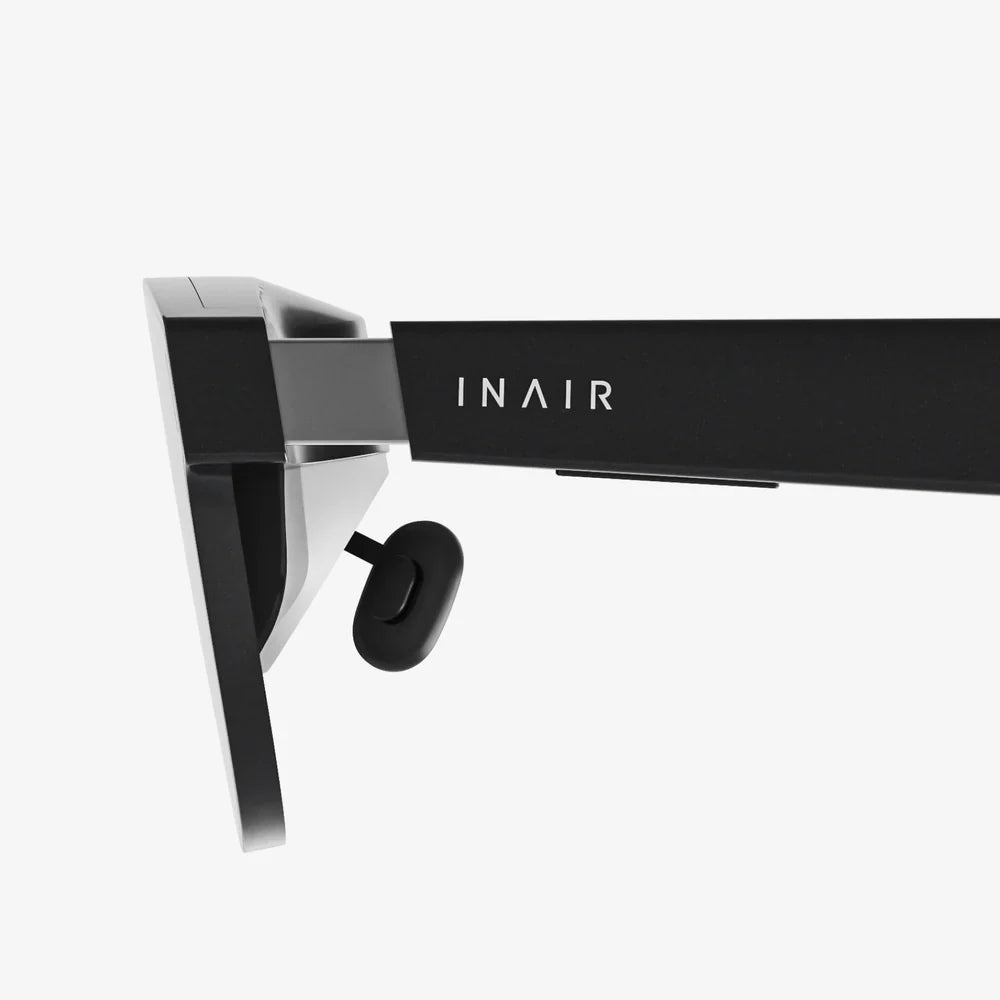
Imagine slipping on a pair of sleek, lightweight glasses and instantly overlaying high-definition maps, messages, and digital objects onto the real world around you. This isn't science fiction; it's the promise of next-generation augmented reality, and beating at the heart of this visual revolution is a piece of technology so small and so powerful it defies belief: the OLED microdisplay. To understand the future of how we will see and interact with information, we must first answer a fundamental question: how do these minuscule marvels of engineering actually work?
The Foundation: Understanding OLED Technology
Before we can shrink something down, we must first understand its full-sized counterpart. The core technology behind a microdisplay is the Organic Light-Emitting Diode, or OLED. Unlike traditional LCD screens that require a separate backlight, each individual pixel in an OLED panel is a microscopic solid-state device that emits its own light when an electric current is applied.
This is made possible by a series of organic semiconductor layers sandwiched between two electrodes. The key layers are:
-
The Emissive Layer: This is where the magic happens. When electrons flow into this layer, they release their energy in the form of photons—light. The specific organic compounds used in this layer determine the color of the light emitted.
-
The Conductive Layer: This layer facilitates the transport of "holes" (the absence of an electron, treated as a positive charge) from the anode.
-
The Anode and Cathode: These electrodes inject electrons and holes into the organic layers, creating the current that drives the light emission process.
The fundamental principle is called electrophosphorescence. A voltage is applied across the OLED, causing electrons to be injected from the cathode and holes from the anode. These opposites attract and meet in the emissive layer, forming a high-energy state known as an exciton. When this exciton relaxes to its ground state, it releases its energy as a photon of light. By carefully doping the emissive layer with different organic compounds, manufacturers can create precise red, green, and blue sub-pixels, which combine to form the full-color image you see.
The Art of the Miniature: Shrinking OLEDs to Micro Size
Now, take everything we know about a large OLED television panel and imagine compressing that technology into a display that is often smaller than a postage stamp, typically measuring between 0.2 and 1.5 inches diagonally. This is the domain of the microdisplay. The term "micro" doesn't just refer to its physical size but, more importantly, to its incredibly high pixel density, often exceeding 3,000 pixels per inch (PPI). For context, a high-end smartphone might have a pixel density of around 500 PPI.
This extreme miniaturization is not achieved by simply building a smaller version of a TV. The manufacturing process is fundamentally different and is where the true engineering marvel lies. The most common method for creating active-matrix OLED (AMOLED) microdisplays involves building the OLED layers directly on top of a silicon wafer, much like how computer chips are made. This foundation is called a CMOS (Complementary Metal-Oxide-Semiconductor) backplane.
The Silicon Backplane: The Display's Brain
The CMOS silicon wafer is more than just a passive substrate; it's an active driver circuit. Each individual pixel on the microdisplay has its own dedicated control transistor, built directly into the silicon. This transistor acts as a precise switch, controlling the exact amount of current flowing to the OLED pixel and thus determining its brightness. This direct, per-pixel control allows for exceptionally fast response times, incredibly fine grayscale control, and minimal power consumption, as pixels can be addressed and updated with extreme efficiency.
The use of a single-crystal silicon wafer provides a perfectly flat and uniform surface, which is crucial for depositing the nanoscale-thin organic layers without defects. It also allows for the integration of additional functionality, such as timing controllers, gamma correction, and other display driver logic, right onto the same chip, further reducing the size and complexity of the overall module.
A Tale of Two Architectures: Bottom vs. Top Emission
When building the OLED stack on the silicon backplane, engineers have two primary architectural choices, each with significant implications for performance.
Bottom-Emission Architecture
This was the first method developed. In a bottom-emission microdisplay, light is emitted downward through the transparent anode and the silicon substrate. This might seem counterintuitive, but the silicon wafer is etched and thinned to become transparent enough for light to pass through. The primary challenge with this design is that the complex circuitry of the CMOS backplane—the transistors, capacitors, and wires—can block and obstruct light, reducing the overall aperture ratio (the percentage of each pixel that actually emits light). This can limit maximum brightness and efficiency.
Top-Emission Architecture
This is the more advanced and now more common approach for high-performance microdisplays. In a top-emission design, the OLED stack is built to emit light upward, away from the silicon substrate. This means the light doesn't have to fight its way through the maze of circuitry below. The result is a dramatically higher aperture ratio, often exceeding 80%, leading to significantly higher brightness levels and better power efficiency for the same driving current. A highly reflective anode layer is used at the bottom of the stack to bounce all generated light toward the top. A transparent or semi-transparent cathode, often made from incredibly thin layers of metals like silver or magnesium-silver alloys, caps the structure, allowing light to escape.
Why So Small? The Compelling Advantages of OLED Microdisplays
The immense effort to create these tiny displays is justified by a set of unparalleled advantages that make them ideal for a host of specialized applications.
-
Exceptional Image Quality: They offer true blacks (because pixels can be completely turned off), an infinite contrast ratio, wide color gamut, and very fast response times, eliminating motion blur.
-
High Brightness and Efficiency: Top-emission designs, in particular, can achieve the high brightness levels needed for use in bright environments while remaining power-efficient, a critical factor for battery-powered wearables.
-
Small Form Factor and Low Weight: Their tiny size is their defining feature, enabling compact and lightweight head-mounted devices.
-
Robustness and Reliability: Being solid-state devices with no moving parts and built on a single-crystal silicon substrate, they are highly resistant to shock, vibration, and temperature variations.
From Lab to Life: The Applications They Enable
The unique properties of OLED microdisplays have opened doors to technologies that were previously impractical or impossible.
Augmented and Virtual Reality (AR/VR)
This is the flagship application. For AR glasses, microdisplays project information onto waveguides or other optical combiners that overlay the image onto the user's view of the real world. Their high pixel density is essential for creating a sharp, readable image that appears to float in space. For VR, they are used in ultra-high-resolution displays that sit very close to the eye, requiring extreme pixel density to avoid the "screen door effect."
Electronic Viewfinders (EVFs)
High-end digital cameras have largely abandoned optical viewfinders in favor of electronic ones. An OLED microdisplay inside the viewfinder provides a bright, high-contrast, and accurate preview of the photograph or video being captured, showing exactly what the image sensor sees.
Medical Imaging and Surgery
Surgeons use head-mounted displays or surgical microscopes integrated with OLED microdisplays to overlay critical patient data, ultrasound images, or surgical guidance markers directly into their field of view without looking away from the operating table. This enhances precision and improves outcomes.
Military and Aerospace
Helmet-mounted displays in fighter jets and for ground troops provide pilots and soldiers with vital tactical information, targeting data, and night vision capabilities, all hands-free and integrated into their vision.
Industrial Maintenance and Repair
Technicians can use smart glasses to view schematics, instruction manuals, and animated guides overlaid on the complex machinery they are repairing, streamlining processes and reducing errors.
The Road Ahead: Challenges and Future Developments
Despite their impressive capabilities, the development of OLED microdisplays is not without challenges. Maximizing lifespan, especially for blue OLED materials which historically degrade faster, is a constant area of research. Pushing pixel densities even higher to eliminate any visible pixels in AR/VR is another frontier. Furthermore, reducing manufacturing costs is crucial for broader consumer adoption beyond professional and industrial markets.
Future developments are likely to focus on new material systems for improved efficiency and longevity, the integration of novel pixel architectures for even higher resolutions, and the development of flexible and transparent microdisplays that could enable entirely new form factors for wearable technology.
The tiny world of the OLED microdisplay is a stunning convergence of material science, semiconductor physics, and optical engineering. It is a technology that operates at the boundary of the visible, yet its impact on how we will perceive and interact with the digital world is poised to be enormous. This intricate dance of electrons and photons, orchestrated on a sliver of silicon, is quietly building the foundation for the next great leap in visual technology, bringing the future into focus one microscopic pixel at a time.