


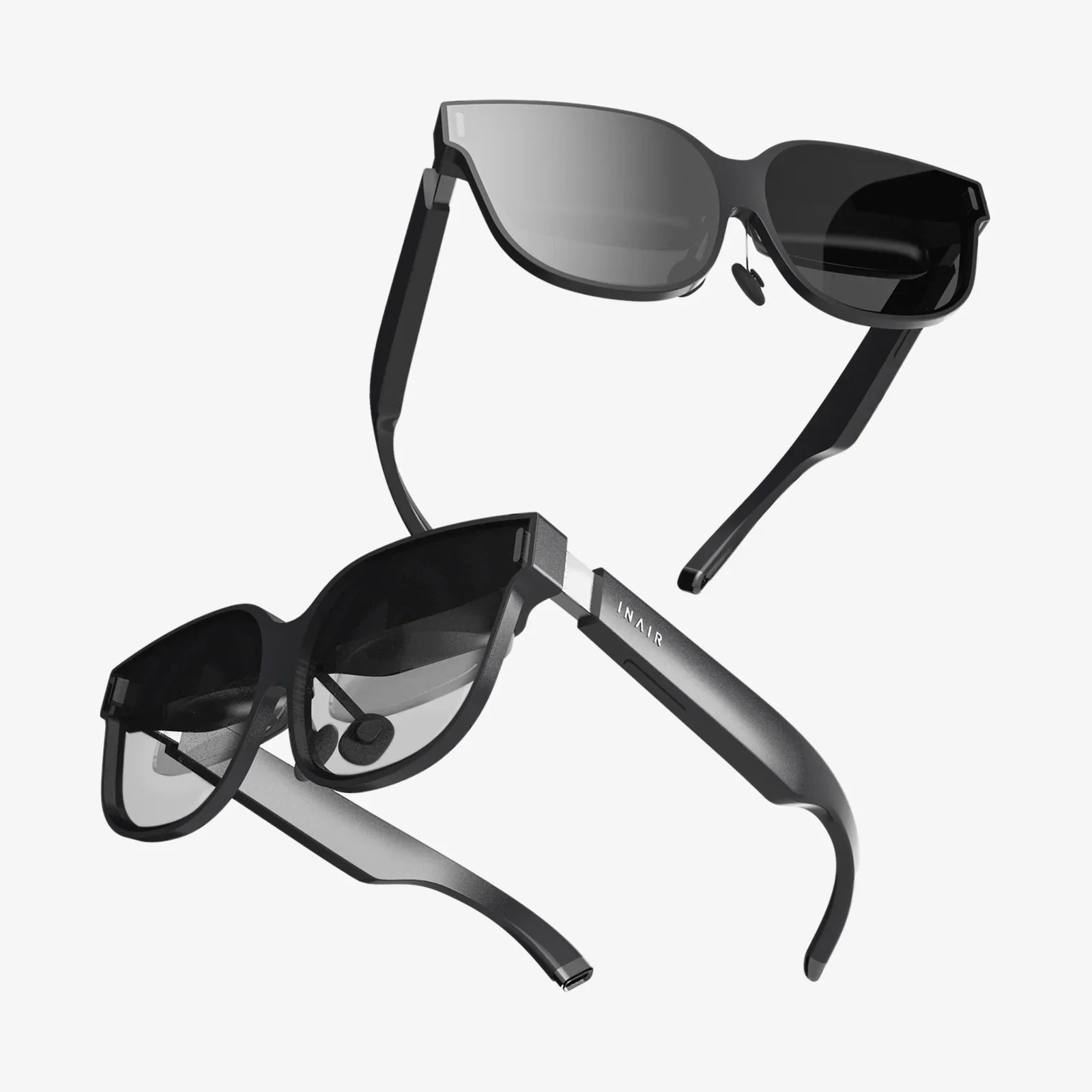
Imagine slipping on a headset and instantly being transported to the surface of Mars, collaborating with a holographic colleague who appears to be sitting across your desk, or trying on a new outfit without ever stepping into a store. This is the promise of Extended Reality (XR), a technological revolution that is blurring the lines between the physical and digital worlds. But have you ever stopped to wonder, as a digital avatar waves hello or a virtual dinosaur roars past you, just how this incredible magic is made? The journey from silicon and code to seamless immersion is a fascinating tale of engineering, neuroscience, and computational power, and it’s a story that is reshaping our very perception of reality itself.
The Three Pillars of XR: Defining the Spectrum
Before we dissect the machinery, it's crucial to understand that Extended Reality is not a single technology but an umbrella term encompassing a spectrum of immersive experiences. This spectrum is anchored by three core technologies, each offering a different level of integration between the user and the digital environment.
Virtual Reality (VR): The Complete Digital Escape
Virtual Reality is the most immersive end of the spectrum. It works by completely replacing the user's physical surroundings with a computer-generated simulation. By wearing a headset that occludes your vision and hearing, you are visually and audibly transported to a new world. The core function of VR is to create a convincing illusion of presence—the undeniable feeling that you are "there" in the virtual space. This is achieved by tracking your head movements and updating the visual perspective in real-time, making the digital world respond to your actions as the physical one would.
Augmented Reality (AR): The Digital Overlay
If VR replaces your world, Augmented Reality enhances it. AR works by superimposing digital information—images, text, 3D models—onto your view of the real world. This is most commonly experienced today through smartphone cameras, where you might see a dinosaur stomping across your living room floor on your screen, or through specialized smart glasses that project information directly onto their lenses. The magic of AR lies in its ability to understand and interact with the physical environment, anchoring digital objects to real-world surfaces and allowing them to persist and occlude realistically.
Mixed Reality (MR): The Seamless Blend
Occupying the space between AR and VR is Mixed Reality. MR is often considered the most advanced form of XR because it doesn't just overlay digital content; it allows that content to interact with the real world in a believable, physical way. In a true MR experience, a virtual character could sit on your real couch, casting a shadow and being partially hidden by it. Or you could use a digital controller to manipulate a holographic engine that appears to be resting on your actual workbench. MR requires a deep understanding of the geometry, lighting, and physics of the user's environment to create these convincing interactions.
The Hardware Symphony: Seeing, Hearing, and Moving
The illusion of XR is orchestrated by a sophisticated suite of hardware components working in perfect harmony. Each piece plays a critical role in tricking the human brain into accepting a digital fabrication as reality.
Visual Display Systems: Building the World Before Your Eyes
At the heart of any XR headset are the displays. These are high-resolution screens, typically one for each eye, positioned very close to the user's face. Special lenses are placed between the eyes and the screens to focus the image, making it appear as a vast, distant world rather than a tiny screen inches away. This stereoscopic vision is crucial for depth perception. To prevent discomfort and a break in immersion, these displays must operate at a very high refresh rate (90 frames per second or higher), ensuring motion appears smooth and lifelike, not laggy or jarring.
Tracking and Sensors: The System's Eyes and Ears
For the digital world to respond to you, the system must know where you are and what you're doing. This is accomplished through a complex array of sensors.
- Inside-Out Tracking: Cameras mounted on the headset itself constantly scan the surrounding environment. By identifying unique features in the room (a painting on the wall, the edge of a table), the system can triangulate its own position and orientation in space with incredible precision.
- Outside-In Tracking: External sensors or base stations placed around the room emit signals (like infrared light) that are picked up by sensors on the headset and controllers. This method is often used for high-end VR systems to achieve ultra-precise, low-latency tracking.
- Inertial Measurement Units (IMUs): These are micro-electromechanical systems (MEMS) containing accelerometers and gyroscopes. They provide high-frequency data on movement and rotation, filling in the gaps between the slightly slower camera updates to ensure there is no perceptible delay.
Audio and Haptics: Completing the Sensory Picture
Immersion is a multi-sensory experience. Spatial audio is a technology that mimics how sound behaves in the real world. By using head-related transfer functions (HRTFs), sounds can be made to appear as if they are coming from specific points in 3D space around you. A whisper from your left in a virtual game will sound like it's coming from your left, enhancing realism dramatically.
Haptics, or touch feedback, is the final frontier. Simple vibration in controllers provides basic feedback. Advanced systems use force feedback, ultrasonic waves, or even electrical muscle stimulation to simulate the feeling of touching a virtual object, adding a powerful layer of tactile confirmation to the visual and auditory experience.
The Software and Computational Engine: Weaving the Illusion
Hardware is the body of XR, but software is its brain and nervous system. This is where the raw data from the sensors is transformed into a coherent, interactive experience.
Simulation and Game Engines: The World Builders
Most XR experiences are built upon powerful game engines. These software platforms provide the tools to create 3D environments, program physics (like gravity and collision), animate characters, and render lighting and shadows in real-time. The engine is responsible for generating the two slightly different perspectives for each eye, rendering the scene at a blistering pace to maintain a high frame rate, and managing all the digital assets that make up the experience.
Computer Vision and Environmental Understanding
For AR and MR, the software must be exceptionally intelligent. This is the domain of computer vision algorithms. These algorithms analyze the video feed from the headset's cameras to perform critical tasks:
- Simultaneous Localization and Mapping (SLAM): This is the foundational technology. SLAM allows the device to both map an unknown environment (creating a 3D mesh of your room) and localize itself within that map simultaneously. It's how your headset knows where the walls, floor, and furniture are.
- Plane Detection: Identifying flat, horizontal surfaces like tables and floors, and vertical surfaces like walls, so digital objects can be placed on them realistically.
- Object Occlusion: Understanding the depth of the scene so that a virtual object can be correctly hidden behind a real-world couch, a key factor in achieving believable mixed reality.
Latency: The Immersion Killer
The single greatest technical challenge in XR is latency—the delay between when you move your head and when the display updates to reflect that movement. High latency, even as little as 20 milliseconds, can cause disorientation, eye strain, and simulator sickness. The entire system, from sensor to display, is engineered to minimize this motion-to-photon latency. This involves incredibly fast sensor data processing, efficient rendering techniques, and clever software prediction algorithms that anticipate your movement to render frames a fraction of a second before the movement is even completed.
The Human Factor: Perception and Psychology
Ultimately, XR doesn't work in a vacuum; it works by hijacking the human sensory system. Its effectiveness is rooted in an understanding of human perception.
Creating the Sensation of Presence
Presence is the holy grail of XR. It's the psychological phenomenon of your brain accepting the virtual environment as real. This is achieved through consistent and convincing sensory input. When you turn your head, the world shifts exactly as expected. When you reach out to touch a virtual object, it doesn't phase through your hand. This congruence between action and reaction convinces your subconscious that the experience is genuine. Breaks in this consistency, known as breaks in presence, instantly shatter the illusion.
Vergence-Accommodation Conflict: A Biological Hurdle
One of the main reasons VR can cause eye strain is a fundamental mismatch in how our eyes work. In the real world, to focus on an object (accommodation), our eyes also turn inward toward each other (vergence). These two actions are neurologically linked. In most current VR headsets, the eyes are always focused on the fixed distance of the screen, but must still verge for objects at different virtual distances. This conflict between vergence and accommodation is unnatural and can cause discomfort, pushing researchers to develop varifocal and light field displays that can dynamically adjust focus.
The Future and Ethical Dimensions of XR
The technology behind XR is advancing at a breathtaking pace. We are moving towards lighter, more comfortable headsets with higher-resolution displays, wider fields of view, and more accurate haptic feedback. The convergence of XR with artificial intelligence will lead to environments and characters that are more responsive and intelligent. Furthermore, the development of brain-computer interfaces could eventually allow us to manipulate virtual worlds with our thoughts, moving beyond controllers and hand-tracking.
However, this power comes with profound ethical questions. How do we protect privacy in a world where devices map our homes and track our every gesture and glance? How do we prevent the creation of perfectly convincing deepfakes and misinformation in AR? And what are the long-term psychological effects of spending significant time in blended realities? The answers to these questions will be just as important as the technological breakthroughs themselves.
The next time you witness a hologram or step into a virtual landscape, you'll see more than just a clever trick. You'll see the culmination of decades of research in computer graphics, sensor fusion, and human-computer interaction—a symphony of hardware and software conducting an elaborate illusion specifically for you. This is not mere entertainment; it is a new lens through which we will learn, work, connect, and understand our own reality. The door to these blended worlds is now open, and the journey to redefine the possible has only just begun.
Share:
New Augmented Reality Headset: The Unseen Revolution on Your Horizon
VR Headset Display: The Ultimate Guide to Resolution, Lenses, and Immersion