


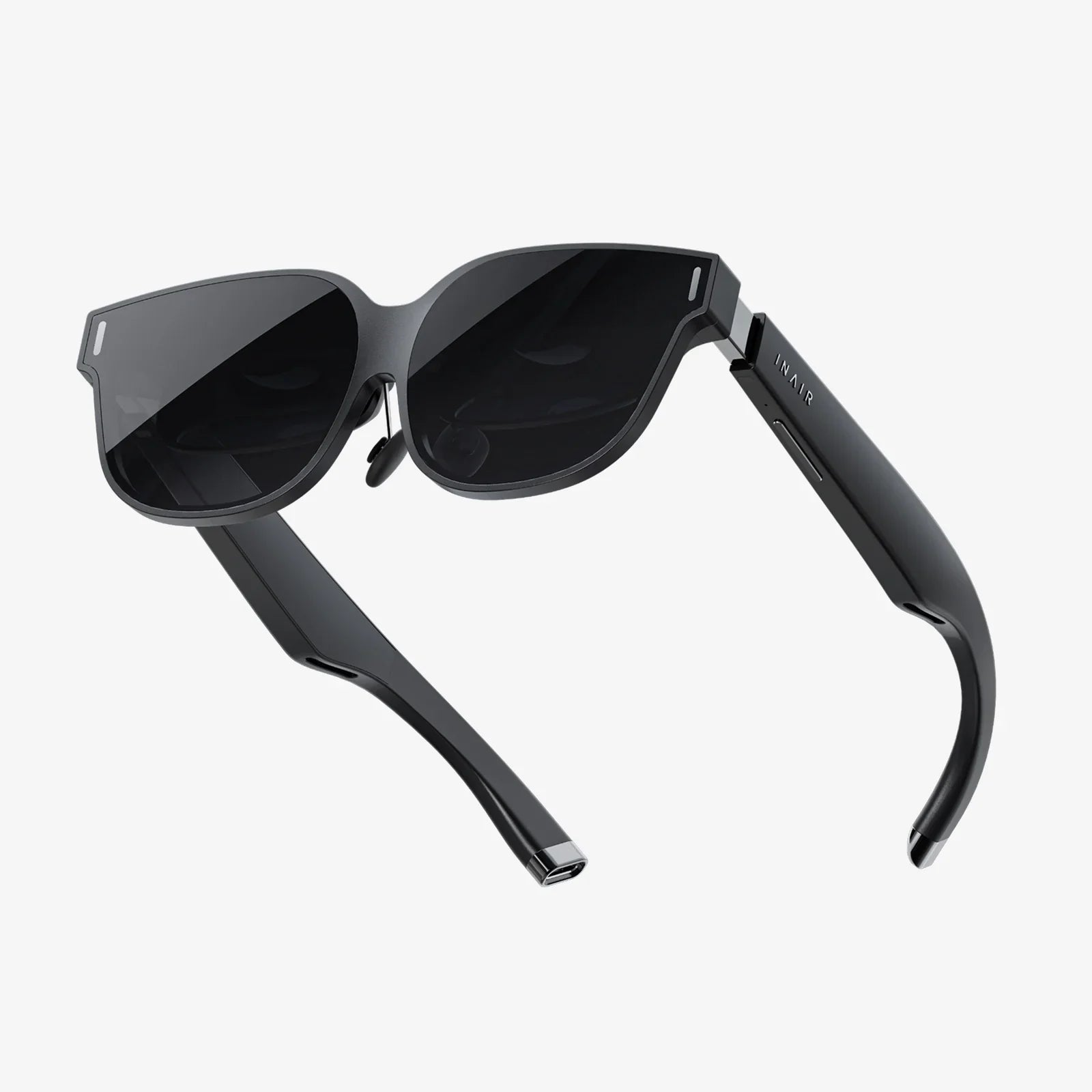
Imagine a world where digital information doesn’t live on a screen in your hand, but is seamlessly woven into the very fabric of your reality. This is the tantalizing promise, the siren's call, of the latest generation of wearable technology. The buzz is electric, the potential is staggering, and it’s all centered on one pivotal piece of hardware. This isn't just another gadget; it's a key, poised to unlock a new layer of human experience.
Beyond the Hype: Defining the New Paradigm
The conversation around augmented reality (AR) has often been mired in science fiction or dismissed as a fleeting gimmick. However, the latest hardware represents a fundamental leap, moving the technology from a novel prototype to a sophisticated tool nearing mainstream viability. This isn't about overlaying clumsy digital dinosaurs in your living room; it's about a persistent, contextual, and intelligent digital layer that enhances your perception and interaction with the world.
This new generation of device addresses the critical trilemma that plagued earlier iterations: form factor, functionality, and affordability. Engineers have made staggering progress in miniaturizing the complex optical systems required for high-fidelity AR. Instead of bulky, face-engulfing visors, we are seeing designs that resemble sleek, modern eyewear, aiming for all-day comfort and social acceptability.
The Technological Heart: Seeing the World Anew
At the core of this revolution are several converging technological advancements. Understanding them is key to appreciating the magic.
The Display: A Window to a Digital Layer
The most critical challenge has always been how to project digital images onto the real world without them appearing translucent, blurry, or confined to a small, distracting box in your vision. New waveguide and holographic optical elements are solving this. These advanced optics pipe light directly into the user’s eyes, allowing for bright, crisp, and solid-looking digital objects to coexist with the physical environment. The field of view—the size of the digital canvas—has expanded significantly, creating a more immersive and less restrictive experience.
Spatial Mapping and Computer Vision
For digital content to feel like it truly belongs in your space, the device must understand that space intimately. A suite of sophisticated sensors, including LiDAR scanners, depth sensors, and high-resolution cameras, continuously scans the environment. This creates a real-time, millimeter-accurate 3D map of the room, understanding the geometry of walls, the shape of tables, and the position of objects. This allows a virtual pet to convincingly hide under your real sofa or a navigation arrow to point directly to a specific product on a physical store shelf.
Power and Processing: The Invisible Brain
All this sensing and rendering requires immense computational power. While some processing is offloaded to a companion device, the onboard processors in these new headsets are marvels of efficiency. Dedicated AI chips process the sensor data instantaneously, handling complex tasks like object recognition, hand-tracking, and spatial anchoring without noticeable lag, which is crucial for maintaining the illusion of a unified reality.
Transforming the Professional Landscape
While consumer applications generate excitement, the most immediate and profound impact will be felt in the workplace. This technology is poised to become the ultimate productivity tool, revolutionizing entire industries.
The Future of Design and Engineering
Architects and industrial designers can step inside their 3D models at full scale, walking through a building before a single brick is laid and making adjustments in real-time. Mechanics can see interactive repair instructions overlaid directly on the engine they are fixing, with arrows pointing to specific bolts and warnings highlighting potential issues. This hands-free, context-rich information delivery drastically reduces errors and training time.
Revolutionizing Healthcare and Medicine
In medicine, the potential is life-changing. Surgeons could have vital signs, 3D scans, and guidance systems superimposed directly on their field of view during procedures, without ever turning away from the patient. Medical students could practice complex surgeries on detailed holographic cadavers. Therapists could use AR for exposure therapy, creating controlled, immersive environments for patients in a safe clinical setting.
Remote Collaboration Reimagined
The concept of the "remote worker" will be fundamentally altered. Instead of staring at a grid of faces on a video call, colleagues from across the globe could be projected as life-like holograms into your physical office. You could collaboratively interact with the same 3D model, making notes in mid-air that everyone can see, creating a sense of presence and shared space that flat screens cannot hope to match.
The Social and Personal Dimension: A New Digital Etiquette
As this technology moves into the public sphere, it brings a host of social questions. Wearing a camera and microphone on your face inherently raises concerns about privacy, both for the user and for those around them. How do we record or interact with digital content in a shared physical space without being disruptive or intrusive? New social norms and etiquettes will need to evolve. Furthermore, the potential for always-available information could lead to cognitive overload or a further blurring of the line between work and personal life. The design of these systems must prioritize user-control and the ability to easily disconnect and be present in the un-augmented world.
Navigating the Ethical Labyrinth
The power of this technology is inseparable from its perils. The same detailed spatial mapping that enables amazing applications also creates an unprecedented dataset about a user's personal life and environment. Who owns this data? How is it stored and used? The potential for targeted advertising becomes unnervingly precise—imagine walking past a coffee shop and seeing a virtual coupon float in the air, personalized to your taste. Robust ethical frameworks and transparent data policies are not an add-on; they are a prerequisite for public trust and adoption.
The Road Ahead: From Niche to Normal
Widespread adoption won't happen overnight. The current wave of devices, while advanced, still exists in an early-adopter phase. Cost remains a significant barrier, and the true "killer app" for the average consumer—the equivalent of the smartphone's web browser and app store—has yet to be universally identified. It may be a revolutionary new social platform, a transformative way to consume media, or an application we haven't even conceived of yet. The ecosystem of developers and creators will be the ultimate architects of this new reality.
The journey ahead is one of refinement, cultural adaptation, and creative explosion. The path is being paved not just by engineers, but by artists, storytellers, educators, and everyday users who will discover new ways to augment their world. The hardware is the invitation; it is now up to us to write the story of what comes next.
We stand at the precipice of a fundamental shift in how we compute, connect, and comprehend our world. This is more than an upgrade; it's the dawn of a new sensory experience, waiting for you to take a look.
Share:
Most Immersive VR Headset - A Deep Dive Into Total Digital Embodiment
How Does Extended Reality Work: A Deep Dive Into The Magic Behind XR