


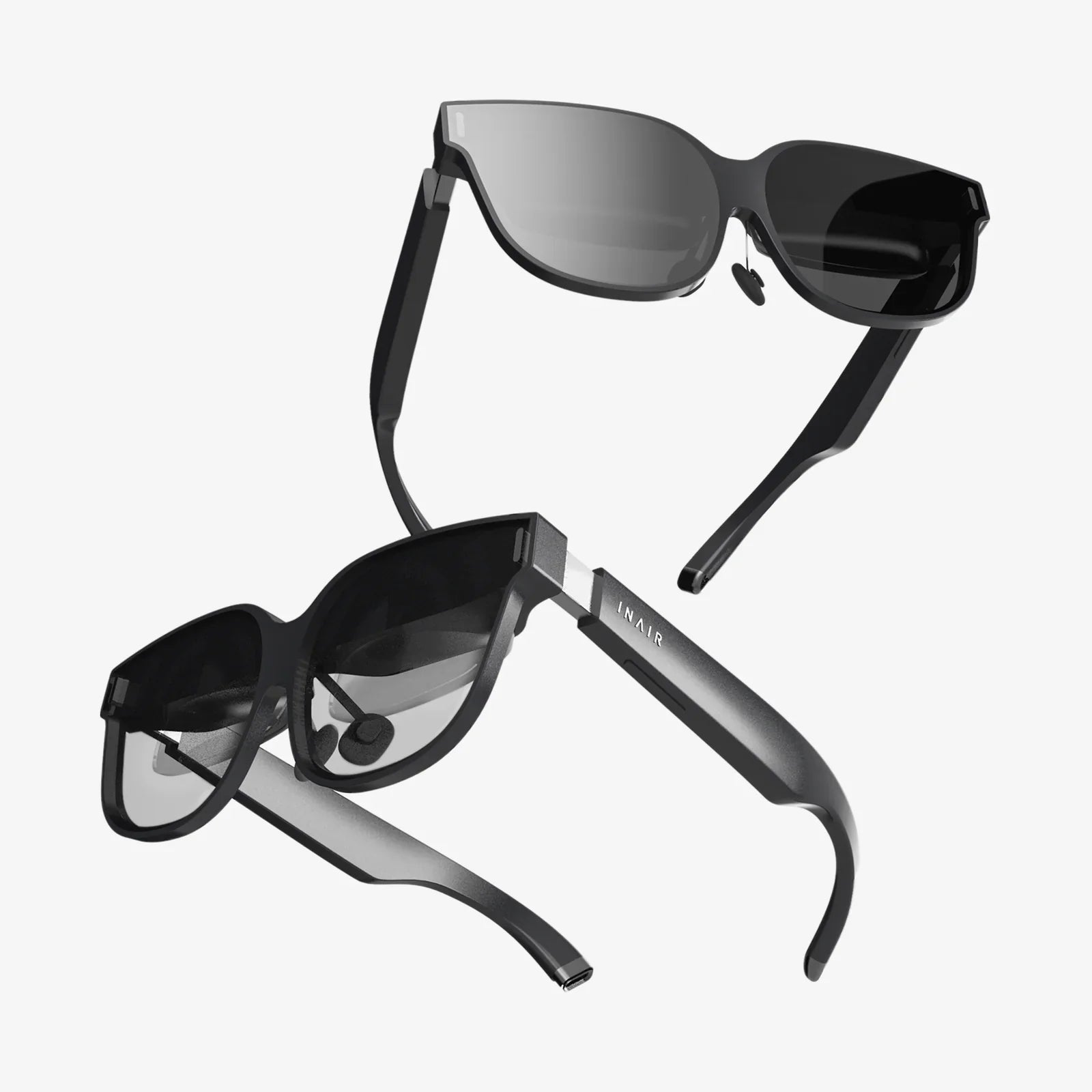
You slip on the headset, and the real world vanishes. In its place, a breathtaking alien landscape stretches to the horizon, or perhaps the intricate cockpit of a starship materializes around you. This is the promise of virtual reality—a complete visual hijacking of your senses. But have you ever stopped to wonder, in that moment of pure immersion, how does virtual reality actually look? The answer is far more complex and fascinating than simply ‘like a screen close to your face.’ It is a delicate, intricate dance of cutting-edge technology and the quirks of human biology, all working in concert to convince your brain that the impossible is real.
The Building Blocks: Screens, Lenses, and the Bridge to Your Brain
At its most fundamental level, the visual experience of VR begins with two tiny, high-density screens, one for each eye. These are not the standard panels found in smartphones or televisions; they are engineered for extreme proximity to the eye and must operate at exceptionally high speeds. The resolution of these displays is the first and most critical factor in answering our question. Early VR was often criticized for its ‘screen door effect,’ a visible grid of black lines between pixels that made the digital world look like it was viewed through a fine mesh. This happened because the pixels were too large and too far apart relative to the lens magnification.
Modern systems have made monumental strides in combating this. With resolutions climbing to 4K per eye and beyond, and the implementation of advanced subpixel arrangements, the screen door effect is rapidly becoming a relic of the past. The goal is to achieve a pixel density so high that the human eye cannot distinguish individual pixels, creating a seamless, continuous image. However, raw resolution is only part of the story. The quality of these panels—their color gamut, contrast ratio, and ability to handle fast motion without blurring (measured by persistence)—is equally vital in crafting a visually rich and convincing world.
These screens are useless, however, without their partners: the lenses. Placed between the screens and your eyes, these specialized optical lenses serve two primary purposes. First, they focus the image from the incredibly close screens onto your retinas, allowing your eyes to relax as if they were looking into the distance rather than at a surface inches away. This is crucial for comfort and preventing eye strain. Second, the lenses warp the image from the flat panel into a wide, spherical field of view that fills your peripheral vision. This process, a type of pre-distortion called a ‘warp,’ is precisely calculated to be counteracted by a matching ‘de-warp’ performed by the software, resulting in a correct, natural-looking perspective for the user.
The Metrics of Immersion: Field of View, Refresh Rate, and Latency
Three technical specifications work in tandem to sell the illusion of reality, and when they fail, the illusion shatters instantly.
Field of View (FoV)
Imagine looking at the world through a pair of binoculars. No matter how clear the image, the knowledge that you are looking through a tunnel reminds you that you are separated from the reality of the scene. Field of View in VR is the measure of how much of your vision is filled by the virtual environment, typically measured diagonally in degrees. The human eye has a natural FoV of approximately 220 degrees. Most consumer VR systems offer between 90 and 120 degrees. While this is enough to create a strong sense of presence, a narrow FoV can create a feeling of looking through a diving mask or goggles, a constant visual reminder of the headset's presence. Wider FoVs are a key frontier for development, seeking to erase this boundary completely and achieve true peripheral immersion.
Refresh Rate
This is the speed at which the image on the screen is updated, measured in Hertz (Hz). Standard cinema operates at 24Hz, and television at 60Hz. For VR, this is nowhere near enough. Because the image is so close to your eyes and encompasses your entire vision, any stutter or flicker is not only noticeable but can be profoundly disorienting and nauseating. High refresh rates—90Hz, 120Hz, and now even 144Hz and higher—are essential for creating smooth, fluid motion. A high refresh rate ensures that when you turn your head, the world moves with perfect, fluid continuity, not in a series of jerky, discrete images. This smoothness is a cornerstone of visual comfort and is critical for tricking the brain into accepting the virtual world as stable and real.
Latency: The Dragon Every System Must Slay
If there is one single factor that can make or break the VR visual experience, it is latency. This is the delay between when you move your head and when the image on the screen updates to reflect that movement. In the real world, this happens instantaneously. In VR, even a delay of 20 milliseconds (ms) can be perceptible and uncomfortable. Latencies above 50ms are almost guaranteed to induce simulator sickness, a form of nausea caused by a mismatch between what your eyes see and what your vestibular system (your inner ear balance system) feels.
Combating latency is a system-wide effort. It requires incredibly fast tracking sensors to detect motion, incredibly powerful processors to calculate the new perspective, and incredibly responsive displays to render it. This is why the pursuit of faster processors and more efficient algorithms is so fervent in VR development. The visual experience is not just about fidelity; it is about synchrony. The virtual world must be perfectly locked to your real-world movements, with zero perceptible lag. When it works, you forget the technology is there. When it fails, you are painfully aware of it.
The Software Sorcery: Rendering, Foveation, and Ray Tracing
The hardware provides the canvas, but the software paints the masterpiece. How a virtual scene is constructed and drawn is what defines its aesthetic and believability.
Rendering and the 3D Illusion
Unlike a flat game on a monitor, VR must render two distinct perspectives—one for each eye—to create a stereoscopic 3D effect. This stereoscopy, the slight difference between the images seen by the left and right eye, is a primary depth cue that makes objects feel solid and tangible in space. This effectively doubles the graphical computational load. Furthermore, the image must be rendered with the correct warping for the lenses, adding another layer of complexity. Developers use advanced game engines that are specifically optimized to handle this immense task, employing techniques like instancing (drawing many identical objects efficiently) and dynamic resolution scaling (temporarily lowering resolution during graphically intense moments to maintain a high framerate).
Foveated Rendering: A Biological Shortcut
One of the most ingenious software techniques leverages a quirk of human anatomy. The human eye only sees in high resolution in a very small central area called the fovea. Our peripheral vision is excellent at detecting motion and contrast but is very poor at detail. Foveated rendering is a technique that tracks your eye position and renders only the exact center of your gaze at full resolution. The areas in your peripheral vision are rendered at a progressively lower resolution and level of detail. The user does not perceive this because their eyes are physically incapable of seeing the detail drop-off unless they look directly at it. This massive reduction in computational load allows for vastly improved graphical fidelity where it matters most, without requiring impossibly powerful hardware.
The Holy Grail of Light Simulation: Ray Tracing
Light is what makes the real world look real. The way it bounces off surfaces, casts sharp and soft shadows, reflects in puddles, and refracts through glass is incredibly complex. Traditionally, games have used pre-baked ‘lightmaps’ and clever tricks to simulate lighting, but these techniques break down in dynamic, user-controlled VR environments. Ray tracing is a rendering technique that simulates the physical behavior of light by tracing the path of light rays as they interact with virtual objects. The result is breathtakingly realistic lighting, shadows, and reflections that behave exactly as they would in reality. While immensely computationally expensive, the integration of hardware-accelerated ray tracing is beginning to transform the visual quality of VR, adding a final, crucial layer of visual plausibility that sells the illusion completely.
The Human Factor: Perception, Comfort, and the ‘Uncanny Valley’
Ultimately, the question of how VR looks is answered not by a spec sheet, but by the human brain. Our perception is a constructed reality, and VR is an exercise in carefully manipulating that construction.
Visual comfort is paramount. We've already discussed how low latency and high refresh rates prevent nausea. But other factors play a role, such as Vergence-Accommodation Conflict (VAC). In the real world, your eyes converge (cross or uncross) and accommodate (focus) in tandem when looking at objects at different distances. In most VR systems, the image is fixed at a single focal plane (usually a few meters away), even if a virtual object is right in front of your nose. Your eyes will converge to look at it, but their focus must remain at the fixed distance. This mismatch can cause eye strain and discomfort. Emerging technologies like varifocal displays, which dynamically adjust the focal plane, are working to solve this fundamental biological challenge.
Then there is the ‘Uncanny Valley’—the unsettling feeling that arises when a synthetic humanoid looks almost, but not quite, real. In VR, this effect is magnified tenfold due to the immersion and stereoscopic 3D. A character that might seem passable on a flat screen can feel deeply unnerving when standing right in front of you in VR. This pushes developers to either pursue photorealistic humans with perfect skin, eye, and muscle simulation—a monumental task—or to embrace stylized, non-realistic aesthetics. This is why many of the most visually acclaimed VR experiences feature artistic, cartoonish, or abstract visuals. They sidestep the Uncanny Valley entirely and create a cohesive, believable world on their own terms, proving that visual fidelity is not the same as visual believability.
The Future Horizon: What’s Next for VR Visuals?
The trajectory of VR visuals is moving towards the complete eradication of the medium's presence. The goal is not just a higher resolution screen, but a perfect visual facsimile of reality. We are moving towards light-field displays, which project a true 3D image that allows your eyes to focus naturally at different depths, finally solving VAC. Resolution will continue to climb until pixels are utterly indistinguishable, and wireless technology will advance to support the vast data throughput needed for such fidelity. Furthermore, the integration of external passthrough cameras is evolving from grainy, black-and-white safety views into high-resolution, mixed reality experiences that seamlessly blend the real and the virtual, challenging our very definitions of what is ‘real’ to look at.
The magic of virtual reality's visual presentation is that it is a grand deception—a technological sleight of hand played on the most sophisticated processor we know: the human brain. It is a symphony of optics, processing power, and software genius, all conducted with the singular goal of making you believe. It looks, in its finest moments, not like a simulation, but like a place. And as the technology continues its relentless march forward, the line between the world we are born into and the worlds we create will become increasingly, and wonderfully, blurred.
Share:
Most Realistic Virtual Reality Experience - Blurring the Line Between Digital and Physical
What Is Mixed Reality vs Virtual Reality: The Ultimate Guide to Immersive Technologies