


- by wangfred
How Expensive Is Augmented Reality: A Deep Dive into the True Cost of Digital Overlay
- by wangfred
Imagine a world where digital information seamlessly blends with your physical reality—where instructions float over a complex machine you're repairing, historical figures reenact battles on an empty field before your eyes, or a new piece of furniture materializes in your living room before you buy it. This is the promise of augmented reality (AR), a technology poised to revolutionize how we work, learn, and play. But as this future inches closer to the present, a critical question emerges for businesses and consumers alike: just how expensive is this digital leap? The answer is far from simple, hidden behind a veil of hardware tiers, development complexities, and a spectrum of use cases that range from the frivolous to the mission-critical.
The cost of augmented reality is not a single number but a complex equation with multiple variables. To understand it, we must dissect it across several dimensions: the price of experiencing AR as a consumer, the significant investment required to develop AR applications, the total cost of ownership for enterprise deployments, and the often-overlooked hidden costs that can make or break an AR project. The spectrum is vast, encompassing everything from a free filter on a social media app to multi-million-dollar industrial systems.
For the average person, the entry point to AR has never been cheaper. The most accessible form of AR is literally in the palm of your hand.
The proliferation of powerful smartphones with advanced cameras, sensors, and processing power has democratized basic AR. Platforms developed by major tech companies have created robust toolkits that allow developers to build AR experiences for existing devices. For the user, this means the hardware cost is already sunk; they are using a device they already own for communication, photography, and web browsing. The software can range from free games and social media filters to retail apps that allow you to visualize products in your home, often at no direct cost. This free-to-use
model is supported by advertising, data, or, in the case of retail, driving product sales.
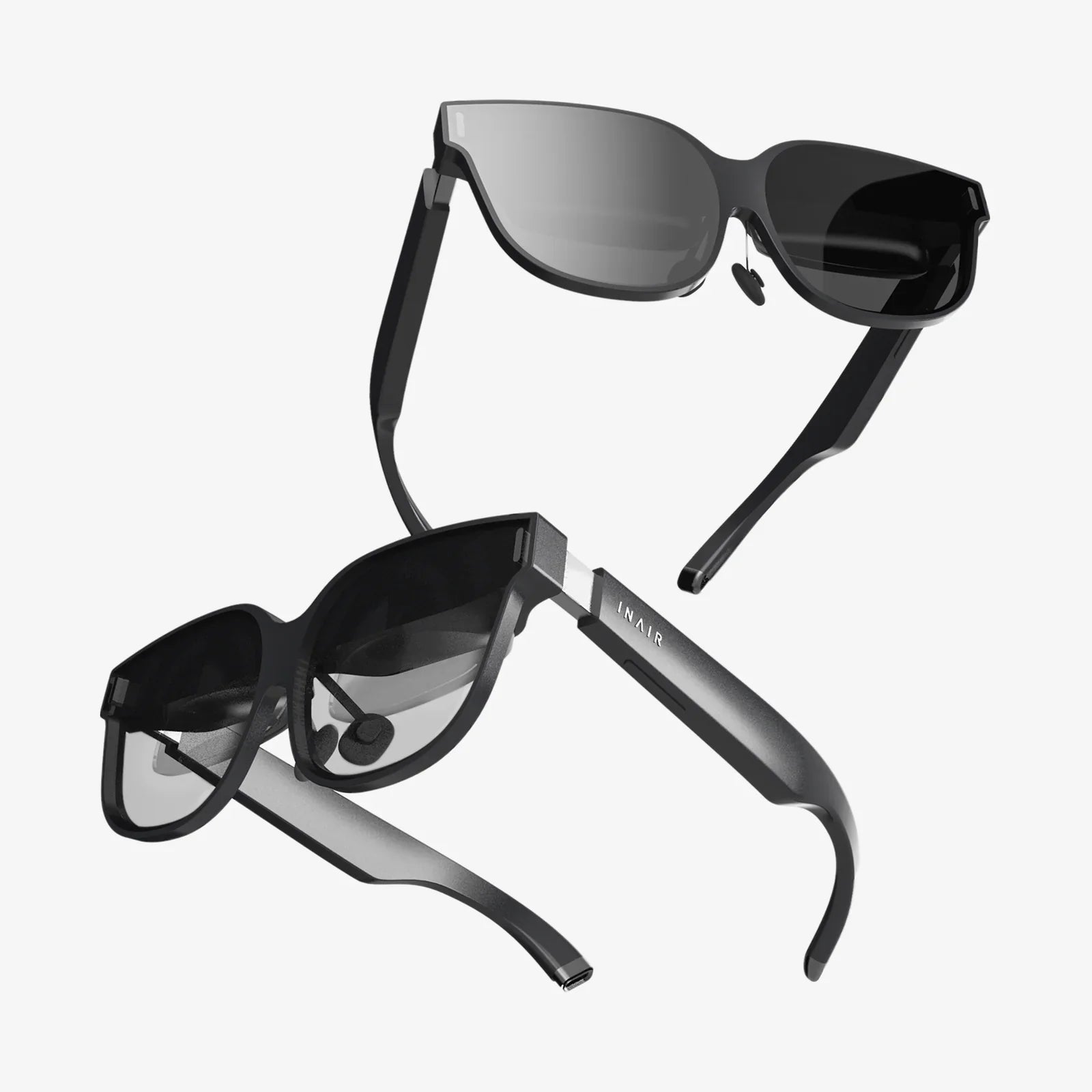
The next step up in fidelity and immersion is the standalone AR headset. These devices contain all the necessary compute power, sensors, and optics within the headset itself, untethering the user from a phone or computer. Prices for capable standalone devices typically range from several hundred to over a thousand dollars. This price point reflects the advanced technology packed inside: waveguide displays, spatial mapping cameras, depth sensors, and powerful mobile processors. They represent a significant consumer purchase, akin to buying a high-end tablet or gaming console, and are targeted at early adopters, developers, and specific professional use cases.
At the top end of the consumer-accessible spectrum are high-end headsets, which often blur the line into enterprise equipment. Some of these devices can cost several thousand dollars. They may offer features like a much wider field of view, higher-resolution displays, enterprise-grade software support, and robust comfort for all-day wear. Some models are designed to be tethered to a powerful personal computer, offloading the intense graphical processing and leveraging dedicated graphics cards. This adds the cost of a high-performance PC to the overall investment, pushing the total system cost firmly into the premium category.
While consumer hardware costs are relatively straightforward, the true financial gravity of AR lies in software development. Building a compelling, functional, and stable AR application is a significant undertaking whose cost can dwarf that of the hardware.
The largest line item in any AR project is human capital. A full-featured AR application requires a diverse team of experts, each commanding a substantial salary:
The cost for a simple, single-feature AR application from a small team can start in the tens of thousands of dollars. A more complex application, like an industrial training simulator or a multi-user retail experience, can easily run into the hundreds of thousands, if not millions, when accounting for full development cycles, iteration, and testing.
Beyond salaries, development incurs other costs. Professional licenses for game engines and design software add up. If the application requires cloud connectivity for storing user data, processing complex simulations, or enabling multi-user functionality, ongoing cloud hosting fees become a recurring expense. The more robust and scalable the application needs to be, the higher these infrastructure costs climb.
An AR application is an empty vessel without content. For a museum AR tour, this means researching, writing, and producing historical narratives and recreations. For a furniture store, it means creating photorealistic 3D models of every product in their catalog. This content creation is a massive, ongoing expense that is often underestimated at the project's outset.
For businesses, the question shifts from How much does it cost?
to What is the return on investment (ROI)?
Here, the upfront costs can be astronomical, but the potential savings and productivity gains justify the expenditure.
An enterprise deploying AR to a thousand field service technicians isn't buying one headset; it's buying a thousand, plus spares, plus charging stations, plus secure storage and transport cases. This represents a capital expenditure of millions of dollars in hardware alone.
Off-the-shelf AR solutions are rare for specialized industrial tasks. Enterprises typically need custom software built to integrate with their existing systems—enterprise resource planning (ERP), customer relationship management (CRM), and inventory management systems. This development, as outlined above, is a multi-year, multi-million-dollar project.
The cost of the technology is only part of the story. Enterprises must invest heavily in training their workforce to use these new tools effectively. This includes creating training materials, dedicating trainers, and managing the cultural shift within the organization. Resistance to change can sink an otherwise perfectly executed technological deployment.
Despite these immense costs, enterprises are charging ahead because the ROI can be transformative. AR can:
When a single avoided error saves hundreds of thousands of dollars in downtime or prevents an accident, the entire cost of an AR program can be justified by a handful of successful use cases.
Beyond the obvious hardware and software bills lurk hidden costs that can dramatically impact the total expense.
An AR application is not a fire-and-forget product. Operating system updates on phones and headsets can break functionality. New hardware models with different sensor configurations require testing and optimization. User feedback will demand new features and improvements. This requires a dedicated team for ongoing maintenance, which is a perpetual operational expense.
AR is incredibly demanding on hardware. Processing camera feeds, mapping the environment, and rendering high-fidelity 3D graphics drains batteries rapidly. This can limit usability and may necessitate purchasing external battery packs or frequent charging cycles, impacting productivity.
AR headsets are essentially cameras on your face, constantly scanning and capturing the environment. For enterprise use, this raises massive data security and privacy concerns. Where is this video data being processed and stored? How is it protected? Ensuring compliance with regulations and preventing sensitive environmental data from leaking requires robust security measures, which add significant cost and complexity.
A poorly designed AR experience that is uncomfortable, difficult to use, or provides little value will not be adopted, rendering the entire investment worthless. The cost of failure—sunk development time and unused hardware—is a very real and often uncalculated risk.
Like all transformative technologies, from personal computers to smartphones, the cost of AR is on a downward trajectory while its capabilities are rapidly expanding.
Hardware components like displays and sensors are becoming cheaper and more efficient through economies of scale and technological innovation. Software development is being simplified through more mature and powerful development platforms and the emergence of no-code/low-code solutions that allow non-programmers to create basic AR experiences. The growing library of available 3D assets and cloud-based AR services is also reducing the content creation burden.
We are moving towards a future where sophisticated AR will be accessible to smaller businesses and eventually ubiquitous for consumers. The high-end, of course, will continue to push the boundaries of what's possible at a premium, but the floor for entry will continue to drop.
So, how expensive is augmented reality? It is as expensive as a free mobile game and as costly as a fundamental reinvention of a global corporation's workflow. The price tag is entirely contextual, dictated by ambition, scale, and complexity. For a casual user, the cost is negligible, hidden within the device they already love. For a developer, it's a substantial investment in talent and time. For a Fortune 500 company, it's a strategic bet with a eight-figure price tag and the promise of a nine-figure return. The true cost of AR isn't just in the dollars spent on glasses or code; it's in the value it creates—or fails to create. As the technology matures, the question will evolve from Can we afford it?
to the far more compelling: Can we afford to be left behind?
Share:
What Technology Is Used in Augmented Reality: The Digital Layer on Our World
What Can I Use VR Glasses For - Exploring the Limitless Virtual Frontier