


- by wangfred
What Technology Is Used in Augmented Reality: The Digital Layer on Our World
- by wangfred
Imagine a world where digital information doesn't just live on a screen but is seamlessly woven into the fabric of your reality, accessible with a glance, a gesture, or a simple voice command. This is the promise of augmented reality (AR), a technology that is rapidly moving from science fiction to an integral part of our daily lives, from how we work and learn to how we play and connect. But have you ever stopped to wonder about the intricate technological ballet happening behind the scenes to make this digital magic possible? The journey from a concept to a convincing, interactive overlay on our world is powered by a complex and fascinating symphony of hardware and software, each component playing a critical role in bridging the gap between the physical and the digital.
Before an AR system can augment your reality, it must first understand it. This is the primary role of a suite of sophisticated sensors that act as the eyes and ears of the device, collecting raw data about the environment and the user's place within it.
The most fundamental sensor is the camera. It continuously captures the live video feed of the user's surroundings. However, this is not just a simple video recording. In advanced AR systems, multiple cameras are often used. A standard RGB camera captures color and light, but it's frequently paired with specialized depth-sensing cameras. These can use various technologies, such as structured light, which projects a pattern of invisible infrared dots onto a surface and measures their deformation to calculate depth, or time-of-flight (ToF) sensors, which measure the time it takes for a light signal to bounce back from an object. This combination allows the AR system to perceive the world not as a flat image, but as a three-dimensional space with volume, distance, and obstacles.
While cameras see the world, Inertial Measurement Units (IMUs) feel the movement of the device itself. An IMU is a micro-electromechanical system (MEMS) that typically contains a combination of accelerometers (measuring linear acceleration), gyroscopes (measuring rotational velocity), and magnetometers (acting as a digital compass). These sensors provide high-frequency data on how the device is moving, tilting, and rotating. This is crucial for tracking the user's head or hand movements with minimal latency, ensuring that digital objects don't jitter or float unnaturally as you move. The data from the IMU is often fused with the visual data from the cameras in a process called sensor fusion, creating a much more stable and accurate understanding of the device's position and orientation.
For even more precise environmental understanding, some systems incorporate Light Detection and Ranging (LiDAR) scanners. LiDAR works by rapidly firing laser pulses and measuring their return time to create a highly detailed point cloud map of the environment. This provides instant, millimeter-accurate depth information, allowing for incredibly fast and accurate placement of virtual objects and superior occlusion (where virtual objects can realistically be hidden behind real-world objects). Other sensors, like microphones for voice commands and ambient sound analysis, and GPS for coarse outdoor location tracking, further enrich the system's contextual awareness.
The raw data from the sensors is meaningless without a powerful brain to process it. This is where the computational heavy lifting occurs, transforming sensor inputs into a coherent digital model of the world.
At the absolute core of any advanced AR experience is a complex algorithm called Simultaneous Localization and Mapping, or SLAM. This is the magical process that allows a device to both map an unknown environment and simultaneously track its own location within that map in real-time. As the device moves, SLAM algorithms analyze the video feed and IMU data to identify unique visual features (like the corner of a table or a power outlet), track how these features move across the frame, and use this information to triangulate the device's precise position and orientation while constantly updating the 3D map of the space. It is this technology that allows a virtual character to sit convincingly on your real-world sofa and stay there, even if you walk around the room.
SLAM is powered by the broader field of computer vision, which enables computers to derive meaningful information from visual inputs. Machine learning, particularly deep learning models, supercharges this capability. These AI models can be trained to perform specific tasks essential for AR, such as object recognition (identifying a chair, a car, or a specific product), plane detection (finding flat surfaces like floors and tables), and gesture recognition (understanding hand movements as commands). They can also enable more advanced features like text translation overlay, where the system can see foreign text, translate it, and re-render the translation in the same style and perspective over the original sign.
Executing these demanding algorithms requires serious processing power. This happens on a combination of hardware components: The Central Processing Unit (CPU) handles general computation and system operations. The Graphics Processing Unit (GPU) is critical for rendering high-fidelity 3D graphics and visual effects at high frame rates to maintain immersion. Most critically, modern AR systems leverage Neural Processing Units (NPUs) or AI accelerators. These are specialized chips designed specifically to run machine learning models with extreme power efficiency, enabling complex AI-driven AR features without rapidly draining the battery.
Once the world is understood and the digital content is prepared, it must be presented to the user. Display technology is the final, crucial link in the AR chain, and it comes in several forms.
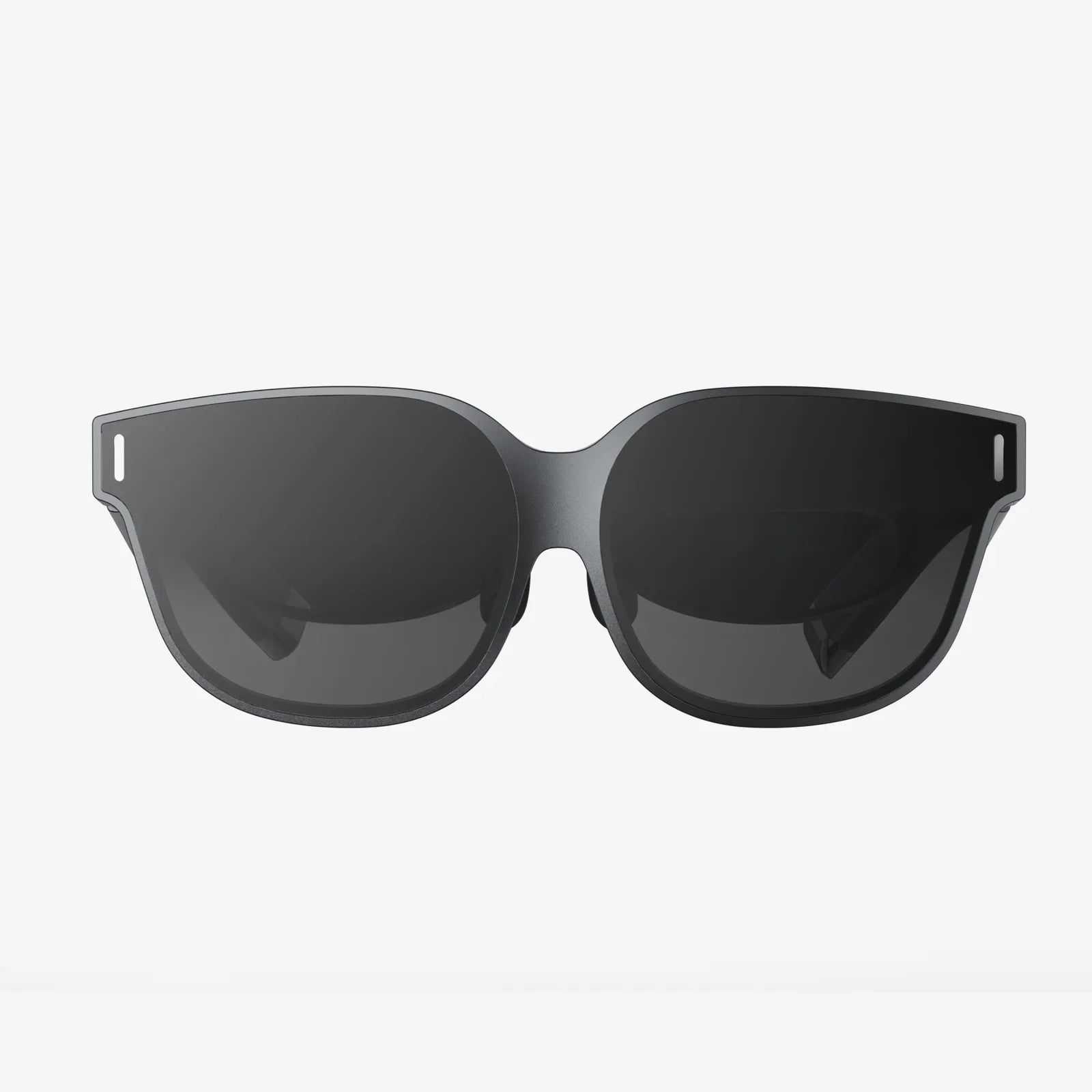
This is the technology used in most smart glasses and head-mounted displays. It involves placing a semi-transparent combiner lens between the user's eye and the real world. Digital images are projected onto this lens, which reflects the light into the user's eye while allowing ambient light from the real world to pass through. This creates a direct optical overlay of the digital onto the physical. Waveguide technology is a common method for this, using microscopic structures on a clear piece of glass or plastic to bend and direct light from a small projector into the eye, allowing for a sleek glasses-like form factor.
Used in smartphones, tablets, and some headsets, this method is more straightforward. The device's cameras capture a live video feed of the real world. The processor then composites the digital AR elements into this video stream in the correct perspective. Finally, this combined video is displayed on the device's screen. While this can create a compelling illusion, it creates a layer of mediation between the user and reality, as you are looking at a screen rather than directly at the world.
A less common but fascinating approach is to project light directly onto physical surfaces to augment them. This can turn any wall, table, or object into an interactive display without the user needing to wear a headset or hold a device. While limited in its flexibility and often requiring controlled lighting conditions, it offers a unique shared AR experience where multiple people can view the augmentation simultaneously without any personal equipment.
For AR to be truly useful, users need ways to interact with the digital content seamlessly. Relying on traditional touchscreens or controllers breaks immersion, so AR has pioneered new interaction paradigms.
Using cameras and depth sensors, AR systems can track the user's hands and fingers with high precision. This allows for natural gestures, like pinching to select a virtual object or swiping in the air to cycle through menus. Advanced systems can even understand complex gestures and sign language, making interaction intuitive and freeing the user from physical controllers.
Voice control, powered by natural language processing (NLP), is a natural fit for AR. It allows users to summon information, control interfaces, or manipulate objects simply by speaking, making the technology accessible and hands-free, which is crucial for tasks like complex repair work or navigation while walking.
To make virtual objects feel more tangible, haptic feedback is used. This can range from simple vibrations in a smartphone or controller to more advanced wearable devices that apply pressure, tension, or temperature changes to the skin. This tactile sensation provides critical confirmation that an interaction has taken place, deepening the sense of immersion and making digital interfaces feel more real.
The core technologies of AR are already impressive, but the frontier of research promises even more profound integrations. Emerging areas include eye-tracking, which allows for foveated rendering (where only the area you are directly looking at is rendered in high detail, saving immense processing power) and more intuitive UI interactions. Research into neural interfaces explores a future where we could control AR systems with our thoughts. Furthermore, the concept of the digital twin—a perfect, real-time digital replica of a physical object or environment—will rely on these AR technologies to visualize and interact with complex data streams overlaid onto the real world, revolutionizing fields from urban planning to advanced manufacturing.
The seamless magic of a digital dragon landing on your driveway or a furniture model perfectly placed in your living room is not magic at all—it is the result of a breathtaking convergence of advanced sensors, immense processing power, sophisticated algorithms, and innovative display tech. This intricate technological stack works in perfect harmony to understand, map, and finally augment our reality. As these core components—sensing, processing, display, and interaction—continue to evolve, becoming smaller, faster, and more power-efficient, the line between what is real and what is digital will blur beyond recognition, unlocking transformative new ways to work, learn, and experience the world around us. The future is not just on a screen; it's all around you, waiting to be augmented.
Share:
Top 10 VR Glasses: The Ultimate Guide to Immersive Technology in 2024
How Expensive Is Augmented Reality: A Deep Dive into the True Cost of Digital Overlay