


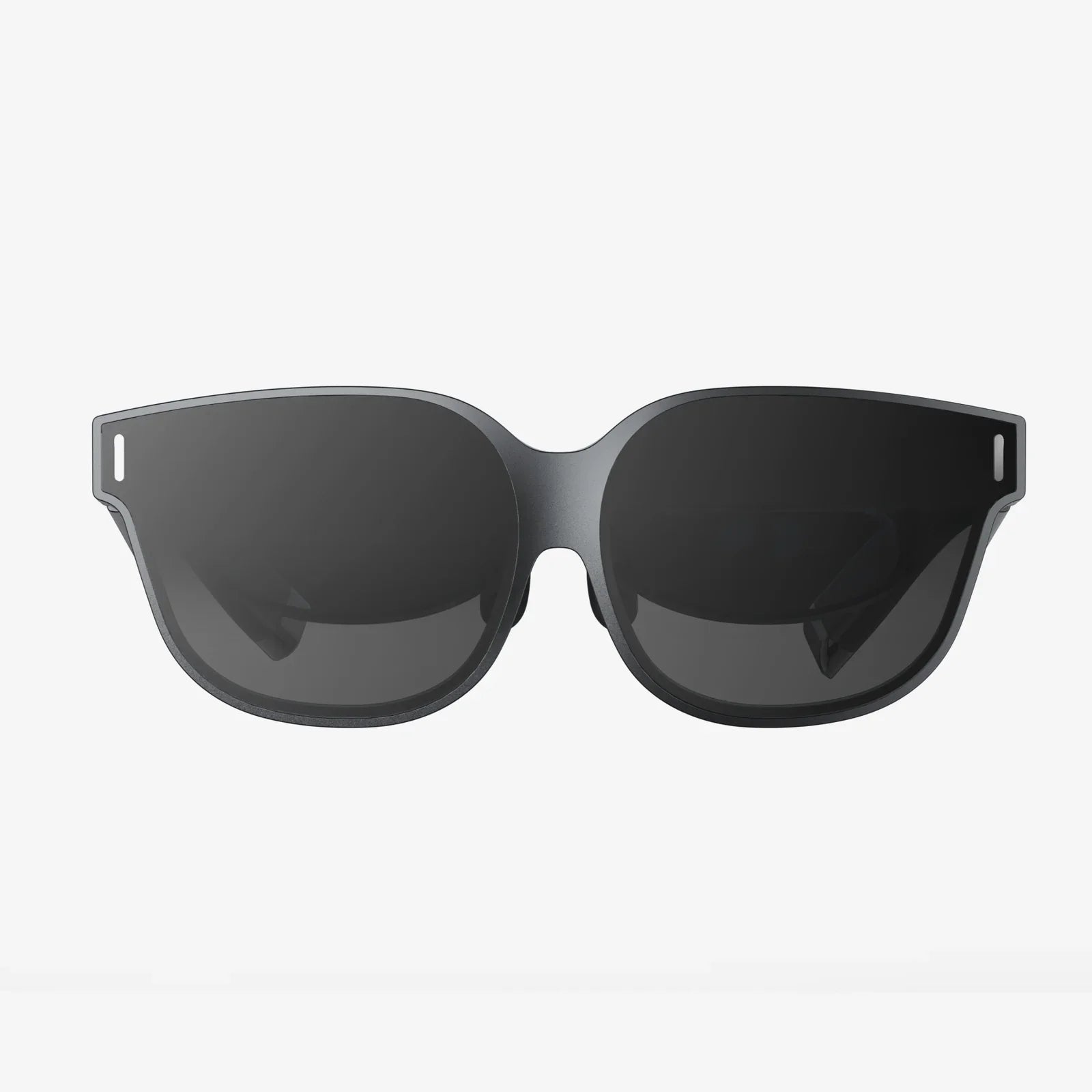
- by wangfred
How Is Virtual Reality Changing the Way We Learn: A Deep Dive Into Immersive Education
- by wangfred
Imagine stepping inside a human heart as it pumps blood, traveling back to witness the construction of the pyramids, or practicing a complex surgical procedure—all from the safety of a classroom. This is no longer the stuff of science fiction but the new reality of education, powered by virtual reality. VR is not merely another technological gadget; it is a paradigm shift, a transformative force that is fundamentally rewiring the pedagogical process. By dissolving the physical and imaginative barriers of traditional learning, VR is creating a future where experience is the greatest teacher and immersion is the primary mode of instruction.
For centuries, education has largely followed a similar model: an expert imparting knowledge to learners through lectures, textbooks, and two-dimensional images. This model, while responsible for incredible advancements, has inherent limitations. It often struggles to convey complex spatial relationships, dynamic processes, and the visceral context of real-world applications. Students are frequently passive recipients of information, which can lead to disengagement and poor knowledge retention. The chasm between theoretical understanding and practical application remains wide for many disciplines.
Virtual reality directly addresses these shortcomings by leveraging the power of presence and experience. VR learning is built on the principle of embodied cognition—the theory that our understanding is deeply tied to our physical interactions with the world. Instead of reading about a historical event, learners can be virtually placed within it. Instead of memorizing the parts of a cell, they can navigate through it. This active, first-person participation transforms learning from a passive intake of data into an unforgettable experience, forging neural pathways that are far more durable than those created by rote memorization.
The immersive nature of VR creates powerful episodic memories. When a learner associates information with a specific, immersive experience—the feeling of standing on the Martian surface, the visual of a chemical reaction unfolding at the atomic level—the memory is encoded with a richness and context that flat text cannot match. Studies have consistently shown that learning in VR leads to significantly higher retention rates days, weeks, and even months later compared to traditional methods. The brain doesn't have to work to imagine the scenario; it is living it, making the educational content inherently more memorable.
One of the most powerful applications of VR is in high-stakes training where mistakes in the real world can have serious consequences. In medical schools, students can perform intricate surgeries on virtual patients, allowing them to make errors, understand the ramifications, and refine their technique without any risk. Aspiring mechanics can dismantle and reassemble complex engines. Pilots have used simulators for decades, and VR is the democratization of this principle. This safe-to-fail environment reduces anxiety, encourages exploration, and builds muscle memory and confidence, ensuring learners are exceptionally well-prepared before they ever touch a real-world subject.
VR acts as a teleportation device for education. It obliterates constraints of location, scale, and time. A biology class in a poorly funded school can take a field trip to the depths of the Great Barrier Reef. History students can walk the streets of ancient Rome, experiencing the scale and grandeur firsthand. Astronomy students can manipulate the solar system, watching planetary orbits unfold in real-time. This levels the educational playing field, providing every student with access to experiences that were previously impossible or prohibitively expensive, fostering a deeper, more equitable understanding of the world and universe.
Let's be honest: traditional learning can sometimes be boring. VR inherently possesses a wow factor that captures attention and sparks curiosity. By gamifying educational content, VR makes learning fun and intrinsically motivating. Students are no longer passive observers but active participants in their own educational journey. This heightened engagement is particularly beneficial for learners who struggle with attention disorders or who have become disenfranchised with conventional teaching methods, reigniting a passion for discovery and exploration.
Every learner is unique, with different paces, styles, and needs. VR platforms can be designed to adapt in real-time to the user. If a student is struggling with a specific concept, the simulation can pause, offer hints, or present the information in a different way. For those who excel, the program can introduce more complex challenges. This adaptive learning technology creates a custom-tailored educational experience for each individual, ensuring no one is left behind and everyone is sufficiently challenged, moving the focus from teaching a class to teaching every student within it.
VR is a natural fit for STEM. Complex abstract concepts in physics, from quantum mechanics to gravitational fields, can be visualized and interacted with. Chemistry students can conduct dangerous experiments with volatile substances without any risk. Engineering students can prototype and stress-test virtual models, gaining invaluable insights into structural integrity and design long before any physical materials are used.
This is arguably one of the most impactful applications. Beyond surgical simulation, VR is used for patient empathy training, allowing medical students to experience the world from the perspective of a patient with a specific condition like Parkinson's disease or macular degeneration. It is also used for emergency response training, teaching triage and critical decision-making under pressure in hyper-realistic mass-casualty scenarios.
History becomes a living, breathing subject in VR. Rather than reading a dry account of a historical battle, students can stand on the battlefield, understanding the terrain, the strategies, and the human cost. They can explore reconstructed ancient cities, interact with historical figures, and gain a profound, empathetic connection to the past that fosters a much deeper understanding than any textbook can provide.
The corporate world is rapidly adopting VR for training in public speaking, leadership, sales, and customer service. Employees can practice delivering presentations to a virtual audience, handle difficult conversations with AI-powered avatars, and navigate complex ethical dilemmas in a safe environment. This provides measurable, repeatable, and scalable training that is both effective and efficient.
Despite its immense potential, the widespread integration of VR in education is not without hurdles. The cost of hardware, while decreasing, remains a significant barrier for many institutions. There are also concerns about the potential for cybersickness, the need for robust technical support, and the importance of designing pedagogically sound content rather than just technologically impressive experiences. Furthermore, the social aspect of learning must be considered; VR should be a tool to enhance human connection and collaboration, not replace it.
The future of VR in learning lies in the seamless blending of the physical and digital worlds. Advancements in haptic technology will soon allow learners to feel the textures and resistances of virtual objects. The integration of artificial intelligence will create even more responsive and adaptive learning environments, with AI tutors guiding students through experiences. As the technology becomes more affordable and accessible, it will cease to be a novelty and will become an integral, ubiquitous part of the educational landscape, from kindergarten to corporate boardrooms.
The classroom walls have finally dissolved. With a VR headset, the entire universe—past, present, and future—becomes a dynamic, interactive textbook, waiting for the next generation of explorers to hit play on their own learning adventure. The question is no longer if virtual reality will change how we learn, but how quickly we can embrace its potential to unlock human understanding on a scale never before imagined.
Share:
5 Paradigms for Virtual Reality: A Deep Dive into the Digital Frontier
True Immersive Virtual Reality: Beyond the Hype and Into the Human Sensorium