


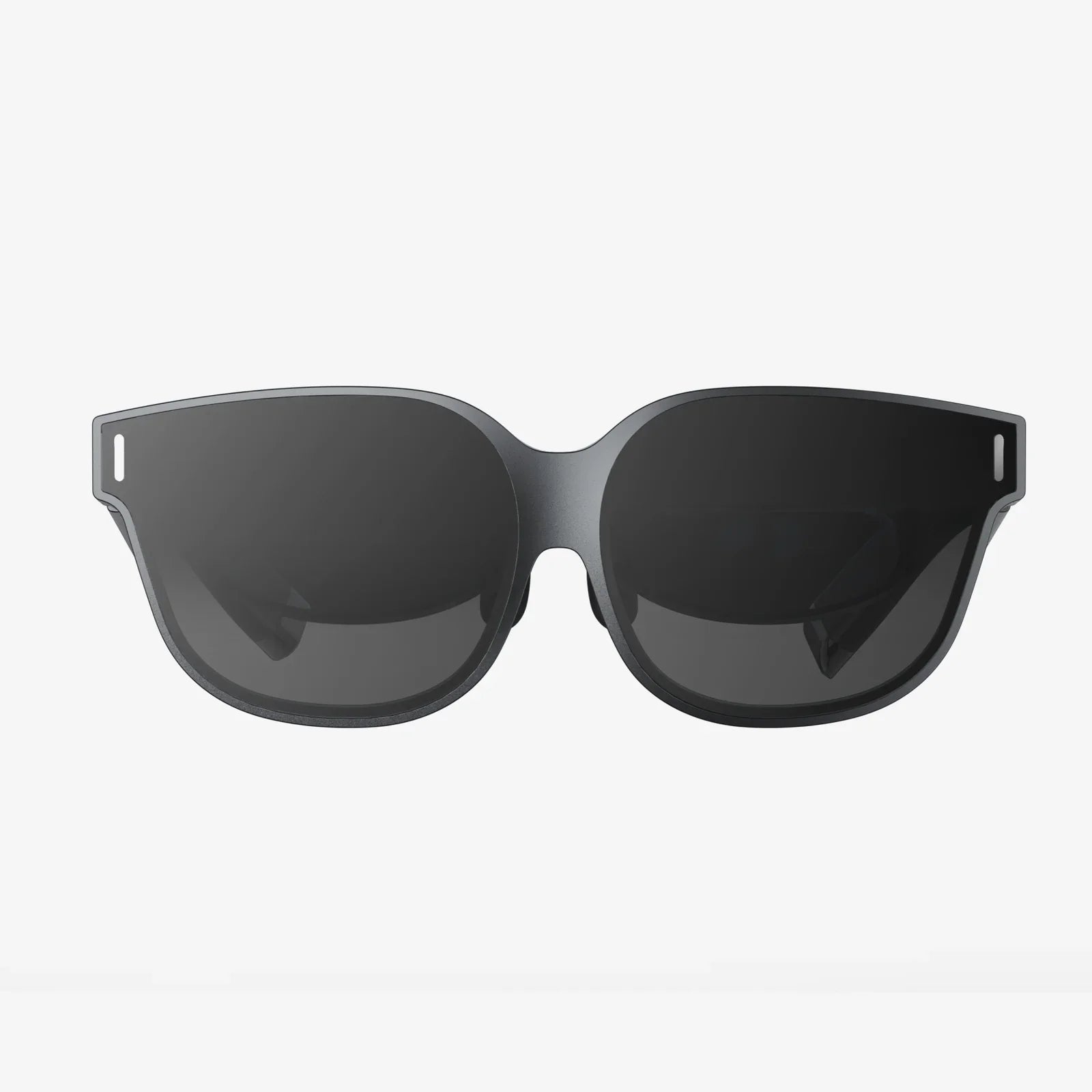
- by wangfred
5 Paradigms for Virtual Reality: A Deep Dive into the Digital Frontier
- by wangfred
Imagine slipping on a headset and stepping into a world limited only by the imagination—this is the promise of virtual reality, a technology not just evolving in power but fundamentally shifting in its very purpose. The journey of VR is not a linear path of improvement but a branching tree of different philosophies, each offering a unique lens through which to experience the digital realm. To truly understand where VR is headed, we must look beyond the hardware and examine the core paradigms that define its application. These are not mere categories of content but foundational frameworks that answer the critical question: What is virtual reality for? The exploration of these five paradigms—Immersion, Simulation, Social VR, Augmented Virtuality, and the Metaverse—reveals the multifaceted future of this transformative technology.
Before delving into the five paradigms themselves, it is crucial to define what we mean by a "paradigm" in this context. Borrowed from Thomas Kuhn's philosophy of science, a paradigm represents a distinct conceptual framework, a set of practices, and a shared way of understanding a domain. In the world of virtual reality, a paradigm is a cohesive model for what the technology is designed to achieve and how users are meant to interact with it. It dictates the design principles, the technological requirements, and the ultimate user experience. A shift from one paradigm to another isn't just an upgrade; it's a redefinition of the technology's core identity and value proposition. We are currently witnessing not one but several competing and complementary paradigms coexisting, each pushing the boundaries of what we thought was possible.
The oldest and most instinctive paradigm for virtual reality is the quest for pure Immersion. This paradigm is founded on the concept of presence—the convincing illusion of being physically transported to another place. The primary goal here is to trick the senses, to shut out the physical world, and to fully replace it with a digital one. This is VR as an ultimate escape mechanism, a portal to fantastical landscapes, terrifying horror scenarios, or serene meditation spaces.
The technological drive within this paradigm is focused on increasing fidelity and reducing friction. This includes:
The content that exemplifies the Immersion paradigm is often solitary and experiential. It's the breathtaking journey through a alien ecosystem, the awe of standing on a virtual mountain peak, or the pulse-pounding tension of a narrative-driven adventure. The success of an experience in this paradigm is measured by how completely it makes the user forget the headset on their face and the room around them.
While the Immersion paradigm is about feeling somewhere else, the Simulation paradigm is about doing something else. Here, the value of VR is not just in its visual fidelity but in its ability to model complex systems, physical interactions, and professional scenarios with a high degree of accuracy. This is VR as a practical tool for training, design, and rehearsal.
The core of this paradigm is interactivity and accuracy, not just visual spectacle. The virtual environment must behave according to real-world rules—or the specific rules of a given system. This has profound implications across numerous industries:
The Simulation paradigm moves VR from a entertainment medium to a productivity platform. Its success is measured not by the feeling of presence, but by the efficacy of the training outcome or the utility of the design review. It leverages VR's ability to create repeatable, scalable, and measurable experiential learning.
Human beings are inherently social creatures, and the third paradigm, Social VR, taps directly into this fundamental need. This framework reimagines VR not as a solitary escape pod, but as a new venue for human connection, collaboration, and shared experience. The technology becomes a conduit for presence with other people, not just with a place.
Social VR platforms create persistent digital spaces where users, represented by avatars, can gather. The magic of this paradigm lies in the sense of co-presence—the feeling that you are truly with another person, sharing the same digital space. This is facilitated by:
This paradigm has the potential to redefine remote work, long-distance relationships, and online communities, transforming them from 2D screen-based interactions into embodied, shared experiences. It posits that the "killer app" for VR might not be a game or a tool, but simply other people.
The first three paradigms largely operate within a fully digital world. The fourth paradigm, often called Augmented Virtuality (a subset of Mixed Reality), flips the script. Instead of augmenting the real world with digital objects (Augmented Reality), this paradigm starts with a virtual world and augments it with elements from the real world.
This is achieved through advanced passthrough cameras on headsets that can display a live video feed of the user's physical environment, onto which the VR system can then layer digital content. This creates a powerful hybrid experience with unique advantages:
This paradigm breaks down the barrier between the digital and the physical, suggesting a future where our virtual and real lives are not separate realms but are seamlessly integrated. It uses the real world as a foundation and canvas, empowering the virtual to enhance it.
The fifth and most ambitious paradigm is the concept of the Metaverse. This is not just a type of experience but a vision for a persistent, unified, and interoperable digital universe. Think of it as a convergence of all the previous paradigms into a single, continuous digital reality. It’s a network of interconnected virtual spaces and experiences, much like the internet is a network of interconnected websites, but experienced in 3D and with a sense of embodied presence.
The key pillars of the Metaverse paradigm include:
This paradigm is the least realized but the most discussed. It represents the ultimate endpoint of VR evolution—a platform that becomes a significant part of daily life for work, socializing, commerce, and entertainment. It is the culmination of the immersion, simulation, social, and blending paradigms into one holistic, all-encompassing digital existence.
It is a mistake to see these five paradigms as a sequence where one replaces the other. The future of virtual reality lies in their convergence and context-dependent application. A medical student might use a high-fidelity Simulation to practice surgery, then join a Social VR lecture with classmates from around the world, and later unwind in an immersive virtual art gallery that blends digital sculptures (Augmented Virtuality) onto their real-world walls. All these experiences could be accessed through a single portal that serves as their gateway to a broader Metaverse.
The technology will continue to advance, becoming lighter, wireless, and more visually stunning, thus serving all paradigms better. However, the true innovation will be in the software and the design philosophies that understand which paradigm is right for which human need. The magic of VR is that it is not one tool but many—a Swiss Army knife for experience itself.
The headset is merely the window; these five paradigms are the blueprints for the worlds we choose to build on the other side. The next time you step into virtual reality, ask yourself not just what you are seeing, but what you are there to do, to feel, and to become. The answer will place you squarely within one of these revolutionary frameworks, each offering a unique path to redefine the very fabric of human experience. The frontier is open, and the paradigms are waiting.
Share:
What Is The Best Virtual Reality Set - A Guide to Finding Your Perfect VR
How Is Virtual Reality Changing the Way We Learn: A Deep Dive Into Immersive Education