


You've heard the terms, seen the futuristic headsets, and maybe even experienced a demo, but a fundamental question lingers in the minds of many: how is virtual reality different from augmented reality? While often mentioned in the same breath, these two groundbreaking technologies offer profoundly distinct experiences, built on different principles and promising to reshape our world in unique ways. Understanding this divide is not just tech trivia; it's the key to unlocking the future of how we will work, learn, play, and interact with the digital realm. This deep dive will peel back the layers of jargon to reveal the core, fascinating differences that set these realities apart.
The Core Philosophical Divide: Replacement vs. Enhancement
At its heart, the difference between VR and AR is a philosophical one. It's a question of the fundamental relationship between the user, the real world, and the digital world.
Virtual Reality (VR) operates on the principle of replacement. It seeks to completely immerse the user in a digitally constructed environment, effectively shutting out the physical world. When you don a VR headset, your visual and auditory connection to your living room, office, or immediate surroundings is severed. You are transported. You could be walking on Mars, standing on the edge of a skyscraper, or exploring a fantasy dungeon. The goal is presence—the convincing feeling of "being there" in a place that does not physically exist. VR is an exercise in escapism and total simulation.
Augmented Reality (AR), in stark contrast, is built on the principle of enhancement. It does not aim to replace your reality but to augment it by layering digital information and objects onto your view of the real world. The physical environment remains your foundation and central canvas. AR adds a helpful or entertaining digital layer to that canvas—be it navigation arrows superimposed on the street in front of you, a virtual dinosaur stomping through your park, or a schematic of a engine hovering over the actual machinery you are repairing. The goal is not to escape reality, but to make it richer, more informative, and more interactive.
Hardware and Technology: The Engines of Immersion and Overlay
This philosophical chasm dictates the vastly different hardware required to power each experience. The technology in your hands (or on your head) is the clearest physical manifestation of the VR vs. AR divide.
The Virtual Reality Headset: A Portal to Another World
A dedicated VR headset is a complex piece of equipment designed for one primary function: sensory isolation. Key components include:
- Fully Enclosed Display: High-resolution screens are placed mere centimeters from your eyes, filling your entire field of view. There is no peeking out at the real world.
- Precise Head-Tracking: A system of internal and external sensors (gyroscopes, accelerometers, and sometimes external "lighthouse" sensors) constantly monitors the orientation and position of your head. This allows the virtual world to respond in real-time as you look up, down, and side-to-side, maintaining the illusion and preventing motion sickness.
- Audio Isolation: High-quality, often spatial, headphones are integrated to provide a 3D audio landscape that matches the visual one, further sealing you inside the simulation.
- Controllers: Hand-held motion-tracked controllers allow you to interact with the virtual world, giving you virtual hands to grab, push, shoot, and manipulate the digital environment.
This hardware is necessarily bulky and power-intensive, as it is responsible for generating and rendering an entire universe from scratch.
The Augmented Reality Interface: A Window to an Enhanced World
AR hardware is more varied and, in many cases, more accessible. Its primary function is not to block out the world, but to see it clearly and add to it. This can be achieved through:
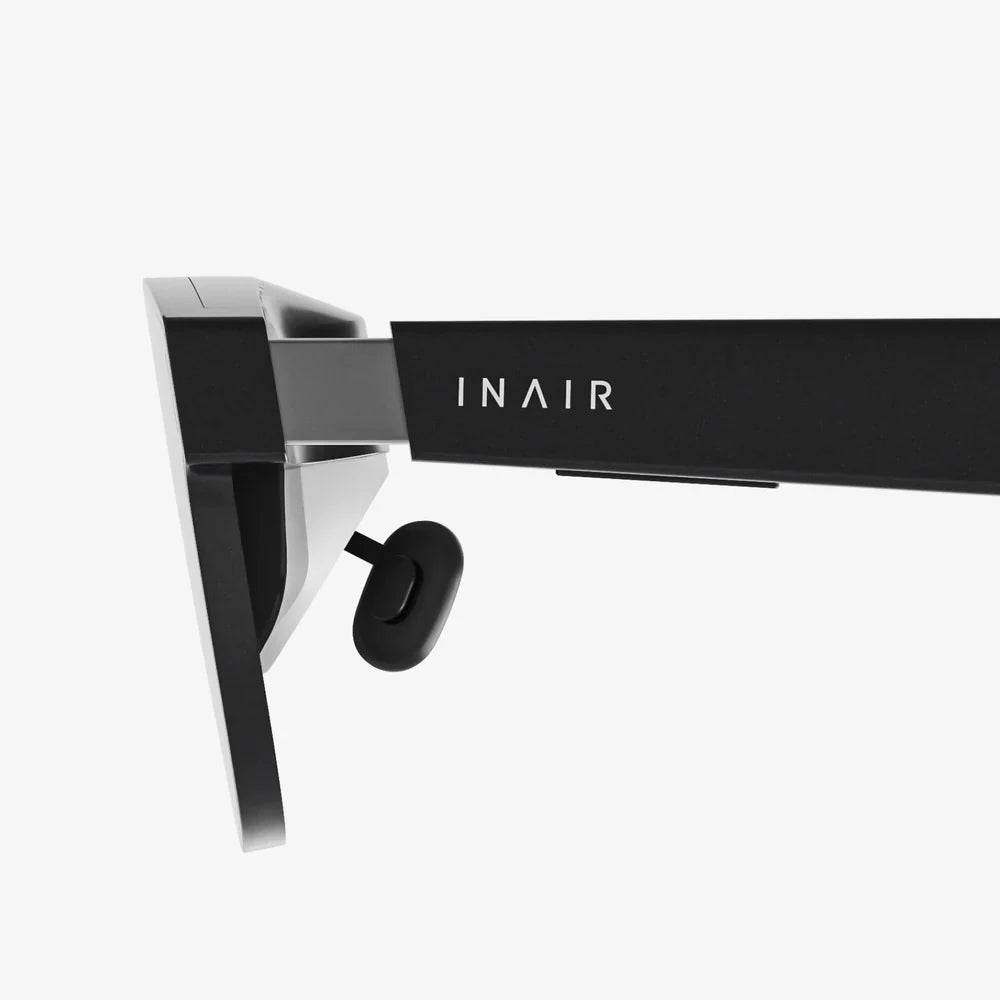
- Heads-Up Displays (HUDs) and Smart Glasses: These are the most direct AR counterparts to VR headsets, but they are typically designed to be transparent or use cameras to pass through a video feed of the real world. They project digital images onto their lenses or screens, overlaying information without fully obscuring your view. They require sophisticated cameras and sensors to understand the geometry of the real world in real-time.
- Smartphones and Tablets: The most ubiquitous AR devices in the world today. Using their cameras, screens, and processing power, they can display the real world on their screen and superimpose digital content on top of it. From popular games to furniture placement apps, your phone is a powerful AR window.
- Environmental Projectors: Some AR systems project light and information directly onto physical objects and spaces, turning any surface into an interactive display without the need for a headset.
The technological challenge for AR is not generating a world, but understanding it. It requires advanced computer vision, object recognition, and depth tracking to seamlessly and convincingly anchor digital content to the physical world.
The User Experience: Total Immersion vs. Contextual Information
The difference in philosophy and hardware culminates in a completely different user experience (UX). The goals, applications, and even the physical sensations are distinct.
The VR Experience: A Journey Into the Simulated
Using VR is an active, dedicated event. You clear a physical space (a "play area"), put on the headset, and consciously enter the digital realm. The experience is all-consuming.
- Presence: The holy grail of VR is the sensation of "presence"—the undeniable, subconscious feeling that you are actually in the virtual space. This is achieved through high-fidelity visuals, perfect tracking, and immersive audio.
- Isolation: This is both a feature and a limitation. It allows for deep focus and incredible experiences but also makes you blind and deaf to your actual surroundings, which can be dangerous and socially isolating.
-
Applications: VR excels in areas that benefit from complete immersion:
- Gaming: Deep, narrative-driven games and intense simulations.
- Training: Flight simulators, surgical practice, hazardous environment training.
- Therapy: Exposure therapy for phobias, PTSD treatment, and pain management.
- Virtual Tourism and Real Estate: Exploring remote locations or property walkthroughs.
The AR Experience: Information at a Glance
Using AR is often a passive, integrated activity. It is designed to be used on the go, woven into the fabric of your daily life.
- Utility and Context: The value of AR is providing the right information at the right time and in the right place. It's about context. Looking at a monument through your phone to see its history, or seeing walking directions painted on the sidewalk in front of you.
- Social Connection: Because you remain in the real world, AR is inherently more social. You can share the experience with others around you who may also be seeing the same digital content, or who can at least see your real-world reactions.
-
Applications: AR thrives in applications that enhance real-world tasks:
- Navigation: Overlaying directions onto live street views.
- Retail: "Trying on" clothes or seeing how a new sofa looks in your living room.
- Education: Bringing textbooks to life with 3D models of the human heart or solar system.
- Industrial Maintenance: Providing technicians with schematics and instructions overlaid on the machinery they are fixing.
The Spectrum of Reality: Where MR and XR Fit In
The line between VR and AR is not always perfectly distinct. This has given rise to other terms that describe the spectrum of experiences.
Mixed Reality (MR) is often considered the pinnacle of this spectrum. It refers to a seamless blend of the physical and digital worlds where virtual objects are not just overlaid but appear to truly exist in your space. They can be occluded by real objects (e.g., a virtual character walks behind your real couch), interact with the physics of your environment, and respond to real-world lighting. MR requires advanced sensors and understanding of the environment that goes beyond basic AR.
Extended Reality (XR) is the umbrella term that encompasses all of these technologies—VR, AR, and MR. It's a convenient catch-all for the entire industry of immersive technologies that alter or extend the reality we perceive.
Implications for the Future: Two Paths Forward
The divergent paths of VR and AR suggest they will evolve to solve different problems and create different futures.
VR's path is one of deepening immersion and fidelity. The pursuit of photorealistic graphics, haptic feedback suits, and even neural interfaces points toward a future of ever-more convincing simulations for work, socializing, and entertainment. It promises the ability to create and visit any place, real or imagined, without leaving your home.
AR's path is one of ubiquity and seamless integration. The goal is to move beyond holding up a phone or wearing bulky glasses. The ultimate expression of AR is often envisioned as a lightweight, socially acceptable pair of glasses—or even contact lenses—that can constantly provide a contextual information layer over your vision. This technology has the potential to become the next major computing platform, replacing the smartphone as our primary interface with the digital world.
One technology seeks to build new worlds for us to escape to; the other seeks to make our existing world infinitely more powerful. One offers an escape from reality; the other aims to be its ultimate tool. The confusion between virtual and augmented reality is understandable, but their destinies are uniquely their own. One invites you to leave your world behind, while the other promises to bring the digital universe to your doorstep, forever changing your perception of what's real and what's possible right in front of your eyes.
Share:
Do You Need Internet for Virtual Reality? The Ultimate Connectivity Guide
Smart Work Instructions: The Future of Operational Excellence is Here