Imagine a world where the line between the physical and the digital has not just blurred, but vanished. A world where your morning meeting, your child's history lesson, and a visit to a remote art museum all happen in a space unconstrained by geography, physics, or even reality as we know it. This is the ultimate promise of virtual reality—not as a headset we put on, but as a layer of existence we slip into. The question hanging in the air, charged with both excitement and trepidation, is not if, but how long till virtual reality achieves this profound ubiquity? The answer is a mosaic, pieced together from breakthroughs in silicon, understanding in neuroscience, and evolutions in human behavior.
The Current State of the Metaverse: A Foundation, Not a Cathedral
To understand the distance we must travel, we must first take an honest inventory of our present location. Today's VR is impressive, a testament to human ingenuity, but it remains a long way from the seamless experience envisioned in science fiction.
Modern systems offer compelling visual fidelity, with high-resolution displays that can create a strong sense of immersion. Spatial audio adds another layer of depth, making sounds feel like they originate from specific points in the virtual space. Haptic feedback controllers allow us to clumsily manipulate digital objects. Yet, for all this technology, the experience is fraught with friction.
-
The Hardware Hurdle: Headsets are still too bulky, too expensive, and too power-hungry. They can cause discomfort during extended use, a phenomenon often called "VR face." The need for powerful, tethered computers or standalone units with limited battery life acts as a barrier to all-day use.
-
The Simulation Sickness Specter: Latency—the delay between a user's movement and the visual response on the screen—remains a critical issue. Even milliseconds of lag can disrupt the vestibular system, leading to nausea, dizziness, and headaches for a significant portion of the population. Solving this is not just an engineering challenge but a biological one.
-
The Interactivity Illusion: While we can pick up and throw virtual objects, the interaction lacks the richness and nuance of the real world. We cannot feel the texture of a digital fabric, the weight distribution of a virtual tool, or the gentle resistance of a button press. Our avatars, often legless and lacking detailed expression, are poor representations of our physical selves.
In essence, we are in the architectural phase, pouring the concrete foundation and erecting the steel beams of the metaverse. The cathedral itself—a structure of breathtaking detail, accessibility, and purpose—is still a vision on the blueprint.
The Technological Leap: Bridging the Chasm Between Clunky and Compelling
The journey from today's VR to tomorrow's reality will be paved with a series of technological revolutions. We are waiting not for one miracle invention, but for a cascade of innovations across multiple fields.
The Visual and Audio Fidelity Frontier
For VR to become indistinguishable from reality, our visual and auditory systems must be perfectly fooled. This requires advancements far beyond simply adding more pixels.
-
Varifocal and Light Field Displays: Current headsets have a fixed focal plane, forcing our eyes to focus on a single distance regardless of the virtual object's perceived proximity, leading to eye strain. Varifocal displays dynamically adjust the focal length, mimicking how our eyes work in the real world. Light field technology goes further, simulating the way light rays travel in every direction, providing natural depth cues and eliminating the vergence-accommodation conflict that contributes to discomfort.
-
Photorealistic Rendering in Real-Time: Achieving real-time ray tracing and global illumination at resolutions exceeding 8K per eye at high refresh rates (144Hz+) demands processing power that doesn't yet exist in a consumer-friendly form factor. This hinges on breakthroughs in semiconductor design, perhaps moving beyond traditional silicon to new materials or neuromorphic computing architectures.
-
Biometric Integration: Future headsets will need eye-tracking not just for foveated rendering (which saves processing power by rendering only the area you're looking at in high detail), but also for expressive avatars. They will monitor our pupil dilation, blink rate, and even facial micro-expressions via internal cameras to translate our true emotional state into our digital persona.
The Haptic Horizon: The Science of Touch
True immersion is impossible without touch. The next decade will see a move from simple rumble motors to sophisticated systems that replicate tactile sensation.
-
Full-Body Haptic Suits: We will see the commercialization of affordable, comfortable suits embedded with arrays of actuators. These will simulate everything from the gentle pressure of a hand on your shoulder to the impact of a virtual raindrop or the directional pull of a virtual wind.
-
Neuro-haptic Interfaces: The ultimate frontier may bypass the skin entirely. Early research into non-invasive neural interfaces focuses on using ultrasonic waves or magnetic stimulation to trigger specific nerve endings, creating the sensation of touch without any physical contact. This technology is in its infancy but represents the clearest path to perfect haptics.
-
Force Feedback Exoskeletons: For professional training and extreme gaming, wearable exoskeletons will provide physical resistance, allowing you to feel the weight of a virtual object or the recoil of a virtual tool.
The Form Factor Revolution: From Headset to Holodeck
The endpoint of VR hardware is its eventual disappearance. This evolution will happen in stages.
-
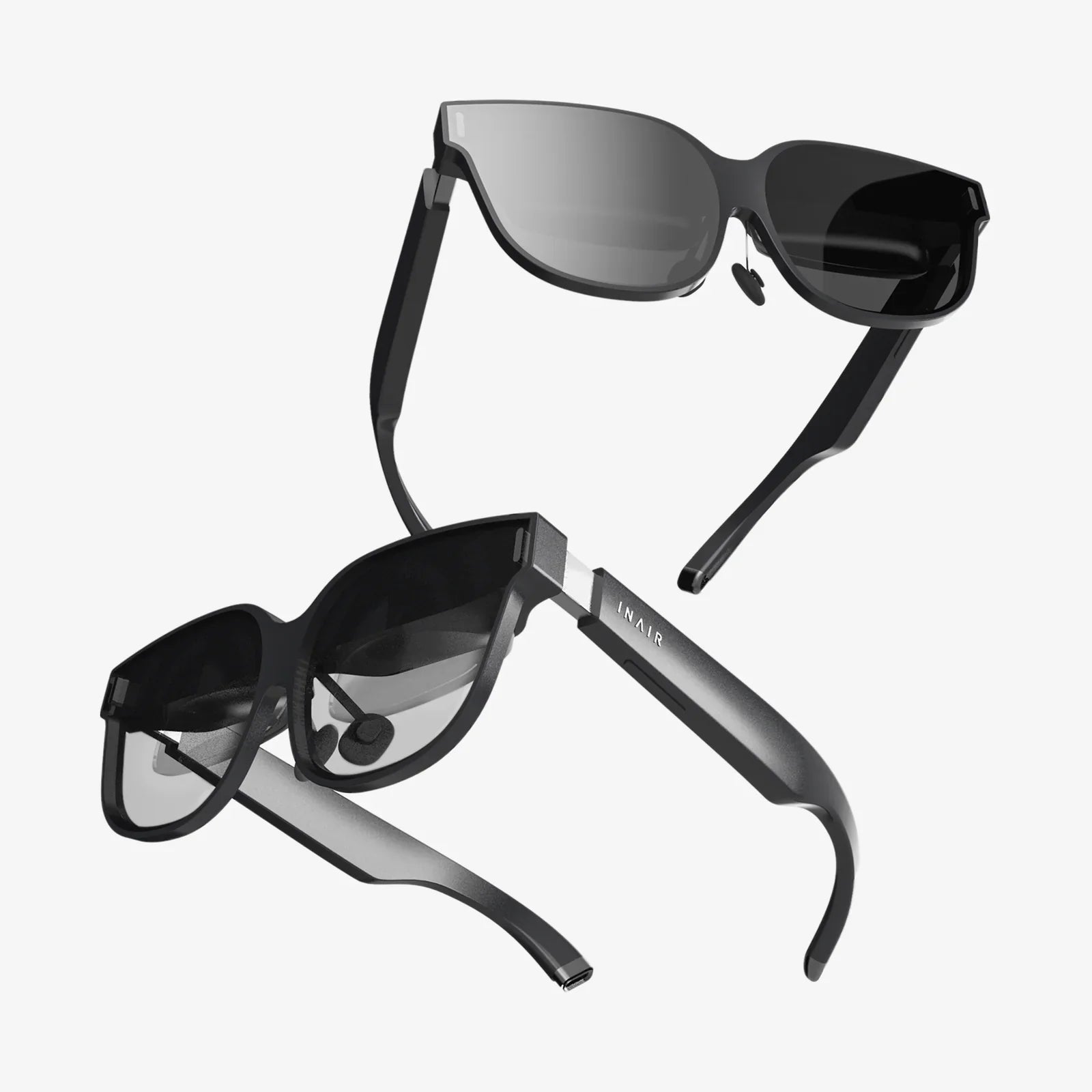
All-in-One Wave: Standalone headsets will become lighter, more powerful, and more comfortable, approaching the size and weight of a large pair of sunglasses. This is likely 5-7 years away for high-end models.
-
The Augmented Merge: The distinction between VR (fully digital) and AR (digital overlays on the real world) will dissolve. Devices will be capable of switching seamlessly between opaque and transparent modes, allowing users to blend realities. This requires developments in advanced electrochromic glass and holographic waveguides.
-
Neural Interfaces: The final form factor may be no headset at all. Companies are already investing heavily in non-invasive and eventually invasive brain-computer interfaces (BCIs) that could stimulate the visual and auditory cortex directly. This is a multi-decade, perhaps half-century, endeavor fraught with ethical and technical challenges, but it represents the endgame for perfect immersion.
The Human Hurdle: Societal and Psychological Adoption
Technology is only half the battle. The more complex question is: how long will it take for humanity to accept, trust, and integrate VR into the fabric of society? This timeline may be longer than the technological one.
-
The Comfort Conundrum: Widespread adoption cannot happen until simulation sickness is eradicated for 99.9% of users. This is a hard biological limit that must be solved before VR can be used in education, workplace training, or for extended social gatherings.
-
The Social Stigma and Isolation Fear: VR faces a perception issue. It is often seen as an isolating, antisocial technology that pulls people away from the "real world." Overcoming this will require demonstrable proof that VR can enhance real-world relationships and create meaningful new forms of connection that text and video calls cannot.
-
The Killer App Dilemma: Beyond gaming, what is the application that will make VR indispensable? Will it be virtual tourism? Telepresence for remote work that is truly lifelike? Revolutionary medical therapy? A new artistic medium? Mass adoption waits for this killer app to emerge and prove its value unequivocally.
-
The Economic and Accessibility Divide: For VR to be a part of daily reality, it must be as accessible as a smartphone. The cost of hardware, the required bandwidth for cloud-streamed experiences, and the digital literacy needed to navigate these spaces must all come down to a level that enables global participation, not just for the wealthy.
A Phased Timeline: From Decades to a Generation
So, how long till virtual reality? It's more accurate to ask how long until different milestones are reached.
-
The Next 5-7 Years (The Era of Refinement): We will see incremental but significant improvements. Headsets will become lighter, resolution will climb, and eye/face tracking will become standard. Social VR platforms will grow, but remain niche. VR will be a popular entertainment and niche professional tool, but not a daily utility for most.
-
The Next 10-15 Years (The Era of Ubiquity): This is where the transition begins in earnest. AR/VR glasses will be a common consumer product, perhaps even replacing traditional computing interfaces for many tasks. High-fidelity telepresence will start to disrupt business travel and remote work. The line between physical and digital shopping, learning, and socializing will significantly blur. The "killer apps" will have emerged.
-
20+ Years (The Era of Indistinguishability): This is the horizon where the sci-fi vision becomes plausible. Neural interfaces may be in early consumer testing. Virtual experiences will be photorealistic and tactilely perfect for all practical purposes. VR will be deeply integrated into medicine, architecture, education, and social infrastructure. It will be an indistinguishable part of daily reality for a generation born into it.
The final barrier won't be a technical specification, but a cultural and psychological one. It will be the moment we stop asking "how long till virtual reality?" and instead start discussing the nuances of life within it—the ethics of digital identity, the laws of virtual spaces, and the nature of human connection when physical presence is no longer a prerequisite for intimacy. That moment is not around the corner, but it is on the horizon, and its approach will redefine what it means to be present, to be connected, and to be human.