


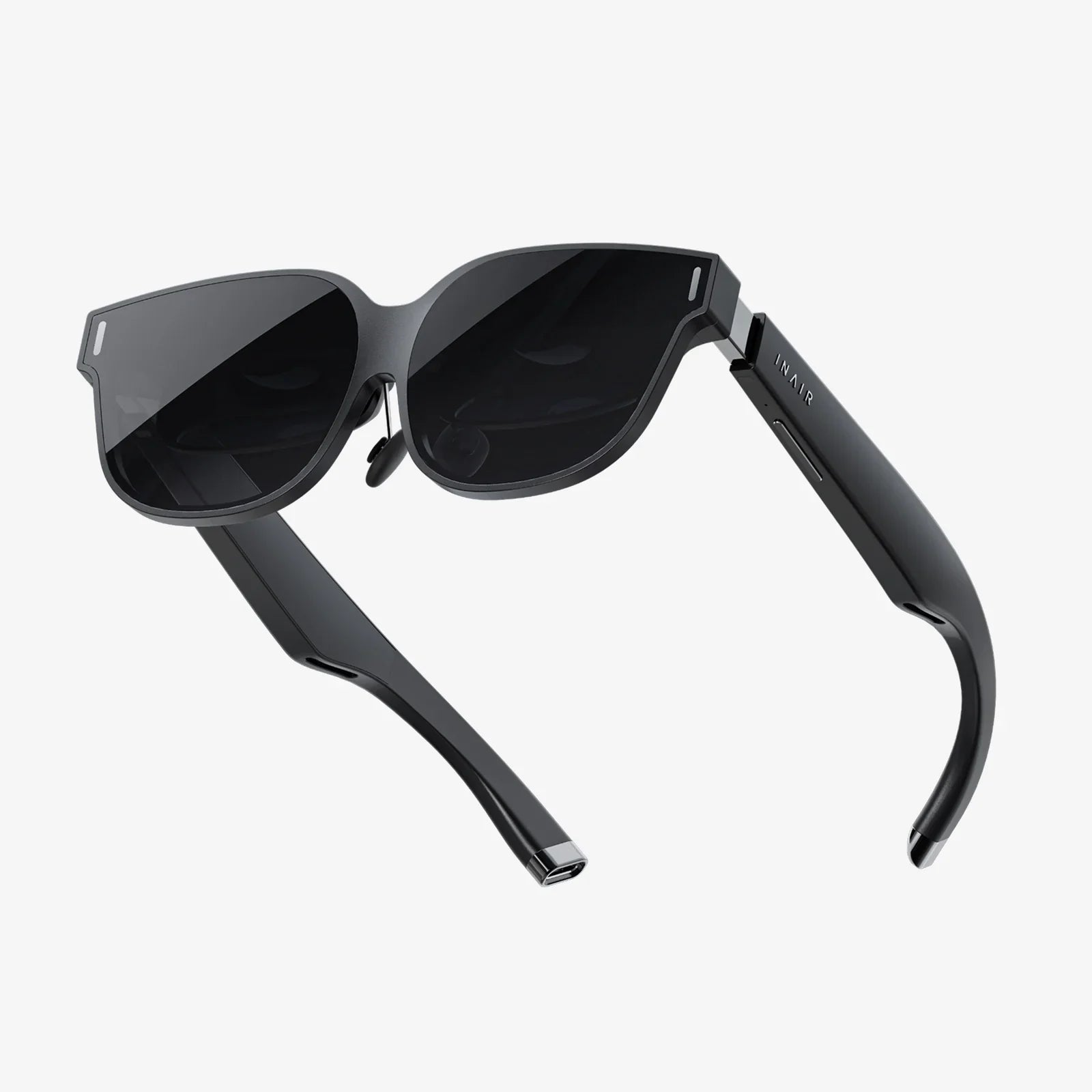
You see the sleek, futuristic device on the shelf or in an online ad, promising to transport you to new worlds, but the price tag often gives you pause. Have you ever held a virtual reality headset and wondered, just how much does it actually cost to create this piece of technology? The journey from a concept to a finished product in a box is a fascinating tale of advanced engineering, global supply chains, and complex economic calculations. The answer is far from simple, hidden behind corporate NDAs and a web of component suppliers, but by dissecting the key elements, we can build a surprisingly accurate picture of the true cost of VR manufacturing.
Deconstructing the Headset: A Bill of Materials Deep Dive
The most direct cost associated with any piece of hardware is the Bill of Materials (BOM). This is the sum total of every physical component that goes into the device. For a modern, high-end VR headset, the BOM is a complex list of cutting-edge technology.
The Display Panels: The Window to Virtual Worlds
The displays are arguably the heart of the experience. Unlike a television you watch from a distance, these screens are mere centimeters from your eyes, requiring incredibly high pixel density to avoid the dreaded "screen door effect." Most high-end headsets now use Fast-Switch LCDs or advanced OLED panels. The cost for these specialized, high-refresh-rate, high-resolution displays can range significantly. For a single unit, premium panels can cost between $50 and $100. This cost is often doubled, as most headsets use one dedicated display per eye. Manufacturing challenges include achieving high yields (the percentage of perfect panels from a production run) and integrating them with complex optical systems.
The Optical Stack: Lenses and Beyond
You can't just put a phone screen against your face; the image needs to be corrected and focused. This is the job of the intricate optical stack, a significant cost driver. Modern headsets use sophisticated Fresnel or aspherical hybrid lenses, molded from high-quality, clear polycarbonate or glass. These are not simple magnifying glasses; they are precision-engineered components designed to minimize god rays, distortion, and chromatic aberration. The tooling for these lenses is extremely expensive, and the per-unit cost can be anywhere from $20 to $40 for the set. This stack also includes the physical housing that perfectly aligns the lenses with the displays and the user's eyes, adding more to the material and tooling cost.
The Processing Brain: SoC, Memory, and Storage
This category splits into two distinct headset architectures. Standalone, or all-in-one, headsets contain a complete mobile computing system on a chip (SoC), similar to those found in high-end smartphones. This includes the CPU, GPU, RAM, and internal storage. A powerful XR-focused SoC, along with several gigabytes of RAM and fast storage, can easily represent a cost of $100 to $200 per device. This is one of the single most expensive components. On the other hand, PC-tethered headsets offload this processing to an external computer. Their internal electronics are less expensive but still require dedicated chips for sensor fusion, display management, and communication, likely costing between $30 and $60.
Sensors and Cameras: Tracking the World and You
Modern inside-out tracking has eliminated the need for external base stations but added a suite of new sensors. A typical headset now includes two to four wide-angle grayscale cameras for positional tracking, one or two RGB cameras for mixed reality passthrough, and often a depth sensor. Each of these camera modules can cost between $5 and $15. Then come the inertial measurement units (IMUs)—gyroscopes, accelerometers, and magnetometers—which are relatively cheap individually (a few dollars) but crucial for accurate, low-latency head tracking. Altogether, the sensor suite can add $40 to $80 to the BOM.
Structural and Miscellaneous Components
This encompasses everything else that holds the device together: the high-quality plastic or lightweight alloy housing, the flexible rubberized face gasket (often including replaceable hygiene foam), the sophisticated head strap system with its dials and straps, and the integrated audio system featuring spatial audio drivers. The fabric-covered cables for tethered headsets are also deceptively expensive to manufacture due to their durability and bandwidth requirements. This collection of "other" parts can easily sum to $30 to $50. Don't forget the packaging, manuals, and the mandatory USB-C power adapter and cable for standalone units, which can add another $10 to $15.
When we tally this preliminary BOM, a high-end standalone headset's components alone likely cost between $250 and $450, depending on the specific technology choices, component sourcing, and scale of procurement. This is, however, just the beginning of the story.
Beyond the Components: The Hidden Cost Multipliers
If the BOM was the only cost, headsets would be far cheaper. The reality is that manufacturing and bringing a product to market involves numerous other critical expenses that significantly inflate the final cost per unit.
Research and Development (R&D): The Invisible Investment
This is the monumental upfront cost that must be amortized over every unit sold. R&D for a new VR platform is staggeringly high. It encompasses the salaries of teams of software engineers, optical scientists, hardware designers, and industrial designers working for years. It includes the cost of prototyping—building thousands of iterative designs with custom-machined parts that can cost thousands of dollars each before mass production tooling is even created. Developing the core software, the tracking algorithms, the user interface, and the developer tools represents a software R&D cost that is just as massive. For a major headset launch, total R&D can easily stretch into the hundreds of millions, if not billions, of dollars. Spreading this over the first few million units sold can add a significant amount—anywhere from $50 to $200+—to the effective cost of each headset.
Manufacturing, Assembly, and Testing
Turning a pile of components into a finished product is a complex operation. Contract manufacturers charge for the labor of assembly, which, while largely automated, still requires precision and quality control. The Surface-Mount Technology (SMT) lines that place microscopic components onto PCBs are expensive to operate. Calibration is a massive time sink; each headset's displays and lenses must be individually calibrated to ensure a clear and aligned image for every user. This process is automated but requires specialized robotic equipment and time. Furthermore, rigorous testing for every unit adds cost. All-in, manufacturing, assembly, calibration, and testing could add another $30 to $80 per unit.
Software, Licensing, and Royalties
The headset doesn't run on hopes and dreams; it requires a full operating system. Developing and maintaining a proprietary OS or heavily customizing an open-source one is a continuous cost. There are also licensing fees for various technologies, such as codecs for video decompression or specific software features. If the headset includes patented technology from other companies, royalty fees must be paid on each unit sold.
Logistics, Distribution, and Retail Margins
The world is a big place, and getting a headset from a factory in Asia to a consumer's home in North America or Europe costs money. This includes shipping, import tariffs, taxes, and warehousing. Then comes the retail margin. If sold through third-party retailers, either online or physical, the retailer typically takes a 15% to 30% cut of the final sale price. For a $500 headset, that's $75 to $150 that goes to the retailer, not the manufacturer. Even for direct sales, the company incurs costs of running an online store, marketing, and customer support.
The Spectrum of VR: Cost Variations Across Tiers
Not all headsets are created equal, and their manufacturing costs vary wildly based on their target market and capabilities.
The Premium All-in-One Experience
This tier represents the current flagship devices. They have the highest BOM: the best available SoCs, the highest-resolution displays, the most advanced pancake lenses, and a full array of sensors for color passthrough and inside-out tracking. Their R&D costs are also the highest, as they are pushing the technological envelope. As estimated, the fully loaded cost to manufacture, including amortized R&D, is likely very close to, and in some cases may even temporarily exceed, the retail price for the first generation of sales. Companies often adopt a hardware subsidy strategy, planning to recoup investment through software and content marketplaces over the device's lifespan.
The PC-Powered Tethered Headset
By offloading the expensive processing to a PC, these headsets can save significantly on the SoC, RAM, and storage BOM. However, they often invest those savings into even higher-resolution displays and more advanced optics to justify their existence as premium peripherals. They may also include specialized components like eye-tracking modules ($20-$40 cost add) and external tracking systems. Their total cost is still high but is reallocated from processing power to display fidelity.
The Budget-Conscious and Entry-Level Market
This is where scale and clever engineering truly come into play. Budget headsets use older-generation SoCs, lower-resolution LCD displays ($20-$40 per panel), and simpler Fresnel lenses. They drastically reduce the sensor suite, sometimes relying on three-degrees-of-freedom (3DoF) tracking from a single IMU instead of full positional tracking, eliminating the need for multiple cameras. Their housing is less complex, and their R&D is often based on refining existing, proven platforms rather than groundbreaking innovation. The BOM for these devices can be slashed to $150-$250, making a profitable sub-$300 retail price achievable.
The Economics of Scale and Future Cost Trajectories
The golden rule of manufacturing is: volume solves all problems. As the VR market grows and companies order components in tens of millions instead of a few million, economies of scale kick in powerfully. Component suppliers can reduce their prices due to higher, more efficient production volumes. The massive upfront R&D cost can be amortized over a much larger number of units, reducing its burden on each individual headset. Manufacturing lines become more efficient with higher yield rates. This is the inevitable path for VR hardware, just as it was for smartphones, televisions, and computers. We can expect the cost to manufacture a headset with today's premium features to drop significantly over the next 3-5 years, making high-end VR more accessible than ever before. Innovations in display technology (like micro-LED), optics, and wireless streaming will continue to redefine the performance-to-cost ratio, ensuring that the question of manufacturing cost remains a moving target, forever chasing the next breakthrough.
So the next time you pick up a VR headset, you'll see more than just plastic and glass; you'll see the culmination of global innovation, immense financial risk, and logistical brilliance. The true cost is a complex equation far exceeding the sum of its parts, a testament to the effort required to build a portal to another dimension and offer it for sale. Understanding this intricate dance of technology and economics makes the prospect of strapping one on and diving in all the more compelling, knowing what it truly takes to make the virtual feel real.
Share:
Can a VR Headset Be Used on a Laptop? The Ultimate Guide to Compatibility and Performance
VR Headset Marketplace: Navigating the Digital Frontier of Immersive Commerce