


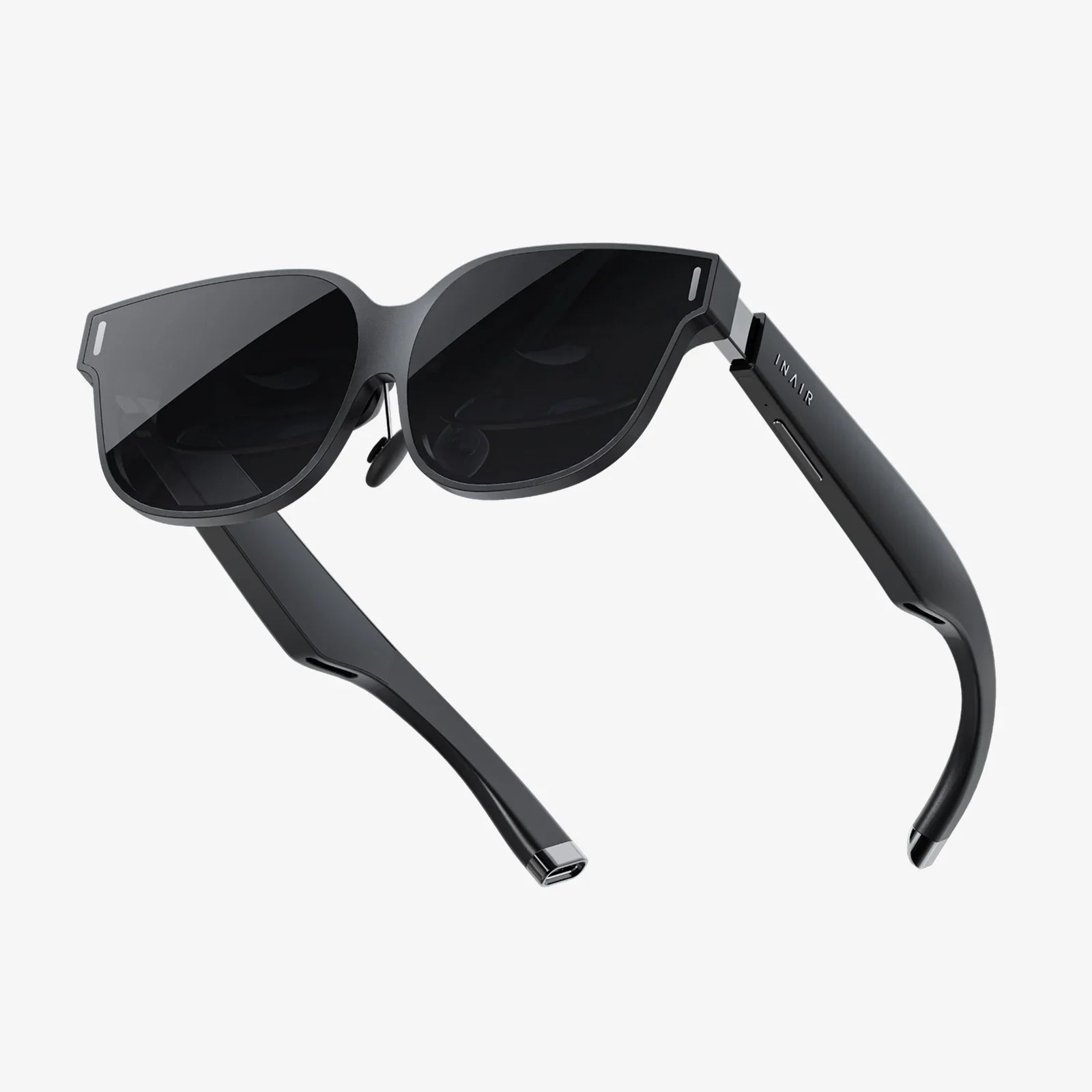
- by wangfred
How to VR Goggles Work: A Deep Dive into Immersive Technology
- by wangfred
You slip them over your head, and in an instant, the real world vanishes. You're standing on the surface of Mars, dodging bullets in a high-stakes firefight, or examining the microscopic details of a human cell. The experience is so visceral, so convincing, that your body reacts as if it's truly there. This is the magic of virtual reality, but it's not magic at all—it's a meticulously engineered illusion. The gateway to these impossible worlds is a pair of VR goggles, a device that represents one of the most sophisticated feats of consumer technology. But have you ever stopped to wonder, as you're exploring these digital frontiers, exactly how this modern marvel functions? The journey from a simple screen strapped to your face to a believable, interactive universe is a story of clever software, precise hardware, and a deep understanding of human perception.
At its most fundamental level, the goal of any VR goggle system is simple: to convince your brain that the synthetic world it's perceiving is authentic. This is achieved not by creating a perfect replica of reality, but by faithfully reproducing the key sensory cues that your brain uses to construct its model of the world around you. The primary senses targeted are vision and hearing, with increasingly sophisticated systems also incorporating touch through controllers and even haptic feedback suits. The entire apparatus is designed to create what is known as "presence"—the undeniable feeling of being in the virtual environment, a sensation so powerful that the conscious knowledge of wearing a device fades away.
The most immediate and obvious component of the VR experience is the visual display. This is where the illusion begins.
Unlike a traditional monitor or television that presents a single image, VR goggles contain two distinct displays (or one high-resolution screen split into two halves), one for each eye. This is the foundation of stereoscopic vision, which is our ability to perceive depth. By presenting two slightly different images, each from the perspective of a separate eye, the goggles replicate the way we see the real world. Your brain automatically merges these two images, interpreting the differences between them as depth and solidity, creating a convincing 3D environment.
If the screens were simply placed directly in front of your eyes, the image would be a large, blurry, and unusable mess. This is because our eyes cannot focus on objects that are only an inch or two away. This is where specialized lenses come into play. Positioned between your eyes and the screens, these lenses perform a critical function:
A static 3D image is impressive, but the moment you move your head and the world doesn't respond, the illusion shatters completely. This is why precise, low-latency head tracking is arguably the most important technological pillar of VR. It ensures that the virtual world remains locked in place relative to your movements, creating a stable and believable universe.
Modern VR systems track your head's movement in six degrees of freedom. This means they track both rotation and translation:
Early mobile-based VR often only offered 3DoF (rotation only), which severely limited immersion. 6DoF tracking is what allows you to lean in to examine an object, peek around a corner, or dodge an incoming projectile.
There are two primary methods for achieving this precise tracking:
The headset itself is just the display and sensor platform. The immense computational power required to generate two high-resolution, high-frame-rate streams of video and process all the tracking data happens elsewhere.
This is a continuous, high-stakes cycle that must happen flawlessly and incredibly fast to maintain immersion and prevent motion sickness:
This entire loop must be completed in less than 20 milliseconds to feel natural. Any significant delay, known as latency, between your head movement and the corresponding change on the screen can cause disorientation and simulator sickness. Techniques like Asynchronous Timewarp are used to compensate for tiny delays by making last-millisecond adjustments to the rendered image based on the latest head position data.
The processing can happen in one of two places:
A truly immersive experience requires more than just visuals.
Sound in VR is not stereo; it's three-dimensional. Using advanced audio algorithms, the system simulates how sound waves interact with the shape of your head and ears (Head-Related Transfer Functions or HRTF). This means a sound coming from behind and to your left will be subtly different from one coming from in front and to your right. You can hear the direction and distance of sounds, allowing you to locate an opponent by their footsteps or sense an object moving around you without looking. This is a critical layer of spatial awareness that deeply enhances presence.
To interact with the virtual world, you need virtual hands. This is achieved through motion-tracked controllers. These handheld devices are tracked by the same system that tracks the headset (using lights or sensors) and contain buttons, joysticks, and triggers. They act as an extension of your hands, allowing you to grab, throw, shoot, and manipulate objects. More advanced systems are moving towards direct hand tracking, where cameras on the headset see your actual hands and fingers, translating their real-world movements directly into the virtual space without the need for controllers, enabling more natural and intuitive interactions like gesturing, pointing, and grasping.
Despite the incredible technology, challenges remain. Issues like simulator sickness, visual fidelity (the "screen door effect"), the weight and comfort of headsets, and the need for more natural interaction paradigms are all active areas of development. The future points towards varifocal lenses that adjust to where your eyes are looking, eye-tracking for foveated rendering (which drastically improves performance), higher-resolution micro-displays, and even smaller, more powerful form factors. The goal is to make the technology so seamless and comfortable that the hardware disappears entirely, leaving only the experience.
The next time you step into a virtual world, take a moment to appreciate the symphony of technology at play. It’s a relentless dance of photons and processors, all choreographed to execute a single, magnificent magic trick on your mind. From the precise warping of light through complex lenses to the millisecond calculations of your position in space, every element is engineered to collapse the barrier between the digital and the real. This isn't just about playing a game or watching a video; it's about fundamentally expanding the canvas of human experience, offering a glimpse into a future where our reality is not a fixed destination, but an infinite possibility.