


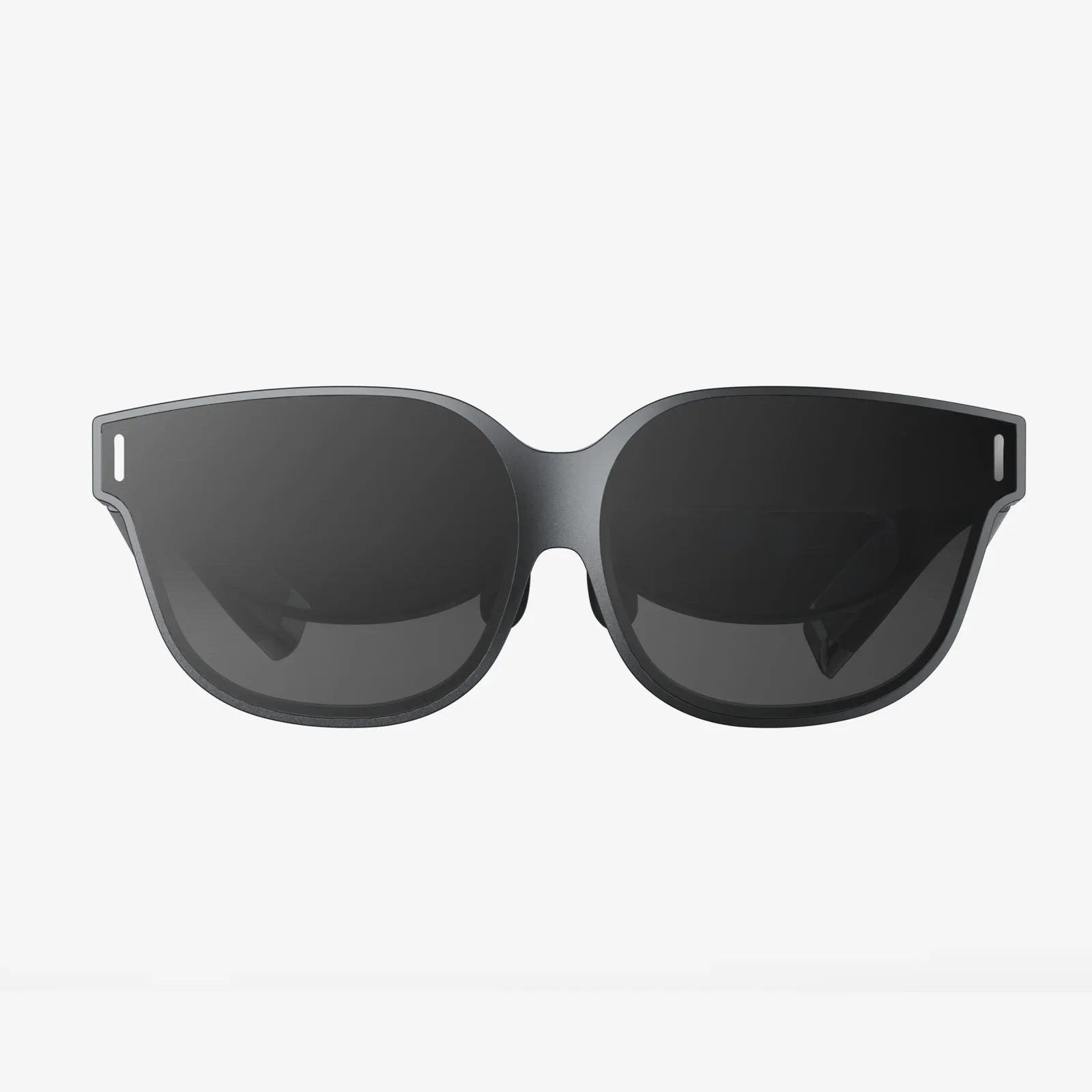
You slip on the headset, and in an instant, the world around you vanishes. You're no longer in your living room; you're standing on the surface of Mars, dodging bullets in a futuristic firefight, or looking down from a vertiginous skyscraper ledge. The experience is so visceral, so convincing, that your body physically reacts to the digital environment. This is the magic of virtual reality, a technological sleight of hand that feels nothing short of miraculous. But have you ever stopped to wonder, as you're being transported to these impossible worlds, how VR glasses actually work? The secret isn't magic—it's a sophisticated orchestration of optics, sensors, and software designed to hijack your senses and convince your brain that the impossible is real.
The Core Principle: Tricking the Human Brain
At its most fundamental level, the goal of any VR system is simple: to create a convincing, interactive simulation of a three-dimensional environment. To achieve this, it must overcome a basic biological challenge—our perception of reality is built upon a constant stream of data from our senses, and our brains are exceptionally good at detecting inconsistencies in that data. VR glasses, therefore, are not just screens you strap to your face; they are elaborate sensory deception devices. They must deliver visual, auditory, and sometimes even haptic cues that are perfectly synchronized and consistent with the user's movements. Any lag, any mismatch, any visual artifact can break the illusion, leading to disorientation or the dreaded simulator sickness. The entire apparatus is built around the concept of presence—the ultimate goal of making you forget you're wearing a device and truly feel like you're somewhere else.
The Visual Gateway: Stereoscopic 3D and Lenses
The most immediate and obvious job of VR glasses is to show you a world. But it can't be just any flat image; it must be a stereoscopic, panoramic, and high-fidelity view.
Two Screens, One World
Inside the headset, positioned just a few inches from your eyes, are two small high-resolution displays (or one large display split into two sections). These displays show two slightly different images, one for your left eye and one for your right. This mimics the way human vision works—our eyes are spaced apart, so each sees the world from a marginally different angle. Your brain takes these two separate 2D images and combines them into a single, coherent 3D image with depth and scale. This process, known as stereoscopy, is the foundational trick that creates the illusion of a three-dimensional space.
The Role of Optics: Focusing on the Close-Up
Here lies a problem: your eyes cannot focus on objects placed just inches away, like a smartphone screen. If you simply placed screens that close, the image would be a blurry, strained mess. This is where specialized lenses come in. Positioned between your eyes and the screens are a set of refractive lenses, similar to magnifying glasses. Their critical job is to bend the light from the screens, making the focused image appear as if it's coming from a farther distance, typically two meters or more away. This allows your eyes to relax and focus naturally on the virtual world, not on the physical screen right in front of them. These lenses also help to widen the field of view, filling your peripheral vision to deepen the immersion and prevent the distracting "binoculars" effect of looking at a small, contained image.
Tracking the Universe: How VR Knows Where You Are
A static 3D image is impressive, but true immersion requires that the world reacts to you. When you turn your head, lean forward, or crouch down, the virtual world must respond instantly and accurately. This is achieved through a complex system of tracking, which is arguably the most important technological component for maintaining presence and preventing nausea.
Head Tracking: The Foundation of Movement
Head tracking is non-negotiable. VR glasses are packed with an array of sensors that constantly report their orientation and position in space. This suite typically includes:
- Gyroscopes: Measure the rate of rotation (turn your head left/right, nod up/down, tilt side-to-side).
- Accelerometers: Measure linear acceleration (moving forward, backward, up, or down).
- Magnetometers: Act as a digital compass, correcting for drift in the gyroscope's orientation data by aligning to the Earth's magnetic field.
This combination of sensors is known as an Inertial Measurement Unit (IMU). It provides incredibly fast, low-latency data on rotational movement, which is why when you quickly turn your head, the world turns with you without any perceptible delay.
Positional Tracking: Moving in 3D Space
While the IMU is great for rotation, it's poor at accurately tracking precise position in a room. For that, VR systems use external or internal methods to create a full 6 Degrees of Freedom (6DoF) tracking—meaning they track not just rotation (pitch, yaw, roll) but also translational movement (forward/back, up/down, left/right).
Outside-In Tracking
This method uses external sensors or cameras placed in the room that look inward to track the position of the headset. The headset might have blinking LEDs or specific markers that these external devices can see. By triangulating the position of these lights, the system can pinpoint the headset's exact location in space with high precision.
Inside-Out Tracking
The modern trend is toward inside-out tracking. Here, the cameras are mounted on the headset itself, looking outward at the world. These cameras continuously scan your environment, tracking the position of static features like furniture, walls, and patterns on the floor. By observing how these reference points move in relation to the headset, the system's algorithms can calculate its own position and movement through the room without any external hardware. This is not only more convenient for users but also allows for much larger play areas.
The Auditory Layer: Spatial Sound
Vision is only part of the experience. Sound is a critical, and often underestimated, component of spatial awareness. VR glasses integrate headphones or audio solutions that deliver 3D or spatial audio. This technology uses Head-Related Transfer Functions (HRTF)—complex algorithms that simulate how sound waves interact with the shape of your head, ears, and torso. The result is astonishing: a sound coming from behind you actually seems to come from behind you. If a virtual object makes a noise to your left, and you turn your head to the right, the sound will shift to your right side. This auditory feedback is perfectly synchronized with the visual input, reinforcing the brain's belief that the environment is real.
The Bridge to the Virtual World: Controllers and Haptics
To truly interact with a virtual world, you need your hands. VR controllers are themselves marvels of engineering, acting as an extension of the tracking system. They contain their own IMUs (gyroscopes, accelerometers) and are tracked by the same external or internal cameras that track the headset. This allows the system to know not just where your head is, but also the precise position, orientation, and movement of your hands. Buttons, triggers, and thumbsticks on the controllers translate your physical actions into digital commands. Furthermore, advanced haptic feedback uses tiny motors to create precise vibrations, simulating the feeling of touching a surface, firing a weapon, or feeling the rumble of a virtual engine.
The Brain of the Operation: Processing and Software
None of this hardware would function without the powerful software that acts as the conductor of this technological orchestra. The software has several critical jobs:
- Rendering: Generating two separate, high-resolution, high-frame-rate (typically 90Hz or higher) images for the left and right eyes. This requires immense graphical processing power to avoid latency.
- Warping and Correction: The image rendered by the computer is a distorted version of the final picture. The software pre-distorts it, knowing that the headset's lenses will then "un-distort" it, resulting in a correct and clear image for the user. This compensates for the optical distortion inherent in the lenses.
- Sensor Fusion: Taking the constant, high-speed data streams from all the sensors (gyros, accelerometers, cameras) and combining them into a single, rock-solid and accurate prediction of head position and orientation.
- Latency Mitigation: Employing techniques like Asynchronous Timewarp and Spacewarp. If the system detects that a frame is going to be rendered late, it can subtly adjust the already-rendered image from the previous frame to match your latest head position, effectively hiding the lag and maintaining smoothness, which is crucial for comfort.
Challenges and The Future of Perception
Despite the incredible technology, challenges remain. The vergence-accommodation conflict is a key one. In the real world, when you look at a close object, your eyes converge (turn inward) and your lenses accommodate (focus). In VR, your eyes converge on a virtual object at a certain depth, but they must always accommodate to focus on the fixed-distance physical screen. This disconnect can cause eye strain for some users. Future solutions include varifocal displays that can physically move screens or use liquid crystal lenses to adjust focal depth dynamically. Light field technology, which replicates the way light rays behave in the real world, promises an even more natural and comfortable visual experience by solving this conflict entirely.
The next time you witness a dinosaur roar in your face or paint in three-dimensional space, you'll appreciate the immense technological ballet happening in real-time. It's a symphony of optics, mechanics, and code, all working in perfect harmony to achieve one goal: to convince you, utterly and completely, that you are there. This isn't just about games or entertainment; it's a fundamental reimagining of human-computer interaction, a new medium limited only by the creativity of its creators and the continuing evolution of the hardware that makes it all possible. The line between the digital and the physical is not just blurring—it's being systematically and brilliantly erased.
Share:
AR VR Headset Market Size 2030: A Deep Dive into the Future of Immersive Technology
Augmented Reality Market Forecast 2030: A $300 Billion Reality Reshaping Our World