


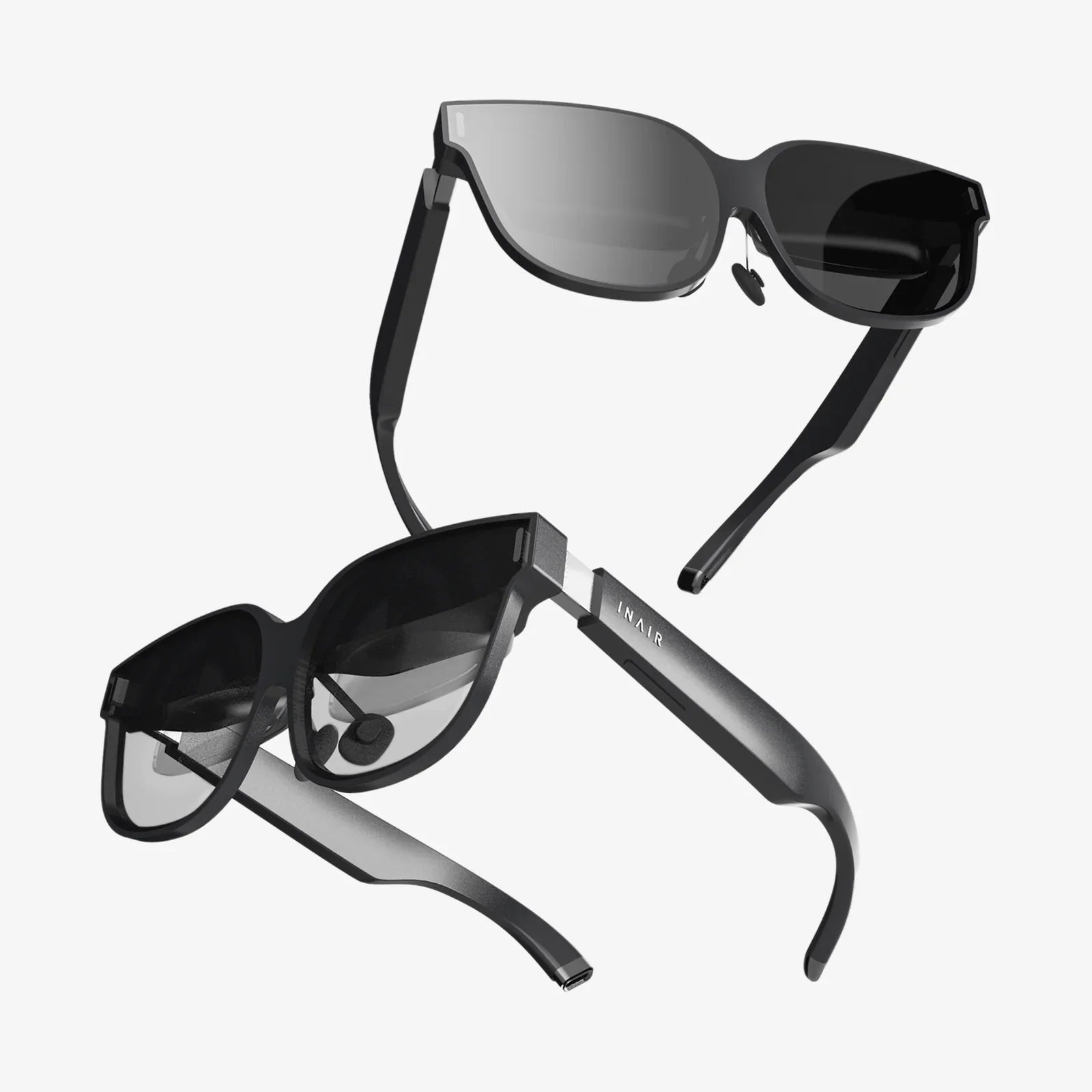
Imagine a world where your computer doesn't just obey your commands but anticipates your needs, understands your frustrations, and responds to your emotions. This isn't science fiction; it's the rapidly approaching future of Human Computer Interaction, a field quietly orchestrating the most profound relationship of our modern era—the dialogue between human and machine. The screens you touch, the voices you command, and the virtual worlds you navigate are all the result of decades of research, design, and a deep understanding of what it means to be human in a digital age. The journey of HCI is the story of technology learning to speak our language, and it is reshaping existence as we know it.
The Genesis of a Dialogue: From Punch Cards to Personal Companions
The story of Human Computer Interaction begins not with sleek touchscreens, but with banks of blinking lights, cryptic switches, and stacks of perforated paper. In the era of room-sized mainframes, interaction was a one-sided affair, reserved for a priesthood of specialists who communicated in binary and machine code. The user was an afterthought, subordinate to the immense and costly logic of the machine itself. The concept of "user-friendly" was yet to be born.
The first true revolution came with the command-line interface (CLI). This text-based dialogue, pioneered by systems like UNIX and later popularized by DOS, represented a monumental leap. For the first time, users could issue verbose commands, and the machine would respond. It was a conversation, albeit a stilted and memorization-heavy one. This era established the fundamental paradigm of input and output, of action and response, that still underpins all computing. However, it created a steep learning curve, effectively locking out anyone without the time or inclination to learn its arcane syntax.
The existential breakthrough, the moment HCI truly found its purpose, was the development of the Graphical User Interface, or GUI. Xerox PARC, a legendary research hub, gave birth to the concepts of windows, icons, menus, and pointers (WIMP). This was more than an innovation; it was a philosophical shift. It moved computing from a linguistic, abstract space to a visual, metaphorical one. The desktop, the trash can, the file folder—these were concepts anyone could understand. The machine was now speaking in the human's native tongue: imagery and metaphor.
The commercialization of this idea by various companies democratized computing. Suddenly, the personal computer lived up to its name. It was personal, approachable, and powerful. The mouse became an extension of the user's hand, translating physical movement into digital action. This direct manipulation of on-screen objects made the computer feel less like a logic engine and more like a tool—a digital workshop, typewriter, and canvas. This shift didn't just make computers easier to use; it made them usable by everyone, setting the stage for the technological integration that defines the 21st century.
The Pillars of Powerful Interaction: Core Principles of Modern HCI
Beneath the surface of every intuitive app and responsive website lies a foundation of rigorous principles. HCI is not merely about making things look attractive; it is a cross-disciplinary science focused on usability, functionality, and human psychology.
Usability: The Five Sacred Tenets
Usability is the cornerstone of effective HCI. It breaks down into five key components, a framework that guides every serious designer and researcher:
- Learnability: How easy is it for users to accomplish basic tasks the first time they encounter the design? A system with high learnability feels familiar almost instantly, leveraging existing mental models.
- Efficiency: Once users have learned the design, how quickly can they perform tasks? This involves streamlining workflows, minimizing unnecessary steps, and creating shortcuts for expert users.
- Memorability: When users return to the design after a period of not using it, how easily can they re-establish proficiency? A memorable design is intuitive and doesn't force relearning.
- Errors: How many errors do users make, how severe are these errors, and how easily can they recover from them? Good design anticipates potential pitfalls, prevents errors where possible, and offers clear, constructive solutions when they occur.
- Satisfaction: How pleasant is it to use the design? This subjective measure encompasses aesthetics, the tone of language, and the overall feeling of empowerment the interface provides.
User-Centered Design: Building With, Not For
The methodology that brings these principles to life is User-Centered Design (UCD). UCD is an iterative process that places the user at the heart of every decision. It involves:
- Research: Understanding the user through interviews, surveys, and observation. What are their needs, goals, and contexts?
- Design: Creating prototypes and wireframes based on that research.
- Testing: Putting those designs in front of real users to gather feedback. This is often done through usability testing sessions.
- Implementation: Building the final product.
- Evaluation: Releasing the product and continuously gathering data on its use to inform the next iteration.
This cyclical process ensures that the final product is not a reflection of what designers *think* users want, but is instead shaped by empirical evidence and direct user feedback.
Accessibility: Designing for All
No discussion of HCI principles is complete without emphasizing accessibility. True usability extends to everyone, regardless of their abilities. Accessible design ensures that people with visual, auditory, motor, or cognitive disabilities can perceive, understand, navigate, and interact with technology. This includes providing text alternatives for images, ensuring sufficient color contrast, enabling full keyboard navigation, and designing for screen readers. Accessibility is not a niche concern; it is a fundamental requirement for ethical and effective HCI, ensuring the digital world is an inclusive space.
Beyond the Screen: The New Frontiers of HCI
While the GUI remains dominant, the frontiers of HCI are rapidly expanding into new, more natural, and more immersive modalities. The goal remains the same: to make the interface between human and computer so seamless that it begins to disappear.
Voice User Interfaces (VUI) and Conversational AI
The rise of smart speakers and voice assistants has made conversational interaction a part of daily life. VUIs represent a return to the most innate form of human communication: speech. The challenge here is profound. Unlike a GUI, which presents all options visually, a VUI must understand natural language, infer intent from incomplete commands, and manage the complex flow of a dialogue without visual cues. Success in this space means creating interactions that feel less like issuing commands to a robot and more like collaborating with a helpful partner.
Gesture and Haptic Feedback
From swiping and pinching on touchscreens to the complex gesture recognition in virtual reality, our bodies are becoming a central part of the interactive experience. This is coupled with haptic technology, which provides tactile feedback. A subtle vibration when pressing a virtual button or the resistive force felt when scrolling through a list creates a powerful physical connection to the digital world, making interactions more tangible and satisfying.
Tangible and Augmented Reality (AR)
Tangible User Interfaces (TUIs) blend the physical and digital worlds by giving digital information a physical form. Imagine manipulating data points by moving physical blocks on a table. AR takes this further by overlaying digital information directly onto our perception of the real world through glasses or phone screens. The HCI challenge is to seamlessly blend pixels with physical objects, creating interactions where information appears exactly where and when it is needed, contextually relevant to our immediate surroundings.
Brain-Computer Interfaces (BCI) and Affective Computing
This is the final frontier of invisibility. BCIs aim to create a direct communication pathway between the brain's electrical activity and an external device, potentially allowing control through thought alone. Parallel to this is affective computing, where systems can recognize, interpret, process, and simulate human emotions. An empathetic computer that can detect user frustration and adapt its behavior accordingly represents the ultimate goal of HCI: a truly symbiotic, adaptive, and human-aware partner.
The Ethical Imperative: Responsibility in a World of Frictionless Interaction
As interfaces become more intuitive and immersive, they also become more persuasive and powerful. This power brings forth a critical set of ethical considerations that the HCI community must confront.
- Privacy: Voice assistants are always listening. Eye-tracking software knows where you look. Affective computing knows how you feel. The data required for seamless interaction is deeply personal. Designing with privacy means being transparent about data collection, giving users genuine control over their information, and practicing data minimization.
- Persuasion and Manipulation: The same principles that make an interface easy to use can also make it easy to manipulate. Dark patterns—deceptive design choices that trick users into doing things they didn't intend to do—are a perversion of HCI principles. The field must champion ethical persuasion that aligns with user goals, not corporate ones.
- Addiction and Attention Economy: Infinite scroll, push notifications, and variable rewards are all HCI techniques designed to capture and hold user attention. Designers have a responsibility to consider the societal and mental health impacts of creating habit-forming technologies and to advocate for designs that promote digital well-being.
- Bias and Representation: AI-driven interfaces learn from data. If that data contains societal biases, the AI will perpetuate and even amplify them, leading to systems that fail to recognize certain accents, genders, or ethnicities. A commitment to diverse data sets and inclusive testing is non-negotiable for building fair and equitable systems.
The Future Human: A Symbiotic Relationship
The trajectory of HCI points toward a future where the line between user and tool, human and computer, becomes increasingly blurred. We are moving from interactive systems to intelligent partners. The computer is evolving from a passive tool that executes commands into an active agent that understands context, predicts needs, and acts proactively on our behalf. This will less resemble using a tool and more resemble collaborating with a colleague.
This future will be built on ubiquitous computing, where processing power is embedded into the very fabric of our environment—our homes, our cities, our clothing. Interaction will be ambient and contextual, shifting effortlessly between voice, gesture, touch, and glance depending on the situation. The goal is no longer just efficiency, but enhancement: technology that amplifies human cognition, creativity, and connection.
The next time you effortlessly navigate a complex website, ask your speaker to play a song, or lose yourself in a game, take a moment to appreciate the invisible art and profound science that made it possible. Human Computer Interaction is the silent conductor of our digital symphony, and its next movement promises to be its most transformative yet, fundamentally redefining human potential in an increasingly intelligent world.
Share:
Remote Work Office The Ultimate Guide to Designing Your Productive Home Sanctuary
Remote Work Office The Ultimate Guide to Designing Your Productive Home Sanctuary