


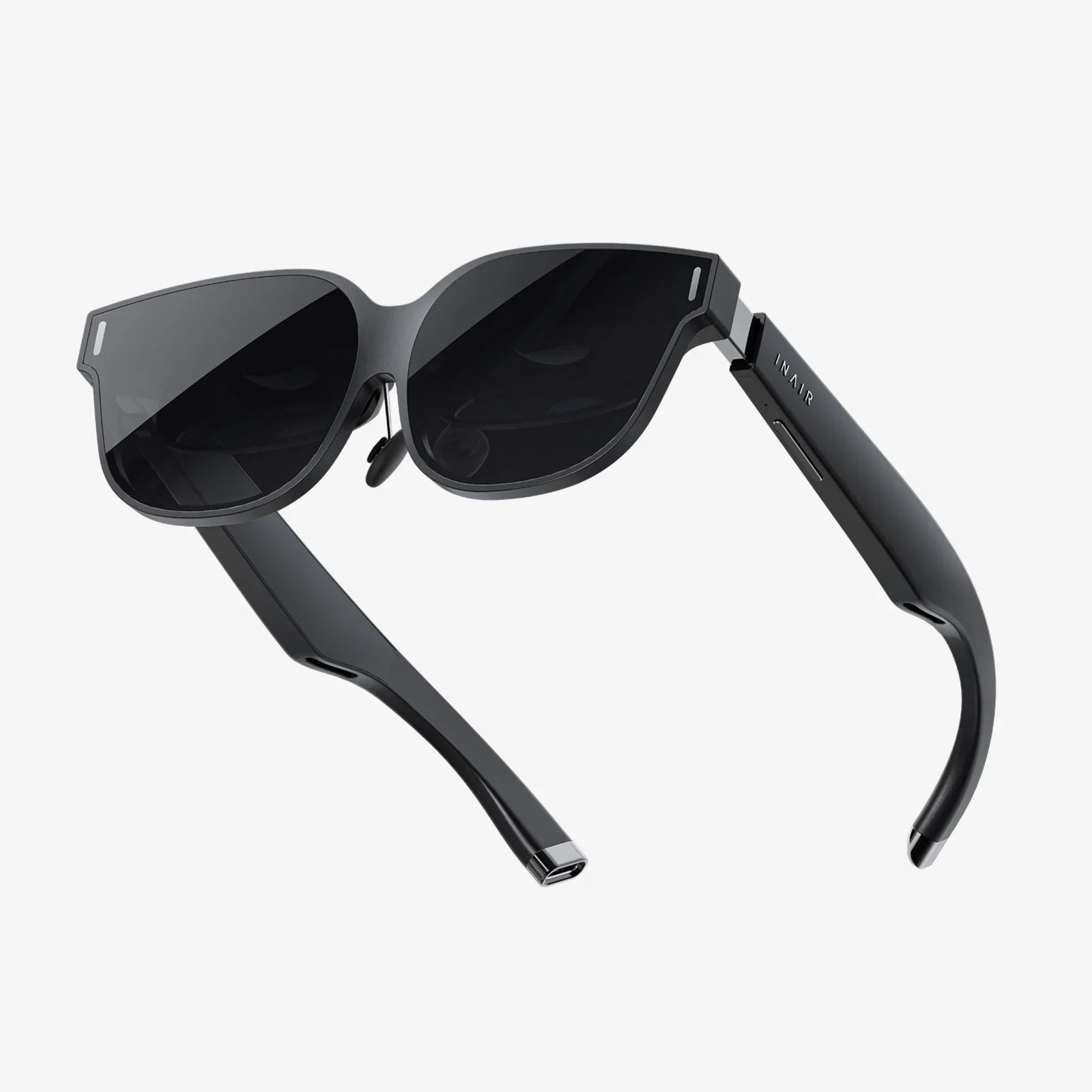
Imagine slipping on a headset and suddenly, you are no longer yourself. The world that materializes before your eyes is not your own; the hands you raise are familiar yet foreign, and the memories that might flicker at the edge of consciousness belong to someone else. This is the intimate, unsettling promise of a future not far away: the ability to truly step into another’s shoes, to see through their eyes, and to feel the virtual world as they have crafted it. The act of saying, "I'm wearing your goggles," is a portal to unparalleled connection, but it is also a Pandora's box of psychological, social, and ethical quandaries that we are only beginning to comprehend.
The Allure of the Shared Perspective: Beyond Simple Screen Sharing
For decades, media has offered windows into other lives. We watch films, read memoirs, and scroll through social feeds, all in an attempt to understand a sliver of another person's experience. But these are curated, second-hand glimpses. Virtual reality, by its very nature, is different. It is not a window to look through; it is an environment to be inhabited. When you wear another person's goggles, you are not just observing their digital playground; you are entering their mind-space.
This shared perspective goes far beyond simply seeing the same avatar or the same landscape. It encompasses the complete sensory and interactive profile they have established:
- Field of View and Height: You instantly experience the world from their physical perspective. A tall person's vantage point becomes yours, or conversely, you may find yourself looking up at a world scaled for someone else.
- Control Schema and Interaction: Their unique way of moving, manipulating objects, and navigating menus becomes your own. You must learn their digital body language.
- Personalized Environments and Avatars: You are surrounded by the assets they have chosen, the worlds they have built or purchased, and the aesthetic that reflects their identity.
- Saved Data and History: Potentially, you could access their saved games, their private journals within a VR space, or their list of favorite locations—the digital equivalent of browsing someone's diary or photo album without their explicit, moment-to-moment consent.
The allure is undeniable. It is the ultimate tool for empathy, for education, for collaboration, and for sheer curiosity. A designer could invite a client into their prototype to experience a building before a single brick is laid. A teacher could share a historical simulation with a student, guiding them through ancient Rome. Friends could share their favorite immersive game worlds exactly as they were meant to be seen.
The Psychological Labyrinth: Identity, Agency, and the Blurring Self
However, this profound intimacy comes with a significant psychological cost. The human sense of self is a fragile construct, built upon a continuous stream of sensory input, proprioception (the sense of your body in space), and personal agency. Shared VR experiences have the potential to disrupt all three.
1. The Dissolution of Agency: When you move your hand and a virtual hand responds, but the mapping is slightly off, or the movement is delayed, a cognitive dissonance occurs. This is known as the agency-ownership dilemma. In a shared perspective context, this dissonance is amplified. Your actions produce outcomes, but they are filtered through another user's predefined settings and physical norms. The feeling of "I did that" becomes entangled with "that is how they would have done it." Over time, this can lead to a subtle erosion of one's own sense of agency, a feeling of being a passenger in someone else's body.
2. Identity Contamination and the Proteus Effect: The Proteus Effect is a well-documented phenomenon in VR where users subconsciously begin to adopt behaviors associated with their avatar. If your avatar is tall, you may act more confidently; if it is attractive, you may be more sociable. Now, imagine that the avatar you inhabit is not a generic archetype but a direct digital extension of another real person. You are not just wearing a mask; you are wearing their face. The potential for identity contamination—where the traits, memories, and preferences of the other person seep into your own consciousness—becomes a real concern. Where do you end, and the borrowed identity begins?
3. Memory and Experience Confusion: Human memory is highly malleable. Vivid VR experiences are often encoded by the brain as real memories. If you spend significant time experiencing life through another's goggles, your brain may struggle to differentiate between your actual experiences and those you lived through their perspective. This creates a new form of digital false memory syndrome, where your personal history becomes a collage of your reality and the realities of others.
The Social Contract, Reimagined: Consent, Privacy, and Digital Vulnerability
If sharing someone's VR perspective is akin to browsing their diary, then our current social and legal frameworks are woefully inadequate. The concept of consent needs a complete overhaul.
The Illusion of blanket Consent: A user might grant a friend "access" to their goggles for a specific purpose—to show them a new game. But does that consent extend to everything that friend might encounter? What if the friend, while navigating the menus, stumbles upon a private, password-protected journal app? Or a intimate recording of a past experience? Our current digital models of consent are binary: access granted or denied. Shared VR requires granular, nuanced consent models that specify what can be shared, for how long, and with whom.
Privacy in a Panopticon: In someone else's VR space, every action can be monitored. Your gaze can be tracked, revealing what captures your attention (and what doesn't). Your hesitation, your movements, your reactions—all of this becomes data that is visible to the owner of the goggles. You are a guest in their panopticon, and you may be giving away more about yourself than you intend. This creates a new power dynamic, where the host has immense insight into the guest's unspoken reactions.
Digital Vulnerability and Trauma: If we accept that VR experiences can feel real, then we must also accept that they can cause real trauma. A person might craft a VR experience that is intensely personal, perhaps working through a phobia or a past traumatic event. For them, it is a controlled, therapeutic environment. For an unsuspecting guest who puts on their goggles, it could be a deeply disturbing and harmful shock. The potential for both intentional and accidental psychological harm is immense.
The Ethical Imperative: Building Guardrails for a New Frontier
Before this technology becomes ubiquitous, we must establish strong ethical guidelines and technical safeguards. This is not a task that can be left to developers alone; it requires input from psychologists, ethicists, neuroscientists, and lawmakers.
- Granular Permission Systems: Software must be designed from the ground up with layered consent. Users should be able to share specific applications, worlds, or experiences while locking away private data and spaces. Permissions should be time-limited and revocable at any moment.
- Identity Safeguards: Systems could incorporate visual or auditory cues that constantly remind the user they are in a "borrowed" perspective, helping to ground them and prevent identity confusion.
- Experience Labeling and Content Warnings: A standardized system for labeling the intensity, purpose, and potential psychological effects of a VR experience is crucial. Before entering another's world, a user should be presented with clear warnings, much like a film rating.
- Data Rights and Ownership: Clear laws must define who owns the data generated by a guest user in a host's space. Does the host have a right to analyze and keep the recording of the guest's reactions? The answer must be a resounding "no" without explicit, separate consent.
A Future of Connection or Consequence?
The ability to share our virtual eyes is a technological leap that mirrors humanity's deepest desire: to be truly understood. It holds the power to dissolve barriers of prejudice, to foster deep empathy across vast divides, and to allow us to share our greatest creations and discoveries in their purest form. It is the next best thing to telepathy.
Yet, this power is symbiotic with a profound vulnerability. It asks us to redefine the boundaries of self, to renegotiate the terms of privacy, and to confront the unsettling ease with which our minds can be reshaped by experience. The simple act of handing someone your headset and saying, "Here, try mine," may soon be one of the most intimate and trusting gestures one human can offer another. It is an offer to temporarily dissolve the barrier between you and me, to let someone walk a mile in your digital shoes. The question is, will we be ready for the blisters, the revelations, and the lost sense of direction that may follow? The future of human connection depends on the choices we make today, before we ever utter the words, "I'm wearing your goggles."
Share:
Benefits of Using Virtual Reality: A Deep Dive Into a Digital Revolution
3D vs Virtual Reality: Demystifying the Digital Dimensions That Are Reshaping Our World