


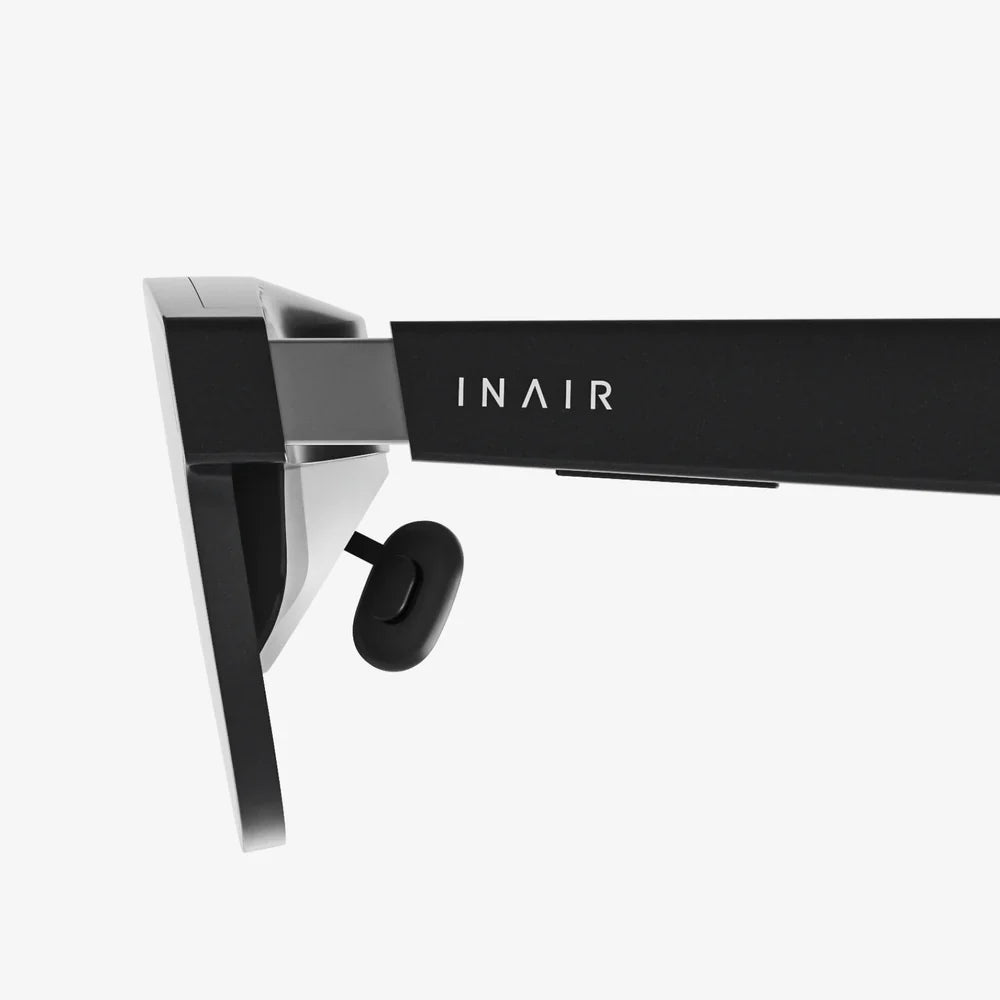
Imagine a device so powerful it can teleport you to the edge of the solar system, shrink you down to explore the human bloodstream, or sit you at a campfire with friends who live continents away. This is no longer the stuff of science fiction; it’s the palpable reality offered by the modern immersion VR headset, a technological marvel that is fundamentally rewriting our relationship with digital content and, by extension, with each other. It’s not just about seeing a new world; it’s about feeling, hearing, and believing you are truly within it. The promise is no longer visual—it’s visceral.
The Anatomy of Presence: How True Immersion is Engineered
The core objective of any high-fidelity immersion VR headset is to achieve a state known as "presence." This is the elusive, almost magical moment where the user's brain is completely convinced that the virtual environment is their actual reality. This isn't achieved by a single feature but through a symphony of advanced technologies working in perfect harmony.
Visual Fidelity: The Window to Another World
The primary gateway to immersion is sight. Early iterations suffered from the "screen door effect," where users could discern the gaps between pixels, shattering the illusion. Today's premier devices employ high-resolution displays, often with pixel densities that make individual elements indistinguishable to the human eye. Coupled with a wide field of view that mimics our natural peripheral vision, these displays create a seamless visual canvas.
However, resolution is only part of the story. Advanced rendering techniques, powered by sophisticated hardware, maintain a high and stable frame rate—typically 90Hz or higher. This fluidity is critical; any lag or stutter between a user's head movement and the corresponding change on-screen can instantly break immersion and, for some, induce discomfort. Furthermore, features like high dynamic range (HDR) and deep color gamuts contribute to a more lifelike and vibrant picture, making virtual sunsets feel warm and caverns feel authentically dark.
Precision Tracking: Anchoring You in the Virtual Space
For the world to feel solid and responsive, the headset must know exactly where you are and how you are moving. This is accomplished through a combination of inside-out and outside-in tracking systems. Inside-out tracking uses integrated cameras and sensors on the headset itself to map the physical room and track its own position within it. This allows for untethered freedom and easier setup.
These systems track six degrees of freedom (6DoF)—not just rotational movement (pitch, yaw, roll) but also translational movement (forward/backward, up/down, left/right). This means you can physically lean around a virtual corner, duck under a low-hanging beam, or kneel to examine an object on the ground. This 1:1 correlation between your physical and virtual movements is a cornerstone of deep immersion, making your body an integral part of the experience.
Audio: The Unseen Hand of Immersion
Often underestimated, spatial audio is arguably just as important as visual fidelity for selling the illusion. Standard stereo sound comes from a fixed location, but 3D spatial audio is dynamic and responsive. Using head-related transfer function (HRTF) algorithms, sound is processed to mimic how our ears receive audio in the real world.
This means you can hear the distinct chirp of a cricket behind you and to your left, the roar of a waterfall growing louder as you approach it, or the whisper of a character speaking directly beside you. This auditory depth cue is incredibly powerful for the brain, providing constant, subconscious reinforcement that the environment you are in is real and spatially coherent. It’s the unseen hand that guides your attention and heightens emotional responses.
Haptics and Feedback: The Sense of Touch
The final frontier of immersion is engaging the sense of touch. While full haptic suits remain a niche product, modern controllers have made significant strides. They incorporate advanced haptic feedback that goes beyond simple vibration, offering a range of sensations—from the gentle buzz of a virtual bumblebee landing on your hand to the sharp jolt of a virtual weapon firing.
Some systems are even exploring finger tracking, either through capacitive sensors on controllers or through external cameras. This allows for natural hand gestures—pointing, waving, giving a thumbs-up, or making a fist. This level of expression adds a profound layer of social presence and interaction, making communication feel more natural and intuitive than ever before.
Beyond the Game: The Expansive Applications of Immersive VR
While gaming remains the most famous application, the value of a deep immersion VR headset extends far beyond entertainment. It is becoming a transformative tool across numerous professional and educational fields.
Revolutionizing Education and Training
Imagine medical students performing intricate virtual dissections without ever touching a cadaver, or mechanics trainees taking apart a complex jet engine, guided by virtual instructions overlaid on the parts themselves. VR provides a safe, cost-effective, and infinitely repeatable training environment. It allows for the practice of high-stakes procedures, from surgery to emergency evacuations, where mistakes in the real world would have dire consequences. This "learning by doing" in a simulated environment dramatically improves knowledge retention and skill acquisition.
Transforming Social Connection and Remote Work
The concept of the "metaverse" is predicated on shared virtual spaces. Immersion VR headsets are the key to unlocking truly compelling social interaction within them. Instead of a grid of faces on a video call, colleagues from around the world can meet as lifelike avatars in a virtual boardroom, brainstorming on a 3D whiteboard. Friends can attend a virtual concert together, feeling the shared energy of the crowd. The sense of co-presence—that you are in a space with another person—fosters a deeper level of connection and collaboration that flat screens cannot replicate.
Unlocking New Frontiers in Therapy and Design
Therapists are using immersive VR for exposure therapy, carefully guiding patients with phobias or PTSD through controlled simulations of their triggers in a safe environment. Architects and interior designers walk clients through photorealistic renderings of unbuilt homes, allowing for changes long before ground is broken. Artists are using VR as a new medium, sculpting and painting in three-dimensional space. The ability to visualize and interact with data and designs in 3D is unlocking new forms of creativity and problem-solving.
Navigating the Challenges: The Path to Ubiquity
Despite the incredible progress, the journey towards perfect, ubiquitous immersion is not without its obstacles.
Accessibility and Cost: The most powerful headsets, coupled with the high-end hardware required to run them, represent a significant financial investment. Creating more affordable, yet still compelling, hardware is crucial for mass adoption.
Comfort and Form Factor: Current headsets can be bulky and cumbersome, generating heat during extended use. The industry is actively pursuing innovations in miniaturization, using new materials like carbon fiber, and developing alternative display technologies like pancake lenses to create lighter, smaller, and more comfortable devices that can be worn for hours.
The "Codec Problem": Truly photorealistic graphics in complex, real-time environments require an immense amount of data. Pushing the boundaries of rendering technology, cloud streaming, and foveated rendering (where only the center of your gaze is rendered in full detail) are essential to overcoming this computational hurdle.
Ethical and Social Considerations: As these worlds become more persuasive, questions about data privacy, psychological effects, and the potential for addiction need to be addressed proactively. Establishing clear ethical guidelines and user protections is paramount for the healthy development of the technology.
The Future is Immersive: What Lies Beyond the Horizon
The evolution of the immersion VR headset is accelerating at a breathtaking pace. We are moving towards devices that are not just worn but seamlessly integrated into our lives. The next generation is likely to feature varifocal displays that dynamically adjust to where your eyes are focused, solving the vergence-accommodation conflict that can cause eye strain. Haptics will evolve from simple controllers to full-body feedback suits and even direct neural interfaces, though the latter remains a distant prospect.
We are heading towards a future where the line between our physical and digital realities will become increasingly blurred. The immersion VR headset is the key that unlocks this door, not as an escape from our world, but as a tool to enhance it—to learn, create, connect, and explore in ways previously confined to our dreams. It promises a new paradigm of human experience, limited not by geography or physical law, but only by the breadth of our imagination.
The screen that once framed our digital adventures is dissolving, replaced by a world you can step into and a reality you can feel with your entire being. This isn't just the next step in tech evolution; it's a fundamental shift in human experience, and the journey is only just beginning. What will you create when the only limit is your imagination?
Share:
Best Buy VR Headset Black Friday: Your Ultimate Guide to the Top Deals of 2024
VR Headset Variable Focus: The Optical Breakthrough Ending Eyestrain and Blur