


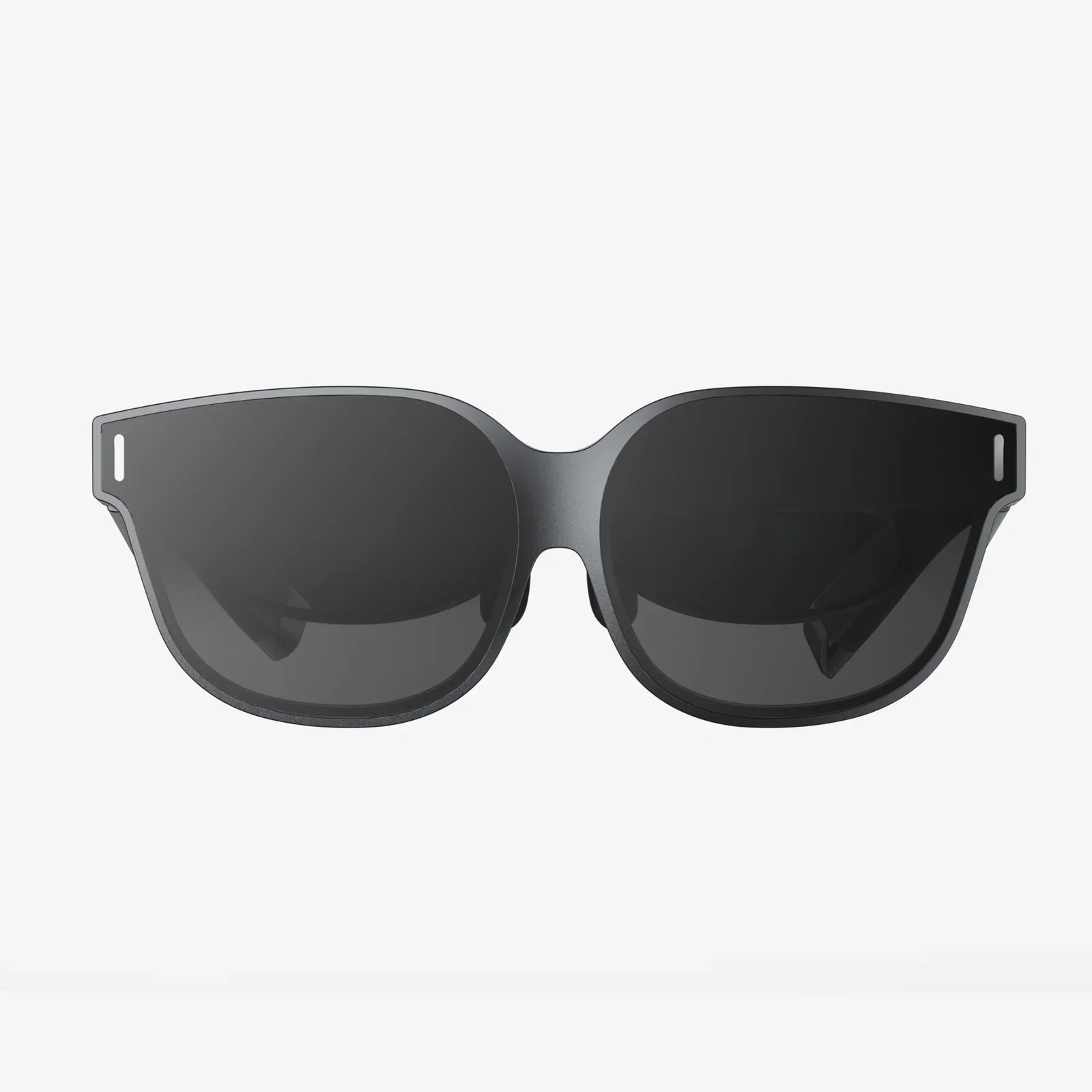
Imagine reaching out into a vast virtual world, your hand trembling slightly as you attempt to gently trace the intricate carvings on a stone monument mere inches from your face. In the real world, your eyes would effortlessly snap into a sharp, close-up focus, the background melting into a soft blur. But in today's most common virtual reality headsets, this simple, natural act is impossible. Instead, you're met with a frustrating, eye-fatiguing blur or a forced, uncomfortable viewing experience that has plagued the industry since its inception. This is the problem that VR headset variable focus technology is designed to eradicate, and it represents nothing short of a revolution in how we will see and interact with digital worlds.
The Fundamental Flaw: The Vergence-Acccommodation Conflict
To understand why variable focus is such a monumental leap, we must first diagnose the core physiological problem it solves: the Vergence-Accommodation Conflict (VAC). This technical term describes a fundamental mismatch between how our eyes and brain work together to perceive depth and focus in the real world versus in a conventional VR headset.
In natural vision, two key processes work in perfect harmony:
- Vergence: This is the movement of our eyes inward (convergence) or outward (divergence) to point at the same object in space. When an object is close, our eyes turn inward; when it's far away, they turn outward.
- Accommodation: This is the process by which the lenses inside our eyes change shape to focus on objects at different distances. Muscles around the lens contract to thicken it for near vision and relax to flatten it for distant vision.
In the real world, vergence and accommodation are neurologically linked. Your brain expects that when your eyes converge on a nearby object, your lenses must also accommodate to bring it into sharp focus. This coupling is instinctive and effortless.
Now, enter the traditional VR headset. These devices use a fixed-focus optical system. A set of stereoscopic displays is placed behind two fixed lenses, which project an image that appears to be at a specific, unchanging focal distance, typically around two meters. Your brain is tricked by stereoscopy into perceiving depth—you see a tree that seems far away and a sword that seems close—but your eyes are perpetually focused on a single, fixed plane. Your vergence changes as you look around the virtual scene, but your accommodation remains locked. This disconnect between what your eyes are doing and where they are focused is the Vergence-Accommodation Conflict.
The human brain is remarkably adaptable, but it cannot fully reconcile this conflict. For many users, the result is persistent visual discomfort, eyestrain, headaches, and even nausea after prolonged use. It creates a subtle but constant barrier to full immersion, a whisper from your biology that the world you're seeing isn't quite real. It is the single greatest optical challenge preventing VR from becoming a comfortable, all-day productivity and entertainment platform.
The Quest for a Solution: A Multitude of Engineering Paths
The industry's pursuit to solve VAC has been a fascinating engineering race, giving rise to several innovative approaches to achieving variable focus. None are trivial, each representing a complex trade-off between technical feasibility, form factor, cost, and visual fidelity.
Mechanical varifocal systems
One of the most intuitive approaches is to physically move the displays or lenses within the headset. Inspired by how a camera's autofocus works, these systems use eye-tracking to determine precisely where a user is looking in the virtual scene—whether at a near or far object.微型 motors then physically adjust the distance between the display screens and the lenses, or between different optical elements, to shift the focal plane to the correct distance.
The advantage of this method is that it can provide optically perfect focus at the selected distance. However, the drawbacks are significant: mechanical systems add weight, bulk, cost, and complexity. They can also be slow, potentially noisy, and prone to wear and tear over time. The physical movement of components can be perceptible to the user, breaking immersion, and the system can only present one focal plane at a time, even if other objects at different depths are visible in the periphery.
Liquid Lens Innovation
A more elegant solution lies in the realm of biomimicry, mimicking the human eye itself. Liquid lens technology replaces traditional solid lenses with a flexible membrane filled with optical fluid. By applying an electrical current, the shape of the membrane can be altered, changing the focal power of the lens instantly and without any bulky moving parts. This method is fast, silent, and potentially more reliable than mechanical systems.
The challenge has been in achieving a large enough aperture and sufficient optical quality with liquid lenses to cover the wide field of view required for a compelling VR experience. Scaling this technology for mass consumer adoption while maintaining precision and clarity remains a key engineering hurdle.
Multi-plane and Light Field Displays
Rather than shifting a single focal plane, some advanced systems aim to project multiple focal planes simultaneously or even replicate a complete light field. Multi-plane displays use stacks of partial screens or specialized optics to present imagery at two or more discrete focal distances. The brain can then more naturally integrate these images, reducing the conflict.
Light field displays represent the ultimate ambition. Instead of showing a 2D image that implies depth, they aim to replicate the actual light rays that would emanate from a real 3D scene, allowing the eye to focus naturally anywhere within the volume. This technology is incredibly computationally intensive and requires extremely high-resolution displays to avoid a noticeable loss in sharpness, making it a longer-term prospect for consumer hardware.
Computational Focus: The Power of Software
Some approaches lean heavily on software tricks to mitigate VAC, even if they don't fully solve it. Techniques like adaptive blurring can simulate depth of field. By using eye-tracking to identify the object of interest, the system can render it in perfect focus while artificially blurring elements in the foreground and background, much like a professional photograph with a shallow depth of field. This cues the brain to focus on the intended plane, reducing the urge to accommodate incorrectly. While not a true variable focus solution, it can significantly enhance comfort and is often used in conjunction with other optical innovations.
Beyond Comfort: The Revolutionary Implications of Variable Focus
While eliminating eyestrain is a monumental achievement in itself, the implications of widespread variable focus adoption extend far beyond mere comfort. This technology is the key that will unlock entirely new levels of immersion and utility for virtual reality.
True Photorealism and Depth Perception
Variable focus adds a critical missing cue to the visual experience: natural ocular depth of field. In the real world, we are constantly and subconsciously using focus and blur to understand spatial relationships. By replicating this flawlessly, virtual environments will feel tangibly more real. The sense of presence—the feeling of actually "being there"—will be profoundly deepened. This is essential for applications demanding high fidelity, from architectural visualization and virtual prototyping to next-generation cinematic experiences.
Unlocking Augmented Reality's Potential
The impact on augmented reality (AR) and mixed reality (MR) may be even more transformative. In AR, digital holograms are superimposed onto the real world. Without variable focus, a virtual screen floating in your living room and a dragon sitting on your coffee table would all be locked to the same focal plane as the physical environment. This creates a jarring and unrealistic effect. With variable focus, the AR headset could allow your eyes to focus naturally on the real-world table, then shift focus to the virtual dragon perched upon it, and then back again, seamlessly blending the digital and physical in a way that feels completely natural.
The Future of Work and Productivity
Imagine working in a virtual office with multiple floating screens and 3D data models. With today's fixed-focus headsets, long-term use is fatiguing. With variable focus, you could work for hours, effortlessly shifting your gaze from a email on a virtual screen two meters away to a complex 3D schematic you're manipulating right in front of you, all without any conscious effort or strain. This makes the vision of the "infinite office" and seamless remote collaboration a practical reality rather than a fatiguing novelty.
Accessibility and a Broader Audience
VAC discomfort is a primary reason many people cannot use VR for extended periods or at all. By solving this, variable focus technology democratizes virtual reality. It opens the door for a wider audience, including those who are more sensitive to visual-technological dissonance, to enjoy and benefit from immersive experiences for education, therapy, social connection, and entertainment.
Challenges on the Horizon
Despite its promise, the path to perfect, ubiquitous variable focus is not without obstacles. Integrating these complex optical systems adds significant cost to headset manufacturing, potentially keeping early iterations in the high-end professional market. There are also computational demands; dynamically adjusting focus or rendering for multiple planes requires more processing power from the graphics unit. Furthermore, minimizing the size and weight of these systems to create sleek, wearable consumer glasses is the ultimate design challenge that will take years to overcome.
The industry is now in a critical phase of experimentation and iteration. We are likely to see hybrid approaches that combine elements of mechanical movement, liquid lenses, and computational blurring to create a practical and effective solution for the first wave of consumer-ready devices.
We are standing on the precipice of a new era in visual computing. The fixed, straining lens of the past is giving way to a dynamic, intelligent eye that sees a virtual world not as a flat image, but as a deep, explorable space. It’s a shift that will transform VR from a compelling novelty into an indispensable tool and a truly believable escape, finally allowing our most powerful processor—the human brain—to see a digital world it can truly believe in.
This isn't just an incremental upgrade; it's the missing link between a promising simulation and a genuine reality. The moment you put on a headset and instinctively try to focus on a virtual object held close to your face—and it actually snaps into crystal-clear sharpness while the world behind it gently falls away—will be the moment you truly understand the meaning of immersion. That visceral, biological sigh of relief from your eyes is the sound of the final major barrier to presence crumbling, inviting you to step through and stay awhile in worlds yet unimagined.
Share:
Immersion VR Headset: Stepping Through the Portal to New Realities
What Are The Uses Of VR Headset - Beyond Gaming Into Our Future