


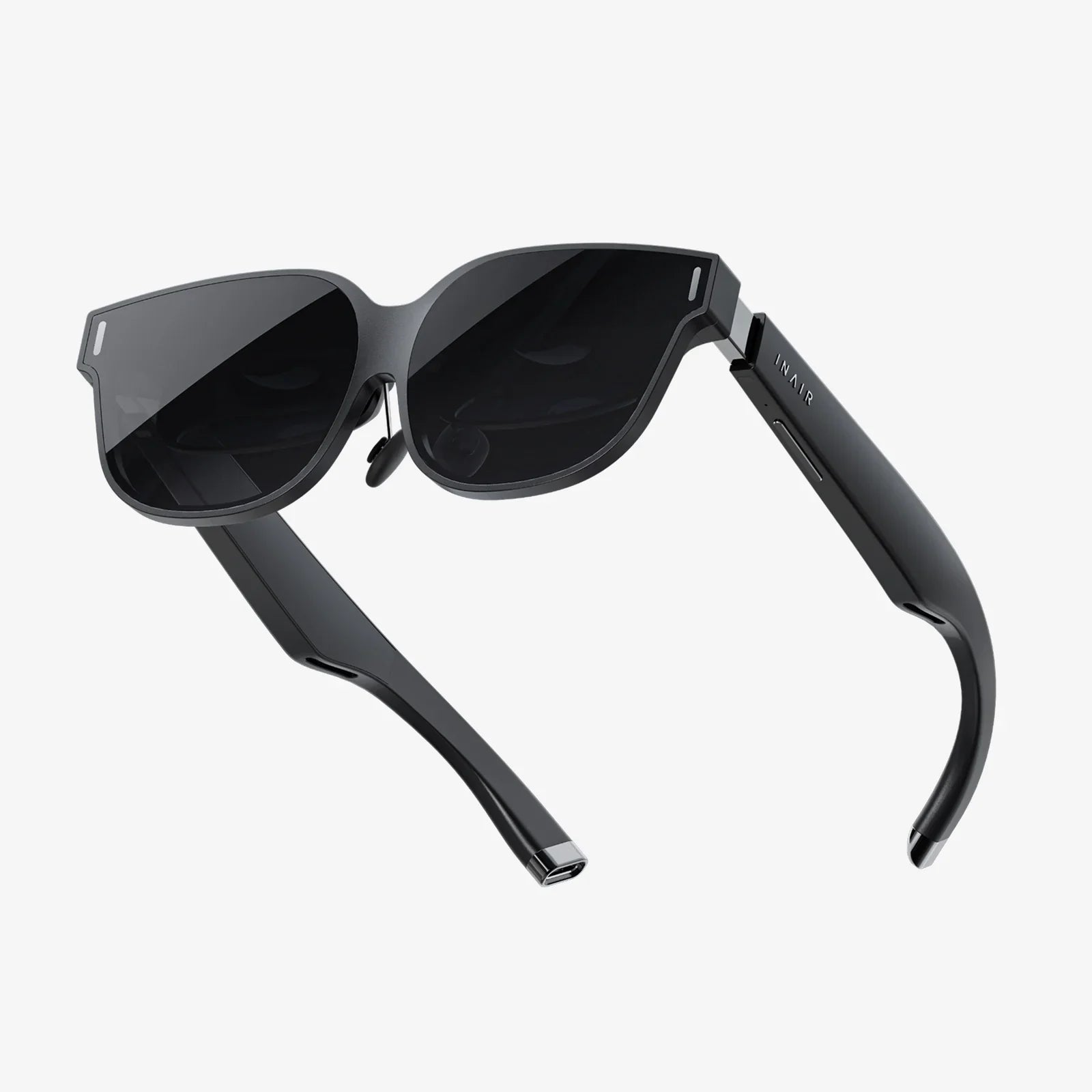
Imagine a world where the digital and the physical are not just adjacent realities but a single, seamless tapestry of experience. A world where learning is by doing, where remote collaboration feels as natural as sharing a room, and where entertainment envelops you completely. This is not a distant sci-fi fantasy; it is the imminent future being forged today in the crucible of Immersion XR. This powerful convergence of technologies promises to fundamentally alter our perception of presence, connection, and possibility, offering a glimpse into a new paradigm of human-computer interaction that is as intuitive as it is revolutionary.
The Pillars of Deep Presence: More Than Just Hardware
At its core, Immersion XR is about achieving a state of profound presence—the undeniable sensation of being physically located in a digitally rendered or augmented space. This goes far beyond simply wearing a headset. It is a meticulously engineered symphony of sensory feedback designed to trick the brain into accepting the virtual as real.
Visual fidelity is the first and most obvious gatekeeper. Early experiences were often hampered by low-resolution displays and a narrow field of view, constantly reminding users they were looking at a screen. Modern advancements are shattering these barriers. High-resolution micro-OLED displays, paired with sophisticated pancake lenses, are creating visuals of stunning clarity and depth, significantly widening the field of view to more closely match human vision. This eradication of the "screen door effect" is a critical step toward convincing the visual cortex.
But sight is only one sense. True immersion is multi-sensory. Spatial audio is arguably as important as high-resolution graphics. By simulating how sound waves interact with the geometry of a virtual environment and travel to our ears, spatial audio allows us to pinpoint the location of a snapping twig in a forest or the whisper of a colleague across a virtual meeting table. This auditory layer adds a powerful, often subconscious, layer of believability and depth to the experience.
The next frontier is haptics. The feeling of touch is a fundamental part of how we interact with and understand the world. Advanced haptic technology is moving beyond simple controller rumble to offer nuanced tactile feedback. From gloves that can simulate the pressure of shaking a hand or the texture of a virtual object to full-body suits that can convey the impact of a virtual punch or the gentle brush of wind, haptic feedback is the key to bridging the last great divide between the digital and the physical.
The Seamless Spectrum: Blending Realities with Passthrough and Spatial Computing
The ultimate expression of Immersion XR is not an escape from reality, but its enhancement. This is where the concept of the "Reality-Virtuality Continuum" becomes tangible. The goal is to move fluidly along this spectrum, from a completely real environment to a fully virtual one, with every possible augmented and mixed reality combination in between.
The technology enabling this fluidity is high-fidelity passthrough. Using advanced stereoscopic cameras, headsets can now digitize the physical world in real-time and display it to the user with incredibly low latency. This is not just a video feed; it is the foundation for blending digital content with the real world. You can place a virtual monitor on your physical desk, have a animated character jump onto your real-life sofa, or design a virtual sculpture that appears to sit in the middle of your living room, all while maintaining a clear view of your actual surroundings.
This capability is powered by spatial computing. The device understands the geometry of your room—the walls, floors, tables, and chairs—through a combination of sensors, cameras, and LiDAR. It maps the environment in 3D, allowing digital objects to behave in physically plausible ways: they can occlude behind real-world objects, cast accurate shadows, and even interact with the physics of your space. This contextual awareness is what transforms a novel trick into a useful tool, making the technology feel intelligent and integrated rather than merely superimposed.
Transforming Industries: The Practical Power of Presence
While the entertainment applications of fully immersive virtual worlds are thrilling, the most profound impact of Immersion XR is happening in enterprise, education, and healthcare. Here, the value proposition is not escapism, but efficacy, safety, and accessibility.
Revolutionizing Training and Education
Imagine a medical student practicing a complex surgical procedure not on a cadaver or a simulation, but on a hyper-realistic, interactive hologram of human anatomy. They can make incisions, encounter complications, and learn muscle memory without any risk to a patient. Similarly, mechanics can train on the intricate systems of a new jet engine before it's even built, and emergency responders can rehearse high-stakes disaster scenarios in a safe, controlled, yet utterly convincing virtual environment. This is "learning by doing" elevated to an entirely new level, democratizing access to experiences that were once too expensive, dangerous, or rare.
Reimagining Remote Collaboration and Design
The concept of the "virtual meeting" is poised for a quantum leap. Immersion XR will move us from flat video conference grids into shared digital spaces where participants, represented by realistic avatars, can interact with 3D models, data visualizations, and prototypes as if they were physically present. Architects and engineers can walk clients through a building design at full scale before a single brick is laid. Global design teams can manipulate a 3D model of a new product together, pointing, annotating, and making decisions in real-time with a naturalness that Zoom calls can never replicate. This restores the nuance of non-verbal communication and collaborative energy that is lost in traditional remote work.
Advancing Healthcare and Therapy
The applications in healthcare are vast and life-changing. Surgeons can use augmented reality overlays during actual operations, displaying vital signs, MRI data, or critical guidance directly onto their field of view without looking away from the patient. Phobia treatment is being revolutionized through controlled, immersive exposure therapy, allowing patients to confront their fears in a safe and gradual manner. Furthermore, Immersion XR offers powerful tools for physical rehabilitation, turning repetitive exercises into engaging games and providing therapists with precise motion-tracking data to monitor progress.
The Human Factor: Navigating the Challenges of a New Reality
For all its promise, the path to widespread adoption of Immersion XR is fraught with significant challenges that extend beyond mere technical hurdles.
The issue of user comfort remains paramount. Simulator sickness, often caused by a mismatch between visual motion and vestibular sensation, is a major barrier. Solving this requires not just higher refresh rates and lower latency, but potentially a fundamental rethinking of locomotion and interaction paradigms within virtual spaces. Furthermore, hardware must become lighter, more comfortable for extended wear, and less socially isolating.
This leads to the critical question of ethics and society. As these experiences become more convincing, we must grapple with new questions. How do we protect privacy in a world where devices map our homes and record our interactions? How do we prevent the creation of hyper-realistic misinformation or deeply traumatic experiences? The potential for addiction and the blurring of lines between reality and simulation present profound psychological questions that society is only beginning to consider. Establishing a framework of ethical design and digital literacy will be as important as the technology itself.
The Invisible Interface: The Future of Immersion XR
The future of Immersion XR lies in its eventual disappearance. The goal is to move away from clunky headsets and controllers toward more intuitive, even invisible, interfaces.
Research into brain-computer interfaces (BCI), though nascent, points to a future where we might manipulate digital objects through thought alone. Advances in eye-tracking and gesture recognition will allow for more natural and expressive interaction, making the technology accessible to everyone, regardless of their technical proficiency.
We are moving toward a world of contextual and ambient computing, where your digital assistant doesn't live in a speaker on your desk but exists as a persistent entity in your mixed reality space, providing information and assistance precisely when and where you need it. The ultimate expression of Immersion XR is an environment that understands you, adapts to you, and enhances your life without demanding your constant attention or complicated commands.
The journey into Immersion XR is a journey into a new layer of human experience, a digital skin overlaying our reality that promises to amplify our potential, reshape our workflows, and redefine connection. It is a canvas for human creativity limited only by our imagination, demanding not just technological innovation but a thoughtful and deliberate conversation about the world we want to build. The door between realities is now open, and the experiences waiting on the other side are poised to change everything.
Share:
Best Buy Head Sets: The Ultimate Guide to Finding Your Perfect Audio Companion
What Is The Best VR Set? A Deep Dive Into High-End, Mid-Range, and Entry-Level Virtual Reality