


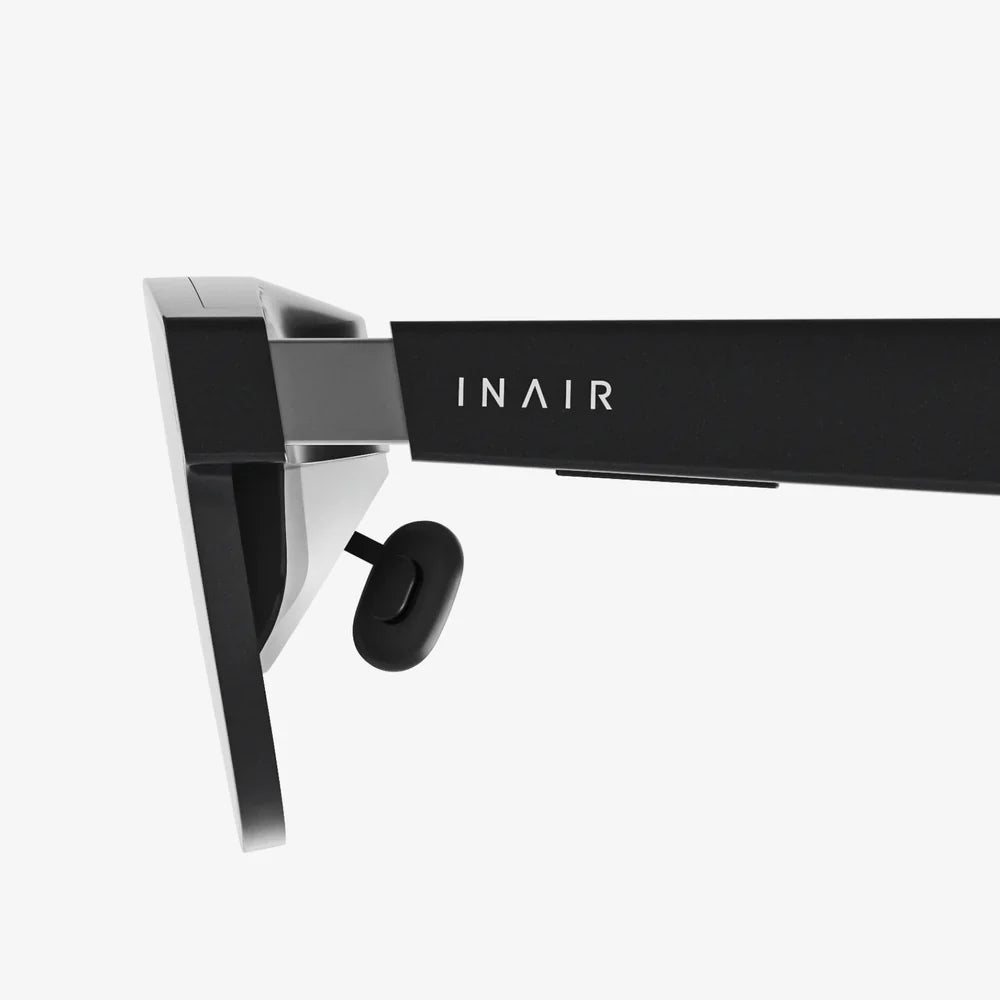
Imagine stepping through your screen, not as a passive observer, but as an active participant in a world that feels as tangible and responsive as the one around you. This is no longer the stuff of science fiction; it is the burgeoning reality being built today through the power of immersive 3D content. We are standing at the precipice of a fundamental shift in our relationship with technology, a move away from two-dimensional interfaces and into rich, volumetric digital spaces that engage our senses, challenge our perceptions, and redefine the very concept of presence.
The Building Blocks of a New Reality
The creation of compelling immersive 3D content is a complex symphony of advanced technologies working in concert. At its foundation lies high-fidelity 3D modeling, the digital sculpting of objects, environments, and characters with intricate detail. These models are then brought to life through sophisticated texturing and lighting, processes that simulate how materials interact with light to create a sense of realism, from the gritty texture of a brick wall to the subtle subsurface scattering of light through a human ear.
However, a static model is not enough. True immersion demands dynamism. This is achieved through animation and physics simulation, which govern how objects and characters move and interact within their digital realm. Whether it's the realistic drape of cloth, the chaotic destruction of an object, or the complex articulation of a digital human, these systems provide the believable behavior that sells the illusion of a living, breathing world.
The final, crucial layer is the engine—the real-time rendering software that acts as the heart and brain of the experience. It is the engine that takes all these assets and systems and renders them instantaneously, responding to user input without perceptible delay. This real-time capability is what separates immersive 3D from pre-rendered CGI in films, enabling true interactivity and agency for the user.
Beyond Entertainment: A Cross-Industry Revolution
While gaming has been the most visible pioneer, the tendrils of immersive 3D content are now reaching deep into nearly every sector, unlocking new possibilities and solving age-old challenges.
Transforming Education and Training
Imagine a medical student being able to step inside a photorealistic, beating human heart, observing valves and chambers from angles previously impossible outside of an operating theater. Or a history class not just reading about ancient Rome, but walking its bustling streets, hearing the marketplace, and gazing up at the unfinished Colosseum. Immersive 3D content makes this possible, transforming abstract concepts into tangible, unforgettable experiences. In high-stakes fields like aviation, surgery, and heavy machinery operation, it allows for risk-free training in hyper-realistic simulations, where mistakes are valuable lessons, not catastrophic failures.
Redefining Retail and Architecture
The days of guessing how a new sofa will look in your living room based on a grainy online photo are rapidly ending. Immersive 3D enables virtual showrooms where customers can inspect products from every angle, customize finishes in real-time, and, most importantly, see those products placed within their own space through augmented reality overlays. For architects and real estate developers, it offers the power to walk clients through unbuilt homes and skyscrapers long before the foundation is poured, allowing for design changes and fostering a deeper emotional connection to the project.
Enhancing Remote Collaboration and Telepresence
The video call grid has been a lifeline for remote work, but it is a poor substitute for the nuanced collaboration of a shared physical space. Immersive 3D is paving the way for the next evolution: virtual collaboration spaces. Colleagues from across the globe can meet as lifelike avatars within a 3D model of a new product design, a architectural plan, or a data visualization, able to point, manipulate, and annotate the model together as if they were standing side-by-side. This sense of shared presence, of co-location within the data itself, is a quantum leap beyond screen sharing.
The Creative and Economic Paradigm Shift
This new medium is not just changing how we consume content; it is fundamentally altering the creative landscape and birthing new economies. The demand for 3D artists, modelers, animators, and environment designers is skyrocketing. New platforms are emerging that allow creators to build, share, and monetize their 3D experiences directly for audiences, often leveraging blockchain technology to establish true digital ownership of unique assets and creations.
This has given rise to the concept of the creator economy 3.0, where value is derived not from likes and shares, but from the creation of deeply engaging experiences and the scarce digital goods that inhabit them. Users are no longer just audiences; they are patrons, participants, and inhabitants of these creator-built worlds.
Navigating the Challenges on the Horizon
For all its promise, the path to a fully immersive 3D future is not without significant obstacles. The computational power required to run high-fidelity experiences is immense, creating a barrier to access for many. While hardware is becoming more powerful and affordable, the pursuit of photorealistic graphics in real-time continues to push the limits of processing power.
Furthermore, the ethical and societal implications are profound. As these digital experiences become more convincing, the potential for misuse grows—from sophisticated misinformation and deepfakes to new forms of addiction and the blurring of lines between reality and simulation. Establishing a framework for digital identity, safety, and privacy within these persistent virtual spaces is one of the most critical challenges technologists and policymakers will face in the coming decade.
The creation of high-quality 3D content also remains a time-intensive and skill-demanding process. While AI-assisted tools are emerging to automate certain tasks like texturing and basic animation, the core creative process still requires significant human expertise. Bridging this skills gap and developing more intuitive creation tools will be essential for the medium to reach its full, democratized potential.
The journey into the third dimension is more than a technical upgrade; it is a cultural and cognitive shift. We are learning a new visual language, one of depth, scale, and interaction. We are building the foundational layers of the metaverse—a persistent network of interconnected 3D spaces. The screens we look into are becoming windows, and soon, they will become doorways. The question is no longer if this future will arrive, but what we will choose to build once we step through.
Share:
How to Convert Video to 3D: A Comprehensive Guide to Creating Immersive Content
How to Setup Virtual Reality Glasses: The Ultimate Step-by-Step Guide to Immersion