


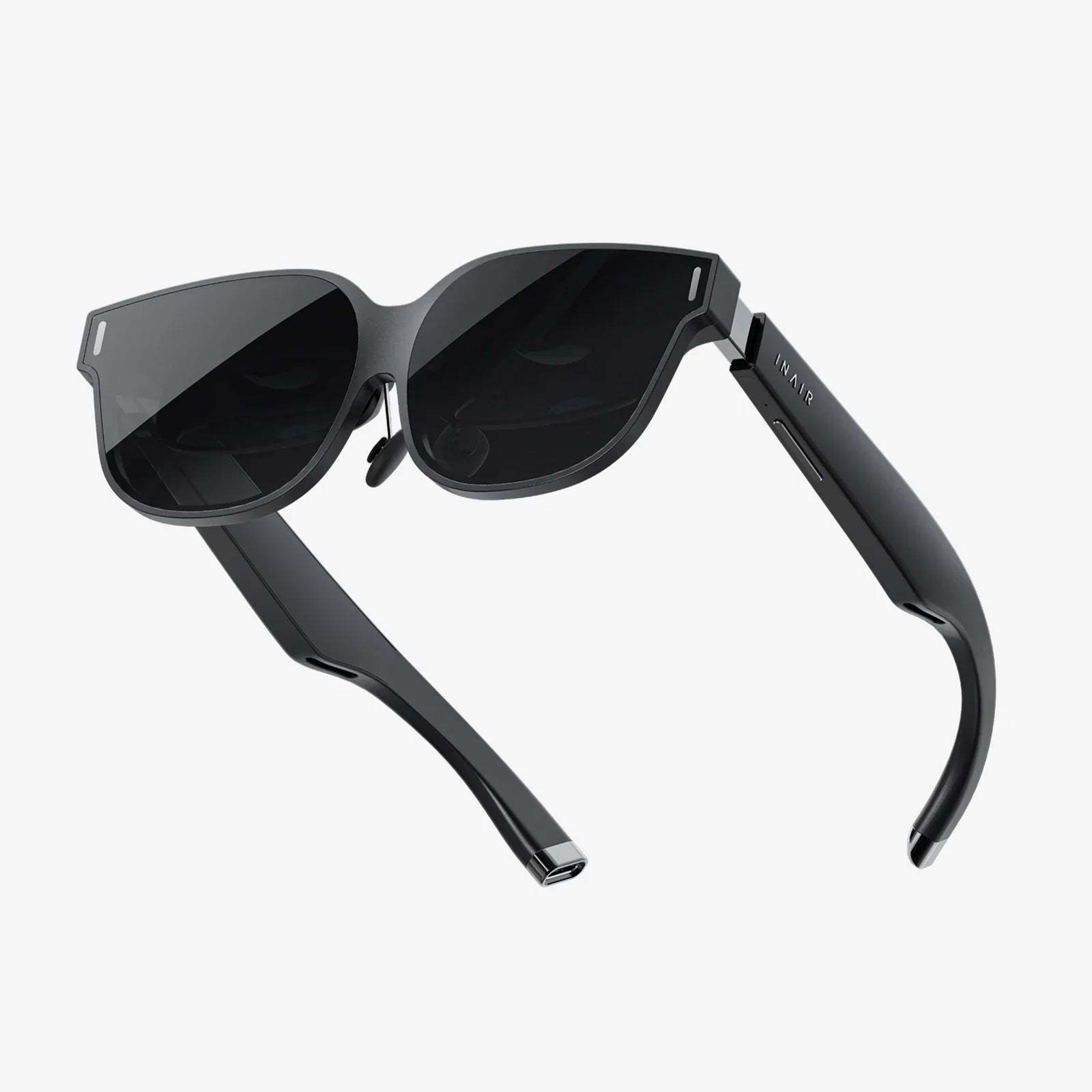
Imagine a world where the boundaries between the digital and the physical dissolve, where information, art, and interaction are woven seamlessly into the fabric of your daily life—not through a screen you hold, but through a layer of intelligence you wear. This is the promise of immersive augmented reality, a technological evolution poised to leap from science fiction into our living rooms, workplaces, and city streets, fundamentally altering the human experience.
Beyond the Novelty: Defining True Immersion
The term "augmented reality" often conjures images of smartphone apps that superimpose a cartoon character onto a camera view. However, immersive augmented reality represents a quantum leap beyond these nascent applications. True immersion is characterized by several key factors that distinguish it from its simpler predecessors.
First is seamless spatial integration. Instead of a flat image floating awkwardly in front of the camera, immersive AR anchors digital objects to the real world with astonishing precision. A virtual sculpture appears to have real mass and occupies physical space, casting accurate shadows and obeying the occlusion of real-world objects. This is achieved through advanced simultaneous localization and mapping (SLAM) algorithms, depth-sensing cameras, and LiDAR scanners that construct a real-time, three-dimensional understanding of the environment.
Second is natural interaction. Immersive AR moves beyond touchscreens and controllers. It leverages hand-tracking, eye-tracking, and voice commands to create an intuitive interface. You might reach out and manipulate a holographic model with your bare hands, select a menu item simply by looking at it, or converse with a digital assistant that appears to be standing in your room. This eradicates the learning curve and cognitive load associated with traditional input devices, making the technology feel like a natural extension of your own capabilities.
Finally, and perhaps most importantly, is persistent context. Immersive experiences are not ephemeral; they are tied to specific locations and persist over time. The virtual art gallery you curated on your living room wall remains there for your guests to see. The navigational arrows guiding you through a complex airport are painted onto the floor itself, visible only to you. This creates a digital layer atop reality that is consistent, reliable, and always available, transforming static spaces into dynamic, information-rich environments.
The Architectural Shift: From Handheld to Head-Worn
The ultimate vessel for this immersive experience is the advanced head-worn display. While smartphones served as the crucial proving ground for AR concepts, their form factor is inherently limiting. They require a user to hold up a device, creating a barrier between them and their environment. Immersive AR demands a hands-free, always-available interface.
Modern optical systems within these displays are engineering marvels. Waveguides and holographic optical elements project high-resolution imagery directly onto the user's retina, allowing digital content to appear at various focal depths. This solves the vergence-accommodation conflict—a major source of eye strain in earlier VR and AR systems—where the brain struggles to reconcile the focus distance of the eyes with the convergence needed to view a stereoscopic image. The result is a comfortable, long-term viewing experience where virtual objects can appear both up close and at infinity.
These devices are also becoming increasingly socially acceptable. The race is on to create form factors that resemble standard eyeglasses, moving away from the bulky, isolating designs of the past. This miniaturization of powerful sensors, processors, and batteries is the critical hurdle to mainstream adoption, turning a specialized tool into an all-day wearable companion.
Transforming the World of Work and Industry
While consumer applications often grab headlines, the most profound and immediate impact of immersive AR is occurring in industrial and enterprise settings. Here, the technology is not for entertainment; it is a powerful tool for enhancing productivity, safety, and precision.
- Remote Assistance and Expert Guidance: A field technician repairing a complex piece of machinery can wear AR glasses that allow an expert thousands of miles away to see their field of view. The remote expert can then annotate the technician's real world, drawing arrows, highlighting components, and pulling up schematics that are locked in place on the equipment itself. This "see-what-I-see" capability drastically reduces errors, travel costs, and downtime.
- Complex Assembly and Manufacturing: On assembly lines, workers can be guided through intricate procedures with digital instructions overlaid directly onto the physical components they are handling. This can highlight the correct part, show the exact orientation for placement, and provide torque settings for fasteners, reducing training time and virtually eliminating assembly errors.
- Design and Prototyping: Architects and engineers can step inside their 3D models at full scale before a single brick is laid. They can walk through a building's design, assessing spatial relationships, airflow, and lighting in a way that is impossible on a 2D screen. This allows for rapid iteration and identifies potential problems early in the design process, saving immense costs.
- Logistics and Warehousing: In massive distribution centers, AR can visually guide warehouse pickers to the exact location of an item, displaying the most efficient route and confirming the pick with a visual check. This streamlines operations, reduces walking time, and improves inventory accuracy.
Revolutionizing Learning and Skill Acquisition
Immersive AR has the potential to democratize expertise and transform education from a passive activity into an active, experiential journey. It creates a safe, scalable environment for practicing complex skills.
Medical students can practice surgical procedures on hyper-realistic virtual patients, receiving real-time feedback on their technique without any risk. Mechanics can learn to dismantle and rebuild engines with virtual tools and guidance. History students can don AR glasses at an archaeological site and see a historical monument reconstructed to its former glory around them, complete with animated figures going about their daily lives. This contextual, hands-on learning fosters deeper understanding and retention than textbooks or videos ever could.
This technology also makes information contextual and just-in-time. Instead of searching a manual, a person fixing a bicycle could look at a component and have the relevant step-by-step instructions appear right next to it. This on-demand access to knowledge empowers individuals to solve problems and learn new skills in the moment they are needed.
Redefining Social Connection and Storytelling
The social implications of a persistent AR layer are vast. Communication will evolve from flat video calls into shared spatial experiences. Instead of seeing a person on a screen, you could see a photorealistic hologram of them sitting on your couch, able to make eye contact and gesture naturally. This creates a powerful sense of "co-presence" that transcends geographical distance.
Entertainment and storytelling will be utterly transformed. Narratives will no longer be confined to rectangular screens. Imagine a detective story that unfolds in your own home, with clues hidden in your bookshelf and virtual characters interacting with your furniture. Or an artist creating a city-wide mural that only becomes visible when viewed through an AR lens, turning entire urban landscapes into dynamic canvases. Games will spill out of the living room and into parks and streets, creating massive, location-based experiences that blend physical activity with digital adventure.
Navigating the Invisible Minefield: Challenges and Ethical Considerations
The path to this augmented future is not without significant obstacles. The technical challenges of creating comfortable, all-day glasses with all-day battery life, seamless connectivity, and immense processing power are immense. However, the non-technical challenges may be even more daunting.
- Privacy and Data Security: An AR device is, by its nature, a powerful surveillance tool. It has cameras and microphones that are always on, scanning the environment. The data it collects—detailed 3D maps of your home, continuous recordings of your surroundings, and biometric data like your eye movements—is incredibly sensitive. Robust frameworks must be established to ensure user data is owned and controlled by the user, not corporations. The potential for unauthorized data collection and eavesdropping is a serious threat that must be addressed at a hardware and software level.
- Digital Division and Accessibility: Will immersive AR become a luxury that further divides society? There is a risk of creating a two-tiered world: those who can afford the technology and have access to its enhanced layer of information and those who cannot. Furthermore, the design of these systems must be inclusive, catering to people with different physical abilities and ensuring the digital world remains accessible to all.
- Reality Blur and Mental Health: When the digital and physical are perfectly blended, how do we maintain a grip on objective reality? The potential for manipulation, misinformation, and addictive experiences is profound. A persistent layer of advertising could turn every surface into a billboard. The line between work and personal life could blur even further if digital workspaces are always present. The long-term psychological effects of living with a permanent digital overlay are unknown.
- Public Space and Social Norms: How will we behave in public when everyone is partially immersed in their own digital world? Will it lead to further social isolation, or will it enable new forms of shared experience? Establishing new social etiquette for these devices will be crucial to their harmonious integration into society.
The Road Ahead: Building an Augmented Future Responsibly
The development of immersive augmented reality is not merely a technological challenge; it is a socio-technical one. It requires a collaborative effort between engineers, designers, ethicists, policymakers, and the public. We must proactively establish guidelines and regulations that prioritize human well-being, privacy, and security.
Open standards and interoperability will be key to preventing a future where our reality is balkanized by competing corporate-walled gardens. We must advocate for a decentralized web for AR, where users have sovereignty over their data and their digital identities. The goal should not be to replace reality, but to augment it in a way that enhances human potential, fosters connection, and addresses real-world problems.
The technology is advancing at a breathtaking pace. Within the next decade, the ubiquitous smartphone may begin to recede, replaced by intelligent glasses that offer a more intuitive and powerful way to interact with the world's information. This shift will be as profound as the move from the desktop to the mobile phone.
The true magic of immersive augmented reality lies not in the flashy holograms it can produce, but in its potential to make us more present, more capable, and more connected to the world and to each other. It offers a chance to weave a tapestry of knowledge and experience directly into the physical world, unlocking human potential in ways we are only beginning to imagine. The invisible layer is coming; the question is not if, but how we choose to build it.
Share:
AR and VR Applications: Reshaping Reality and Revolutionizing Industries
Augmented Reality Overview: Bridging Our Digital and Physical Worlds