


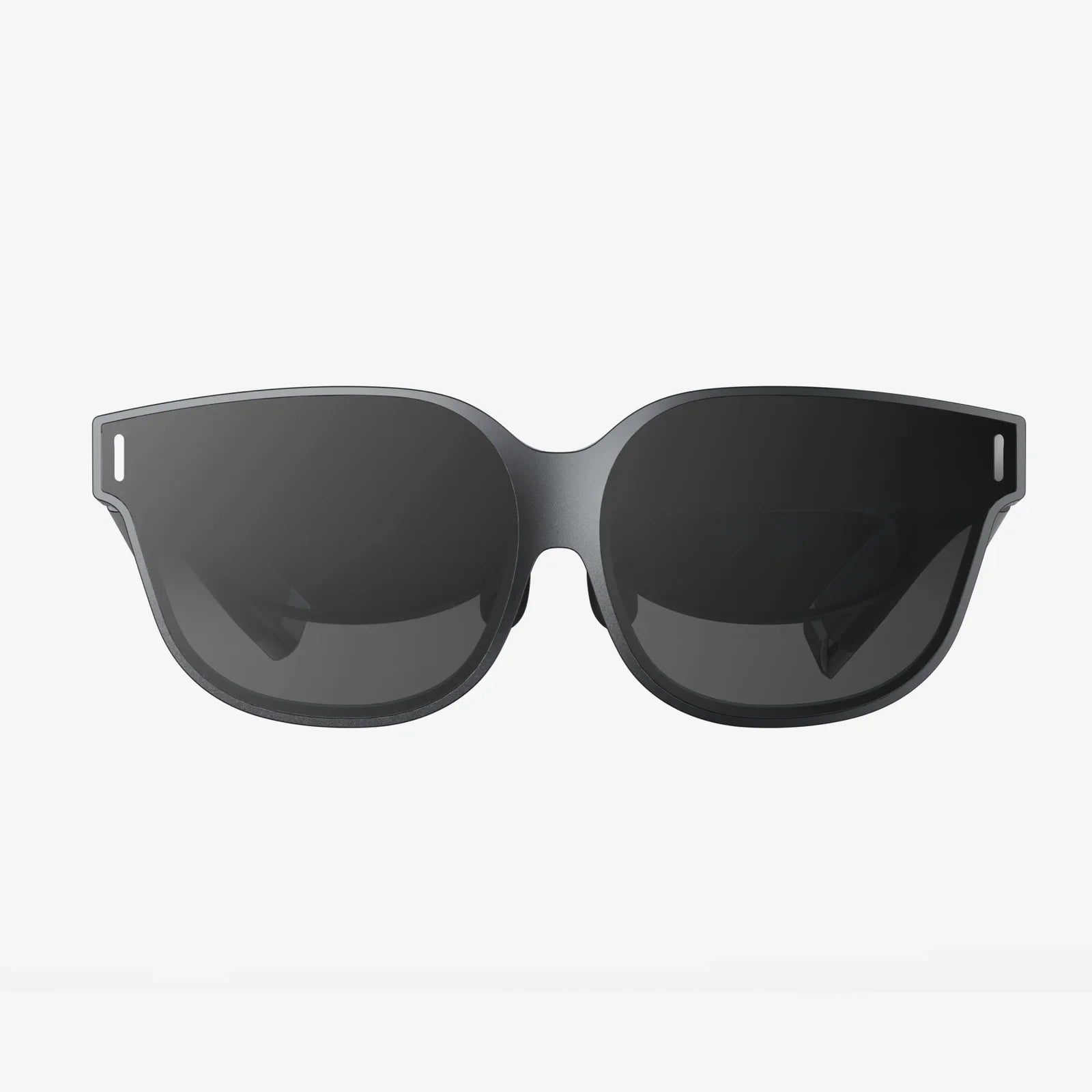
Imagine a world where your morning run is guided by digital creatures hiding in your local park, where a surgeon in New York can guide a procedure in Mumbai as if standing shoulder-to-shoulder, and where the history of a ruin you're exploring unfolds before your eyes in vivid, animated detail. This is no longer the stuff of science fiction; it is the rapidly emerging present, powered by the revolutionary capabilities of Augmented Reality (AR) and Virtual Reality (VR) applications. These technologies are breaking free from their perceived confines of entertainment to fundamentally alter how we work, learn, heal, and connect, promising a future where the digital and physical worlds are seamlessly and powerfully intertwined.
Demystifying the Digital Duo: AR vs. VR
While often mentioned in the same breath, AR and VR offer distinctly different experiences. Understanding this distinction is crucial to appreciating their unique applications.
Virtual Reality (VR) is an immersive, all-encompassing technology. By wearing a headset, users are transported into a completely computer-generated environment, effectively shutting out the physical world. This digital realm can be a realistic simulation of a real place or a fantastical landscape born from pure imagination. The primary goal of VR is to create a sense of presence—the convincing feeling of "being there." This is achieved through stereoscopic displays that fill the user's field of view, precise head-tracking, and spatial audio that reacts to their movements.
Augmented Reality (AR), on the other hand, does not replace reality but enhances it. It overlays digital information—images, text, 3D models, and animations—onto the user's view of the real world through a device like a smartphone, tablet, or smart glasses. The magic of AR lies in its ability to understand and interact with the environment. Using advanced computer vision and simultaneous localization and mapping (SLAM) technology, AR applications can place a virtual piece of furniture in your actual living room to check for size and style or display navigation arrows directly onto the road ahead of you. The line between these two is further blurred by Mixed Reality (MR), where virtual objects not only coexist with the real world but can interact with it in real-time, such as a digital ball bouncing off your real-world table.
The Engine Room: Core Technologies Powering the Revolution
The magic of AR and VR is made possible by a sophisticated convergence of hardware and software.
Hardware Foundations
- Headsets: Ranging from powerful PC-connected units offering the highest fidelity for VR to standalone wireless headsets and accessible smartphone-based viewers. AR is rapidly advancing through sleek smart glasses that aim for all-day usability.
- Sensors: A suite of sensors including accelerometers, gyroscopes, magnetometers, and depth sensors work in concert to track the user's head and hand movements with sub-millimeter accuracy, making the virtual world feel responsive and real.
- Displays and Optics: High-resolution, high-refresh-rate displays are critical for preventing motion sickness and achieving immersion. Complex lens systems focus the image comfortably for the eye, while for AR, waveguide technology projects digital images onto transparent lenses.
- Processing Power: Rendering complex 3D environments in real-time, especially at high frame rates, requires immense computational power, increasingly handled by dedicated chipsets within the headsets themselves.
Software and Development
- Game Engines: Powerful real-time 3D creation platforms are the bedrock of most AR and VR experiences, providing the tools to build, render, and animate immersive worlds.
- SDKs and APIs: Software Development Kits (SDKs) provide developers with the essential building blocks—like hand-tracking, spatial mapping, and environmental understanding—to create applications without building everything from scratch.
- 3D Asset Creation: The virtual world is built from millions of detailed 3D models, textures, and animations, created by artists using sophisticated digital content creation tools.
Transforming Industries: Real-World Applications Beyond the Hype
The true measure of these technologies lies not in their novelty but in their tangible impact. Across the global economy, AR and VR applications are solving real problems, increasing efficiency, and creating entirely new paradigms.
Revolutionizing Healthcare and Medicine
The healthcare sector is witnessing some of the most profound and life-changing applications of AR and VR.
- Surgical Training and Planning: VR provides a risk-free environment for surgeons to practice complex procedures on detailed virtual anatomies, drastically reducing errors and improving outcomes. AR can project a patient's CT scans or MRI data directly onto their body during surgery, acting as an X-ray vision guide for the surgeon.
- Medical Education: Students can explore the human body in immersive 3D, walking through a giant heart or dissecting a virtual cadaver from every angle, gaining a depth of understanding impossible from textbooks.
- Pain Management and Phobia Treatment: VR is a powerful tool for distraction therapy, immersing burn victims in a soothing snowy landscape to significantly reduce their perceived pain. It's also highly effective in exposure therapy, helping patients safely confront and overcome phobias like fear of heights or flying in a controlled virtual setting.
- Remote Assistance and Telemedicine: An expert specialist can use AR to see what a field medic or a less-experienced doctor sees and annotate their view with instructions, arrows, and notes in real-time, enabling expert guidance from anywhere in the world.
Redefining Education and Corporate Training
These technologies are moving learning from passive observation to active participation.
- Immersive Learning: Instead of reading about ancient Rome, history students can take a virtual walking tour of the Forum. Biology classes can dive into a human cell. This experiential learning dramatically improves engagement and knowledge retention.
- Skills Simulation: From training mechanics to repair complex machinery to preparing retail employees for Black Friday crowds, VR simulations provide safe, scalable, and consistent training without the cost or risk of real-world mistakes. Trainees can practice soft skills like public speaking or difficult conversations with AI-powered virtual humans.
- Remote Collaboration: Teams spread across the globe can meet in a shared virtual boardroom, interacting with 3D models of products they are designing as if they were physically present, breaking down the barriers of traditional video conferencing.
Supercharging Manufacturing and Design
In industrial settings, AR and VR are streamlining processes from the design phase to the factory floor.
- Prototyping and Design Review: Automotive and aerospace engineers can design and review full-scale 3D models of vehicles in VR, identifying ergonomic or design flaws long before a physical prototype is built, saving millions of dollars and months of development time.
- Assembly, Maintenance, and Repair: AR smart glasses can overlay digital work instructions, diagrams, and torque specifications directly onto the machinery an engineer is working on, guiding them through complex procedures hands-free. This reduces errors, cuts training time for new technicians, and improves overall efficiency.
- Logistics and Warehousing: AR can visually guide warehouse workers to the exact bin location for an item, display optimal packing instructions for a box, and verify orders, dramatically speeding up fulfillment and reducing errors.
Elevating Retail and the Customer Experience
The retail landscape is being reshaped, offering new ways for consumers to try and visualise products.
- Virtual Try-On and Preview: Shoppers can use their smartphone to see how a new sofa would look in their living room, how a pair of glasses fits their face, or how a shade of paint changes the feel of a room. This reduces purchase uncertainty and lowers return rates.
- Virtual Showrooms and Stores: Brands can create immersive digital stores that customers can browse from home, exploring products in 3D and in context, offering a compelling alternative to e-commerce and a complement to physical retail.
- Interactive Marketing: AR campaigns allow customers to point their phone at a product poster or packaging to unlock games, additional product information, or brand stories, creating engaging and memorable marketing experiences.
Navigating the Challenges and Ethical Frontier
Despite the immense potential, the widespread adoption of AR and VR is not without significant hurdles and profound ethical questions that society must address.
Technical and Adoption Barriers
- Cost and Accessibility: High-end hardware remains expensive, creating a digital divide. While smartphone-based AR is ubiquitous, advanced applications often require significant investment.
- User Experience: Issues like cybersickness in VR, limited battery life, bulky hardware, and the need for intuitive user interfaces are ongoing challenges for developers.
- Connectivity and Latency: For truly seamless and complex cloud-rendered experiences, robust, low-latency connectivity (like 5G and beyond) is essential, which is not yet universally available.
Profound Ethical and Societal Considerations
- Data Privacy and Security: AR and VR devices are data collection powerhouses. They capture detailed information about our physical environments, our movements, our gaze (what we look at and for how long), and even our biometric responses. This raises critical questions about who owns this data, how it is used, and how it is protected.
- The Reality Gap: As these experiences become more convincing, the potential for manipulation, misinformation, and "deepfake" realities increases. Differentiating between a real memory and a convincingly fabricated virtual one could become a genuine challenge.
- Psychological and Social Impact: What are the long-term effects of prolonged immersion in virtual worlds? Could it lead to increased social isolation, addiction, or a depreciation of physical reality? The concept of "presence" is powerful, and its psychological ramifications are still being studied.
- Accessibility and Inequality: Ensuring these transformative tools are designed for people with diverse abilities is paramount to prevent creating a new layer of digital exclusion.
The Future is Blended: Trends Shaping Tomorrow's Reality
The trajectory of AR and VR points toward a future where the distinction between digital and physical becomes increasingly meaningless. Several key trends will define this evolution.
- The Metaverse: This envisioned successor to the mobile internet is a persistent network of interconnected 3D virtual worlds focused on social connection. AR and VR are the primary gateways to this embodied internet, where we will work, play, and socialize.
- Spatial Computing: This refers to the digitization of activities and interactions in physical space. Our environments themselves will become the interface, with context-aware information available exactly when and where we need it.
- The Proliferation of AR Glasses: The ultimate goal for AR is a pair of stylish, all-day glasses that seamlessly integrate digital information into our daily perception. Advances in micro-optics, battery technology, and networking are steadily progressing toward this reality.
- AI Integration: Artificial Intelligence will be the brain that makes AR and VR truly intelligent. AI will power more natural interactions, generate dynamic virtual worlds, and provide real-time contextual analysis of our surroundings.
- Haptics and Sensory Feedback: The next frontier of immersion is engaging the sense of touch. Advanced haptic gloves and suits will allow users to feel the texture, weight, and resistance of virtual objects, closing the loop on sensory immersion.
The journey into this blended reality has already begun, not with a sudden explosion, but with a steady integration into the fabric of our professional and personal lives. From the operating room to the classroom, from the factory floor to our living rooms, AR and VR applications are ceasing to be exotic gadgets and are becoming indispensable tools for human progress. They hold the promise of enhancing our capabilities, bridging vast distances, and unlocking new depths of understanding and creativity. The challenge ahead is not just to build this new world, but to build it wisely—with a steadfast commitment to ethics, inclusivity, and the enduring value of our shared human experience. The door to a new layer of reality is now open; the question is not if you will step through, but how.
Share:
What Do Smart Sunglasses Do? Exploring the Future of Wearable Tech on Your Face
Immersive Augmented Reality: The Invisible Layer Reshaping Our World