


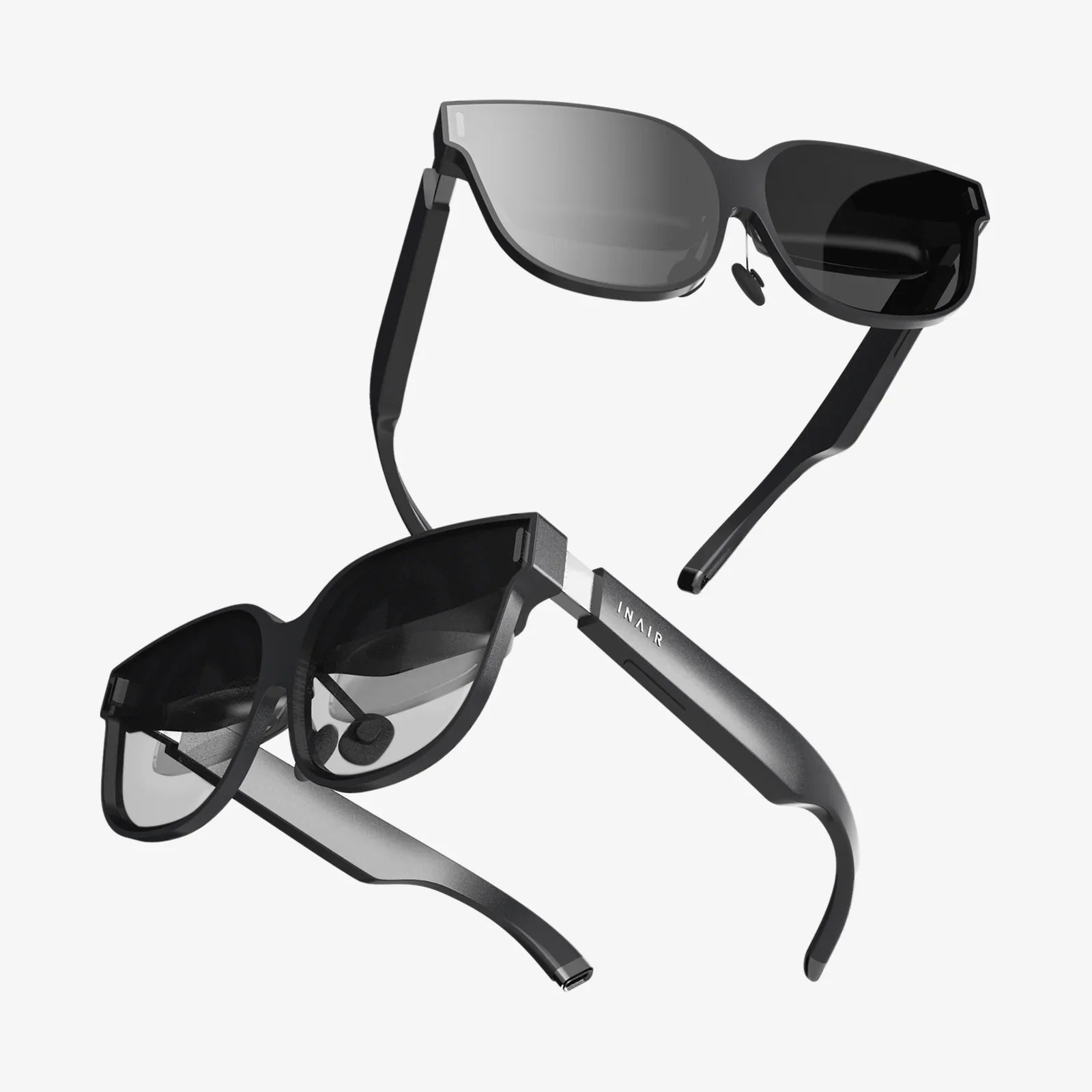
Imagine a world where your digital life doesn’t live on a screen in your hand, but is seamlessly woven into the fabric of your physical reality. A world where information, entertainment, and social connection are not just viewed but experienced, layered perfectly over your environment. This is the promise of augmented and extended reality, a promise that 2025 is poised to finally deliver upon in spectacular fashion. The coming year represents a pivotal inflection point, moving beyond clunky prototypes and niche applications to usher in a new era of sleek, powerful, and truly intelligent devices that will fundamentally change how we work, play, and connect.
The Dawn of Photorealistic Avatars and Expressive Telepresence
For years, the concept of "telepresence" in AR and XR has been hampered by cartoonish avatars and stilted animations that fall into the infamous "uncanny valley." In 2025, this barrier is shattered. Innovations in real-time light field capture and neural rendering are enabling the creation of photorealistic digital humans that can be projected into any space.
Advanced sensor arrays embedded in the next generation of devices will scan a user's face with incredible precision, capturing not just the shape of a smile but the subtle micro-expressions around the eyes, the furrow of a brow, and the slight pursing of lips that convey nuance and emotion. This data is then processed on-device using dedicated neural processing units (NPUs) to animate a hyper-realistic avatar in real-time. The result is a sense of presence that video calls can never match—the feeling that another person is truly in the room with you, making eye contact and responding to your body language. This will revolutionize remote collaboration, making it feel as natural as sitting across a table, and will open up new frontiers in social connection, therapy, and remote education.
The Rise of Context-Aware Artificial Intelligence
Perhaps the most significant innovation in 2025's AR/XR devices is not in what you see, but in how the device understands what you see. Current devices are largely passive viewers of augmented content. The next generation will be active participants, powered by sophisticated, on-device AI that comprehends context and intent.
These devices will feature multimodal AI models that fuse data from high-resolution cameras, depth sensors, microphones, and inertial measurement units (IMUs) to build a rich, real-time understanding of the user's environment. The device won't just see a table; it will understand it's a wooden dining table with four chairs, currently clear except for a coffee cup and a set of keys. It will hear you say, "I need to prepare for my presentation," and knowing your calendar, it will automatically project your slide deck onto the clear surface of the table, resizeable with your fingers.
This context-aware AI will act as an invisible, indispensable assistant. Walking through a foreign city? Your device will not only overlay translated street signs but, by recognizing the facade of a restaurant, will instantly display its menu, reviews, and even highlight your friend's recommended dish. Troubleshooting a broken appliance? The AI will recognize the model, overlay interactive repair instructions directly onto the components, and even warn you if you're about to touch a live wire. This shift from augmented viewing to augmented understanding is the key that will unlock mass adoption.
Revolutionary Optics: The End of the Bulky Headset
The single greatest hurdle for AR/XR adoption has been form factor. The dream has always been a pair of stylish glasses you can wear all day. In 2025, that dream becomes a widespread reality, thanks to breakthroughs in optical engineering.
Two technologies are leading this charge. First, holographic optics and waveguides are becoming dramatically more efficient. New materials and nanoscale patterning techniques allow for thinner, brighter, and wider field-of-view waveguides that can be embedded into lenses that look nearly indistinguishable from standard prescription glasses. They eliminate the ghosting and rainbow artifacts that have plagued earlier versions, delivering crisp, vibrant digital images that blend perfectly with the real world.
Second, we are seeing the maturation of Laser Beam Scanning (LBS) and MicroLED displays. These micro-displays are incredibly small and power-efficient, projecting light directly into the waveguide without the need for bulky projection systems. The combination of advanced waveguides and ultra-compact MicroLEDs finally allows manufacturers to design devices that are socially acceptable, lightweight, and comfortable for all-day wear, moving the technology out of the lab and onto the faces of consumers.
Spatial Audio That Maps the World
Immersive reality is not solely a visual experience. Audio plays a crucial role in selling the illusion, and 2025's devices are making monumental strides in this arena. The innovation here is the move from standard stereo to truly dynamic spatial audio that interacts with the environment.
Using the same spatial mapping data that powers the visual overlay, the onboard audio engine will understand the acoustic properties of your surroundings. If a virtual companion is speaking to you from across a large, tiled bathroom, their voice will carry a slight echo. If they move behind the couch, their voice will be subtly muffled. A notification alert won't just ping in your ear; it will sound as if it emanated from your wristwatch, helping you intuitively locate digital events in physical space.
This is achieved through advanced head-related transfer function (HRTF) personalization, where the device calibrates its audio output to the unique shape of your ears, and beamforming microphone arrays that can isolate sounds from specific directions in a noisy room. This creates an unparalleled level of immersion, making digital objects and characters feel tangibly present in your world.
The Proliferation of the Spatial Web and Open Standards
An AR device is useless without content. The innovation in 2025 extends beyond the hardware to the very fabric of the digital layer itself—the spatial web. This is the concept of a web of information and experiences that is anchored to locations and objects in the real world, accessible through any compatible AR device.
Major strides are being made in open standards and protocols that allow this digital layer to be persistent and interoperable. Imagine walking up to a historic monument and seeing a virtual tour guide, left there by a historical society, that anyone can access. A restaurant can anchor its menu and daily specials to its storefront. An artist can leave a virtual sculpture in a park for all to enjoy.
This shift from app-based silos to a location-based, open web is critical. You won't need to open "the history app" or "the restaurant app"; the relevant information will simply be there, tied to the place you're looking at, accessible through a universal browser built into your device's operating system. This democratizes content creation and turns the entire world into a canvas for digital interaction.
Power and Performance: All-Day Computing in a Tiny Package
Driving these sophisticated experiences requires immense computational power, which traditionally means large batteries and heat generation—the antithesis of a sleek glasses form factor. The innovation solving this paradox is a move toward heterogeneous computing architectures.
Instead of relying on a single, power-hungry main processor, 2025's devices will distribute tasks across specialized co-processors. A dedicated NPU handles all the AI and machine learning tasks incredibly efficiently. A graphics processing unit (GPU) is tuned specifically for low-latency passthrough video and 3D rendering. A separate sensor hub manages the constant stream of data from cameras and IMUs with minimal power draw.
Furthermore, new solid-state battery technologies with higher energy density will finally provide all-day battery life, often distributed cleverly across the frames of the glasses and, in some cases, supplemented by a small, pocketable battery pack for intensive tasks. This allows the device to handle complex AR experiences while remaining lightweight and wearable.
Intuitive and Expressive Interaction Paradigms
How do you interact with a interface that has no screen? The point-and-click metaphor of the past is obsolete. 2025 solidifies a new set of intuitive interaction models built for spatial computing.
Eye-tracking, now a standard feature in high-end devices, becomes a primary input method. Simply looking at a virtual button for a moment can select it. Combined with hand-tracking, which has become remarkably robust and capable of recognizing fine motor skills like pinches and gestures, users can manipulate digital objects with a naturalness that feels like magic. Voice commands, supercharged by the context-aware AI, provide a hands-free alternative.
The most exciting innovation is the emergence of neural interfaces as a complementary input. While not reading minds, non-invasive sensors, often in the form of specialized pads on the device's temples, can detect subtle neural signals from the scalp and facial electromyography (EMG) from the jaw and face. This allows for silent, subvocal commands or the activation of a control with nothing more than a thought of raising an eyebrow. This multimodal combination of eyes, hands, voice, and neural input creates a seamless and powerfully expressive way to communicate with the digital world.
Enhanced Safety and Ethical Frameworks
As these devices become more integrated into our lives, 2025 will see a major focus on safety and ethics. Innovations here are not just technological but also societal. On the hardware side, expect "Reality Blend" or "Transparent Mode" buttons to become mandatory—a physical, hardware-based switch that instantly disables all displays and cameras, providing a guaranteed private mode to reassure those around you.
Digital etiquette layers will be built into the OS, helping users understand when it is and isn't appropriate to use certain features. Privacy will be paramount, with on-device processing ensuring that sensitive camera and location data never needs to leave the device to power most experiences. The industry is converging on ethical design principles that prioritize user well-being, digital safety, and real-world awareness, ensuring that this powerful technology enhances our lives without isolating us from each other.
The horizon of 2025 is not merely about newer gadgets; it's about the dawn of a seamlessly blended reality. The innovations converging this year—from AI that understands our intent to optics that disappear on our faces—are dismantling the final barriers between the digital and the physical. This is the year we stop looking at devices and start looking through them, to a world infinitely enhanced, connected, and understood. The future is no longer something we will watch on a screen; it's something we will step into and shape with our own hands.
Share:
How to Connect Your VR Headset to Your Computer: The Ultimate Setup Guide
VR Headset Guide 2025: Navigating the Next Generation of Immersive Technology