


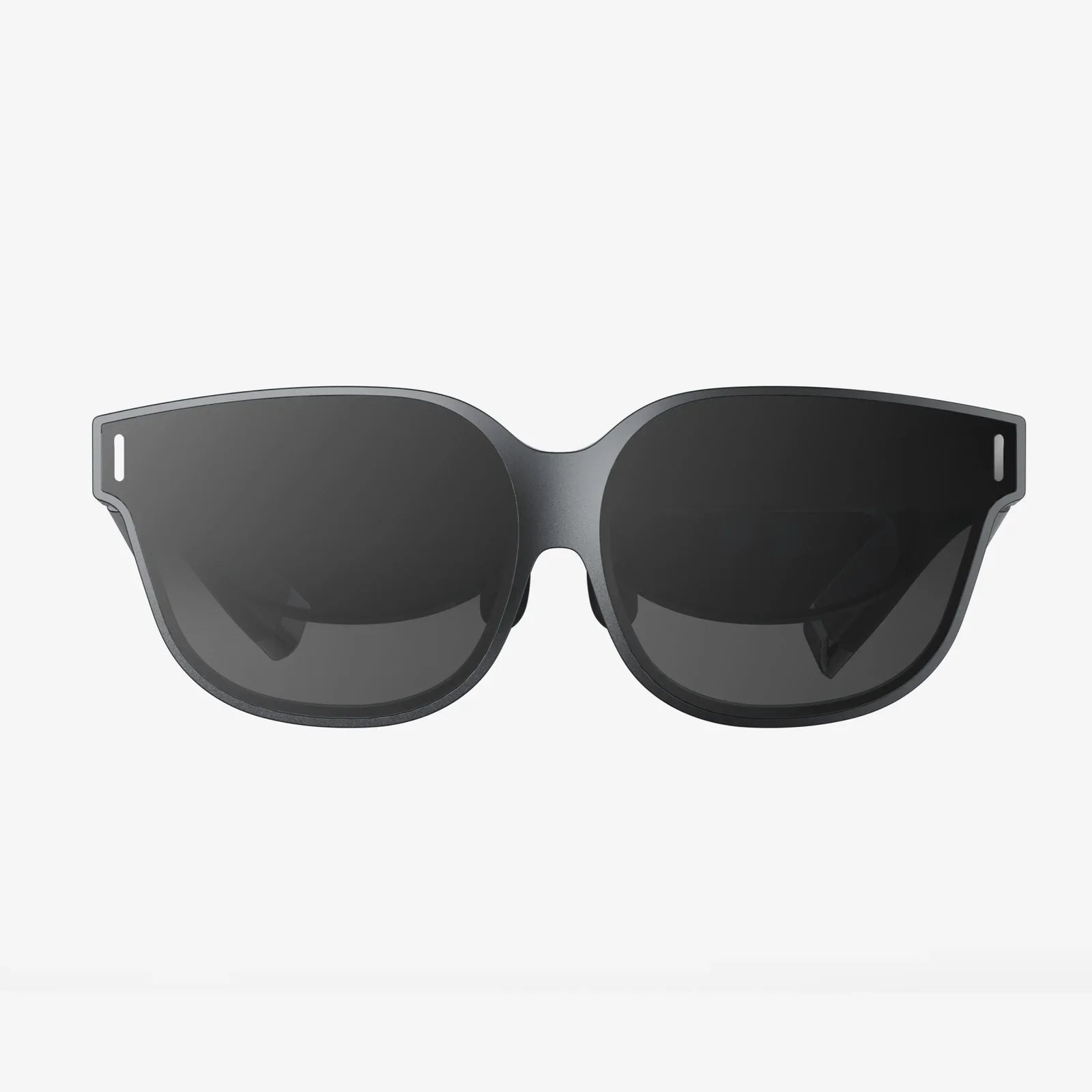
Imagine a world where information doesn’t live on a screen you hold in your hand, but is woven directly into the fabric of your reality. Where directions appear as a glowing path on the street before you, where a foreign language is instantly translated and superimposed over a menu, and where the name and professional background of everyone you meet at a conference hovers discreetly beside them. This is not a distant sci-fi fantasy; it is the imminent future being built today through the rapid advancement of intelligence smart glass technology. This emerging category of wearable computing represents a fundamental shift from interacting with technology to experiencing it as an integrated, intelligent layer over our own perception.
The Architectural Core: How Intelligence Sees the World
At its essence, intelligence smart glass is a sophisticated convergence of multiple advanced technologies packaged into a wearable, often stylish, form factor. Unlike its simpler predecessors, which may have offered basic heads-up displays, true intelligence smart glass is defined by its capacity for context-aware, interactive computing.
The foundation of this intelligence is a sophisticated array of sensors that act as the device's eyes and ears. High-resolution cameras continuously capture the user's field of view, while depth sensors, LiDAR, and time-of-flight sensors map the environment in three dimensions, understanding the geometry and distance of objects. Inertial Measurement Units (IMUs), including accelerometers and gyroscopes, track the precise movement and orientation of the user's head.
This raw sensor data is meaningless without a brain to process it. This is where the onboard processor, a specialized system-on-a-chip (SoC), comes into play. It runs complex machine learning algorithms and computer vision models in real-time to perform a staggering array of tasks: object recognition, facial recognition, spatial mapping, gesture tracking, and simultaneous localization and mapping (SLAM). SLAM is particularly crucial, as it allows the device to understand its position within an unknown environment while simultaneously building a map of that space, enabling persistent digital content that appears fixed to a physical location.
The final piece of the puzzle is the display technology. Using waveguides, micro-LEDs, or other advanced optical systems, these devices project digital imagery directly onto the user's retina or onto the lens itself. This creates the illusion that holograms, text, and interfaces are existing in the real world, seamlessly blended with physical objects. This combination of sensing, processing, and display creates a closed-loop system of intelligence, constantly perceiving, interpreting, and augmenting the user's reality.
A Spectrum of Augmentation: From Assistance to Transformation
The applications for this technology extend far beyond novelty, promising profound enhancements across nearly every professional and personal domain.
Revolutionizing Enterprise and Industrial Workflows
The most immediate and impactful adoption is occurring in enterprise and industrial settings. Here, intelligence smart glass is not a consumer gadget but a powerful tool for increasing efficiency, safety, and accuracy.
- Field Service and Maintenance: A technician repairing a complex piece of machinery can see animated, step-by-step instructions overlaid directly onto the equipment they are working on. They can stream their point-of-view to a remote expert who can then annotate the technician's real-world view with arrows, circles, and notes, guiding them through the process without ever being on-site.
- Manufacturing and Logistics: On a factory floor or in a massive warehouse, workers receive hands-free picking and packing instructions, with digital arrows guiding them to the correct inventory bin and confirming the correct item and quantity. Quality control inspectors can have potential defects highlighted automatically by AI-driven visual inspection systems.
- Healthcare and Surgery: Surgeons can have vital patient statistics, ultrasound images, or 3D anatomical models projected directly into their line of sight during a procedure, eliminating the need to look away at a monitor. Medical students can learn through interactive, life-sized holograms of the human body.
Redefining Personal and Social Interaction
For the consumer, the promise is a more intuitive and integrated digital life.
- Navigation and Exploration: Walking through a new city, turn-by-turn directions are painted onto the sidewalk. Looking at a landmark triggers an informational overlay detailing its history. The technology becomes the ultimate tour guide, revealing the hidden stories of any environment.
- Accessibility and Translation: For individuals with hearing impairments, speech could be converted to real-time subtitles displayed in their glasses. For anyone, a conversation with a person speaking another language could be translated live, with subtitles appearing beneath the speaker, effectively breaking down language barriers.
- Social Connectivity and Content: Imagine watching a live sports game and being able to pull up player stats and instant replays that appear as holographic windows floating beside the field. Or having a video call with a friend whose live video feed appears as if they are sitting on the couch across from you.
The Double-Edged Sword: Navigating the Ethical Minefield
The power of intelligence smart glass to capture, analyze, and display information about our world is also the source of its most significant challenges. Widespread adoption forces a critical societal conversation about ethics, privacy, and security.
The most pressing concern is the privacy paradox. A device designed to record everything the user sees is, by its very nature, a potent surveillance tool. The potential for constant, clandestine recording in public and private spaces raises alarming questions. How do we prevent these devices from being used for unethical surveillance? What protocols must be in place to obtain consent from individuals who are inadvertently recorded? The concept of a "reasonable expectation of privacy" becomes incredibly murky when anyone around you could be passively capturing audio and video.
This leads directly to the issue of data security. The amount of intimate data collected by these devices—what you look at, where you go, who you talk to, even your biometric data from eye-tracking—is a treasure trove for hackers and malicious actors. Protecting this data from breaches is paramount. Furthermore, the business models of many technology companies rely on data monetization. There is a legitimate fear that these devices could become the ultimate tool for targeted advertising, analyzing your real-world behavior and preferences to serve you ads based on the products you physically look at in a store or the restaurants you glance at.
There are also profound social and psychological implications. If everyone is constantly immersed in a personalized digital layer, will it enhance our shared reality or fracture it? Will we become more disconnected from the people physically around us, a phenomenon already observed with smartphone use? There is also a risk of digital dependency, where our own cognitive abilities—like memory and navigation—atrophy because we over-rely on digital augmentation.
The Road Ahead: From Prototype to Ubiquity
For intelligence smart glass to move from a specialized tool to a mainstream consumer product, several significant hurdles must be overcome. The current generation of devices often grapples with limitations in battery life, as the computational demands of AR are immense. Form factor and aesthetics are also critical; the technology must become something people genuinely want to wear all day, moving from bulky, technical-looking headgear to designs that are lightweight, comfortable, and socially acceptable, akin to premium eyewear.
Perhaps the most important development will be the creation of a robust and intuitive spatial computing ecosystem. Just as the smartphone needed an app store and a mobile internet, intelligence smart glass needs a new class of applications and content built specifically for spatial interaction. This requires new tools for developers and new design languages that prioritize context, glanceability, and world-persistence. The success of the platform will depend on this thriving ecosystem.
Finally, we must establish clear and forward-thinking regulatory and social norms. Laws must be updated to address recording consent, data ownership, and permissible use cases. Socially, we will need to develop new etiquettes—digital manners for an augmented world. Indicators that show when a device is recording, or "AR-free zones" in certain spaces, could become commonplace as we negotiate this new terrain together.
The journey of intelligence smart glass is just beginning. It is a technology that holds a mirror to our own ambitions and anxieties about the future. It promises a world of limitless information and effortless assistance, but it also demands that we carefully consider what kind of world we want to build. It challenges us to be not just consumers of technology, but architects of a new reality. The choices we make today—in design, in policy, and in social adoption—will determine whether this powerful technology becomes a force for isolation and division or for connection, understanding, and human advancement. The future is not just something we will see through these glasses; it is something we will actively create with them.
Share:
Augmented Reality Software Market: Shaping the Future of Digital Interaction
Understanding Augmented Reality: The Digital Layer Transforming Our World