


Imagine a world where your surroundings respond to your presence, where information flows not from a screen but through the very air you breathe, and where the line between the physical and the digital dissolves into a seamless dance of light, sound, and sensation. This is not a distant science fiction fantasy; it is the rapidly converging reality of interactive digital technology, a force that is fundamentally rewiring the fabric of human experience, communication, and creativity. The passive consumption of digital content is giving way to an era of dynamic participation, where every gesture, glance, and thought can become a catalyst for digital interaction.
From Passive Consumption to Active Participation: Defining the Digital Shift
The term 'interact digital' signifies a profound paradigm shift. For decades, our relationship with technology was largely transactional and one-directional. We input data via a keyboard or clicked a mouse, and the machine delivered a predetermined output. The experience was static. Today, interaction is the core principle. It describes a bidirectional, dynamic exchange between a user and a digital system. This system, powered by sophisticated algorithms and sensor arrays, perceives the user's actions—be it touch, voice, movement, or even biometric data—and responds in real-time, creating a continuous feedback loop. This transforms the user from a mere observer into an active participant, a co-creator within the digital environment.
This evolution can be traced through the interfaces we use. The command-line interface (CLI) was the first step, requiring precise textual instructions. The graphical user interface (GUI), with its icons and mouse, made technology more accessible but still required learning its metaphorical language. The contemporary interactive digital landscape is built upon natural user interfaces (NUIs), which aim to make the interaction feel instinctive, using modalities like multi-touch, voice commands, and gesture control that mimic interactions with the physical world.
The Architectural Pillars of Modern Digital Interaction
The seamless experiences we enjoy today are built upon a complex foundation of interconnected technologies. These are the pillars that enable rich, responsive digital interaction.
Sensor Technology and The Internet of Things (IoT)
Interaction begins with perception. A vast array of sensors acts as the digital nervous system, collecting data from the user and the environment. Cameras track movement and recognize faces and gestures. Microphones listen for voice commands. LiDAR scanners map physical spaces in 3D. Accelerometers and gyroscopes detect orientation and motion. In the broader context of the IoT, these sensors are embedded in everything from wearables and smartphones to home appliances and city infrastructure, creating a pervasive network of data points that digital systems can use to understand and respond to context.
Artificial Intelligence and Machine Learning
Raw sensor data is meaningless without interpretation. This is where Artificial Intelligence (AI) and Machine Learning (ML) become the brain of the operation. AI algorithms process the immense streams of data from sensors, identifying patterns, predicting intent, and making decisions. Natural Language Processing (NLP) allows systems to understand and generate human language, powering conversational interfaces. Computer vision enables systems to 'see' and interpret visual data. Machine learning models continuously improve these capabilities based on new data, making interactions smarter, more personalized, and more anticipatory over time.
Connectivity: 5G and Beyond
For interaction to be instantaneous and seamless, data must travel at incredible speeds with minimal latency. The rollout of high-speed, low-latency 5G networks is a critical enabler for advanced interactive experiences, particularly in augmented reality (AR) and virtual reality (VR). It allows for complex processing to be offloaded to powerful cloud servers while still delivering a responsive, real-time experience on a user's device, paving the way for a truly wireless and ubiquitous interactive future.
Manifestations: How We Interact Digital Today
The convergence of these technologies has given rise to revolutionary applications across every sector.
Immersive Realities: AR, VR, and the Metaverse
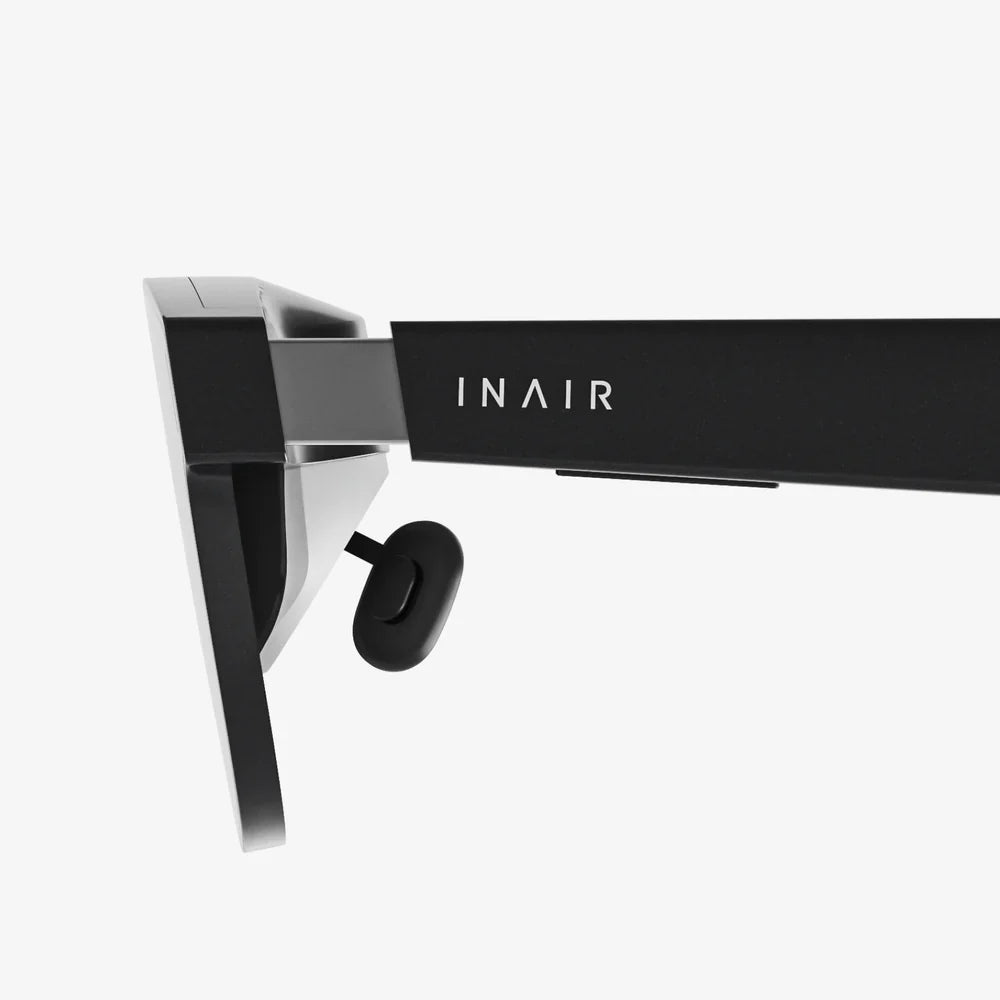
Augmented and Virtual Reality represent the apex of interactive digital technology. VR completely immerses the user in a synthetic digital world, where they can interact with objects and environments using motion-tracked controllers and their own hands. AR overlays digital information and objects onto the physical world, viewed through glasses or a smartphone camera. Both are intensely interactive, requiring the system to understand the user's position, gaze, and gestures in three-dimensional space. This is the foundational technology for nascent visions of the metaverse—a persistent network of shared, interactive digital spaces.
The Conversational Interface
Voice-activated assistants have made interacting with technology as simple as speaking. This represents a major leap towards NUIs, allowing users, regardless of technical proficiency, to access information, control their environments, and execute tasks through natural dialogue. These systems are evolving beyond simple command-response models into more fluid, context-aware conversations that can handle ambiguity and maintain context over multiple exchanges.
Gamification and Interactive Storytelling
The principles of interactive design have profoundly influenced other domains. Gamification applies game-like elements—such as points, badges, leaderboards, and challenges—to non-game contexts like education, fitness, and corporate training to boost engagement and motivation. In media, interactive storytelling, popularized by choose-your-own-adventure style films and games, puts the audience in the director's chair, allowing them to influence the narrative's outcome, thus blurring the line between author and audience.
The Human Impact: Reshaping Society and the Individual
As with any transformative technology, the rise of interactive digital experiences brings a host of profound implications, both empowering and concerning.
Revolutionizing Industries
From retail to healthcare, interaction is driving innovation. Surgeons use AR overlays for complex procedures, visualizing patient anatomy in real-time. Architects and engineers create interactive 3D models of buildings long before ground is broken. Retailers offer AR apps that let customers 'try on' clothes or visualize furniture in their homes. In education, interactive simulations allow students to conduct virtual chemistry experiments or explore historical events, making learning an active, engaging process rather than a passive one.
The Double-Edged Sword of Data and Privacy
For digital systems to be truly interactive and personalized, they require data—lots of it. Every interaction generates data about our preferences, behaviors, habits, and even our emotions. While this data can be used to create incredibly useful and tailored experiences, it also raises monumental questions about privacy, surveillance, and consent. The line between helpful personalization and intrusive manipulation is thin and constantly shifting. Establishing robust ethical frameworks and transparent data governance is arguably the single greatest challenge facing the future of interactive technology.
Redefining Human Connection
Interactive technology has the power to connect us across vast distances in incredibly rich ways, from collaborating with colleagues in a virtual boardroom to attending a concert with a friend on another continent via VR. Yet, it also risks fostering a new kind of isolation, where digitally mediated interactions replace face-to-face connection. The psychological impact of living between physical and digital realities is not yet fully understood, highlighting a critical need for digital literacy and a conscious approach to how we integrate these tools into our lives.
Gazing into the Interactive Future: What Lies Ahead?
The trajectory of interactive digital technology points toward even more profound integration with our lives and bodies.
Brain-Computer Interfaces (BCIs)
The ultimate NUI would bypass physical movement entirely. BCIs aim to create a direct communication pathway between the brain and an external device. While still in early stages, the potential is staggering: controlling digital interfaces with thought alone, restoring mobility and communication to people with disabilities, or even sharing thoughts and experiences directly—a concept known as 'telepathic' communication.
The Sentient Environment and Ambient Computing
The goal of future interaction is to make the technology itself recede into the background. This is the vision of ambient computing, where intelligence is woven into the environment around us. Instead of interacting with a specific device, the room itself becomes the interface. Lights, temperature, information, and entertainment adjust automatically to your preferences and presence, creating a context-aware environment that anticipates your needs without explicit commands.
Ethical AI and Designing for Humanity
The future will be defined not just by what is technologically possible, but by what is ethically desirable. The next frontier of interactive design will focus on building AI systems that are transparent, fair, and accountable. It will involve creating interactions that enhance human agency and well-being rather than exploiting cognitive biases for engagement. The most successful and enduring interactive digital systems will be those designed with a deep respect for human psychology, privacy, and dignity.
The silent, static screen is becoming a relic of the past, replaced by a dynamic, intelligent, and responsive digital layer that is woven into the very fabric of our existence. To interact digital is no longer a novelty; it is the default mode of engaging with the modern world. This ongoing revolution promises to unlock unprecedented levels of creativity, connectivity, and understanding, but it also demands from us a new level of wisdom, caution, and intentionality. The interface is evolving from a tool in our hand to an environment we inhabit, and the choices we make today will determine whether this new realm becomes a prison of distraction or a canvas for the next great chapter of human achievement. The power to shape this future, quite literally, is at our fingertips.
Share:
What Are the Advantages of Virtual Meetings: A Deep Dive into the Digital Transformation of Collaboration
Spectacles for Screen Protection: The Essential Defense for the Digital Age