


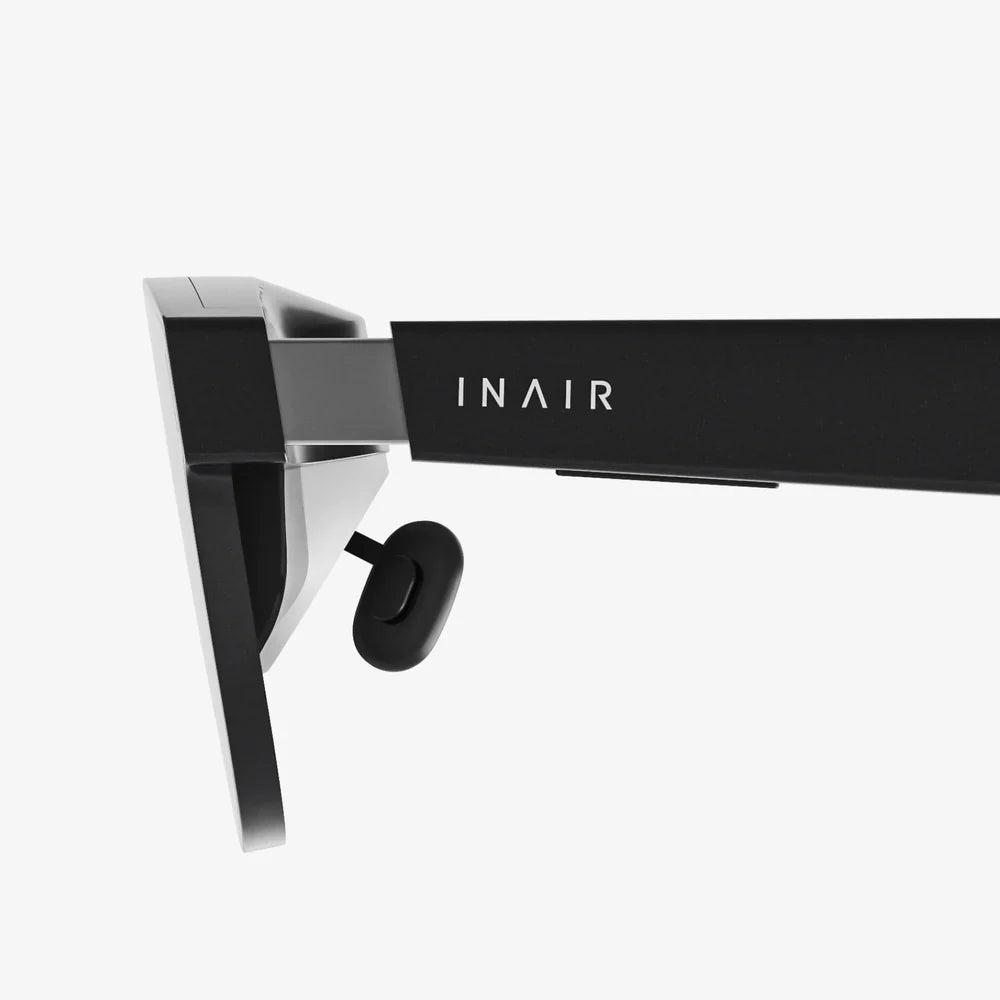
Imagine reaching into the air to manipulate a holographic model, your gestures intuitively rotating and scaling it as if it were a physical object. Envision walking through a virtual museum where the acoustics change subtly as you move between exhibits, and the information panels appear seamlessly as you glance towards them. This isn't science fiction; it's the emerging reality of interaction spatiale, a paradigm shift that is fundamentally redefining the relationship between humans, machines, and the spaces we inhabit. This concept moves beyond the flat, confined screens of traditional computing to create a seamless, intuitive, and deeply human dialogue with technology, woven into the very fabric of our three-dimensional world. The potential is staggering, promising to dissolve the final barriers between our digital and physical realities, and it all begins with understanding this invisible architecture of engagement.
Beyond the Screen: Defining a New Paradigm
At its core, interaction spatiale is a design philosophy and technological framework for human-computer interaction that utilizes the three-dimensional space surrounding a user as the medium for input and output. It transcends the traditional WIMP (Windows, Icons, Menus, Pointer) model, which is inherently confined to a two-dimensional plane. Instead, it treats the user's body, movements, and position in space as the primary interface.
This approach is built upon several foundational pillars:
- Spatial Input: Using sensors, cameras, and wearables to track a user's position, gaze, gestures, and even bio-signals as commands.
- Spatial Output: Rendering digital information within the user's environment through technologies like augmented reality (AR), virtual reality (VR), spatial audio, and haptic feedback.
- Spatial Context: The system's awareness of the physical environment—its geometry, objects, lighting, and acoustics—allowing digital content to interact with and respect real-world boundaries.
- Embodied Interaction: The recognition that cognition is not just a brain-based activity but is deeply connected to our physical bodies and our motor systems. Interaction becomes a full-body experience.
The goal is to create a sense of presence—the feeling of truly "being there" in a digital environment—and agency—the ability to affect that environment in a natural and direct way.
The Human Factor: Principles of Natural and Intuitive Design
For interaction spatiale to be effective, it cannot simply transplant 2D interfaces into 3D space. It must be built upon an understanding of human psychology, ergonomics, and perception. Key principles guide this design:
- Affordances & Constraints: Digital objects must suggest their functionality (affordances) and prevent impossible actions (constraints). A virtual lever should look like it can be pulled, not pushed.
- Proxemics: Borrowing from anthropology, this principle dictates how the distance between the user and a digital object affects interaction. Information might be summarized from afar and become detailed as the user approaches, mimicking real-world social and personal space.
- Perceptual Consistency: Digital objects must obey the laws of physics (or convincingly break them for a reason). They should cast shadows, occlude and be occluded by real objects, and respond to virtual forces in a predictable manner.
- Reducing Cognitive Load: The interaction should feel effortless. The user should not have to remember complex command structures; the interface should leverage innate human skills like pointing, grabbing, and walking.
These principles ensure that the technology serves the human, not the other way around, creating experiences that are powerful yet feel strangely familiar.
The Technological Engine: Sensing, Processing, and Rendering Space
The realization of seamless interaction spatiale is powered by a sophisticated stack of converging technologies.
Sensing the User and the Environment
Advanced sensor systems are the eyes and ears of a spatial interface. This includes:
- Inside-Out Tracking: Cameras and sensors on a headset or device that map the environment and track the user's position within it simultaneously, without external beacons.
- Depth Sensing: Using technologies like LiDAR (Light Detection and Ranging) or structured light to create a precise 3D depth map of the surroundings.
- Hand and Eye Tracking: High-fidelity cameras that monitor the intricate movements of fingers, hands, and pupils, translating them into nuanced input commands. A glance can select, a pinch can grab.
- Inertial Measurement Units (IMUs): Accelerometers and gyroscopes in controllers or wearables that track rotation and acceleration for precise movement data.
Processing the Spatial Data
The raw data from these sensors is meaningless without immense computational power. Machine learning and AI algorithms are crucial for:
- Scene Understanding: Parsing the depth map to identify floors, walls, ceilings, tables, and other objects, turning raw geometry into a semantically understood environment.
- Gesture Recognition: Classifying complex hand movements into intentional commands (e.g., a thumbs-up, a wave, a pointing gesture).
- Voice Recognition: Processing natural language commands within the spatial context ("Place that model here," "What is that?").
Rendering the Experience
Finally, the processed information must be presented back to the user in a believable way:
- Spatial Augmented Reality: Overlaying persistent digital content onto the real world through optical or video see-through displays.
- Immersive Virtual Reality: Replacing the user's visual and auditory field entirely with a synthetic environment.
- Spatial Audio: Sound that behaves like real-world sound, emanating from a specific point in 3D space, changing volume and timbre as the user moves closer or farther away.
- Haptic Feedback: Wearable devices that provide tactile sensations, from simple vibrations to complex forces that simulate the weight and texture of virtual objects.
From Theory to Practice: Applications Reshaping Industries
The impact of interaction spatiale is already being felt across a diverse range of fields, demonstrating its transformative potential.
Design and Engineering
Architects and engineers can walk clients through full-scale, immersive models of unbuilt structures, making changes in real-time with gestures. Automotive designers can sculpt virtual clay models in 3D space, examining ergonomics and aesthetics from every angle without the cost of physical prototypes.
Healthcare and Medicine
Surgeons can visualize complex patient anatomy from CT or MRI scans as a hologram floating above the operating table, improving precision and planning. Medical students can practice procedures on virtual patients, and physical therapists can use motion tracking to guide patient rehabilitation exercises with perfect form.
Education and Training
History students can explore ancient Rome at life-size scale. Mechanics-in-training can practice disassembling a complex engine, with instructions and part names appearing in their field of view as they look at each component. This "learning by doing" in a risk-free environment is unparalleled.
Remote Collaboration and Telepresence
Interaction spatiale enables the next evolution of video conferencing: true telepresence. Colleagues from across the globe can appear as life-like avatars in your room, gathered around a shared 3D model, pointing, annotating, and manipulating it together as if they were physically present. This shared spatial context breaks down the barriers of remote work.
Navigating the Challenges: The Path to Ubiquity
Despite its promise, the widespread adoption of interaction spatiale faces significant hurdles that must be overcome.
- Technological Limitations: Achieving photorealistic graphics, flawless tracking, and long battery life in a comfortable, socially acceptable form factor (like everyday glasses) remains the holy grail. The "vergence-accommodation conflict," which can cause eye strain, is a major physiological challenge.
- User Experience (UX) Design: We are still writing the rulebook for 3D UX. Designers must avoid "gorilla arm" (fatigue from holding arms up), create intuitive navigation for vast virtual spaces, and prevent motion sickness. Standardized design patterns are still emerging.
- Privacy and Security: Devices that constantly scan and map our homes and offices raise profound privacy questions. Who owns this spatial data? How is it stored and used? The potential for always-on surveillance is a serious concern.
- The Social Contract: How do we behave in shared augmented spaces? What are the social norms? The blurring of public and private digital layers could lead to new forms of distraction or even digital vandalism.
The Future is Spatial: A World Re-architected
The trajectory is clear: computing is expanding off the screen and into our environment. The future of interaction spatiale points towards a world where context-aware digital assistants are embedded in our surroundings, responding to our presence and needs without a spoken command. It suggests a future where our physical world becomes a dynamically customizable canvas, with information, art, and tools available at a glance or a gesture. The distinction between "being online" and "being offline" will fade, replaced by a continuous, contextual blend of the two. This will require not just better hardware, but a new internet—a spatial web with protocols for anchoring persistent digital content to specific locations in the real world, accessible and interactive for all.
We are standing at the precipice of a revolution as significant as the move from command-line interfaces to the graphical user interface. The flat, abstract world of pixels is giving way to a rich, voluminous, and embodied digital reality. The way we work, learn, play, and connect is on the verge of a fundamental transformation, all orchestrated by the subtle, powerful, and increasingly invisible hand of interaction spatiale. The question is no longer if this future will arrive, but how quickly we can design it to be intuitive, equitable, and profoundly human.
Share:
AR Interaction Techniques: The Future of How We Interface with Digital Worlds
AR Interaction Techniques: The Future of How We Interface with Digital Worlds