


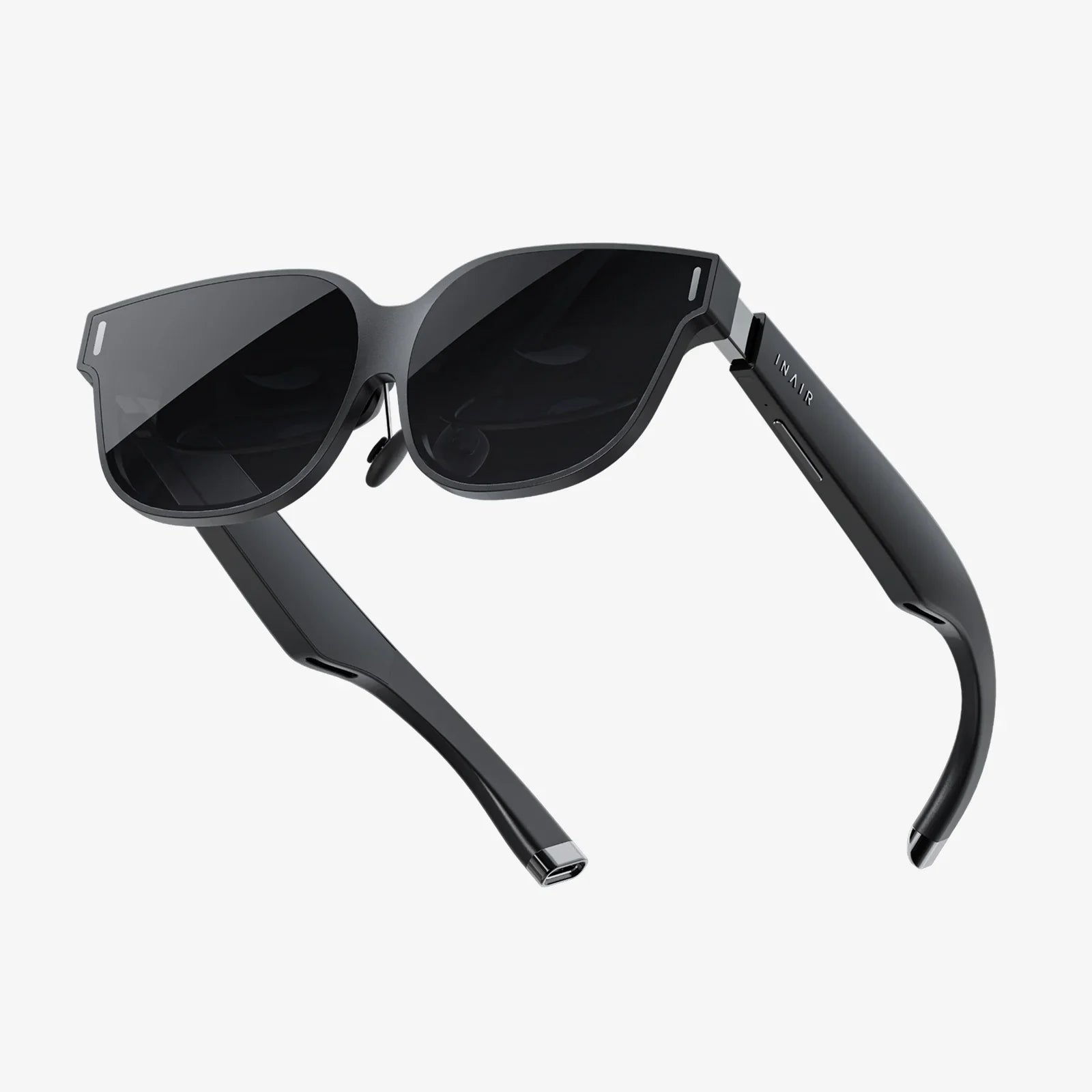
Imagine a device that doesn’t just sit on your face but acts as a gateway, a portal that dissolves the barriers between your physical reality and limitless digital worlds. This is the promise and the power of the modern interactive VR headset. It’s more than a screen; it’s an invitation to step inside the experience itself, to not just see a new reality but to touch it, shape it, and live within it. The journey from a novel concept to a sophisticated piece of immersive technology represents one of the most exciting evolutions in modern computing, fundamentally altering our relationship with digital content.
The Anatomy of Immersion: More Than Just a Display
At its core, an interactive VR headset is a symphony of advanced technologies working in perfect harmony to craft a convincing illusion. The most obvious component is the high-resolution display, often two separate panels—one for each eye—that provide a stereoscopic 3D view. But the magic truly begins with the sophisticated lens system that sits between these displays and the user's eyes. These lenses warp and focus the image to fill the user’s entire field of view, creating the sensation of being surrounded by the environment.
However, visual fidelity alone is not enough to create genuine immersion. This is where a suite of sensors takes center stage. Accelerometers, gyroscopes, and magnetometers work together in a process known as inside-out or outside-in tracking to precisely monitor the orientation and position of the user’s head in real-time. Every tilt, turn, nod, and step is instantly translated into the virtual world, ensuring that the perspective shifts naturally and without latency. This precise head-tracking is the bedrock of presence—the elusive feeling of actually "being there."
The Bridge to the Virtual: Controllers, Hand Tracking, and Haptics
While seeing and moving within a virtual space is transformative, true interactivity is achieved through our hands, our primary tools for manipulating the world. Early systems relied on traditional gamepads, but the modern interactive VR headset is defined by its specialized motion controllers. These devices are packed with their own sensors, allowing them to be tracked in 3D space with six degrees of freedom (6DoF). They become virtual extensions of the user’s hands, enabling them to grab, throw, shoot, paint, and manipulate objects with an intuitive physicality.
The next evolutionary step is the move beyond controllers altogether. Advanced computer vision and machine learning algorithms now allow headsets to track the user’s bare hands with remarkable accuracy. Cameras mounted on the headset itself see the user's fingers, interpreting gestures, pinches, and waves. This leap to natural interface eliminates a layer of abstraction, making interactions feel more direct and instinctive. Picking up a virtual apple by actually reaching out and closing your hand around it is a profoundly different experience than pressing a button on a controller.
To complete the sensory feedback loop, haptic technology is rapidly advancing. Controllers now provide nuanced vibrations and resistance to simulate the feeling of touching different surfaces—from the gentle buzz of a virtual bee landing on your palm to the jarring kick of a virtual weapon. Research into full hand haptics, using gloves or wearable devices, promises to simulate texture, weight, and even temperature, further blurring the line between the real and the virtual.
Software and Content: The Soul of the System
The most powerful hardware is useless without compelling software to bring it to life. The ecosystem for interactive VR headsets has exploded from simple tech demos into a rich and diverse library of experiences. This content can be broadly categorized into several key areas:
- Gaming and Entertainment: This remains the primary driver for consumer adoption. VR games range from pulse-pounding action adventures and precise sports simulations to serene puzzle games and social hangouts. Users don’t just play a character; they embody them.
- Social Connection and Collaboration: VR is becoming a powerful platform for social interaction. Platforms exist where users, represented by detailed avatars, can meet, talk, watch movies, play games, and collaborate on projects as if they were in the same physical room, regardless of geographic distance.
- Education and Training: This is perhaps one of the most impactful applications. Medical students can practice complex surgical procedures on virtual patients without risk. Mechanics can learn to repair intricate machinery. History students can take a field trip to ancient Rome. The power of "learning by doing" in a safe, controlled, and repeatable environment is unparalleled.
- Design and Architecture: Architects and product designers use VR to walk clients through unbuilt structures, allowing them to experience the scale, lighting, and flow of a space long before ground is broken. This enables iterative design changes in real-time based on immersive feedback.
Beyond the Hype: Challenges and Considerations
Despite its incredible potential, the widespread adoption of interactive VR technology faces several significant hurdles. The issue of motion sickness, or VR-induced nausea, remains a problem for a segment of users. This is primarily caused by a mismatch between what the eyes see (movement) and what the vestibular system in the inner ear feels ( stillness). While advancements in higher refresh rates, lower latency, and better tracking have mitigated this for many, it is still a barrier that developers must carefully design around.
There are also social and psychological considerations. Prolonged use in immersive virtual environments can lead to a phenomenon known as "VR dissociation," where users feel slightly disconnected from reality upon removing the headset. Furthermore, the collection of vast amounts of biometric and behavioral data—precise eye movement, hand gestures, reaction times—raises serious questions about privacy and data security that the industry is still grappling with.
Finally, there is the challenge of accessibility and comfort. Headsets need to become lighter, less cumbersome, and more affordable to achieve true mainstream status. The "friction" of setting up and putting on the device must be reduced to the level of putting on a pair of sunglasses.
The Future is Interactive: Where Do We Go From Here?
The trajectory of the interactive VR headset points towards even greater integration with our senses and our reality. Several key technologies are poised to define the next generation:
- Eye-Tracking: This is a game-changer. By knowing precisely where a user is looking, rendering resources can be focused on the center of their gaze (a technique called foveated rendering), drastically reducing the computational power required for photorealistic graphics. It also enables new forms of social interaction, as avatars can make natural eye contact, and intuitive UI control via gaze.
- Varifocal Displays: Current headsets have a fixed focal plane, which can cause eye strain as users look at virtual objects at different distances. Next-gen systems will dynamically adjust the focal length to match where the user is looking, creating a more natural and comfortable visual experience that mirrors real life.
- Brain-Computer Interfaces (BCI): Looking further ahead, research into non-invasive BCIs could allow users to interact with virtual environments through thought alone. Imagine moving a virtual object simply by intending to do so. This would represent the final frontier in intuitive control, merging human intention directly with digital creation.
- The Metaverse: The interactive VR headset is widely seen as the primary hardware interface for the nascent concept of the metaverse—a persistent, interconnected network of virtual spaces. It will be the device that allows us to "enter" this new layer of the internet and interact with it and others in a embodied way.
The interactive VR headset is far more than a gaming peripheral or a passing technological fad. It is a foundational shift in how we interface with information and with each other. It has the power to democratize experiences, revolutionize education and industry, and create new forms of art and social connection. As the technology continues to evolve, becoming more powerful, comfortable, and intuitive, its potential to reshape our world is limited only by our imagination. The portal is open, and the invitation to step through has never been more compelling.
Share:
VR Headset Always Blurry? The Ultimate Troubleshooting Guide to Crystal Clear Immersion
VR Headset Always Blurry? The Ultimate Troubleshooting Guide to Crystal Clear Immersion