


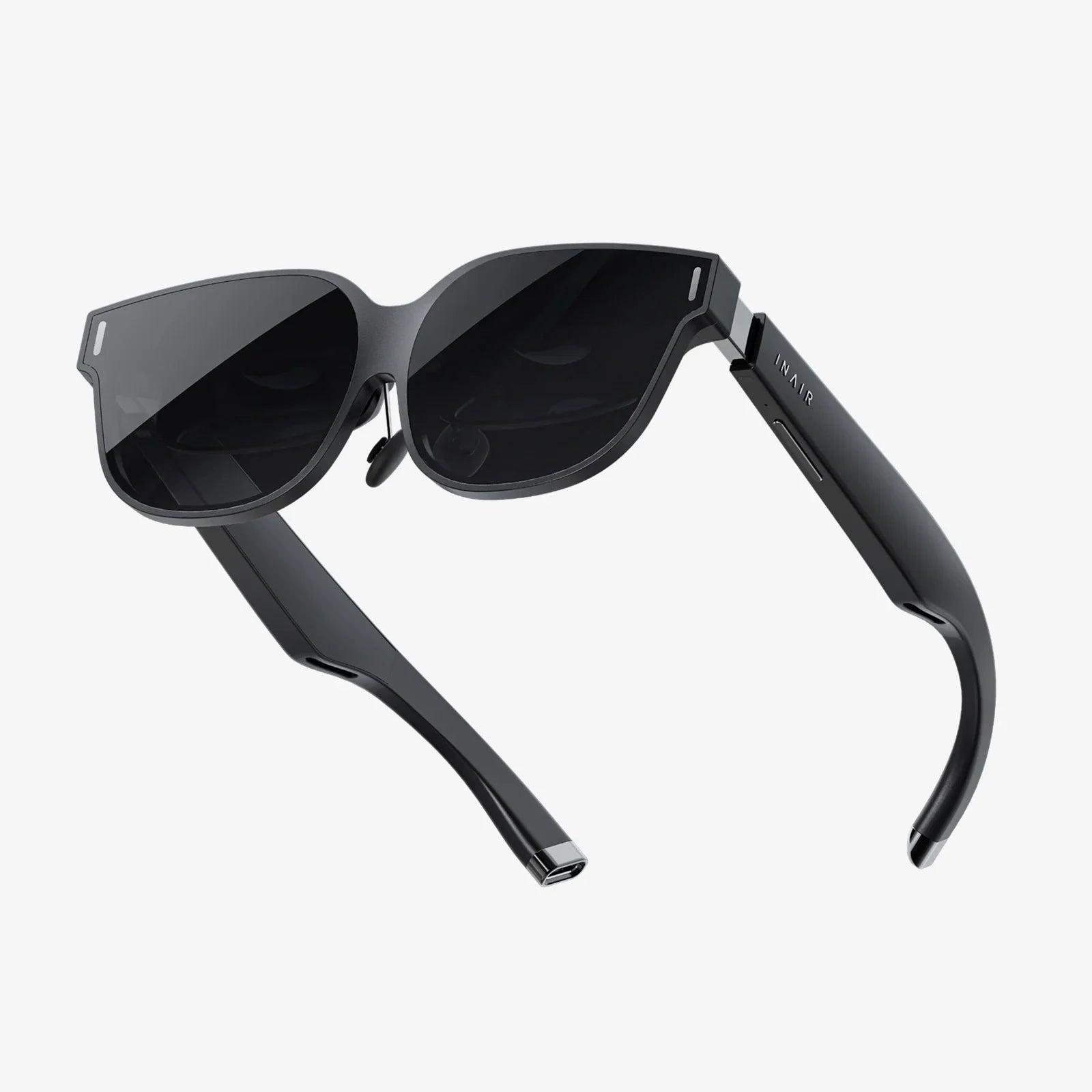
You strap on your headset, heart racing with anticipation for a journey into another world, only to be greeted by a frustrating, hazy mess. The text is fuzzy, the distant objects smear into a soupy blur, and a dull headache begins to form behind your eyes. If your virtual reality experience is constantly undermined by a lack of visual clarity, you are far from alone. The complaint of a "VR headset always blurry" is one of the most common and vexing issues for newcomers and veterans alike. But before you relegate your expensive gadget to the back of a closet, know this: a blurry image is rarely a death sentence for the hardware. More often than not, it's a solvable puzzle, a matter of understanding the intricate dance between human anatomy, sophisticated optics, and software calibration. This deep dive will guide you through every potential culprit and provide the definitive steps to transform your blurry ordeal into a crystal-clear window to other realms.
The Foundation of Clarity: Mastering the Fit and IPD
Imagine wearing someone else's prescription glasses; the world would be an indistinct nightmare. In many ways, a VR headset is a complex optical instrument personalized for your eyes, and the single biggest cause of blur is an improper fit. It's not just about comfort; it's about optical precision.
The Critical Role of Interpupillary Distance (IPD)
IPD is the distance between the centers of your pupils, measured in millimeters. Every headset has a "sweet spot"—the perfectly clear area in the center of the lenses. If the lenses' centers don't align with your pupils' centers, you're looking through the distorted edges of the lenses, resulting in a pervasive blur and often, eye strain.
Most modern headsets offer either a software IPD adjustment (which digitally shifts the image) or a far superior mechanical IPD adjustment (which physically moves the lenses themselves). To find your IPD, you can use a mirror and a ruler, ask an optometrist, or even use certain smartphone apps designed for this purpose. Once you have this number, meticulously adjust the headset's IPD slider while it's on your head until the dial matches your measurement. Don't just set it and forget it; fine-tune it while looking at text or a detailed object until it snaps into perfect clarity.
Strapping In for Success: Position and Balance
A headset that is too loose, too tight, or sitting at the wrong angle on your face will never be clear. The goal is to have the headset feel like a natural extension of your head, not a vise or a dangling mask.
- The Strap Sequence: Loosen all straps. Place the headset on your face and hold it with one hand in the position that gives the clearest image. With your other hand, first secure the top strap so it takes the majority of the weight onto the crown of your head. Then, tighten the side straps just enough to secure the position without squeezing.
- Angle is Everything: Many headsets can pivot on the faceplate. Tilt the entire headset up or down on your cheeks to find the angle that maximizes the sweet spot. You should not see any light bleed from the bottom or sides (this is also crucial for immersion).
- Check for Symmetry: Ensure the headset is not crooked. The left and right sides should feel even and the image should be uniformly clear.
Lens Care and Environmental Factors
Once the headset is perfectly positioned, the next place to look is the physical state of the lenses and your environment.
The Enemy of Vision: Smudges, Dust, and Scratches
The oils from your skin, eyelashes, and ambient dust are clarity's worst enemies. A single fingerprint can scatter light and create a surprising amount of blur.
- Proper Cleaning Technique: Always use a microfiber cloth designed for lenses. First, use a rocket blower or gentle breath to dislodge any abrasive dust particles. Then, in a circular motion, gently wipe the lenses. Avoid using any harsh chemicals, window cleaners, or alcohol-based solutions, as they can degrade the special anti-reflective coatings on the lenses. If needed, a tiny drop of lens cleaning fluid on the cloth—never directly on the lens—is acceptable.
- Protection is Key: If you wear glasses inside the headset, you risk scratching both your glasses and the headset's lenses. Use the included glasses spacer to create more room. For a permanent solution, consider purchasing prescription lens inserts that slot directly over the headset's lenses, which is a game-changer for comfort and clarity for glasses wearers.
Taming the Light
Ambient light in your room isn't just an immersion breaker; it can cause reflections and glare inside the headset itself, washing out the image and creating a blurry, low-contrast appearance. Always use your headset in a dimly lit or dark environment. Furthermore, if light is bleeding in from around the nose bridge or cheeks, it will dilate your pupils, making the limited depth of field of the headset more apparent and the blur worse. Ensure the headset's light blockers are properly attached and forming a good seal against your face.
Delving into Software and Hardware Settings
If the physical setup is flawless and the blur persists, it's time to journey into the digital realm of settings and performance.
Rendering Resolution and Supersampling
Your headset has a native panel resolution (e.g., 1920x2160 per eye), but the image being rendered by your computer or console might be lower. This is often the case on performance-mode settings or on less powerful hardware. A game rendering at a resolution lower than the headset's display will always look blurry or pixelated.
- Check In-Headset Settings: Many standalone headsets have a toggle for "Visual Quality" or similar. Ensure this is set to the highest setting your device can handle.
- PC VR Supersampling: For PC-based VR, this is the most powerful tool for clarity. Supersampling means rendering the game at a higher resolution than the headset's native panels and then downsampling it. This acts as a form of anti-aliasing, smoothing out jagged edges and providing a dramatically sharper image. This setting is typically found in the PC VR software platform (e.g., SteamVR, Oculus PC app) under a "Resolution Per Eye" or "Supersampling" slider. Be warned: this is extremely demanding on your graphics card. Pushing it too high will cause performance issues, which leads to the next major culprit.
The Performance Bottleneck: Reprojection and ASW
VR requires a high, stable framerate (usually 72Hz, 90Hz, or 120Hz) to feel smooth and avoid motion sickness. If your computer cannot maintain this framerate, the software will engage safety features known as Asynchronous Spacewarp (ASW) or Reprojection. These technologies synthetically generate frames to maintain the headline framerate, but they introduce visual artifacts like ghosting, shimmering, and a distinct, overall blurriness, especially during fast movement. If your world becomes a smeary mess the moment you move your head, you are likely experiencing reprojection.
The Fix: You must lower your graphical settings in-game until your PC can maintain the native framerate. Disable heavy effects like MSAA, lower shadow quality, and reduce environment details. Use a performance overlay (like the one built into SteamVR) to monitor your frametimes and ensure you are consistently hitting the target.
When the Blur is by Design: Understanding Fixed-Foveated Rendering
To maintain performance, especially on standalone headsets with mobile processors, developers use a technique called Fixed-Foveated Rendering (FFR). This means the engine renders the center of your vision (where you are directly looking) at full resolution, but the peripheral areas are rendered at progressively lower resolutions. This is a smart optimization trick, but if it's implemented aggressively, you can actually see the ring of blurriness in your periphery, which can be distracting and break immersion. There's often no way to disable this, as it's a core optimization for the platform, but being aware of it helps you understand that not all blur is a problem with your setup.
The Unavoidable Truths: Hardware Limitations and the Screen Door Effect
Despite our best efforts, some aspects are inherent to the current generation of technology.
- The Screen Door Effect (SDE): This is the visible fine grid-like pattern between pixels on the display. It is not the same as blurriness, but it can be mistaken for it. SDE makes the image look like you're viewing it through a fine mesh screen door. It is a factor of the resolution and the lens's ability to blend pixels (known as the fill-factor). Higher-resolution headsets have significantly reduced this issue, but it is still present to some degree on all consumer models.
- God Rays and Lens Artifacts: Certain lens designs, particularly Fresnel lenses which are used to be lightweight, are prone to "god rays" or glare artifacts. These appear as smears of light emanating from high-contrast elements (like white text on a black background). This is a physical property of the lens design and cannot be eliminated, only minimized through perfect positioning and keeping the lenses impeccably clean.
- Source Material Quality: Not all VR experiences are created equal. A poorly optimized game or a 360-degree video that was originally shot at a low resolution will look blurry no matter how expensive your headset is. The old adage of "garbage in, garbage out" still applies.
Your journey into virtual reality should be one of wonder and immersion, not a squint-filled struggle against a blurry veil. By methodically working through this guide—from the fundamental mechanical fit and IPD adjustment, through meticulous lens care, and into the nuanced world of software rendering and performance management—you empower yourself to take control of your experience. The difference between a foggy disappointment and a razor-sharp portal to another dimension often lies in these subtle calibrations. So, power up your headset, approach it not as a consumer but as a pilot preparing for flight, and dial in that perfect, crystal-clear view. Your next adventure awaits, and now, you'll see every breathtaking detail.
Share:
Interactive VR Headset: The Ultimate Portal to Immersive Digital Realities
Interactive VR Headset: The Ultimate Portal to Immersive Digital Realities