


- by wangfred
Interesting AR Projects: Blending Reality with Digital Imagination
- by wangfred
Imagine pointing your device at a seemingly ordinary street corner and watching a historical battle unfold before your eyes, or opening a textbook to see a complex molecule spring into three-dimensional life above the page. This is no longer the stuff of science fiction; it is the thrilling reality being built by a global community of creators through interesting AR projects. Augmented Reality has burst from the confines of niche tech demonstrations into a vibrant field of experimentation, offering glimpses into a future where our digital and physical realities are seamlessly intertwined. The most compelling projects are those that move beyond mere gimmickry, solving real problems, sparking genuine wonder, and fundamentally altering our perception of the world around us. This deep dive explores the fascinating landscape of these innovations, showcasing how they are revolutionizing fields from fine art to practical education.
Perhaps the most profound impact of interesting AR projects is occurring within the realm of education. By overlaying digital information onto physical objects, AR transforms passive learning into an active, immersive experience. Static diagrams and photographs are no longer sufficient when students can manipulate a beating human heart, walk through a meticulously reconstructed ancient Roman villa, or witness the orbit of planets around a sun that appears to hover above their desk.
Consider a geometry class where students can pull, twist, and deconstruct complex polyhedrons with their fingers, intuitively understanding volume and surface area in a way a flat drawing could never convey. History lessons are revolutionized as students use their devices to scan a map and watch animated troop movements from pivotal battles, providing temporal context to geographic information. For young children, AR storybooks have created a new genre of literature, where characters leap off the page and interact with the reader, fostering a deep and personal connection to narrative and literacy. These projects succeed because they engage multiple senses simultaneously, catering to diverse learning styles and making abstract concepts tangibly, undeniably real.
The art world has enthusiastically embraced AR as a new medium, creating fascinating projects that challenge the very definition of a gallery space. Digital artists are using the world itself as their canvas, anchoring breathtaking sculptures, animated figures, and surreal landscapes to specific GPS coordinates or physical markers. This creates a curated, hidden layer of art that exists only for those who know to look for it, turning a city walk into an artistic treasure hunt.
Museums are deploying AR to add new dimensions to their collections. A visitor can point their device at a Renaissance painting to see it restored to its original colors, learn about the symbolism of certain elements through interactive pop-ups, or even watch a short documentary about the artist materialize beside the frame. Public memorials and statues are being enhanced with AR experiences that tell the fuller, often untold, stories of the figures they represent. This fusion of physical artifact and digital narrative creates a powerful, multi-layered historical dialogue. These artistic projects democratize art, making it accessible, interactive, and deeply personal, breaking it free from static walls and allowing it to live and breathe in our shared environment.
While one massively popular game famously brought AR gaming to the mainstream, the genre has since expanded into far more interesting and diverse territory. Interesting AR projects in gaming are creating persistent worlds that exist on top of our own. Narrative-driven games turn a player's neighborhood into the setting for a sci-fi mystery or a fantasy adventure, requiring them to explore physical locations to progress the story, effectively blending exercise, exploration, and gameplay.
Storytelling itself is being redefined. AR authors are crafting experiences where chapters are unlocked by visiting real-world locations, and characters appear to communicate directly with the reader through their screen. This creates an unparalleled sense of agency and immersion, as the user is not just consuming a story but actively participating in it, their environment becoming an integral character in the plot. These narrative projects demonstrate AR's unique ability to break the fourth wall, weaving fiction into the fabric of our daily lives and creating memories that are tied to real places and actions.
Beyond play and education, interesting AR projects are providing powerful utilitarian tools that simplify complex tasks. The furniture and home decor industry has been transformed by AR apps that allow users to project true-to-scale 3D models of sofas, tables, and lamps into their living space. This eliminates the guesswork of purchasing, allowing for confident visualization of how an item will look and fit before it is ever bought, drastically reducing return rates and enhancing customer satisfaction.
In fields like interior design and architecture, clients can now walk through a photorealistic rendering of their proposed kitchen renovation, seeing the exact materials and lighting in place. Mechanics and engineers use AR glasses that overlay wiring diagrams or repair instructions directly onto the equipment they are servicing, improving accuracy and efficiency. Even navigation is being enhanced, with AR overlays in car windshields or smartphone cameras projecting turn-by-turn directions onto the road itself. These projects, though perhaps less flashy than their artistic counterparts, are arguably more impactful, solving everyday problems and enhancing our capabilities in profound ways.
The magic of these experiences is powered by a sophisticated blend of technologies. Most interesting AR projects rely on a combination of computer vision, simultaneous localization and mapping (SLAM), and powerful 3D rendering engines. Computer vision allows the device to understand its environment—recognizing flat surfaces like floors and tables, detecting edges, and tracking objects. SLAM technology enables the device to map the physical space while simultaneously tracking its own position within it, which is crucial for placing digital objects that stay locked in place as the user moves.
These digital assets are then rendered in real-time by powerful game engines, which handle the lighting, shading, and physics to ensure the virtual object convincingly interacts with the real world, casting accurate shadows and even appearing to occlude behind physical objects. Furthermore, the rise of WebAR has been a game-changer, allowing users to access AR experiences directly through a web browser without needing to download a dedicated application, significantly lowering the barrier to entry and enabling creators to reach a wider audience instantly.
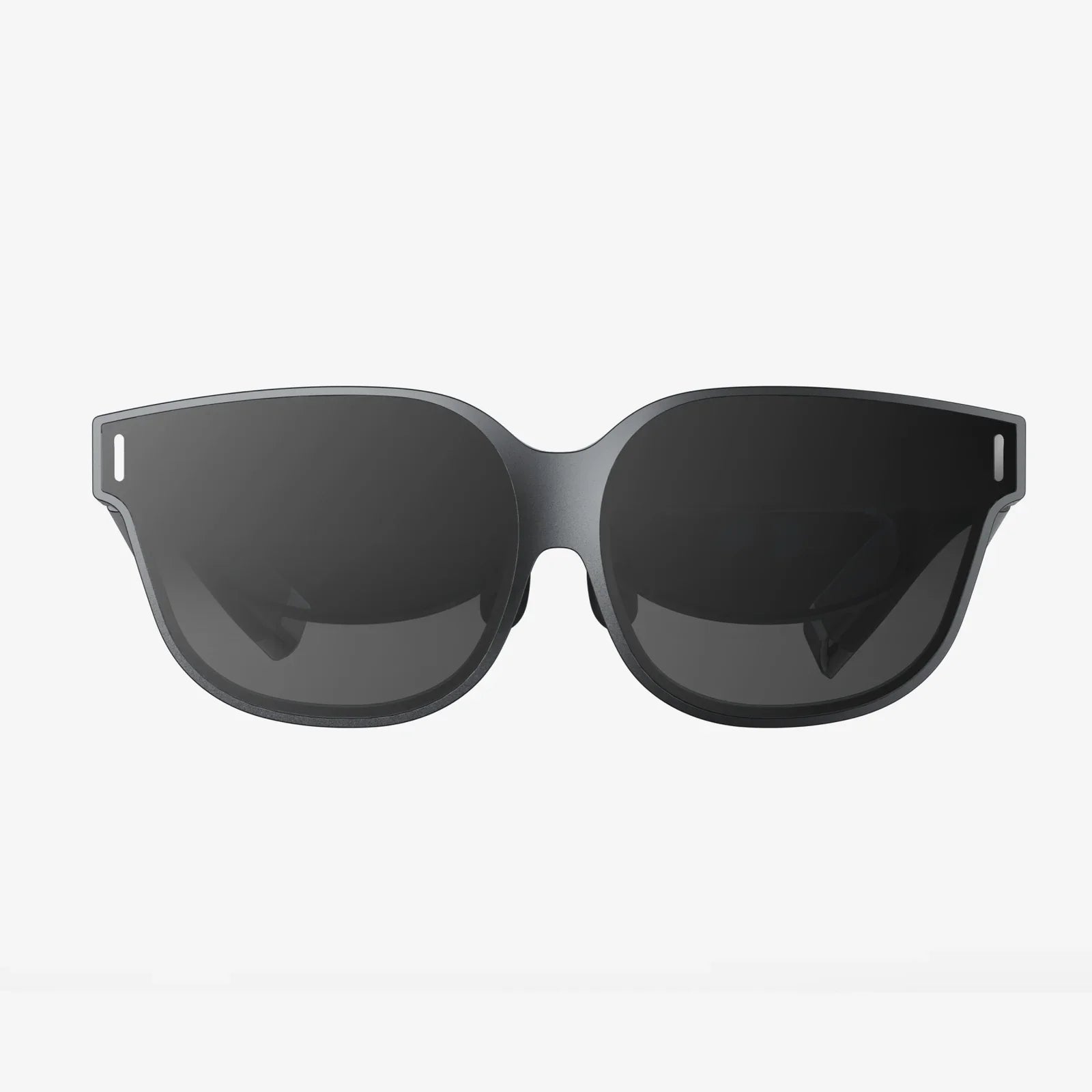
The trajectory of interesting AR projects points toward an even more integrated and astonishing future. The next frontier is the move away from handheld screens toward sleek, socially acceptable AR glasses and eventually contact lenses. This will untether experiences from our phones, allowing for truly hands-free interaction and a constant, ambient layer of useful information over our field of view.
We can anticipate a rise in multi-user AR experiences where several people in the same location can see and interact with the same digital objects, collaborating on designs, playing games together, or sharing a artistic performance. The convergence of AR with Artificial Intelligence will lead to context-aware experiences that understand what you're looking at and provide relevant information automatically—imagine looking at a restaurant and instantly seeing its menu and reviews, or looking at a monument and having its history narrated to you. Furthermore, the concept of the 'digital twin'—a perfect virtual replica of a physical object or system—will be visualized and manipulated through AR, revolutionizing fields from urban planning to manufacturing. The most interesting projects will be those that fade seamlessly into the background of our lives, enhancing our perception without overwhelming it.
The world is on the cusp of a new layer of existence, one painted not with brush and pigment but with data and light. These fascinating AR projects are the first brushstrokes on this vast, blank canvas, demonstrating a future where learning is a visceral adventure, where art is unbound by physical limits, and where our digital tools understand not just our commands, but our context. The boundary between what is real and what is digital is becoming beautifully, artistically, and usefully blurred, inviting us all to become explorers in our own augmented world.